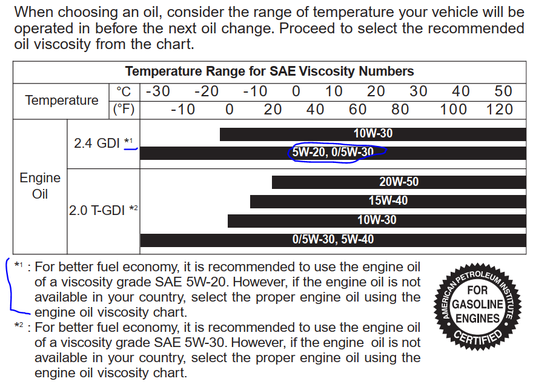
Are you wondering if you can use 5W30 oil instead of 5W20 in your Hyundai? Choosing the right oil for your car is more important than you might think.
The wrong oil can affect your engine’s performance, fuel efficiency, and even its lifespan. Before you make a quick switch, it’s crucial to understand what these numbers mean and how they impact your vehicle. Keep reading to find out if 5W30 is a safe and smart choice for your Hyundai or if you should stick with 5W20 to keep your engine running smoothly.

Credit: www.reddit.com
Oil Viscosity Basics
Understanding oil viscosity is key before deciding if you can swap 5W20 for 5W30 in your Hyundai. Viscosity refers to how thick or thin the oil is, which directly impacts how well it flows through your engine. Knowing these basics helps you make a safer, smarter choice for your vehicle’s health.
What 5w20 And 5w30 Mean
The numbers in 5W20 and 5W30 represent the oil’s viscosity at different temperatures. The “5W” means the oil behaves like a 5-weight oil in cold temperatures, ensuring smooth starts during chilly mornings.
The second number shows the oil’s thickness when the engine is hot. A 20 means the oil is thinner at operating temperature, while a 30 is slightly thicker.
This difference might seem small, but it can affect how your engine components move and wear over time.
How Viscosity Affects Engine Performance
Thinner oil like 5W20 flows easily, reducing friction and improving fuel efficiency. However, thinner oil might not protect as well under high stress or heat.
Thicker oil such as 5W30 offers better protection in hotter climates or during heavy engine loads, but it can slightly reduce fuel economy.
Have you noticed your engine feels different when using a different oil? That’s viscosity at work. Choosing the right oil balances protection with performance for your specific driving conditions.
Manufacturer Recommendations
Understanding your Hyundai’s manufacturer recommendations is key before deciding to switch oil types. These guidelines are designed to keep your engine running smoothly and prevent costly damage. Ignoring them could lead to performance issues or even void your warranty.
Hyundai’s Oil Specifications
Hyundai typically recommends specific oil viscosities like 5W20 or 5W30 based on the engine design and operating conditions. The owner’s manual is your best source for the exact specification required for your model and year.
For example, many Hyundai engines call for 5W20 because it offers better fuel efficiency and quicker flow at startup. However, some models or climates may allow 5W30 as an alternative, but only within certain limits.
You should check for:
- API rating (e.g., SN, SP)
- Viscosity grade recommended
- Any additional specifications like ILSAC or ACEA
Why Following Specs Matters
Using oil that doesn’t meet Hyundai’s specs can affect engine wear, fuel economy, and even emissions. Your engine is built to operate with a certain oil viscosity to ensure proper lubrication and cooling.
Think about it this way—using 5W30 instead of 5W20 might sound minor, but it can change how the oil flows, especially during cold starts. This could lead to increased engine friction or sludge buildup over time.
Have you ever noticed your engine running louder or less smoothly after switching oil types? That might be your engine telling you it needs the right oil grade.
Comparing 5w20 And 5w30
Choosing between 5W20 and 5W30 oil for your Hyundai can feel tricky. Both oils share similar base properties but differ in their thickness, which affects how they perform under various conditions. Understanding these differences helps you decide which oil suits your driving needs and climate best.
Temperature Performance Differences
5W20 oil is thinner than 5W30, making it flow more easily when your engine is cold. This means quicker lubrication during cold starts, which is great if you live in a cooler climate.
On the other hand, 5W30 stays thicker at higher temperatures, providing better protection when your engine heats up during long drives or hot weather. Have you noticed your engine running hotter on summer trips? In that case, 5W30 might offer the extra defense your engine needs.
Impact On Fuel Efficiency
Thinner oils like 5W20 reduce engine friction more effectively, which can slightly improve your fuel efficiency. If you want to squeeze every mile out of a gallon, 5W20 is often recommended for that reason.
However, the difference in fuel economy between 5W20 and 5W30 is usually small. Would you sacrifice a tiny bit of fuel savings for better engine protection? That’s the trade-off to consider.
Engine Wear And Protection
Thicker oil like 5W30 can form a stronger protective layer on engine parts, especially under heavy loads or high temperatures. If you frequently tow, drive uphill, or push your Hyundai hard, 5W30 can help reduce engine wear.
Conversely, 5W20 is designed to meet the precise specifications of many Hyundai models, balancing wear protection with smooth engine operation. Using 5W30 instead of 5W20 may slightly increase oil consumption or affect engine seals over time.

Credit: www.reddit.com
Potential Risks Of Using 5w30
Using 5W30 oil instead of the recommended 5W20 in your Hyundai might seem like a minor swap, but it carries several risks you should consider. The difference in viscosity can affect how your engine performs and might lead to unwanted issues. Understanding these risks helps you decide if the switch is safe or if it could cause more harm than good.
Warranty Implications
Your Hyundai’s warranty is designed around the manufacturer’s specifications, including the oil type. Using 5W30 instead of 5W20 might void your warranty if any engine problems arise.
Manufacturers expect you to follow their maintenance guidelines. If you face engine issues and the dealer finds 5W30 was used against recommendations, they could refuse coverage.
Have you checked your warranty terms carefully? It’s worth reviewing before making any oil changes that differ from the manual.
Engine Compatibility Concerns
Engines are calibrated for specific oil viscosities. Switching to 5W30 means thicker oil, which may not flow as easily through your Hyundai’s engine components.
This can cause reduced lubrication in tight engine parts, especially during cold starts. Over time, this can increase wear and tear or even lead to engine damage.
Think about how your car feels during startup or heavy traffic. If you notice rough idling or unusual noises after switching oils, it might be due to compatibility issues.
When Using 5w30 Might Be Acceptable
Choosing the right oil for your Hyundai matters for engine health and performance. Using 5W30 instead of 5W20 might be okay in certain situations. These cases depend on weather and engine condition. Understanding when 5W30 is acceptable helps avoid damage and keeps your car running smoothly.
Extreme Weather Conditions
5W30 oil has a slightly thicker viscosity than 5W20. This thickness helps protect the engine better in hot weather. In summer or warm climates, 5W30 can maintain oil pressure and reduce engine wear.
In very cold weather, 5W30 also flows well during engine start. It offers good lubrication similar to 5W20. This makes 5W30 a safe alternative if the temperature changes a lot where you live.
High Mileage Engines
Older Hyundai engines with high mileage may benefit from 5W30 oil. Thicker oil helps reduce leaks and oil burning. It also keeps worn engine parts better lubricated.
Using 5W30 in a high mileage engine can improve oil pressure. This supports smoother engine operation and longer engine life. Check your owner’s manual or ask a mechanic before switching oils.

Credit: www.reddit.com
Tips For Choosing The Right Oil
Choosing the right oil for your Hyundai is essential for its performance and engine health. Using the incorrect oil can cause wear and reduce fuel efficiency. Understanding how to pick the right oil prevents costly repairs and keeps your car running smoothly.
Pay attention to factors like oil viscosity, manufacturer recommendations, and driving conditions. Proper oil choice supports engine lubrication and protection under different temperatures.
Checking Owner’s Manual
Start with the owner’s manual. It provides specific oil grade recommendations for your Hyundai model. The manual lists the correct viscosity, such as 5W20 or 5W30, and oil standards to meet.
Follow these guidelines strictly. The manufacturer tests oils to match engine design and ensure optimal performance. Using the recommended oil helps maintain engine warranty and efficiency.
Consulting With A Mechanic
Talk to a trusted mechanic for advice tailored to your driving habits. They can suggest oil types based on your local climate and engine condition. Mechanics also know if switching oils like from 5W20 to 5W30 is safe.
A mechanic can check for engine wear or sludge that might need a different oil type. Their experience helps avoid mistakes and extends your engine’s life.
Frequently Asked Questions
Can I Mix 5w30 With 5w20 Oil?
Mixing 5W30 with 5W20 is generally not recommended. Different viscosities can affect engine performance. It’s best to stick to the manufacturer’s oil specification. Using the correct oil ensures optimal lubrication and protection. Always consult your vehicle’s manual for guidance.
What Happens If I Use 5w30 Instead Of 5w20?
Using 5W30 instead of 5W20 may impact engine efficiency. 5W30 is thicker, which can lead to reduced fuel economy. It might also affect engine wear over time. Always use the recommended oil viscosity for best performance and longevity.
Will 5w30 Damage My Hyundai Engine?
Using 5W30 occasionally in place of 5W20 might not cause immediate damage. However, it can affect long-term performance. Hyundai vehicles are engineered for specific oil viscosities. Consistently using the wrong oil may lead to engine wear and reduced efficiency.
Why Does Hyundai Recommend 5w20 Oil?
Hyundai recommends 5W20 for optimal performance and fuel efficiency. This oil ensures proper lubrication in varied temperatures. It also meets the specific engineering requirements of Hyundai engines. Using the recommended oil helps maintain warranty and prolongs engine life.
Conclusion
Using 5W30 instead of 5W20 in your Hyundai can affect engine performance. Stick to the oil grade recommended in your owner’s manual. Thicker oil may cause reduced fuel efficiency and engine wear. Always check your vehicle’s needs before changing oil types.
Choosing the right oil helps your car run smoothly. Protect your engine by using the correct oil. Keep your Hyundai healthy with proper oil care. Simple steps prevent costly repairs later.