
Are you tired of your salmon losing its flavor and texture after spending time in the freezer? You’re not alone.
Many people struggle with preserving this delicious and nutritious fish, often ending up with less-than-appetizing results. But don’t worry, there’s a simple solution. By learning the proper techniques for freezing salmon, you can ensure that every bite is as fresh and tasty as the day it was caught.
Imagine opening your freezer to find perfectly preserved salmon, ready to be turned into a delightful meal at a moment’s notice. In this guide, we’ll unlock the secrets to freezing salmon the right way, helping you save money and reduce waste. Stick around to discover how you can keep your salmon fresh and flavorful, just like a professional chef.

Credit: knowseafood.com
Choosing Fresh Salmon
Choosing fresh salmon is the first and most important step before freezing it. The fresher your salmon is, the better it will taste after thawing. You want to make sure you pick fish that will hold its texture and flavor through the freezing process.
Identifying Quality Fish
Look for salmon that smells clean and fresh, not fishy or sour. The flesh should be firm and bounce back when pressed gently with your finger. Avoid salmon with dull or brownish spots; bright, vibrant color is a good sign of freshness.
Check the eyes if the head is still attached—they should be clear and not sunken. Also, shiny, moist skin without any slime is a great indicator. If you have the option, ask the fishmonger when the fish was caught or delivered to ensure freshness.
Types Of Salmon For Freezing
Not all salmon are created equal when it comes to freezing. Wild-caught varieties like Sockeye and Coho tend to have firmer flesh and hold up better in the freezer. Farmed salmon is often fattier and softer, which can affect texture after freezing.
Think about how you plan to use the salmon after freezing. If you want to grill or bake, firmer types work best. For dishes like salmon salad or spreads, softer salmon can be fine.
Have you ever wondered if frozen salmon can be as tasty as fresh? Choosing the right type and quality of salmon is your best bet to enjoy delicious meals later on.

Credit: blog.outdoorprolink.com
Preparing Salmon For Freezing
Preparing salmon for freezing ensures it stays fresh and tasty. Proper preparation removes any unwanted parts and cuts the fish into manageable pieces. This process helps keep the salmon’s flavor and texture intact during freezing. Take time to clean and portion the fish correctly before sealing it for the freezer.
Cleaning And Trimming
Start by rinsing the salmon under cold water. Remove any scales left on the skin using a knife or scaler. Pat the fish dry with paper towels to reduce ice crystals. Trim off the fins and any dark or fatty parts. Cut away the belly fat for a cleaner taste. Check for and remove any small bones with tweezers. Clean fish freezes better and lasts longer.
Portioning For Convenience
Cut the salmon into portions that fit your meals. Use sharp knives to make clean, even cuts. Smaller pieces freeze faster and thaw more evenly. Wrap each portion separately to avoid sticking. Label each package with the date and size. This helps track freshness and plan meals easily. Proper portioning saves time when cooking later.
Packaging Techniques
Packaging plays a crucial role in freezing salmon properly. The right technique preserves freshness and prevents freezer burn. Choosing the correct packaging method can make a big difference in taste and texture once thawed.
Using Airtight Containers
Airtight containers are a simple and effective way to freeze salmon. They prevent air from reaching the fish, which slows down oxidation and moisture loss. Choose containers made of sturdy plastic or glass with tight-fitting lids.
Before sealing, pat the salmon dry to remove excess moisture. This step reduces ice crystals forming inside the container. Also, leave a little space at the top to allow for expansion as the fish freezes.
Have you noticed how freezer burn changes the flavor of fish? Airtight containers help avoid that by creating a barrier against air and humidity. This keeps your salmon tasting fresh for weeks.
Vacuum Sealing Benefits
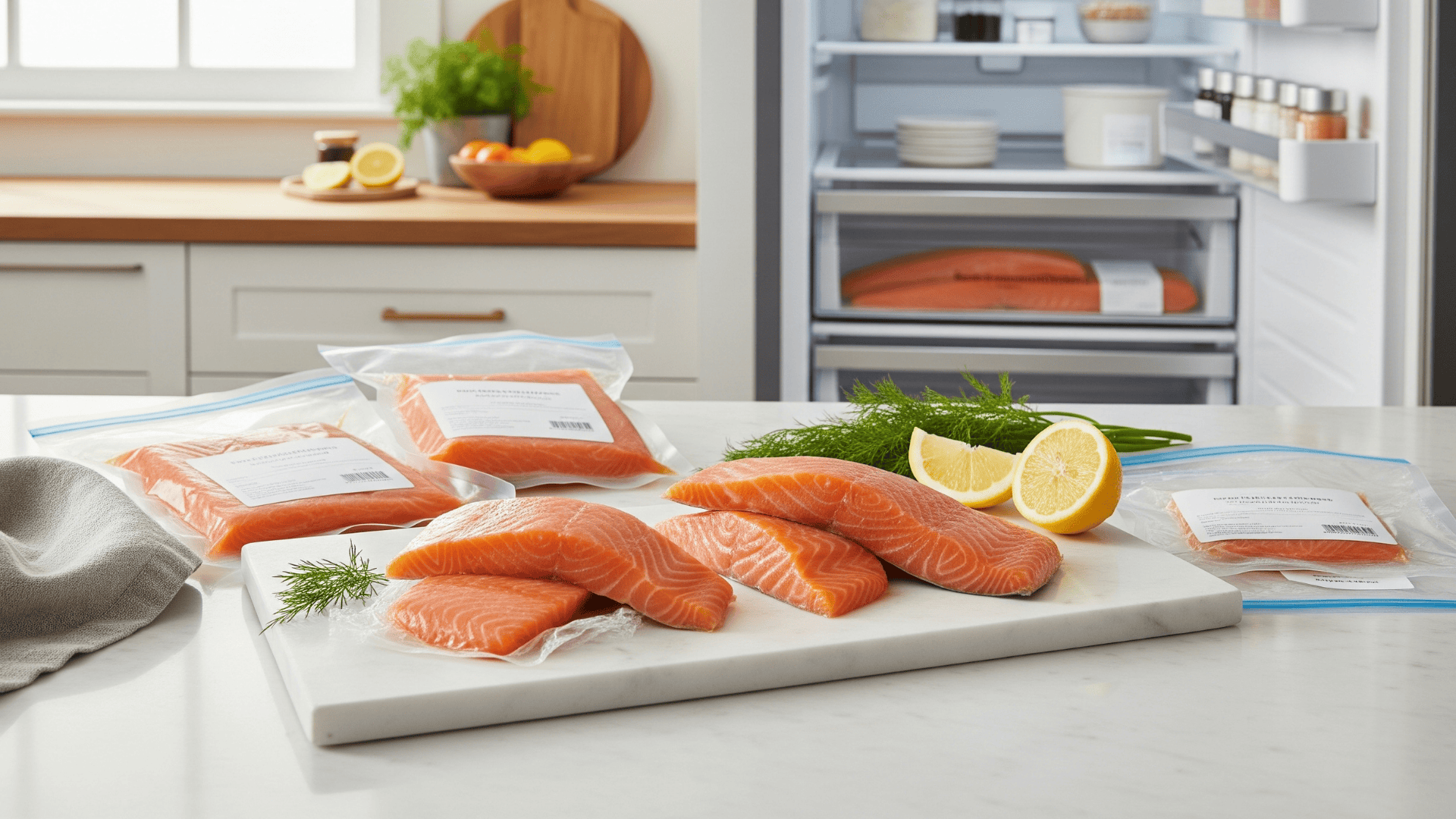
Vacuum sealing is one of the best ways to package salmon for freezing. It removes nearly all air around the fish, which significantly reduces freezer burn risk. This method also locks in natural juices, keeping the salmon moist.
Vacuum-sealed salmon lasts much longer in the freezer without losing quality. You can store it for several months and still enjoy a near-fresh taste. Plus, the compact packaging saves space in your freezer.
If you haven’t tried vacuum sealing before, consider investing in a vacuum sealer. It’s a handy tool that can elevate how you store not just salmon, but many other foods. What’s stopping you from giving your salmon the best protection?
Freezing Methods
Freezing salmon correctly keeps its fresh taste and texture intact, making your meals delicious even weeks later. Different freezing methods affect how well the salmon holds up after thawing. Understanding these methods helps you choose the best way to preserve your fish’s quality.
Quick Freezing Tips
Freezing salmon quickly prevents large ice crystals from forming, which can damage the flesh. Before freezing, pat the salmon dry with paper towels to remove excess moisture. This step reduces ice buildup and keeps the texture firm.
Wrap the salmon tightly in plastic wrap or aluminum foil, then place it inside a freezer bag. Squeeze out as much air as possible to avoid freezer burn. For even better results, use a vacuum sealer if you have one—it locks out air completely and extends freshness.
Try freezing salmon pieces in a single layer on a baking sheet before bagging. This prevents the fillets from sticking together, so you can thaw only what you need. Have you noticed how small changes like this save you time and reduce waste?
Avoiding Freezer Burn
Freezer burn happens when air reaches the fish, drying it out and causing off flavors. To avoid this, use airtight packaging and remove as much air as possible before freezing. Double wrapping with plastic wrap and foil provides extra protection.
Label your packages with the date to keep track of how long the salmon has been frozen. It’s easy to forget, and frozen fish starts to lose quality after 3 months. Have you ever found freezer burn on your fish and wondered how it happened? Proper sealing and storage are the answers.
Keep your freezer at a steady temperature of 0°F (-18°C) or lower. Avoid opening the freezer door often, as temperature fluctuations can speed up quality loss. Your salmon deserves the best environment to stay fresh until you’re ready to enjoy it.
Storage Duration And Conditions
Knowing how long salmon stays fresh in the freezer and the right conditions for storage can save you from wasted food and disappointing meals. Freezing salmon correctly preserves its texture and flavor, but it depends heavily on the temperature and time it spends frozen. Let’s look closely at these factors so you can enjoy salmon that tastes as fresh as the day you bought it.
Optimal Freezer Temperature
Your freezer’s temperature plays a crucial role in keeping salmon safe and tasty. The ideal temperature to freeze salmon is 0°F (-18°C) or lower. This temperature effectively halts bacterial growth and slows down the natural enzymes that cause spoilage.
Many home freezers can fluctuate above this level when opened frequently. Do you check your freezer’s temperature regularly? Investing in a freezer thermometer can help you maintain the right environment, ensuring your salmon stays fresh longer.
How Long Salmon Stays Fresh
Salmon frozen at the optimal temperature can maintain its best quality for about 2 to 3 months. Beyond this period, the fish remains safe to eat but may develop freezer burn or off flavors.
If you freeze salmon for longer than 3 months, consider vacuum sealing it. This method removes air and helps prevent freezer burn, keeping the fish fresher. Have you tried vacuum sealing your fish before? It might just change how well your salmon freezes.
Remember, fresh salmon stored in the freezer longer than 6 months can lose its texture and taste. Plan your meals to use frozen salmon within this window to enjoy the best flavor and quality.
Thawing Salmon Safely
Thawing salmon safely is essential to maintain its texture, flavor, and most importantly, your health. Improper thawing can cause bacteria to grow, leading to foodborne illnesses. Let’s look at reliable ways to thaw your salmon that keep it fresh and safe to eat.
Refrigerator Thawing
Thawing salmon in the refrigerator is the safest and most foolproof method. Place the wrapped salmon on a plate or shallow dish to catch any drips and leave it in the fridge for 12 to 24 hours depending on the size.
This slow thaw keeps the fish at a safe temperature, preventing bacteria from multiplying. Have you noticed how this method preserves the salmon’s firm texture better than quicker thawing?
Cold Water Method
If you need to thaw salmon faster, the cold water method works well without compromising safety. Keep the salmon in a sealed plastic bag to avoid water contact, then submerge it in cold water.
Change the water every 30 minutes to ensure it stays cold. Usually, small fillets thaw within an hour this way. This method is perfect if you forget to plan ahead but still want to enjoy fresh-tasting salmon.
Cooking Frozen Salmon
Cooking frozen salmon is a simple and convenient way to enjoy this healthy fish. You do not need to thaw it first. With the right cooking techniques, frozen salmon can be just as tasty and moist as fresh fish. Understanding how to adjust cooking times and preserve texture helps you get the best results every time.
Adjusting Cooking Times
Frozen salmon takes longer to cook than fresh salmon. Increase the cooking time by about 50%. For example, if fresh salmon needs 10 minutes, cook frozen salmon for 15 minutes. Use a lower heat setting to cook it evenly. Avoid cooking on high heat, which can dry out the fish.
Check the salmon’s internal temperature. It should reach 145°F (63°C). Use a meat thermometer for accuracy. Cooking times vary depending on the thickness of the salmon fillet. Thicker pieces need more time, so adjust accordingly.
Preserving Texture And Flavor
Cooking frozen salmon gently helps keep its texture soft and moist. Avoid overcooking, which makes the fish dry and tough. Use methods like baking, poaching, or pan-searing on medium heat. These methods lock in moisture and flavor.
Season the salmon after cooking to keep its natural taste. Lemon juice, herbs, and simple spices enhance the flavor. Do not add salt before cooking, as it draws out moisture and changes texture.
Credit: knowseafood.com
Common Mistakes To Avoid
Freezing salmon is a smart way to keep it fresh longer. Avoiding common mistakes helps preserve its flavor and texture. Many people make errors that lead to freezer burn or a loss of taste. Knowing what to avoid makes your frozen salmon better for cooking later.
Improper Packaging
Poor packaging lets air reach the fish. Air causes freezer burn, drying out the salmon. Use airtight bags or vacuum-sealed packs. Remove as much air as possible before sealing.
Wrap the salmon tightly in plastic wrap first. Then place it in a freezer bag. This double layer protects against moisture loss. Label the package with the date to track freshness.
Freezing Already Thawed Fish
Never refreeze salmon that has fully thawed. Thawed fish loses quality and texture after refreezing. It can become mushy and watery when cooked.
Only freeze salmon once, directly after buying or catching. If thawing is needed, cook the fish before freezing again. Cooking prevents bacteria growth and keeps taste intact.
Frequently Asked Questions
How Long Can Frozen Salmon Stay Fresh?
Frozen salmon stays fresh for up to 3 months. Proper packaging and freezing at 0°F (-18°C) maintain quality. Beyond this, texture and flavor may decline, though it remains safe if frozen continuously.
What Is The Best Way To Wrap Salmon For Freezing?
Wrap salmon tightly in plastic wrap or aluminum foil. Then, place it in an airtight freezer bag. Remove as much air as possible to prevent freezer burn and preserve flavor.
Should I Freeze Salmon With Skin On Or Off?
Freezing salmon with skin on helps retain moisture and flavor. The skin acts as a protective barrier against freezer burn. You can remove the skin after thawing if preferred.
How Do I Thaw Frozen Salmon Safely?
Thaw salmon overnight in the refrigerator. For faster thawing, place it in a sealed bag under cold water. Avoid thawing at room temperature to prevent bacterial growth.
Conclusion
Freezing salmon the right way keeps it fresh and tasty. Use airtight packaging to avoid freezer burn. Label the package with the date to track freshness. Freeze salmon quickly to keep its quality high. Thaw it slowly in the fridge for best results.
Proper freezing saves money and reduces food waste. Enjoy your salmon just like fresh, anytime you want. Simple steps make a big difference in preserving flavor. Try these tips to keep salmon delicious and safe.