
Have you ever wondered about the cost of freezing your eggs? You’re not alone.
Many people like you are considering this option to preserve their fertility for the future. But with so much information out there, it can be overwhelming to understand what you’re really paying for. Imagine having peace of mind knowing you’re making an informed decision about your future.
We’ll break down the costs associated with egg freezing, from initial consultations to storage fees, so you know exactly what to expect. Stay with us to uncover the financial side of this life-changing process and see if it’s the right choice for you.
Egg Freezing Basics
Egg freezing is a way to preserve fertility for the future. It involves collecting eggs from the ovaries and freezing them. This method helps women delay pregnancy without lowering their chances later. Understanding the basics helps decide if egg freezing is the right choice.
How Egg Freezing Works
Egg freezing starts with hormone injections. These hormones help the ovaries produce multiple eggs at once. After several days, doctors collect the eggs using a minor procedure. The eggs are then frozen using a special technique called vitrification. This process keeps the eggs safe for many years.
Who Should Consider It
Egg freezing suits women who want to delay having children. It benefits those who face medical treatments that might harm fertility. Women focusing on career or education might also choose this option. It gives more control over when to start a family.
Initial Consultation Fees
Initial consultation fees are the first costs you face when deciding to freeze your eggs. This stage includes meeting with a fertility specialist and undergoing some basic tests. These fees vary by clinic and location. Knowing what these costs cover helps you prepare financially.
Doctor’s Visit Costs
The doctor’s visit is a key part of the initial consultation. During this appointment, the doctor reviews your medical history and discusses your options. The cost can range from $100 to $300 depending on the clinic. This visit helps the doctor assess your health and suitability for egg freezing.
Preliminary Tests
Preliminary tests are necessary to check your fertility status. Common tests include blood work and an ultrasound to count your ovarian follicles. These tests usually cost between $200 and $500. They provide important information about your egg quality and quantity.
Medication Expenses
Medication is a key part of the egg freezing process. It helps the ovaries produce multiple eggs for retrieval. These drugs stimulate the growth of eggs, making the process more effective. Medication costs make up a large part of the total expense. Understanding these costs helps plan your budget better.
Types Of Fertility Drugs
Several fertility drugs are used during egg freezing. Each has a specific role in the process. Common types include:
- Gonadotropins:These hormones stimulate the ovaries to produce multiple eggs.
- Lupron (Leuprolide):This drug prevents premature ovulation.
- FSH (Follicle Stimulating Hormone):It encourages the growth of egg follicles.
- hCG (Human Chorionic Gonadotropin):Used to trigger the final maturation of eggs.
Doctors choose drugs based on individual needs and response.
Average Medication Costs
Medication costs vary by type and dosage. On average, drugs can cost between $2,000 and $5,000 per cycle. Some factors affecting prices include:
- Brand name versus generic drugs
- Dosage required
- Pharmacy pricing differences
Insurance coverage for fertility drugs is often limited or unavailable. Patients usually pay out of pocket. Planning for these costs is essential for a smooth egg freezing journey.
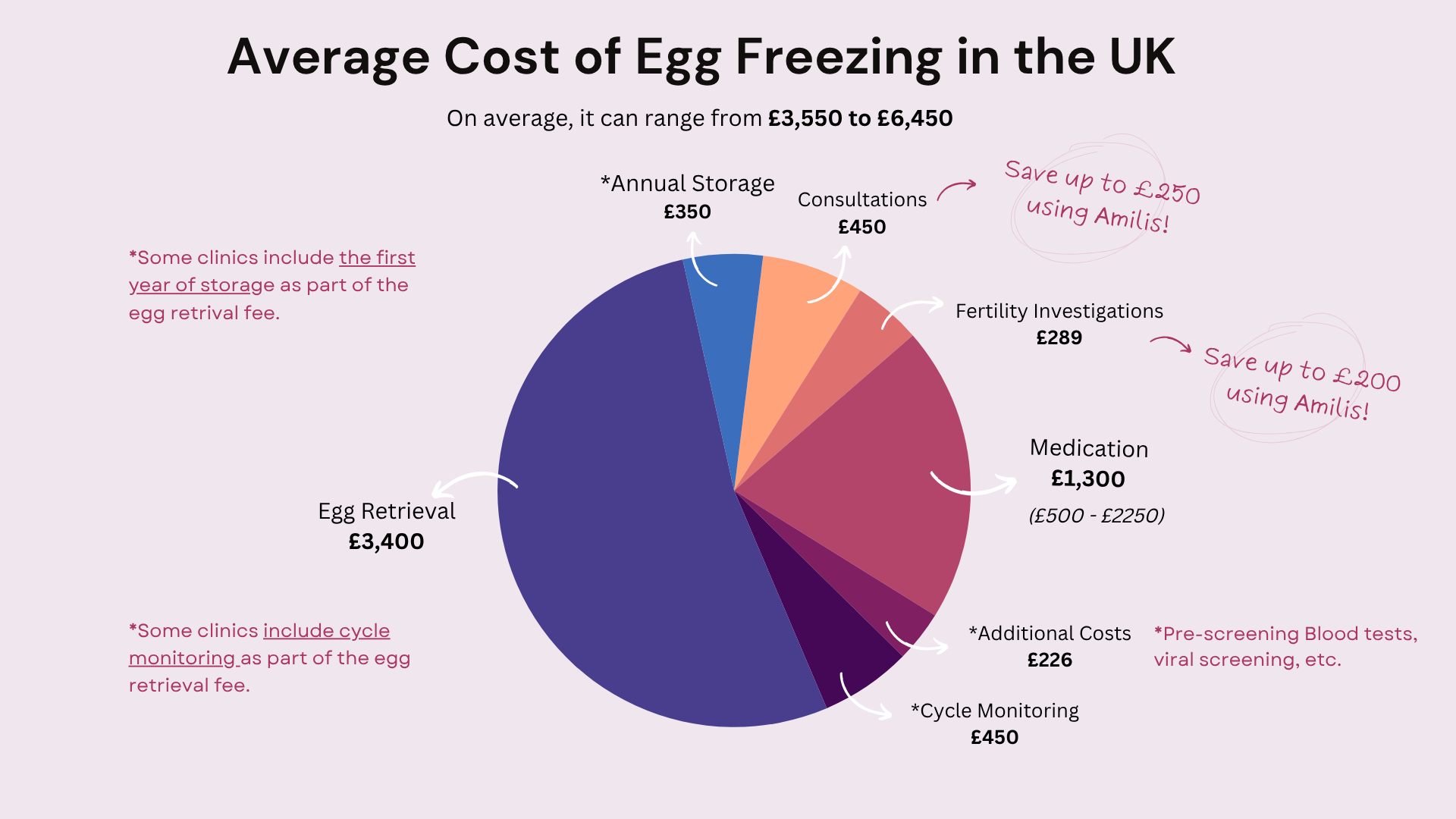
Credit: www.amilis.co.uk
Procedure Charges
Understanding the procedure charges is crucial when considering egg freezing. These costs can vary widely depending on the clinic, location, and specific treatments involved. Breaking down the charges helps you plan financially and avoid surprises along the way.
Ovarian Stimulation
Ovarian stimulation is the first major step and often the most expensive part of the process. It involves daily hormone injections over 10 to 14 days to encourage your ovaries to produce multiple eggs. The cost for these medications alone can range from $2,000 to $5,000.
Besides medication, monitoring during this phase requires multiple ultrasounds and blood tests. Each visit adds to the overall price, typically $500 to $1,000 for the entire monitoring process. Clinics may offer package deals covering both medication and monitoring, so ask about bundled costs.
Egg Retrieval Process
The egg retrieval procedure itself is a critical step where eggs are collected from your ovaries. This outpatient surgery usually requires sedation and takes about 20 to 30 minutes. Expect to pay between $3,000 and $5,000 for this part of the process.
Additional costs might include anesthesia fees, facility charges, and the initial consultation. Some clinics include these in a total package price, while others bill separately. Have you checked if your clinic provides a clear breakdown of these fees?
Knowing these specific charges upfront can help you budget wisely and compare options effectively. What questions will you ask your clinic to ensure you understand all costs before starting?
Storage Fees
Storage fees are a key part of the total cost to freeze your eggs. These fees cover keeping your eggs safe and preserved in a clinic’s facility. The prices vary based on how long you plan to store your eggs. Understanding these fees helps you plan your budget better.
Short-term Vs Long-term Storage
Short-term storage usually means keeping eggs for less than a year. Clinics often offer lower rates for this period. Long-term storage applies when eggs stay frozen for several years. Costs may increase or remain steady depending on the clinic’s policy. Some clinics offer discounts for long-term storage contracts.
Annual Storage Costs
Most clinics charge an annual fee to store frozen eggs. This fee covers maintenance, monitoring, and storage equipment. Annual costs typically range from $500 to $1,000. Some clinics require payment upfront for multiple years. Others allow yearly payments to keep the service active.

Credit: newlifefertility.com
Additional Costs To Consider
Freezing your eggs involves more than just the initial procedure fee. There are several additional costs that can impact your overall budget. Understanding these can help you plan better and avoid surprises later.
Anesthesia Fees
You might not realize it, but anesthesia is a separate charge from the egg retrieval procedure. Depending on the clinic and the type of anesthesia used, fees can range from a few hundred to over a thousand dollars. Ask your clinic upfront about anesthesia costs to factor it into your budget.
Lab Testing And Monitoring
Before and during the egg freezing process, you’ll undergo multiple blood tests and ultrasounds. These tests monitor your hormone levels and follicle growth, ensuring your safety and success. These visits can add up, so check if your package includes them or if they come as extra charges.
Future Ivf Costs
Egg freezing is just the first step. When you decide to use your frozen eggs, you’ll face IVF costs, which can be significant. It’s important to think ahead: how much will fertilization, embryo transfer, and storage fees add to your total expense?
Insurance And Financing Options
Freezing eggs can be costly. Many women want to know about insurance and financing options. These options can lower the upfront cost. Understanding them helps plan your budget better.
Coverage Possibilities
Insurance coverage for egg freezing varies widely. Some plans cover medical reasons only, like cancer treatment. Elective egg freezing often lacks coverage. Check your policy carefully. Some employers offer fertility benefits. These may include partial or full coverage. Always ask your insurance provider for details.
Payment Plans And Loans
Many clinics offer payment plans to spread out costs. These plans make payments manageable over months. Interest rates may apply, so read terms closely.
Specialized loans for fertility treatments are available. These loans cover egg freezing and related expenses. Loan approval depends on credit and income. Compare loan options to find the best fit.
Geographical Cost Variations
Egg freezing costs can vary widely depending on where you live. These geographical cost variations often surprise many who assume prices are fairly uniform. Understanding these differences can help you plan better and even save money on your fertility journey.
Prices By Region
Egg freezing prices differ significantly across regions within the same country and especially between countries. In the United States, for example, coastal cities like New York and San Francisco tend to have higher fees compared to midwestern cities like Kansas City or Cleveland.
Internationally, costs can be even more varied. Countries like Spain and the Czech Republic offer egg freezing at lower prices, sometimes half of what you might pay in the U.S. or the UK. This makes medical tourism an attractive option for some, but you should consider travel and accommodation expenses as well.
- In the U.S., expect to pay between $6,000 and $15,000 per cycle depending on location.
- In Europe, prices range from €3,000 to €7,000, with Eastern Europe generally cheaper.
- In Asia, countries like India offer competitive rates, sometimes under $4,000.
Clinic Reputation And Pricing
Your choice of clinic also impacts the cost. Clinics with higher success rates and advanced technology often charge more. But paying extra doesn’t always guarantee better outcomes.
Some clinics bundle services like medication, storage, and future thawing fees into one package. Others list them separately, making direct price comparisons tricky. Always ask for a detailed breakdown of what’s included.
Would you rather pay more upfront for comprehensive care or choose a more affordable clinic and manage additional costs yourself? Your personal priorities and financial situation play a big role in this decision.
Ways To Reduce Expenses
Freezing eggs can be costly, but there are ways to lower the price. Smart planning helps manage expenses and makes the process more affordable. Understanding available options can ease financial stress and open doors to savings.
Discount Programs
Many fertility clinics offer discount programs to help with costs. These programs may include package deals for multiple egg freezing cycles. Some clinics provide seasonal discounts or special offers for first-time patients.
Ask clinics about payment plans that spread out costs over time. Group discounts can also reduce expenses if you join with friends or family. Research local clinics to find the best deals in your area.
Employer Benefits
Some employers cover egg freezing as part of their health benefits. Check your company’s health plan to see if it includes fertility services. Employer coverage can significantly reduce out-of-pocket expenses.
Talk to your HR department about fertility benefits and eligibility. Some companies partner with fertility clinics for discounted rates. This benefit is more common in larger companies and tech industries.

Credit: newlifefertility.com
Frequently Asked Questions
How Much Does Egg Freezing Typically Cost?
Egg freezing usually costs between $6,000 and $15,000 per cycle. This includes medication, retrieval, and initial freezing fees. Storage fees are extra and charged annually, often around $500 to $1,000.
Are Medication Costs Included In Egg Freezing Price?
Medication costs are often separate and can add $2,000 to $5,000. These drugs stimulate egg production for retrieval. Always confirm if medication is included when budgeting.
What Are The Annual Storage Fees For Frozen Eggs?
Annual storage fees range from $500 to $1,000. These fees cover the preservation and monitoring of your frozen eggs. Costs vary by clinic and location.
Does Insurance Cover Egg Freezing Costs?
Most insurance plans do not cover egg freezing since it’s considered elective. Some employers offer fertility benefits that may help. Check your policy or employer benefits for coverage details.
Conclusion
Freezing your eggs involves several costs to consider. These include initial testing, medication, and storage fees. Prices vary depending on location and clinic. Planning your budget helps avoid surprises later. Knowing the costs helps you make informed choices. Take time to research and ask questions.
Egg freezing is an important step for many women. Understanding expenses lets you focus on your future.