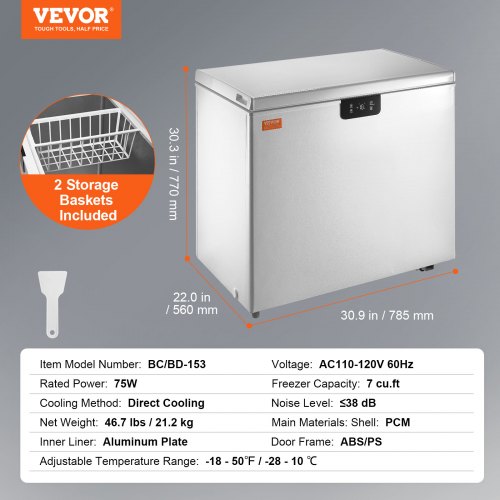
Have you ever wondered how much wattage your deep freezer uses? It’s not just an idle curiosity.
Understanding the energy consumption of your deep freezer could save you money and help you make smarter choices about your home’s energy use. You might think that a deep freezer, often running round-the-clock, must be guzzling electricity. But is that really the case?
Knowing the wattage can help you better manage your electricity bill and even extend the lifespan of your appliance. Dive into this article to uncover the surprising facts about your deep freezer’s energy use and find out how you can optimize it to suit your lifestyle and wallet. You won’t want to miss these insights that could transform the way you view this kitchen staple.

Credit: www.vevor.com
Deep Freezer Power Basics
Understanding the power consumption of a deep freezer is key to managing electricity costs. Deep freezers use electricity to keep food frozen solid for long periods. Their power use depends on several factors including size, model, and usage habits. Knowing the basics helps you estimate your energy bills and choose the right freezer for your needs.
Typical Wattage Range
Most deep freezers use between 150 and 400 watts when running. Smaller models often consume around 150 to 200 watts. Larger or chest freezers can use up to 400 watts or more. The freezer does not run constantly, so average power use is lower over time. Many models cycle on and off to maintain temperature, saving energy.
Factors Affecting Power Usage
- Size:Larger freezers need more power to cool the bigger space.
- Insulation:Better insulation reduces power needed to keep cold air inside.
- Temperature setting:Lower temperatures increase energy use.
- Age and condition:Older freezers often use more power than newer models.
- Location:Placing the freezer in a warm room can raise power use.
- Frequency of opening:Opening the door often lets cold air out and increases power use.

Credit: naturesgenerator.com
Energy Consumption Patterns
Understanding the energy consumption patterns of your deep freezer can help you manage your electricity bills better. These patterns reveal how much power the appliance uses while running and when it first starts up. Knowing these details allows you to predict daily and monthly energy costs, helping you decide if your freezer is energy efficient or if it needs an upgrade.
Running Vs Startup Watts
Deep freezers typically use less power once they are running steadily compared to the surge they draw at startup. The startup wattage can be two to three times higher than the running wattage because the compressor works harder to bring the temperature down quickly.
For example, a freezer might run at 150 watts normally but spike up to 450 watts when the compressor kicks in. This spike lasts only a few seconds, but it’s important to factor it into your overall energy use if you’re monitoring your consumption closely.
Have you ever noticed your freezer’s compressor turning on and off frequently? This cycling impacts total energy use more than the startup spike alone. Understanding both values helps you gauge the true power draw over time.
Daily And Monthly Usage Estimates
To estimate daily energy use, multiply the running watts by the number of hours your freezer runs each day. Deep freezers often run between 8 to 12 hours daily, depending on usage, temperature settings, and how full they are.
Here’s a simple table to give you a clearer picture:
| Running Watts | Daily Running Hours | Daily Energy Use (Wh) | Monthly Energy Use (kWh) |
|---|---|---|---|
| 150 W | 10 hours | 1500 Wh (1.5 kWh) | 45 kWh |
| 200 W | 8 hours | 1600 Wh (1.6 kWh) | 48 kWh |
Knowing these estimates can guide you in budgeting your electricity costs. If your monthly consumption seems high, you might want to check your freezer’s seal or temperature settings.
Types Of Deep Freezers
Deep freezers come in different types, each with unique features and energy uses. Knowing these types helps understand their wattage and efficiency. The main types include chest freezers, upright freezers, and Energy Star models. These variations affect how much power they consume daily.
Chest Freezers
Chest freezers open from the top and usually hold more items. They keep cold air inside better, so they often use less energy. Their wattage can range from 150 to 400 watts depending on size. They are ideal for storing large or bulky food items for long periods.
Upright Freezers
Upright freezers resemble refrigerators and open from the front. They offer easier access with shelves and compartments. Their wattage is generally higher, between 200 and 500 watts. This is due to frequent door openings and less cold air retention compared to chest freezers.
Energy Star Models
Energy Star freezers meet strict energy efficiency standards. They use advanced insulation and compressors to reduce power consumption. These models can save 10 to 25 percent more energy than standard ones. Their wattage varies but always aims to minimize electricity costs and environmental impact.
Calculating Energy Costs
Calculating energy costs helps you understand how much your deep freezer affects your electricity bill. It involves knowing the power your freezer uses and how long it runs. This knowledge allows you to estimate monthly expenses and manage your budget better.
Converting Watts To Kilowatt Hours
Deep freezers show power in watts (W). Electricity companies bill in kilowatt hours (kWh). One kilowatt equals 1,000 watts. To convert watts to kilowatt hours, use this simple formula:
- Power in watts ÷ 1,000 = Power in kilowatts
- Power in kilowatts × Hours of use = Energy consumed in kWh
For example, a 150-watt freezer running for 24 hours uses:
| Calculation | Result |
|---|---|
| 150 W ÷ 1,000 | 0.15 kW |
| 0.15 kW × 24 hours | 3.6 kWh |
This means the freezer uses 3.6 kWh in one day.
Estimating Monthly Expenses
To find monthly costs, multiply daily energy use by 30 days. Then multiply by your electricity rate.
- Daily kWh × 30 = Monthly kWh
- Monthly kWh × Cost per kWh = Monthly cost
If electricity costs $0.12 per kWh, the example freezer costs:
| Calculation | Result |
|---|---|
| 3.6 kWh × 30 days | 108 kWh |
| 108 kWh × $0.12 | $12.96 |
The estimated monthly cost is $12.96. This helps plan your budget and control energy use.
Tips To Reduce Energy Use
Reducing the energy use of your deep freezer doesn’t just lower your electricity bill—it also helps the environment. Small adjustments in how you operate and care for your freezer can make a big difference. Let’s look at some practical tips you can start using today to keep your deep freezer efficient without sacrificing performance.
Optimal Temperature Settings
Setting your deep freezer to the right temperature is key. Most freezers work best between -10°F and 0°F (-23°C to -18°C). Colder than that wastes energy without improving food safety.
Have you checked your freezer’s temperature lately? A simple adjustment can cut down power use significantly. Use an appliance thermometer to get an accurate reading and avoid guessing.
Proper Maintenance Practices
Keeping your freezer clean and well-maintained helps it run smoothly. Dust off the coils every few months to prevent overheating. Dirty coils force the compressor to work harder, using more electricity.
Also, defrost your freezer when ice buildup exceeds a quarter-inch. Thick ice layers reduce cooling efficiency, making your freezer consume extra energy.
Placement And Insulation
Where you put your deep freezer matters. Avoid placing it near heat sources like ovens or direct sunlight, which make it work harder. Instead, choose a cool, shaded spot with good airflow.
Check the door seals regularly. Damaged or loose seals let cold air escape, causing your freezer to run longer. You can test the seal by closing the door on a piece of paper—if it slips out easily, it’s time to replace the gasket.

Credit: www.amazon.com
Comparing Deep Freezers And Refrigerators
Choosing between a deep freezer and a refrigerator often boils down to your specific storage needs and energy concerns. Both appliances serve to keep food fresh, but they operate differently and consume power in unique ways. Understanding these differences can help you make smarter decisions about your energy use and household budget.
Energy Efficiency Differences
Deep freezers generally use less electricity than refrigerators. This is because they maintain a consistent, lower temperature and open less frequently. Your refrigerator door opens multiple times a day, causing temperature fluctuations that demand more energy to stabilize.
Deep freezers are designed with thicker insulation, which helps keep the cold air in and the warm air out. This design reduces the workload on the compressor, further cutting down electricity use. You might notice your electricity bill drop if you switch to a deep freezer for long-term storage.
Usage Scenarios
Think about how you use your appliances. If you need quick access to a variety of fresh and frozen foods daily, a refrigerator is more practical. However, if you buy in bulk or preserve seasonal foods, a deep freezer excels.
For example, during holiday seasons, I stock up on meats and vegetables in my deep freezer, which helps avoid multiple trips to the store. This approach not only saves time but also reduces energy use because I open the freezer less often compared to a fridge.
Which appliance fits your lifestyle better? Consider how often you open the door, the types of food you store, and how long you keep them. These factors will guide you toward a more energy-efficient and cost-effective choice.
Frequently Asked Questions
How Many Watts Does A Typical Deep Freezer Use?
A typical deep freezer uses between 150 to 400 watts. Usage depends on size, model, and efficiency. Larger freezers consume more power, while energy-efficient models use less.
What Affects A Deep Freezer’s Power Consumption?
Power consumption depends on freezer size, insulation quality, temperature settings, and frequency of door openings. Older models usually consume more energy than newer ones.
Can I Reduce My Deep Freezer’s Electricity Usage?
Yes, you can reduce usage by keeping it full, maintaining proper temperature, sealing doors tightly, and placing it in a cool area away from heat sources.
Does Freezer Wattage Impact My Electricity Bill Significantly?
Yes, a deep freezer running constantly adds to your electricity bill. Efficient models and mindful usage help minimize costs without compromising storage.
Conclusion
Knowing the wattage of your deep freezer helps control energy use. It also helps you plan your electricity budget better. Different models use different amounts of power. Choosing the right freezer means balancing size and energy needs. Running it efficiently saves money and reduces waste.
Small changes in use can lower electricity bills. Keep your freezer clean and sealed tight. This keeps it working well without extra power. Understanding wattage makes your home energy smart. Save energy, save money, and keep food fresh longer.