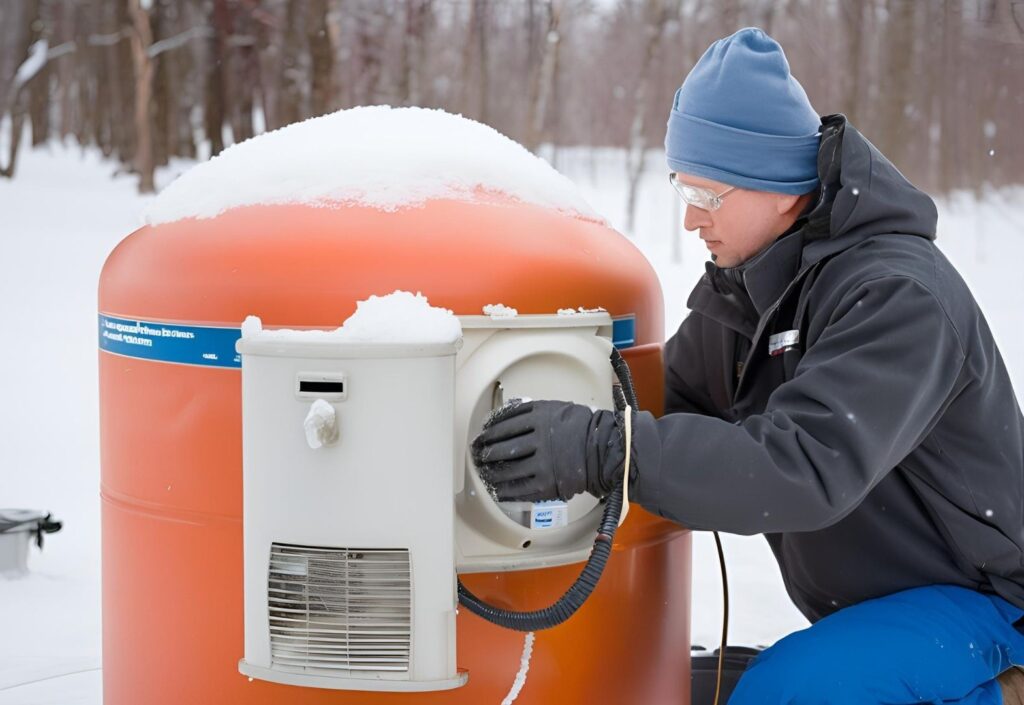
Have you ever wondered if your propane tank can freeze or even explode? It’s a question that might cross your mind, especially during cold weather.
Understanding what really happens to propane tanks in freezing temperatures is crucial for your safety and peace of mind. You’ll discover the facts behind propane tank freezing and the truth about explosion risks. By the end, you’ll know exactly how to handle your propane tank safely, no matter the weather.
Keep reading—your safety depends on it.
How Propane Tanks Work
Understanding how propane tanks work helps clear up safety concerns. These tanks store propane as a liquid under pressure. The liquid turns into gas when released, which powers many appliances and tools. The design keeps propane stable and safe for use in different conditions.
Propane Properties
Propane is a colorless gas at room temperature. It turns into liquid when under pressure. This liquid state allows easy storage in tanks. Propane boils at -44°F (-42°C), so it vaporizes quickly at normal temperatures. It expands when heated, increasing pressure inside the tank. Propane is heavier than air, so leaks can collect near the ground.
Tank Design And Safety Features
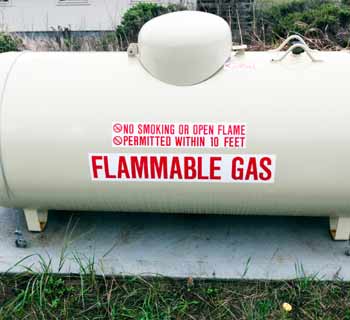
Propane tanks are made from strong steel or aluminum. They have thick walls to handle high pressure safely. Tanks include safety valves that release gas if pressure gets too high. A pressure relief valve prevents explosions by venting excess gas. Tanks are also painted to reflect sunlight and reduce heating. These features protect the tank from damage and keep users safe.
Credit: www.pritzkerlaw.com
Freezing Point Of Propane
Propane is a common fuel stored in tanks for heating, cooking, and grilling. Understanding its freezing point is key to safe use. Propane does not freeze in the typical sense but can become very cold under pressure.
The freezing point of propane is around -306°F (-188°C). This temperature is far below normal weather conditions. So, propane in tanks rarely freezes. However, very low temperatures can affect the tank and fuel performance.
Temperature Limits
Propane tanks work best above -44°F (-42°C). Below this, propane pressure drops. Low pressure can cause the tank to feel cold and reduce gas flow.
- Tanks can become sluggish in extreme cold.
- Pressure drops make it hard to use propane appliances.
- Proper insulation helps maintain tank temperature.
Signs Of Tank Freezing
Watch for frost or ice on the tank surface. Frost means the tank is very cold and pressure is low. You may notice slow gas flow or appliances not working well.
- White frost on the tank
- Weak flame or low heat output
- Hissing or unusual sounds from the tank
Keep tanks away from direct snow and ice buildup. Store propane tanks in shaded, ventilated areas during cold months.
Can Propane Tanks Actually Freeze?
Propane tanks do not freeze like water but can get very cold in low temperatures. Pressure inside the tank drops, which may cause fuel flow issues but rarely leads to explosions. Proper tank maintenance and storage reduce any safety risks.
Propane tanks are essential for heating, cooking, and more. Many wonder if they can freeze. It’s a common concern, especially in areas with harsh winters. Understanding this helps ensure safety and efficiency.Realistic Conditions
Propane itself doesn’t freeze under normal conditions. Its freezing point is -306°F (-188°C). This is much colder than any natural weather conditions on Earth. Tanks are designed to withstand low temperatures. The main issue in cold weather is not the freezing of propane but reduced pressure. This affects gas flow.Effects On Tank And Gas Flow
In cold weather, propane molecules move slower. This reduces the pressure inside the tank. Lower pressure affects gas flow to appliances. Devices may not receive enough propane to function properly. It’s crucial to monitor tank pressure during cold spells. Keeping tanks at least 30% full helps maintain pressure. Proper insulation of the tank area can also help. Regular checks ensure smooth operation and safety.Explosion Risks With Propane Tanks
Propane tanks can pose serious explosion risks if not handled correctly. Understanding these risks helps prevent accidents and keeps people safe. Explosions usually happen due to pressure issues or physical damage to the tank. Knowing what causes these problems can help avoid dangerous situations.
Common Causes Of Explosions
- Leaks from damaged or faulty valves
- Exposure to extreme heat or fire
- Improper storage or handling
- Corrosion or physical damage to the tank
- Overfilling the tank beyond its capacity
Leaks allow propane gas to escape and mix with air, creating an explosive mixture. Heat causes the propane inside the tank to expand, increasing pressure. Physical damage can weaken the tank, making it prone to rupture under pressure.
Pressure Build-up And Relief Valves
Propane tanks have relief valves to control pressure. These valves open to release gas when pressure gets too high. This prevents dangerous pressure build-up inside the tank.
Relief valves must work properly to keep the tank safe. Blocked or damaged valves can cause pressure to rise dangerously. Regular inspection and maintenance ensure valves function correctly.
Extreme cold does not cause propane tanks to explode. However, rapid temperature changes can affect pressure levels. Proper storage away from heat and direct sunlight reduces explosion risks.
Myths About Freezing And Explosions
Propane tanks often spark curiosity and concern, especially when it comes to safety in cold weather. Many people worry that these tanks can freeze or even explode under certain conditions. Let’s clear up some common myths and help you understand what really happens with propane tanks in freezing temperatures.
Common Misconceptions
One widespread myth is that propane tanks can freeze solid in the winter. Actually, propane has a very low freezing point—around -306°F (-188°C)—which is far colder than any natural weather on Earth. So, your tank won’t freeze like water does.
Another fear is that propane tanks can explode if exposed to cold weather. This is not true either. Propane tanks are built with strong steel and safety valves to handle pressure changes safely, regardless of temperature.
Some people believe that condensation or frost on tanks means the propane is freezing inside. In reality, this frost is just moisture from the air and not a sign of danger. It’s a normal reaction when warm, humid air touches the cold tank surface.
Separating Fact From Fiction
Understanding how propane works can ease your worries. Propane is stored as a liquid under pressure, and it vaporizes when released. Cold weather can slow down this vaporization, which might reduce fuel flow, but it doesn’t cause freezing or explosions.
Think about the safety features built into propane tanks—pressure relief valves release excess pressure to prevent accidents. These valves are tested to meet strict safety standards. Knowing this, you can see why explosions are extremely rare and usually caused by improper handling, not weather.
Have you ever noticed your propane grill struggling to light on a chilly day? That’s not propane freezing, but the gas vaporizing slower due to the cold. Warming the tank slightly or moving it to a warmer spot often solves the problem quickly.
Remember, regular maintenance and proper storage are your best defense against any propane issues. So next time you hear a scary story about freezing or exploding tanks, ask yourself—does it really match what you know about propane’s properties and safety design?

Credit: centralpennpropane.com
Safe Handling And Storage Tips
Handling and storing propane tanks safely protects you and your property. Proper care reduces risks of freezing and explosions. Follow these tips for secure use and storage.
Preventing Freezing
Keep propane tanks in a dry, well-ventilated area. Cold weather can cause tanks to get very cold. This may slow gas flow but rarely causes freezing inside the tank. Avoid placing tanks directly on snow or ice.
- Use insulated covers made for propane tanks.
- Store tanks above ground on pallets or stands.
- Bring tanks indoors only if the area is well-ventilated.
- Check valves and connections regularly for frost or ice buildup.
Avoiding Explosion Hazards
Store propane tanks away from heat sources and open flames. Never store tanks inside living spaces or basements. Keep tanks upright to prevent leaks.
- Check tanks and hoses for damage before use.
- Use tanks only with compatible appliances and regulators.
- Turn off valves when tanks are not in use.
- Keep tanks in a shaded area to avoid overheating.
- Do not store tanks near electrical equipment or sparks.
Emergency Response For Propane Issues
Emergency response is crucial for propane-related problems. Knowing how to act fast can protect lives and property. Propane leaks or damage can cause fires or explosions. Immediate action reduces risks and prevents accidents.
Detecting Leaks And Damage
Recognize signs of a propane leak early. Smell a strong, sweet odor near the tank or appliance. Listen for a hissing sound around connections or valves. Check for frost or ice buildup on the tank surface. Look for damaged hoses, rust, or dents on the tank. Stay alert to these warning signs to act quickly.
Steps To Take In An Emergency
- Leave the area immediately if you suspect a leak.
- Avoid using any electrical devices or open flames.
- Do not smoke near the propane tank or leak site.
- Call emergency services or the propane supplier from a safe distance.
- Warn others nearby to stay clear of the area.
- Do not try to repair the tank or stop the leak yourself.
- Wait for professionals to handle the situation safely.

Credit: www.reddit.com
Frequently Asked Questions
Can Propane Tanks Freeze In Cold Weather?
Propane tanks do not freeze because propane has a low freezing point of -306°F. However, extreme cold can reduce pressure inside the tank, affecting performance but not freezing the propane itself.
Is It Possible For Propane Tanks To Explode?
Yes, propane tanks can explode if they are damaged, overfilled, or exposed to high heat. Proper handling and storage reduce the risk of explosions significantly.
How Does Cold Weather Affect Propane Tank Pressure?
Cold weather lowers propane vapor pressure inside the tank, which can reduce gas flow. Tanks may need warming or refilling to maintain efficient fuel delivery.
Can Frozen Valves Cause Propane Leaks Or Explosions?
Frozen valves are unlikely but possible in extreme cold. They may cause leaks, increasing explosion risk. Regular maintenance prevents valve freezing and ensures safety.
Conclusion
Propane tanks rarely freeze in cold weather because propane stays liquid under pressure. Extreme cold can reduce tank pressure, but freezing is unusual. Tanks can explode only if damaged or mishandled, not just from cold. Always store tanks upright and away from heat sources.
Check for leaks and damage regularly. Proper care keeps propane tanks safe and reliable. Understanding how propane works helps avoid accidents. Stay cautious but don’t fear freezing or explosions. Safety is simple with the right knowledge and habits.