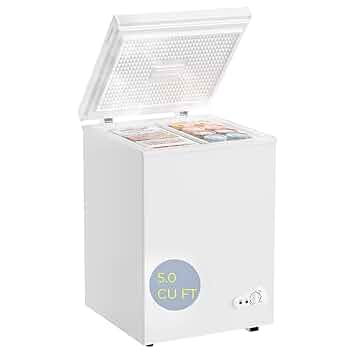
Are you wondering how many watts your deep freezer uses? Knowing this can help you save money on your electricity bill and choose the right model for your home.
Whether you want to run your freezer efficiently or plan for backup power, understanding its power consumption is key. You’ll discover everything you need to know about deep freezer watts, so you can make smart decisions and keep your food frozen without surprises.
Keep reading to find out how to balance performance and energy use perfectly.
Deep Freezer Power Basics
Understanding the power consumption of your deep freezer is key to managing your energy bills and ensuring efficient use. Knowing the wattage helps you choose the right model and prepare your home electrical setup. Let’s break down the basics of deep freezer power usage so you can make smarter decisions.
Typical Wattage Range
Most deep freezers consume between 100 and 400 watts when running. Smaller, compact models tend to be on the lower end, around 100-150 watts, while larger chest freezers or upright models can use up to 400 watts or more.
Keep in mind, these numbers reflect the running wattage, not the startup surge, which can be 2 to 3 times higher. This means your freezer may briefly pull 300-1200 watts when the compressor kicks in.
Factors Affecting Power Use
- Size and Capacity:Bigger freezers naturally use more energy to maintain low temperatures.
- Temperature Setting:Lower temperature settings increase power consumption as the compressor works harder.
- Usage Patterns:Frequent door openings let warm air in, causing the freezer to run longer.
- Ambient Temperature:Placing your freezer in a hot garage or room forces it to use more power.
- Age and Maintenance:Older models or poorly maintained units with dirty coils can waste electricity.
Have you noticed your freezer running constantly on hot days? That’s a sign ambient temperature plays a big role in power use. Simple steps like keeping the freezer away from heat sources and sealing the door tightly can save you watts and dollars.

Credit: www.amazon.com
Types Of Deep Freezers
Deep freezers are essential in many homes. They help store food for long periods. Knowing the types of deep freezers can guide your choice. Each type has unique features and benefits.
Chest Freezers
Chest freezers are large and box-like. They open from the top. They usually have a larger capacity than upright freezers. This makes them ideal for storing bulk items. Their design helps retain cold air when opened. This can save energy and reduce running costs. Many models offer adjustable storage baskets. These help organize smaller items neatly.
Upright Freezers
Upright freezers resemble regular refrigerators. They open from the front and have shelves. This makes accessing items easier and more convenient. They take up less floor space. This is great for smaller areas. Some models come with automatic defrost. This feature reduces maintenance time. Though they may use more energy, their convenience is unmatched.
Energy Consumption Patterns
Understanding energy consumption patterns helps manage your electricity bills better. Deep freezers use different amounts of power at different times. Recognizing these patterns can help you save energy and money.
Startup Vs Running Watts
Deep freezers require more power to start than to keep running. The startup wattage can be two to three times higher than the running wattage. This spike happens when the compressor kicks on to cool the freezer.
Running watts indicate the steady power used to maintain the freezer’s temperature. Knowing both values helps choose the right power source or generator. It also gives a clearer picture of the actual energy demand.
Daily And Monthly Usage
Daily energy use depends on the freezer’s size and how often the door opens. A typical deep freezer uses between 100 and 250 watts while running. The daily energy consumption is the running watts multiplied by the hours of operation.
Monthly usage adds up daily consumption over 30 days. For example, a freezer running 24 hours daily at 150 watts uses about 108 kWh per month. Tracking this helps estimate your electricity cost more accurately.
Energy Efficiency Ratings
Energy efficiency ratings are key when choosing a deep freezer that won’t skyrocket your electricity bill. They tell you how much power the freezer uses relative to its size and performance. Understanding these ratings can save you money and reduce your environmental impact.
Understanding Energy Star Labels
The Energy Star label is a reliable indicator of energy efficiency. Products with this label meet strict energy-saving guidelines set by the U.S. Environmental Protection Agency. Choosing a deep freezer with an Energy Star label means it uses less electricity compared to standard models.
Not all Energy Star freezers consume the same power, though. Look closely at the specific energy consumption listed on the label. This helps you compare models beyond just the badge itself and find the best fit for your needs.
Comparing Models For Efficiency
When comparing deep freezers, focus on the wattage and annual energy use. A freezer rated at 150 watts might seem efficient, but if it runs continuously, your bill could still be high. Instead, check the estimated yearly kilowatt-hours (kWh) to understand the real cost.
| Model | Wattage | Annual Energy Use (kWh) | Energy Star Certified |
|---|---|---|---|
| Freezer A | 150 W | 300 kWh | Yes |
| Freezer B | 180 W | 350 kWh | No |
| Freezer C | 140 W | 280 kWh | Yes |
Ask yourself: How long will your freezer run each day? Could a slightly higher upfront cost for an Energy Star model save you more in the long run? Your choice should balance power use, size, and how often you access the freezer.
Calculating Electricity Costs
Understanding how much electricity your deep freezer consumes can save you from unexpected high bills. Calculating the electricity costs is easier than you might think, and it empowers you to manage your energy use better. Let’s break down the process so you can estimate what your freezer might be costing you each month.
Estimating Monthly Expenses
Start by finding the wattage of your deep freezer—this is usually on a label inside or at the back of the unit. Next, consider how many hours per day it runs. Deep freezers cycle on and off, so they don’t run constantly; a typical estimate is 8 to 12 hours daily.
Use this simple formula to estimate monthly energy consumption:
| Step | Description | Example |
|---|---|---|
| 1 | Find wattage (W) | 150 W |
| 2 | Estimate hours used daily (h) | 10 hours |
| 3 | Calculate daily consumption (W × h) | 150 W × 10 h = 1500 Wh (or 1.5 kWh) |
| 4 | Calculate monthly consumption (daily × 30 days) | 1.5 kWh × 30 = 45 kWh |
Does this number seem high to you? It might be less than you expect, especially if your freezer is energy efficient. If you want to be exact, use a power meter to track real-time consumption.
Using Wattage To Calculate Bills
Once you know your monthly kWh usage, multiply it by the cost of electricity per kWh charged by your utility provider. This rate varies depending on where you live and your plan. For instance, if your rate is $0.12 per kWh, multiply 45 kWh by 0.12 to get $5.40.
Here’s how you calculate the monthly cost:
- Monthly kWh consumption× cost per kWh= Monthly cost
- 45 kWh × $0.12 = $5.40
Think about your freezer’s age and insulation quality. Older models often use more power, increasing your bill. Are you curious how much you could save by upgrading to a newer model?
Tips To Reduce Power Usage
Reducing the power usage of a deep freezer saves money and helps the environment. Small changes in how you use and maintain the freezer can lower electricity consumption. Follow these practical tips to make your freezer run more efficiently without losing performance.
Optimal Placement And Temperature
Place the freezer in a cool, dry area away from sunlight and heat sources. Avoid spots near ovens, heaters, or direct sunlight. Keep the freezer away from walls to allow air circulation.
Set the temperature to the recommended level, usually around -18°C (0°F). Colder settings use more power without improving food preservation much. Check the temperature regularly with a thermometer to keep it steady.
Maintenance Practices
Clean the freezer coils every six months to remove dust and dirt. Dirty coils make the compressor work harder, increasing power use. Defrost the freezer when ice buildup exceeds 0.5 cm (0.2 inches). Thick ice layers reduce efficiency.
Check door seals for cracks or gaps. Replace damaged seals to stop cold air from escaping. Avoid opening the freezer door often or leaving it open for long. Plan what you need before opening to save energy.
Upgrading To Energy-efficient Models
Older freezers consume more electricity than new models. Look for freezers with an Energy Star label or good energy ratings. These models use better insulation and compressors to save power.
Consider buying a deep freezer that matches your storage needs. A smaller freezer uses less energy if you do not need a large one. Investing in an energy-efficient model reduces bills and environmental impact over time.
Alternative Power Sources
Choosing the right power source for a deep freezer can save money and ensure steady operation. Alternative power sources offer flexible ways to run your freezer without relying solely on the electrical grid. These options help maintain food safety during power outages or in remote areas.
Solar Power Compatibility
Solar panels can power a deep freezer efficiently. The key is to match the freezer’s wattage with the solar system output. Most deep freezers use between 100 and 400 watts, so a solar setup must handle this load continuously.
Solar power works best with a battery system to store energy. This storage keeps the freezer running at night or on cloudy days. Proper wiring and an inverter are necessary to convert solar energy into usable electricity for the freezer.
- Choose solar panels rated for at least 20% more than the freezer’s wattage.
- Use a deep cycle battery for consistent energy supply.
- Install a charge controller to protect the battery from overcharging.
Battery Backup Options
Batteries provide backup power during outages or off-grid use. Lead-acid and lithium-ion batteries are common choices. Lithium-ion batteries last longer and weigh less but cost more upfront.
Battery capacity must cover the freezer’s wattage and expected runtime. For example, a 200-watt freezer running 10 hours needs a 2000-watt-hour battery. Include extra capacity for safety and efficiency.
- Use an inverter to convert battery power to AC for the freezer.
- Regularly check battery health and charge levels.
- Consider portable battery packs for easy setup and mobility.
Credit: www.homedepot.com

Credit: www.amazon.com
Frequently Asked Questions
How Many Watts Does A Deep Freezer Use?
A typical deep freezer uses between 100 to 400 watts. Usage depends on the size, brand, and efficiency. Larger models consume more power. Energy-efficient freezers use fewer watts, saving electricity costs.
What Affects The Wattage Of A Deep Freezer?
Wattage depends on freezer size, insulation, compressor type, and temperature settings. Frequent door openings increase power consumption. Energy Star-rated models usually use less wattage. Proper maintenance helps reduce energy use.
How To Calculate Deep Freezer Electricity Consumption?
Multiply the freezer’s wattage by hours of use daily. Divide by 1,000 to get kilowatt-hours (kWh). Multiply kWh by your electricity rate to estimate cost. This method helps monitor and manage power usage effectively.
Are Energy-efficient Deep Freezers Worth It?
Yes, energy-efficient freezers reduce electricity bills and environmental impact. They use advanced technology for lower power consumption. Initial costs may be higher but savings accumulate over time. Look for Energy Star certification when buying.
Conclusion
Choosing the right wattage for your deep freezer saves money and energy. Most freezers use between 100 to 400 watts, depending on size. Bigger models need more power but offer more storage. Consider how often you open the freezer. Frequent use can increase electricity consumption.
Check the energy label before buying to compare efficiency. Proper maintenance keeps your freezer running well and lowers power use. Think about your needs and space to find the best fit. Understanding watts helps you make a smart, cost-effective choice.