Thinking about storing half a cow in your freezer? You might be wondering just how big a freezer you’ll need to keep all that meat fresh.
Choosing the right size freezer isn’t just about space—it’s about making sure your meat stays safe, organized, and easy to access. You’ll discover exactly what freezer size fits half a cow, tips to maximize storage, and how to avoid common mistakes.
Keep reading to make the best decision for your freezer and your meat!

Credit: www.reddit.com
Estimating Meat Yield From Half A Cow
Estimating the meat yield from half a cow is crucial. It helps in planning freezer space and budgeting. A half cow provides a substantial amount of meat. But the exact quantity can vary. Understanding these variations is key for effective storage planning.
Factors Affecting Meat Quantity
Several factors influence how much meat you get. The cow’s breed plays a significant role. Some breeds offer more meat than others. The cow’s diet also impacts meat yield. Grass-fed cows might have less fat. But they can be leaner and healthier. The cow’s age and size are crucial too. Younger cows usually offer more tender meat. But older cows might provide more quantity. Finally, the butcher’s skill affects the yield. An experienced butcher minimizes waste.
Average Pounds Of Meat From Half A Cow
On average, half a cow yields about 200 to 250 pounds of meat. This includes a variety of cuts. Ground beef, steaks, roasts, and more. The exact amount can vary based on the factors above. Generally, you can expect:
- Ground Beef: Around 70 pounds
- Steaks: Approximately 30-40 pounds
- Roasts: Nearly 40-50 pounds
- Other Cuts: Close to 60-90 pounds
These estimates help in planning your freezer needs. Ensure your freezer can accommodate this volume comfortably. This prevents spoilage and ensures meat quality.
Types Of Freezers For Storing Beef
Choosing the right freezer is crucial when storing half a cow. The type of freezer you pick affects how well your beef stays fresh and how much space you’ll need. Let’s look at the main options available and what makes each one suitable for your meat storage needs.
Chest Freezers
Chest freezers are popular for storing large amounts of meat because they offer deep storage space and maintain a consistent cold temperature. They usually have more usable space than upright freezers of the same size, which means you can fit more beef in. Plus, they are energy-efficient since cold air stays inside when you open the lid.
One downside is that you need to bend down to reach the bottom, which can be a bit inconvenient. However, using baskets or dividers can help you organize the meat better. Think about how often you’ll access your beef to decide if this setup fits your routine.
Upright Freezers
Upright freezers look like regular refrigerators and make it easier to organize your beef with shelves and door bins. You can see everything without much digging, which saves time when you want to grab a specific cut. They take up less floor space, making them a good option if your storage area is tight.
They tend to be slightly less energy-efficient than chest freezers and may have less usable space because of shelves and door compartments. If you prefer quick access and neat organization, an upright freezer might be your best choice.
Commercial Freezers
Commercial freezers are designed for heavy-duty use and can store large quantities of beef with excellent temperature control. They are built to last longer and handle frequent opening and closing without temperature fluctuations. If you’re storing half a cow regularly or even more, this might be a worthwhile investment.
They can be more expensive and take up more space than home freezers. But if you want reliable long-term storage and quick access, commercial freezers offer superior performance. Would investing in a commercial model save you money and hassle in the long run?
Calculating Freezer Size Needed
Figuring out the right freezer size for storing half a cow can be tricky. You want enough space to keep the meat fresh without overcrowding. Understanding how much room each pound of meat takes and the extra space needed for packaging and air flow helps you choose wisely.
Cubic Feet Per Pound Of Meat
On average, 1 pound of meat requires about 0.5 cubic feet of freezer space. This includes the bulk of the meat itself plus some allowance for bones and fat. So, if you have 200 pounds of beef from half a cow, you’re looking at roughly 100 cubic feet of freezer space.
But this number can vary. Different cuts of meat pack differently—ground beef takes less space than large roasts. It’s smart to add a buffer of 10-15% to cover these variations and avoid cramming.
Space For Packaging And Air Circulation
Packaging adds bulk that can’t be ignored. Vacuum-sealed bags are space savers, but bulky butcher paper or trays need more room. Think about how you plan to package your meat before measuring freezer size.
Good air circulation inside the freezer keeps meat at a consistent temperature and prevents freezer burn. Avoid tightly stacking packages; leave some gaps for airflow. This means your freezer needs a bit more room than just the raw cubic footage of the meat.
Have you checked how your current freezer handles space? Sometimes, adding shelves or bins can improve air flow and storage efficiency without buying a bigger freezer. What’s your current freezer’s capacity compared to these estimates?
Credit: www.whitebison-ranch.com
Recommended Freezer Sizes For Half A Cow
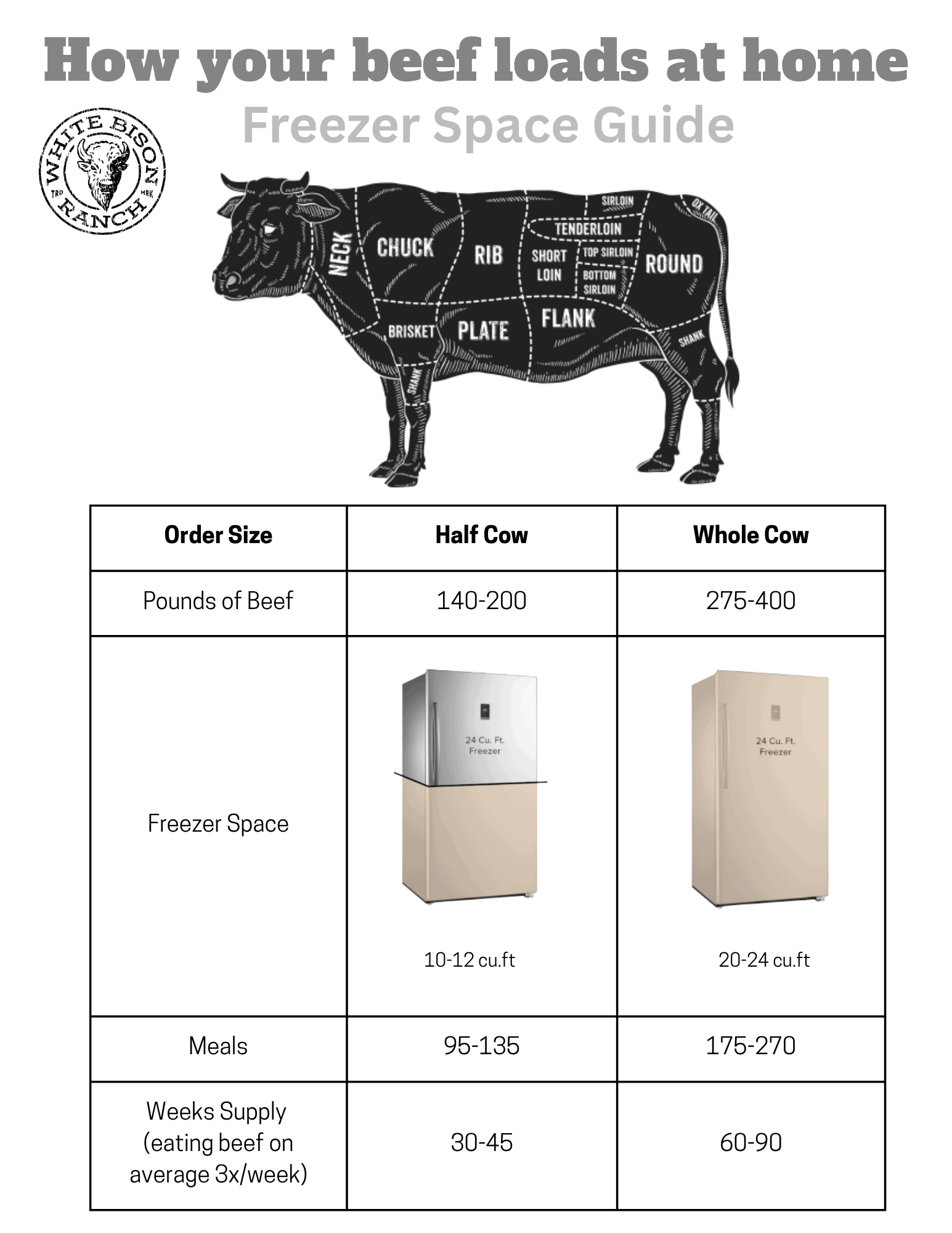
Choosing the right freezer size for half a cow is important. It keeps your meat fresh and organized. Half a cow usually weighs between 150 to 200 pounds of meat. You need enough space to store all cuts without crowding. Proper freezer size helps maintain good air circulation. This keeps the meat safe for longer storage. Below are some common freezer sizes to consider.
Small To Medium Freezers
Small to medium freezers hold about 5 to 15 cubic feet. These can store half a cow if you organize well. Upright freezers with shelves help separate different cuts. Chest freezers offer more space but require stacking. You might need to trim packaging to save room.
- 5 to 7 cubic feet: Good for small half cows or limited cuts
- 8 to 12 cubic feet: Fits most half cows comfortably
- 13 to 15 cubic feet: Extra space for bulk packaging and other items
Choose a freezer with adjustable shelves or baskets. It helps you use space better. Keep the freezer full but not packed tight. This keeps air flowing and meat frozen properly.
Large Freezer Options
Large freezers start at 16 cubic feet and go up. These are ideal for bigger half cows or extra storage needs. Chest freezers in this size range offer wide, deep storage. Upright models provide easier access and better organization.
- 16 to 20 cubic feet: Room for half a cow plus extras like vegetables
- 20+ cubic feet: Great for multiple halves or whole cows
Large freezers use more energy but offer flexible storage. Choose one with strong insulation and a reliable thermostat. This keeps your meat safe during power outages.
Organizing Meat Inside The Freezer
Organizing meat inside your freezer is key to making the most of the space you have, especially when storing half a cow. Proper organization keeps meat fresh, easy to find, and reduces waste. How you package and arrange the cuts can transform a chaotic freezer into a well-ordered storage unit.
Efficient Packaging Techniques
Packaging meat correctly protects it from freezer burn and helps maintain quality. Use vacuum-sealed bags or heavy-duty freezer paper to tightly wrap each cut. Removing as much air as possible before sealing is essential for preserving flavor and texture.
Label each package clearly with the cut type and date. This simple step prevents confusion later and helps you use older items first. You might find it helpful to keep a small notebook or digital list of what’s inside your freezer.
Maximizing Storage Space
Think about the shape and size of your packages when arranging meat inside the freezer. Flat, uniform packages stack better and save space. Try to group similar cuts together—roasts in one section, steaks in another.
Consider using bins or baskets to keep things tidy and easy to pull out. Leaving some space around packages allows cold air to circulate, helping meat freeze evenly. Have you tried laying packages flat first, then stacking vertically like files? It often makes finding what you need faster.
Maintaining Freezer Performance
Keeping your freezer running efficiently is key when storing a large quantity of meat like half a cow. Proper maintenance ensures your beef stays fresh longer and saves you from costly repairs or energy waste. Small daily habits make a big difference in freezer performance.
Temperature Settings
Set your freezer temperature between -10°F and 0°F (-23°C to -18°C) for optimal meat preservation. Temperatures above this range can cause freezer burn and spoilage. Too cold, and you risk unnecessary energy consumption.
Check the temperature regularly using a freezer thermometer. Don’t rely only on the built-in display, as it can be inaccurate. Have you ever found your meat thawed because the freezer was too warm? Adjusting the thermostat promptly can prevent that.
Regular Cleaning And Defrosting
Ice buildup reduces your freezer’s efficiency and storage space. Even a thin layer of frost acts as insulation, making the freezer work harder. Aim to defrost your freezer whenever the frost layer is about 1/4 inch thick.
Cleaning spills and food debris quickly also helps maintain airflow. Use a mild detergent and warm water to wipe down shelves and walls. Keeping your freezer clean not only improves performance but reduces odors that can affect your meat.
Budget Considerations For Freezer Purchase
Buying a freezer to store half a cow is a significant investment. You want to make sure your money goes toward a freezer that fits your needs without overspending. Budgeting carefully helps you balance initial cost with long-term value.
Cost Vs. Capacity
Freezers with larger capacity usually cost more upfront. But if you choose a model too small, you might end up buying another one soon after. Think about how much meat you’ll store and compare prices for freezers that hold at least 20-30 cubic feet.
Sometimes spending a bit more on a bigger freezer saves money over time. You avoid the hassle of splitting your meat between multiple units or trips to the butcher. Have you checked if the freezer’s internal space matches the size of your meat cuts?
Energy Efficiency
Energy-efficient freezers can reduce your electricity bill noticeably. Look for models with the ENERGY STAR label—they use less power but keep your meat just as cold. This might add to the initial price, but you’ll save money month after month.
Consider how often the freezer will run and where you’ll place it. A freezer in a warm garage uses more energy than one in a cool basement. Have you factored in these ongoing costs before picking your freezer?
Credit: www.christensenranch.com
Frequently Asked Questions
How Much Freezer Space Is Needed For Half A Cow?
Half a cow requires about 20 to 25 cubic feet of freezer space. This allows enough room for proper air circulation and organized storage of meat cuts.
What Size Freezer Is Best For Storing Half A Cow?
A 20 to 25 cubic feet chest or upright freezer is ideal. It offers sufficient capacity to store various meat packages securely.
How Long Can Beef From Half A Cow Be Frozen?
Beef can be safely frozen for 6 to 12 months. Proper packaging and consistent freezing temperatures help maintain its quality.
How To Organize Meat In A Freezer For Half A Cow?
Label and group similar cuts together. Use airtight packaging and stack packages to maximize space and maintain freshness.
Conclusion
Choosing the right freezer size saves space and keeps meat fresh. Half a cow needs about 20 to 25 cubic feet of freezer space. Think about how much meat you will store and how often you buy. Good airflow inside the freezer helps keep the meat at the right temperature.
A proper freezer also saves money by reducing waste. Plan well before buying to avoid surprises later. This way, you enjoy fresh beef anytime without hassle or extra costs. Simple steps make storing half a cow easy and efficient.