Have you ever paused mid-cleaning and wondered if you’re going about it all wrong? Do you vacuum or dust first?
This simple question might seem trivial, but the order in which you clean can make a big difference in how clean your home actually gets. Imagine saving precious time and effort, all while achieving a spotless, dust-free environment. Sounds appealing, right?
By diving into this article, you’ll uncover the secrets of a more effective cleaning routine. You’ll not only enhance the cleanliness of your space but also reduce allergens and improve air quality. Ready to transform your cleaning strategy and make your home shine like never before? Let’s get started!

Credit: www.amazon.com
Common Cleaning Mistakes
Cleaning your home might seem straightforward, but certain mistakes can make your efforts less effective. These common errors often lead to more dirt, dust, and allergens lingering around. Understanding these pitfalls can help you clean smarter and breathe easier.
Skipping Dusting Before Vacuuming
Many people start vacuuming right away, thinking it’s the fastest way to clean. However, dusting first is crucial because dust settles on surfaces and can fall onto the floor during vacuuming. If you vacuum before dusting, you might miss this dust, making your cleaning less thorough.
Try dusting furniture, shelves, and other surfaces before you vacuum. This simple change can reduce the amount of dust that ends up back on the floor, saving you time and effort in the long run.
Vacuuming Without Preparation
Vacuuming seems simple, but skipping preparation steps can reduce its effectiveness. For example, not clearing clutter or moving furniture blocks access to hidden dirt and dust. Also, using the wrong vacuum setting can leave debris behind or damage delicate surfaces.
Prepare your space by tidying up and adjusting your vacuum settings for different floor types. This attention to detail ensures you get the best cleaning results every time.
Ignoring Airborne Dust
Airborne dust is often overlooked but plays a big role in how clean your home feels. When you dust or vacuum, particles float into the air and settle back down if not controlled. Ignoring this means dust will quickly return, undoing your hard work.
Consider using a vacuum with a HEPA filter or an air purifier to trap these particles. Have you noticed how the air feels fresher after using these tools? They can make a real difference in keeping your space truly clean.
Why Dusting Comes First
Choosing to dust before vacuuming makes cleaning more effective. Dusting first removes particles that settle on surfaces and floors. This stops dust from just moving around. Clean surfaces mean vacuuming captures more dirt and allergens.
Dust Settling Patterns
Dust falls from the air and lands on furniture, shelves, and floors. It collects in layers over time. When you dust, you catch dust before it reaches the floor. This prevents dust from spreading during vacuuming. Understanding where dust gathers helps target cleaning better.
Benefits Of Removing Dust Early
- Less dust on floors means vacuuming is quicker and easier.
- Cleaning surfaces first reduces the chance of dust resettling.
- Dusting early keeps electronics and decor safer from scratches.
- It reduces the need to vacuum multiple times in one session.
Impact On Air Quality
Dust contains allergens and tiny particles that affect breathing. Dusting removes these from surfaces before vacuuming stirs them up. This lowers the amount of dust floating in the air. Better air quality helps everyone in the home breathe easier.
Vacuuming After Dusting
Vacuuming after dusting is a smart cleaning habit. Dusting stirs up particles that fall to the floor or furniture. Vacuuming next captures these hidden bits of dust. This two-step process helps keep your home cleaner and healthier. It also reduces allergens in the air.
Capturing Fallen Dust
Dusting moves dirt from surfaces into the air and onto the floor. Vacuuming after dusting picks up this loose dust. It stops dust from settling again on your furniture or carpets. This step improves overall air quality. Vacuuming removes dust mites and tiny allergens. It creates a fresher living space.
Best Vacuum Techniques
Use slow, steady strokes with your vacuum. Move in different directions to catch all dust. Focus on corners and edges where dust hides. Adjust the vacuum height for carpets and hard floors. Empty the vacuum bag or bin often. This keeps suction strong and effective. Use attachments to clean upholstery and drapes after dusting.
Choosing The Right Vacuum
Select a vacuum with strong suction power. A HEPA filter is best for trapping fine dust particles. Lightweight models are easier to handle and move quickly. Cordless vacuums offer convenience for quick cleaning. Consider a vacuum with multiple attachments for various surfaces. Proper tools make vacuuming after dusting easier and more thorough.
Credit: cleanzen.com
Tools For Effective Cleaning
Choosing the right tools can make your cleaning routine faster and more effective. Having the proper dusters and vacuum attachments at hand means you can tackle dirt and dust without missing spots or creating more mess. Let’s look at some tools that can help you get the job done right and even make cleaning less of a chore.
Recommended Dusting Tools
Microfiber cloths are a must-have for dusting. They trap dust rather than just moving it around, leaving surfaces cleaner. Feather dusters can reach tight corners but might spread dust if used roughly.
Consider a static duster for electronic devices. These tools attract dust using static electricity, preventing particles from resettling quickly. Have you noticed how some dusters leave a fine residue? Microfiber avoids that problem completely.
Vacuum Attachments That Help
Using the right vacuum attachment can change your cleaning game. Crevice tools help reach narrow spaces like baseboards and behind furniture. Brush attachments are great for delicate surfaces like lampshades and curtains.
Some vacuums come with motorized heads that work well on carpets and upholstery. If your vacuum doesn’t, consider buying one separately. Have you tried vacuuming before dusting? It often pushes dust into the air, so attachments that capture dust efficiently can reduce airborne particles.
Eco-friendly Cleaning Options
If you want to cut down on chemicals, look for eco-friendly dusters and vacuums. Bamboo dusters are durable and biodegradable, making them a smart choice. Reusable microfiber pads reduce waste compared to disposable ones.
Vacuum cleaners with HEPA filters trap fine dust and allergens without releasing them back into the room. You can also use natural cleaning sprays made from vinegar or essential oils to freshen surfaces without harsh chemicals. What small change could you make to your cleaning tools that helps the planet?
Room-by-room Cleaning Order
Deciding whether to vacuum or dust first can depend on the room you’re cleaning. Tackling each space with the right order makes your efforts more efficient and leaves your home truly fresh. Let’s break down the best approach room by room, so you know exactly where to start and how to finish.
Living Room Tips
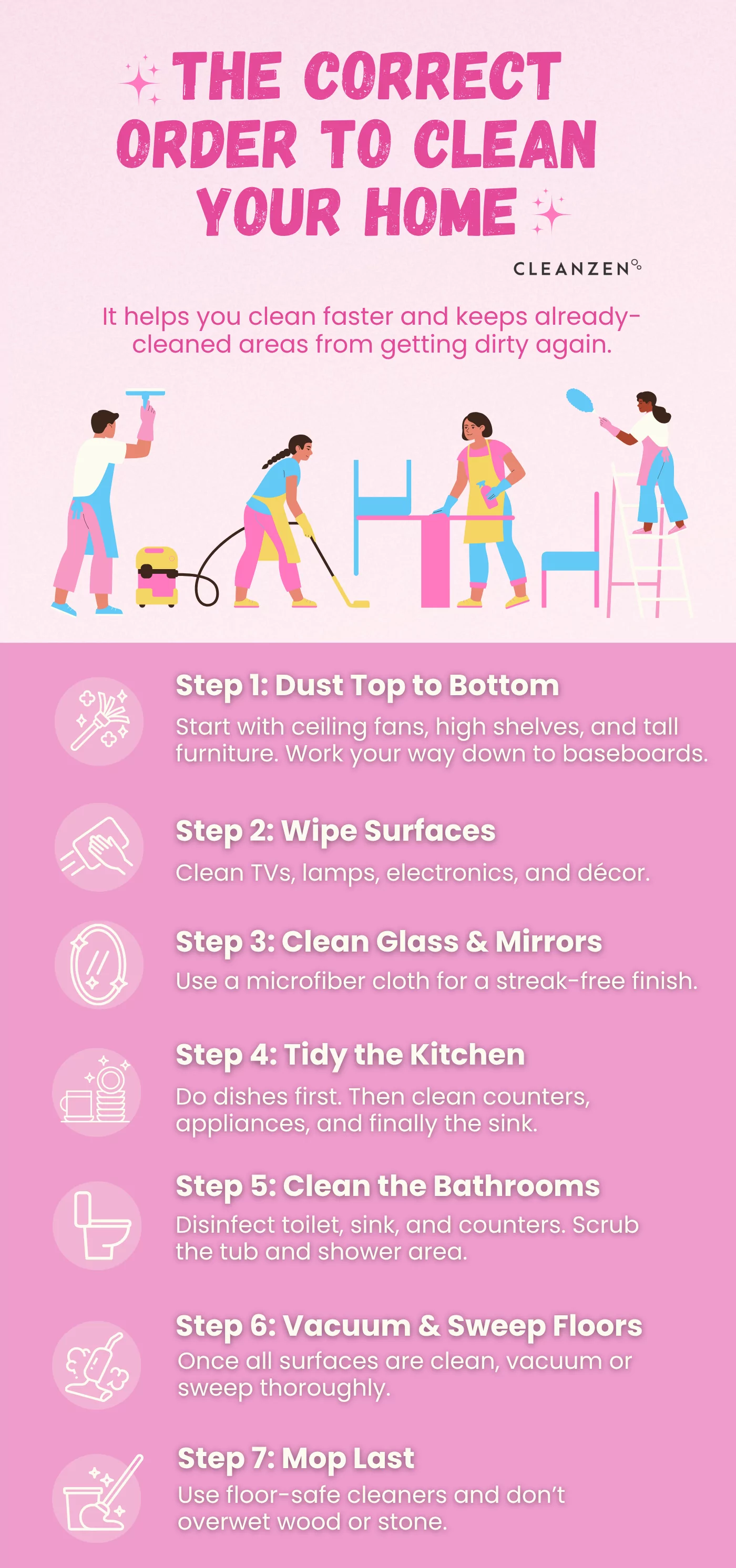
Start by dusting all surfaces in your living room. This includes shelves, picture frames, lamps, and electronics. Dusting first ensures that any particles fall to the floor, ready to be picked up by vacuuming.
After dusting, vacuum the floor and any upholstered furniture. Don’t forget to check under cushions and along baseboards where dust often hides. This order prevents you from spreading dust after vacuuming.
Bedroom Strategies
In the bedroom, dust ceiling fans and light fixtures before moving down to dressers and nightstands. Dust first to catch allergens that can settle on your bedding.
Once dusting is done, vacuum carpets or rugs thoroughly. If you have hardwood or tile floors, sweep or vacuum first, then mop to remove any leftover dust. This helps maintain a clean and healthy sleeping environment.
Kitchen And Dining Areas
Dust might not be the first thing you think of in the kitchen, but wiping down countertops, shelves, and appliances is crucial. Do this before sweeping or vacuuming the floor to catch crumbs and particles.
Vacuum or sweep the floor after dusting and wiping surfaces. This step ensures you pick up all debris without pushing it around. For dining areas, don’t skip vacuuming under the table where crumbs tend to collect.
Maintaining Cleanliness Longer
Keeping your home clean for longer saves time and effort. A solid routine helps stop dust and dirt from piling up quickly. Small habits make a big difference in how fresh your space feels every day.
Regular Cleaning Schedule
Set a cleaning routine that fits your lifestyle. Clean high-traffic areas more often. Consistency stops dirt from settling deeply. Quick daily tasks prevent big messes later. A regular schedule makes cleaning less overwhelming.
Preventing Dust Build-up
Dust gathers fast on surfaces and floors. Use microfiber cloths to trap dust better. Avoid sweeping dry floors as it spreads dust in air. Wipe surfaces gently to remove dust without scattering it. Keeping windows closed during windy days helps reduce dust inside.
Air Purifiers And Filters
Air purifiers reduce airborne dust and allergens. Choose one with a HEPA filter for best results. Change filters regularly to maintain air quality. HVAC filters also capture dust from air circulation. Clean filters improve breathing and lessen dust on furniture.

Credit: www.inkl.com
Frequently Asked Questions
Should I Dust Or Vacuum First For Better Cleaning?
Dusting first is recommended because it loosens dust particles. Vacuuming afterward removes settled dust from surfaces and floors effectively. This order prevents dust from resettling on cleaned areas, ensuring a thorough and efficient cleaning process every time.
What Happens If You Vacuum Before Dusting?
Vacuuming before dusting can cause dust to resettle on surfaces. Dust particles disturbed during vacuuming may settle on furniture and shelves. This reduces cleaning efficiency and requires extra effort to clean dust again after vacuuming.
Can Dusting After Vacuuming Cause More Dust Spread?
Yes, dusting after vacuuming can spread dust into the air. Vacuuming stirs up dust that can settle on surfaces afterward. Dusting first minimizes airborne particles and leads to a cleaner, healthier home environment.
Is It Better To Dust Or Vacuum Carpets First?
Dust carpets first to remove surface dirt, then vacuum deeply. Dusting loosens debris on carpet fibers, making vacuuming more effective. This combination ensures carpets are thoroughly cleaned, removing both surface and embedded dirt.
Conclusion
Dusting first clears dirt from surfaces. Vacuuming afterward removes dust on floors and carpets. This order keeps your home cleaner for longer. Dust falls down, so cleaning top to bottom works best. Choose tools that fit your needs. Regular cleaning helps reduce allergens and keeps air fresh.
Small steps make a big difference in your space. Try dusting before vacuuming next time you clean. You’ll notice a fresher, tidier home right away.