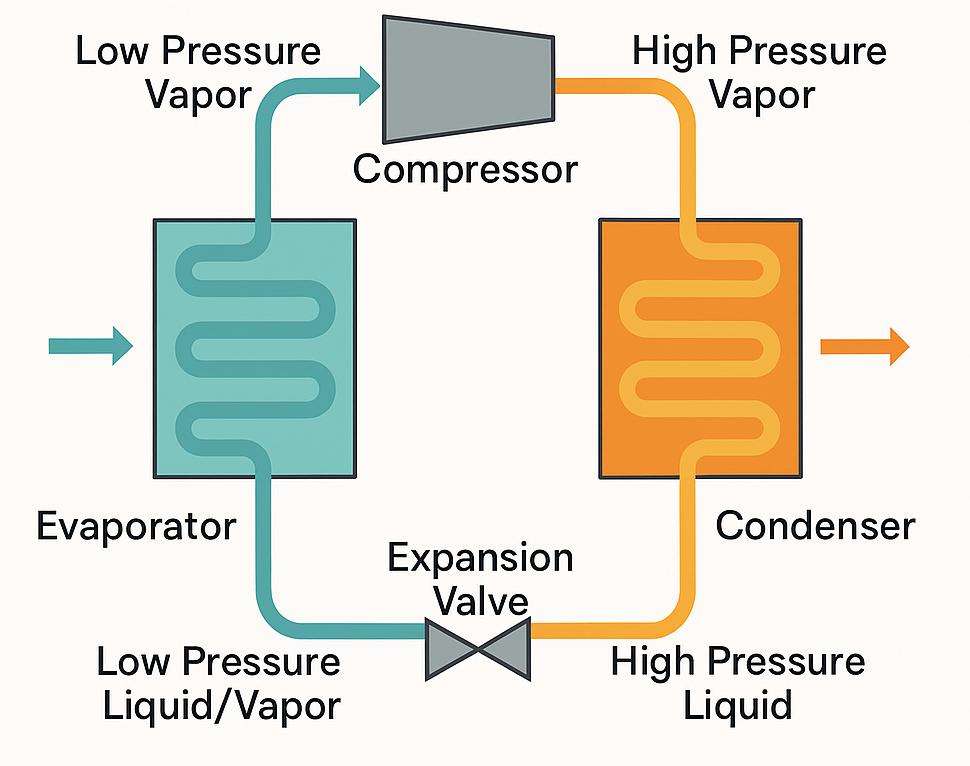
Ever wondered what happens inside your air conditioner or refrigerator? It all revolves around the refrigerant and its fascinating journey through different states.
You might be curious: does the refrigerant change state in the compressor? The answer isn’t just a simple yes or no, and understanding this can transform how you look at your cooling appliances. Imagine having the power to know exactly how your AC or fridge keeps things cool, ensuring they run efficiently and effectively.
Dive into this article, and you’ll uncover the secrets of the compressor’s role in the cooling process, empowering you with knowledge that can even help you troubleshoot common issues. Let’s unravel this mystery and boost your understanding!
Refrigerant Basics
Understanding refrigerant basics is key to knowing how air conditioners and refrigerators work. Refrigerants are special fluids that move heat from one place to another. This process helps cool spaces or keep food fresh. They change between liquid and gas to absorb and release heat efficiently.
The compressor is a vital part of this cycle. It pushes the refrigerant through the system. Knowing the type and behavior of refrigerants helps explain what happens inside the compressor.
What Is Refrigerant?
Refrigerant is a liquid or gas that absorbs heat from the air or environment. It evaporates at low temperatures and condenses at higher temperatures. This change in state moves heat out of a space, making it cooler.
It circulates inside cooling systems in a closed loop. The refrigerant picks up heat as a low-pressure gas. Then, it releases heat as a high-pressure liquid.
Common Types Of Refrigerants
- R-22: Used in older air conditioners. Being phased out due to environmental impact.
- R-410A: Common in new air conditioning systems. More efficient and eco-friendly.
- R-134a: Often used in refrigerators and car air conditioners.
- Natural refrigerants: Such as ammonia and carbon dioxide. Eco-friendly but need careful handling.
Each refrigerant type has unique properties. These affect how it changes state and how compressors work.
Compressor Role In Refrigeration
The compressor plays a vital role in refrigeration systems. It moves the refrigerant through the system and maintains the cycle. The compressor increases the pressure of the refrigerant, which helps in heat transfer. It acts as the heart of the refrigeration process, enabling cooling and heating functions.
How Compressors Work
Compressors pull low-pressure refrigerant gas from the evaporator. Inside the compressor, the gas is compressed to a smaller volume. This compression raises the refrigerant’s pressure. The compressor then pushes the high-pressure gas to the condenser. This movement drives the refrigeration cycle forward.
Pressure And Temperature Changes
During compression, the refrigerant’s pressure and temperature rise. The gas becomes hot as it is compressed. This heat is later released in the condenser. The refrigerant stays in a gaseous state inside the compressor. The compressor does not change the refrigerant to liquid. It only increases pressure and temperature to continue the cooling cycle.
Phase Changes In Refrigeration Cycle
The refrigeration cycle relies heavily on the ability of the refrigerant to change its phase between liquid and gas. These phase changes are what allow the system to absorb and release heat efficiently. Understanding where and how these transitions happen can help you grasp why the compressor’s role is unique and why it doesn’t typically cause a phase change.
Evaporation And Condensation
Evaporation happens when the refrigerant absorbs heat and changes from liquid to vapor. This process takes place in the evaporator, where the refrigerant extracts heat from the environment you want to cool. The key here is that evaporation happens at low pressure and low temperature, allowing the refrigerant to absorb maximum heat.
Condensation is the opposite phase change, where the refrigerant releases heat and turns from vapor back into liquid. This occurs in the condenser, where the refrigerant releases the absorbed heat into the surrounding air or water. Condensation happens at high pressure and high temperature, making it easier for the heat to dissipate.
Where Phase Changes Occur
You might wonder if phase changes happen inside the compressor. Actually, the compressor’s main job is to increase the pressure and temperature of the refrigerant vapor. It compresses the refrigerant gas but does not cause it to change phase.
Phase changes occur primarily in the evaporator and condenser only. The refrigerant enters the compressor as a low-pressure vapor and leaves as a high-pressure vapor. The compressor prepares the refrigerant for condensation but does not itself turn vapor into liquid.
Knowing this helps you understand why the compressor must handle gas, not liquid. Liquid inside the compressor can cause damage, a problem known as liquid slugging. This detail shows the importance of controlling where phase changes happen in your system.
State Of Refrigerant Inside Compressor
The state of refrigerant inside the compressor plays a crucial role in the refrigeration cycle. Understanding whether the refrigerant is in liquid or gas form helps explain how the compressor functions. It also clarifies why the refrigerant does not change phase inside the compressor.
The compressor’s main job is to increase the pressure and temperature of the refrigerant. This process affects the refrigerant’s state and behavior inside the compressor chamber.
Is Refrigerant Liquid Or Gas In Compressor?
The refrigerant inside the compressor is always in a gaseous state. It enters as a low-pressure vapor from the evaporator. The compressor then compresses this gas, raising its pressure and temperature.
Liquid refrigerant inside the compressor can cause damage. Compressors are designed to handle gas only. Liquid could harm the moving parts or cause failure.
Why Phase Change Doesn’t Happen Here
Phase change happens during evaporation and condensation, not inside the compressor. The compressor only compresses the vapor without changing its phase.
Pressure and temperature rise in the compressor, but the refrigerant remains a gas. Phase changes require heat exchange, which does not occur inside the compressor.
Effects Of State On Compressor Performance
The state of the refrigerant inside the compressor plays a crucial role in determining how well the compressor performs. Whether the refrigerant is in a gaseous or liquid state affects efficiency, reliability, and the overall lifespan of your system. Understanding these effects can help you maintain your equipment better and avoid costly repairs.
Impact On Efficiency
Compressors are designed to work with refrigerant in a vapor state. When refrigerant enters as a gas, the compressor can compress it efficiently, using less energy and delivering better cooling performance.
If the refrigerant is partially liquid, the compressor has to work harder, which wastes energy and reduces efficiency. You might notice higher electricity bills or a drop in cooling power, signaling that something is off.
Have you ever wondered why your air conditioner seems to struggle on hot days? It could be due to refrigerant not fully vaporizing before entering the compressor, impacting its efficiency.
Potential Issues From Liquid Ingress
Liquid refrigerant entering the compressor can cause severe mechanical damage. Compressors are not made to handle liquids; this can lead to a condition called “liquid slugging,” where the liquid causes internal parts to bend or break.
This damage often results in costly repairs or even total compressor failure. Avoiding liquid ingress is key to keeping your system running smoothly and extending its lifespan.
- Liquid can wash away lubricating oil, increasing wear on moving parts.
- It can cause sudden pressure spikes, stressing the compressor components.
- Repeated liquid ingress may lead to overheating and breakdown.
Next time you service your system, check if the refrigerant is properly vaporized before it reaches the compressor. This simple step can save you from unexpected downtime and expensive fixes.

Credit: www.reddit.com
Common Misconceptions
Many people believe the refrigerant changes state inside the compressor. This is a common misunderstanding about how air conditioning systems work. Clarifying these misconceptions helps you understand the cooling process better. Let’s explore some myths and the real role of the compressor.
Myths About Refrigerant State
- Refrigerant turns from gas to liquid inside the compressor.
- The compressor cools the refrigerant by changing its state.
- The compressor acts like a pump that condenses the refrigerant.
These ideas are incorrect. The compressor only compresses the refrigerant gas. It does not change the refrigerant from gas to liquid. The state change happens later in the system.
Clarifying Compressor Function
The compressor’s job is to raise the pressure of the refrigerant gas. It increases the gas temperature but keeps it in a gaseous state. The high-pressure gas then moves to the condenser.
In the condenser, the refrigerant releases heat and changes from gas to liquid. The compressor’s role is to push the refrigerant through the system efficiently. It does not cool or condense the refrigerant itself.
Summary Of Refrigerant State Changes
Understanding how the refrigerant changes state in an HVAC system is crucial for grasping how compressors work. The refrigerant typically enters the compressor as a low-pressure gas and leaves as a high-pressure gas without changing into a liquid inside the compressor itself. This process is essential to maintaining the cycle that cools your space effectively.
Key Points To Remember
- The refrigerant enters the compressor in a gaseous state, not as a liquid.
- The compressor’s main role is to increase the refrigerant’s pressure and temperature.
- No phase change (gas to liquid or vice versa) happens inside the compressor; that occurs elsewhere in the system.
- The high-pressure gas then moves to the condenser, where it changes into a liquid.
- Understanding this cycle helps diagnose issues like compressor failure or refrigerant leaks.
Implications For Hvac Maintenance
Knowing that the refrigerant stays gaseous inside the compressor can help you spot problems early. If you find liquid refrigerant inside the compressor, it’s a sign of a serious issue that could cause damage. This might happen due to overcharging or a malfunctioning expansion valve.
Regularly checking refrigerant pressure and temperature readings can prevent costly repairs. You might wonder why your compressor seems to struggle during hot days—often, it’s due to improper refrigerant flow rather than compressor failure itself. This knowledge empowers you to maintain your system better and avoid unexpected breakdowns.

Credit: www.reddit.com
Credit: medium.com
Frequently Asked Questions
Does Refrigerant Change State Inside The Compressor?
No, the refrigerant remains in a gaseous state inside the compressor. The compressor pressurizes and raises the temperature of the refrigerant gas but does not change its phase.
Why Is Refrigerant Not Liquid In The Compressor?
The compressor is designed to handle refrigerant vapor. Liquid refrigerant can damage the compressor, so it only compresses low-pressure gas.
What Happens To Refrigerant After Leaving The Compressor?
After compression, the high-pressure, high-temperature refrigerant gas moves to the condenser. There, it releases heat and changes from gas to liquid.
Can Refrigerant Change State Within The Compressor?
No, refrigerant does not change state in the compressor. The state change occurs later in the condenser or evaporator.
Conclusion
The refrigerant does not change state inside the compressor. It stays as a gas while the compressor raises its pressure and temperature. This step is crucial for the cooling cycle to work properly. Knowing this helps you understand how air conditioners and refrigerators function.
Keeping the refrigerant in gas form ensures smooth operation and better efficiency. This simple fact clears up common confusion about the compressor’s role. Remember, the compressor’s job is to compress gas, not change its state.