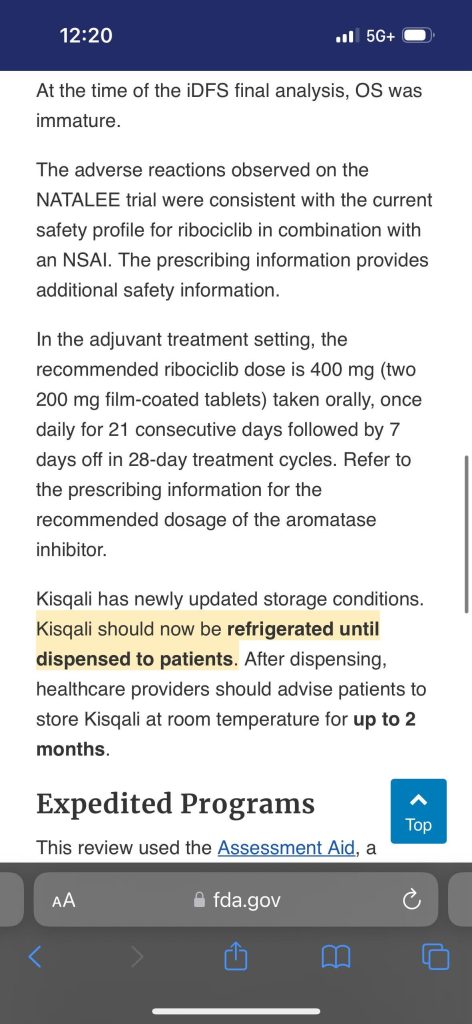
Are you curious about the proper storage of your medication, particularly Kisqali? You’re not alone.
The way you store your medication can significantly impact its effectiveness. Imagine investing in a treatment that doesn’t work simply because it wasn’t stored correctly. That’s a scenario you certainly want to avoid. So, does Kisqali need to be refrigerated, or can it be kept at room temperature?
In this blog post, we’ll unravel this mystery for you, ensuring you’re taking the right steps to maintain your medication’s potency. Keep reading to discover how simple it is to protect your health with just a little knowledge about medication storage.

Credit: www.oncologynewscentral.com
What Is Kisqali?
Understanding what Kisqali is helps you manage your medication better. Kisqali is a prescription drug used to treat certain types of breast cancer. It plays a crucial role in slowing down cancer cell growth.
What Is Kisqali Made Of?
Kisqali contains the active ingredient ribociclib. This compound works by blocking proteins that help cancer cells divide and grow. By targeting these proteins, Kisqali helps control the spread of cancer in the body.
Who Should Take Kisqali?
Kisqali is usually prescribed for adults with hormone receptor-positive, HER2-negative breast cancer. This type of cancer depends on hormones to grow, so Kisqali helps by interfering with those signals. Your doctor will decide if this treatment fits your specific condition.
How Is Kisqali Administered?
You take Kisqali as a pill, usually once daily for 21 days, followed by a 7-day break. This cycle repeats to maximize its effectiveness while managing side effects. Sticking to this schedule is key to getting the best results.
Why Is Knowing About Kisqali Important?
Knowing the basics of Kisqali empowers you to handle your treatment confidently. You can better understand potential side effects and how the drug works in your body. Have you asked your healthcare provider how Kisqali fits into your overall cancer care plan?
Credit: www.drugs.com
Recommended Storage Conditions
Proper storage of Kisqali ensures the medication remains effective and safe to use. Following the recommended storage conditions helps maintain its quality. This section explains how to store Kisqali to protect it from damage.
Temperature Guidelines
Kisqali does not require refrigeration. Store it at room temperature, between 20°C and 25°C (68°F and 77°F). Avoid exposing it to temperatures above 30°C (86°F). Keep the medication away from freezing conditions. These temperature ranges help preserve the drug’s strength.
Light And Moisture Protection
Keep Kisqali in its original container. The container protects the tablets from light and moisture. Store it in a dry place, away from direct sunlight. Avoid storing Kisqali in bathrooms or other humid areas. Proper protection prevents degradation and keeps the medicine safe.
Refrigeration Requirements
Kisqali, a medication used in certain cancer treatments, has specific storage instructions that can impact its effectiveness. Understanding the refrigeration requirements is essential for keeping the medication safe and potent. Let’s break down when you need to refrigerate Kisqali and what happens if it isn’t stored properly.
When Refrigeration Is Necessary
Kisqali usually comes in capsule form, which generally does not require refrigeration. You can store these capsules at room temperature, typically between 68°F and 77°F (20°C and 25°C). However, if your healthcare provider or pharmacist gives different instructions, it’s important to follow those precisely.
There are some exceptions. For example, if you have been given a liquid form or a special formulation of Kisqali, refrigeration might be necessary. Always check the packaging or ask your pharmacist to confirm the right storage method.
Risks Of Improper Storage
Storing Kisqali improperly can reduce its effectiveness. Exposure to heat, moisture, or freezing temperatures can cause the medication to break down or lose potency. This may lead to less effective treatment and could affect your health outcomes.
Have you ever noticed changes in the appearance of your medication, like discoloration or unusual smells? These signs could indicate that the medicine has been stored incorrectly. If you suspect this, consult your healthcare provider before continuing the treatment.
Remember, keeping Kisqali within recommended storage conditions helps ensure you get the full benefit of your prescribed therapy. Always double-check with your pharmacist if you’re unsure about the storage requirements for your specific Kisqali prescription.
How To Store Kisqali Safely
Storing Kisqali correctly keeps the medicine effective and safe. Proper storage avoids damage from heat, moisture, or sunlight. Follow simple rules to protect your medication at home and on the go.
Storage Tips At Home
- Keep Kisqali in its original container with the lid tightly closed.
- Store in a dry place, away from bathrooms or kitchens.
- Maintain room temperature, ideally between 68°F and 77°F (20°C to 25°C).
- Avoid direct sunlight and extreme temperatures.
- Keep out of reach of children and pets.
Traveling With Kisqali
- Carry Kisqali in its original packaging with the prescription label.
- Use a small insulated bag if traveling to hot or cold areas.
- Keep the medicine with you, not in checked luggage.
- Check storage instructions for temperature limits before your trip.
- Consult your healthcare provider if your travel involves long delays.
Signs Of Spoiled Medication
Recognizing the signs of spoiled medication is crucial for your safety and treatment effectiveness. Kisqali, like many medications, can lose its potency or even become harmful if it goes bad. Paying attention to changes in your medication helps you avoid potential health risks.
Appearance Changes
Check your Kisqali tablets carefully. If they look discolored, cracked, or have unusual spots, it could mean the medication is spoiled. Even a slight change in color from the original can signal that the drug is no longer safe to use.
Unusual Smell
Medications typically have little to no odor. If your Kisqali has developed a strange or strong smell, it may be a sign of chemical breakdown. Trust your senses—if it smells off, don’t take the risk.
Texture And Consistency
Tablets should feel solid and smooth. If your Kisqali feels sticky, crumbly, or unusually soft, it might have been exposed to moisture or heat. Such texture changes often mean the medication’s effectiveness is compromised.
Expiration Date
Always check the expiration date on your medication bottle. Using Kisqali past this date increases the risk of reduced potency and safety. If your medication is expired, ask your pharmacist for a replacement.
Storage Conditions And Your Medication
Have you ever left your medication in a hot car or bathroom? These conditions can spoil Kisqali even before the expiration date. Proper storage is your first defense against medication spoilage.
Consulting Your Pharmacist
Talking to your pharmacist about Kisqali storage can clear up any confusion you have. Pharmacists are experts in medication care and can provide advice tailored to your situation.
They can explain whether Kisqali needs refrigeration based on the product you received. Sometimes, storage needs vary depending on the packaging or batch.
Pharmacists also share practical tips on how to store Kisqali safely at home. This advice helps maintain the drug’s effectiveness and ensures your treatment stays on track.
Ask Specific Questions About Kisqali Storage
- Is refrigeration necessary for my Kisqali prescription?
- Can Kisqali be kept at room temperature, and if so, for how long?
- What should I do if I accidentally leave Kisqali out of the fridge?
- Are there storage differences between the tablet and liquid forms?
These targeted questions help you get clear answers and avoid guesswork.
Share Your Living Conditions
Tell your pharmacist about your home environment. Do you have reliable refrigeration? Is your climate humid or hot?
This info helps them suggest the best storage options that fit your lifestyle. They might recommend alternatives if keeping Kisqali in a fridge is challenging.
Learn About Expiry And Stability
Pharmacists can clarify how long Kisqali stays stable outside the fridge. They explain expiry dates and what signs indicate the medication has gone bad.
Knowing this helps you avoid using ineffective or unsafe medication. Have you ever wondered how long a medicine can stay effective without refrigeration?
Request Written Instructions Or Leaflets
Ask for printed storage guidelines to keep at home. Having clear instructions reduces mistakes in handling the medication.
This is especially helpful if you manage multiple medicines or have caregivers assisting you. Written info acts as a handy reminder.

Credit: www.oncologynewscentral.com
Frequently Asked Questions
Does Kisqali Require Refrigeration After Purchase?
Kisqali does not require refrigeration after purchase. Store it at room temperature, between 20°C and 25°C (68°F to 77°F). Avoid exposure to excessive heat or moisture to maintain its effectiveness and shelf life.
How Should Kisqali Be Stored At Home?
Store Kisqali in a cool, dry place away from direct sunlight. Keep it in its original container tightly closed. Avoid storing Kisqali in bathrooms or near kitchen sinks where humidity is high.
Can Kisqali Be Kept In The Refrigerator?
Kisqali can be refrigerated but it’s not necessary. Keeping it at room temperature is sufficient. Refrigeration will not harm the medication, but it offers no additional storage benefits.
What Happens If Kisqali Is Not Refrigerated?
Not refrigerating Kisqali does not affect its safety or potency. The medication is designed to be stable at room temperature. Improper storage involving heat or moisture should be avoided to prevent degradation.
Conclusion
Kisqali should be stored at room temperature, not refrigerated. Keep it away from heat, moisture, and direct sunlight. Always follow the storage instructions on the label or from your pharmacist. Proper storage helps maintain the medicine’s strength and safety. If unsure, ask your healthcare provider for advice.
Taking care of Kisqali ensures it works well for you. Simple steps make a big difference in your treatment. Stay informed and handle your medication carefully.