Have you ever stood in your kitchen, wondering why your refrigerator is humming? That constant sound might seem normal, but it could be trying to tell you something important.
Understanding why your refrigerator hums can save you money, prevent food spoilage, and keep your home quiet and comfortable. You’ll discover the common reasons behind that humming noise and learn simple steps to fix it. Keep reading—you’ll be surprised at what your fridge’s hum might reveal!
Common Causes Of Refrigerator Humming
Humming sounds from a refrigerator can be normal or signal an issue. Understanding common causes helps decide if action is needed. Many parts inside create humming noises as they work.
Sometimes the sound is just part of the fridge running. Other times, it points to a problem needing repair or adjustment. Knowing the source of humming can reduce worry and prevent bigger damage.
Compressor Operation Sounds
The compressor makes humming while cooling the fridge. It pumps refrigerant through coils to remove heat. This motor runs quietly but produces a steady low hum. Variations in sound can occur with compressor age or wear.
Condenser Fan Noise
Condenser fans cool the compressor and coils. Dust or dirt on fan blades may cause extra humming. If the fan motor struggles or the blades hit something, noise increases. Regular cleaning keeps this noise low.
Evaporator Fan Issues
Inside the fridge, the evaporator fan moves cold air. It makes a soft humming or buzzing sound when running. Ice buildup or debris can block the fan, causing louder noise. A stuck or faulty fan motor adds to humming.
Water Line And Ice Maker Noises
Refrigerators with ice makers use water lines that can hum. Water flow or pressure changes cause these sounds. The ice maker’s motor may also add humming during ice production. Leaks or loose connections increase noise.
Vibration And Placement Problems
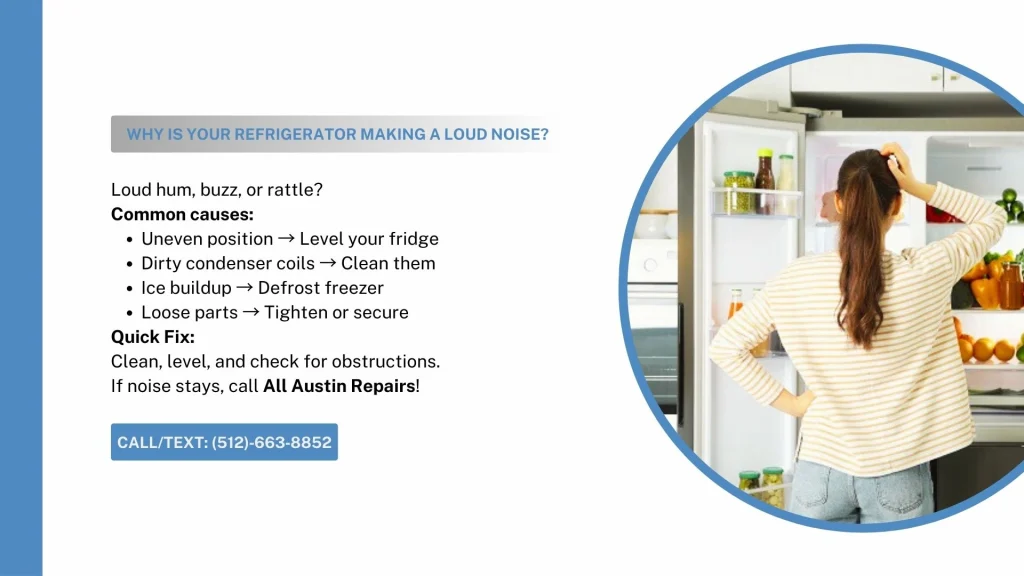
Improper fridge placement causes vibration humming. If the fridge touches walls or cabinets, noise worsens. Uneven floors make the fridge vibrate and hum more loudly. Adjusting feet or moving the fridge can fix this.

Credit: www.allaustinrepairs.com
How To Diagnose Humming Sounds
Humming sounds from a refrigerator can be normal or a sign of a problem. Diagnosing these noises helps prevent bigger issues. Start by carefully listening to where the sound comes from. This makes it easier to find the cause and fix it quickly.
Identifying The Source Of Noise
Stand close to your fridge and listen carefully. Try to find out if the sound is coming from the back, inside, or underneath. Use a quiet room to hear better. Move around the fridge to see if the humming changes or gets louder.
When To Check The Compressor
The compressor is usually at the back, near the bottom. It can make a low humming or buzzing noise. If the sound is constant and loud, the compressor might be working too hard. Check if the fridge is too hot or if the compressor feels very warm to touch.
Inspecting Fans And Motors
Fans inside the fridge help cool it down. Motors power these fans. Dust or ice can block them, causing humming sounds. Open the fridge and freezer doors. Look for any ice build-up or dirt near fan areas. Clean gently and remove any ice if possible.
Examining Water Lines And Drains
Some fridges have water lines for ice makers or water dispensers. These can cause humming if they are clogged or leaking. Check the water line at the back. Also, look at the drain pan under the fridge. Clear any blockages or water to stop strange noises.
Simple Fixes For Humming Refrigerators
Humming sounds from refrigerators can be distracting. Many causes are simple to fix without needing a technician. Some repairs only take a few minutes and basic tools. These fixes help reduce noise and improve fridge performance.
Leveling The Refrigerator
Uneven floors cause vibrations and humming. Use a level tool to check the fridge’s balance. Adjust the front or back feet to make it steady. A stable fridge runs quieter and avoids extra noise.
Cleaning Condenser Coils
Dust on coils makes the compressor work harder. This creates humming or buzzing sounds. Unplug the fridge and clean coils with a brush or vacuum. Clean coils help the fridge cool efficiently and reduce noise.
Tightening Loose Parts
Loose screws or panels cause rattling and humming. Check the fridge’s back and inside walls for loose parts. Use a screwdriver to tighten screws and bolts. Secure parts stop extra vibrations and humming noises.
Replacing Faulty Fans
Fans move air inside and outside the fridge. Broken or worn fans often cause loud humming or buzzing. Listen for fan noise and check if it spins freely. Replace the fan if it’s damaged to restore quiet operation.
Adjusting Water Supply Lines
Water lines may create humming when too tight or loose. Inspect the water valve and tubing behind the fridge. Secure loose lines or loosen very tight connections slightly. Proper adjustment stops water line vibrations and humming sounds.

Credit: www.allaustinrepairs.com
When To Call A Professional
Knowing when to call a professional for your humming refrigerator can save you time, money, and stress. Some issues are simple and safe to fix yourself, but others require expert attention to avoid further damage or hazards. Understanding the signs that point to serious problems helps you decide the right moment to seek help.
Signs Of Compressor Failure
If your refrigerator’s humming sound changes to a loud or irregular noise, it might signal compressor trouble. You could also notice that your fridge is not cooling properly or cycles on and off frequently.
Ignoring these signs can lead to complete compressor breakdown, which is costly to repair. Have you ever experienced a fridge that just wouldn’t get cold despite running all day? That’s often a compressor issue needing professional diagnosis and repair.
Electrical Issues And Safety
Unusual humming combined with flickering lights or frequent tripping of circuit breakers suggests electrical problems. These issues are not just inconvenient but potentially dangerous.
Electrical faults can cause short circuits or even fires. If you notice sparks, burning smells, or your refrigerator’s plug feels hot, stop using it immediately and call an electrician or appliance technician.
Handling Refrigerant Problems
Refrigerant leaks or low refrigerant levels can cause persistent humming and poor cooling. Refrigerants require careful handling due to their environmental impact and health risks.
Attempting to fix refrigerant issues yourself can lead to exposure to toxic chemicals or worsen the leak. Only a certified technician should manage refrigerant recharge or leak repair to ensure safety and compliance with regulations.
Expert Tips To Reduce Refrigerator Noise
Refrigerator humming can be distracting in a quiet home. Reducing this noise helps create a calm environment. Simple actions can lower the sound without costly repairs. Follow expert tips to keep your fridge running quietly and smoothly.
Proper Maintenance Routine
Clean condenser coils regularly. Dust build-up makes the compressor work harder. Defrost the freezer if ice forms. It prevents the motor from overworking. Keep door seals clean and tight to avoid cold air leaks. This reduces compressor noise and saves energy.
Optimal Refrigerator Placement
Place your refrigerator on a flat, stable surface. Uneven floors cause vibrations and louder humming. Leave space around the fridge for air circulation. Crowding it against walls traps heat, making the compressor noisy. Avoid placing it near heat sources or direct sunlight.
Using Noise Dampening Pads
Install noise dampening pads under the fridge feet. These pads absorb vibrations and reduce humming sounds. Choose pads made from rubber or foam for best results. They are affordable and easy to install. This small change can make a big difference.
Regular Inspection And Servicing
Check the refrigerator regularly for loose parts or screws. Tighten anything that moves to reduce rattling noises. Listen for unusual sounds that may indicate a problem. Schedule professional servicing once a year to keep the fridge in good condition. Early detection prevents loud noises and costly repairs.

Credit: www.allaustinrepairs.com
Frequently Asked Questions
Why Does My Refrigerator Make A Humming Noise?
A humming noise in refrigerators is often normal. It usually comes from the compressor or fans working. This sound is a part of the cooling process. However, if it’s unusually loud, it may indicate a problem. Regular maintenance can help keep the sound at a normal level.
Is A Loud Refrigerator Hum A Problem?
A loud hum might indicate an issue. If the noise level suddenly increases, it could mean a problem with the compressor or fan motor. Ensure the refrigerator is level and check for obstructions. If the loud noise persists, contacting a professional technician is advisable.
How Can I Reduce Refrigerator Humming?
To reduce humming, ensure the fridge is level on the ground. Keep it away from walls to allow proper airflow. Regularly clean the condenser coils to prevent buildup. Check and tighten any loose components. These steps can help minimize the humming sound.
Why Do Refrigerators Hum At Night?
Refrigerators may seem louder at night due to a quieter environment. The compressor and fans cycle on and off more frequently to maintain temperature. This is normal operation. If the noise is disruptive, check for any issues or consider soundproofing solutions.
Conclusion
A humming refrigerator is normal but can signal issues. It may mean the motor or fan works harder. Dust or dirt can cause extra noise too. Check the coils and clean them often. Listen for changes in sound or frequency.
Small problems can grow if ignored. Keep your fridge well maintained for quiet operation. Simple care helps save energy and money. Stay aware of sounds your refrigerator makes daily. It protects your food and peace of mind.