Are you struggling with charging refrigerant blends correctly? Getting it right is crucial for your system’s performance and longevity.
If you charge too much or too little, your equipment won’t work efficiently, and you could face costly repairs. This article will guide you step-by-step on how to charge refrigerant blends the right way. By the end, you’ll have the confidence to handle your system like a pro and avoid common mistakes that many make.
Keep reading to unlock the secrets of perfect refrigerant charging!
Basics Of Refrigerant Blends
Understanding the basics of refrigerant blends is essential before you begin charging them. These blends differ from pure refrigerants because they combine multiple chemicals, each with unique boiling points and pressures. Knowing how these factors influence charging can prevent system damage and improve efficiency.
Types Of Refrigerant Blends
Refrigerant blends come in three main types based on their behavior during phase changes:
- Azeotropic Blends:These behave like a single refrigerant with a constant boiling point. When you charge them, the composition stays stable, making charging straightforward.
- Zeotropic Blends:These have components that evaporate at different rates, causing a temperature glide during phase change. Charging requires caution to maintain the right mix.
- Near-Azeotropic Blends (NAR):These behave almost like azeotropes but with a slight temperature glide. They need careful charging similar to zeotropic blends.
Have you ever wondered why some refrigerants are easier to charge than others? It often comes down to their blend type.
Properties Impacting Charging
The unique properties of refrigerant blends affect how you should charge them. Temperature glide is a critical factor—it’s the temperature range during evaporation or condensation.
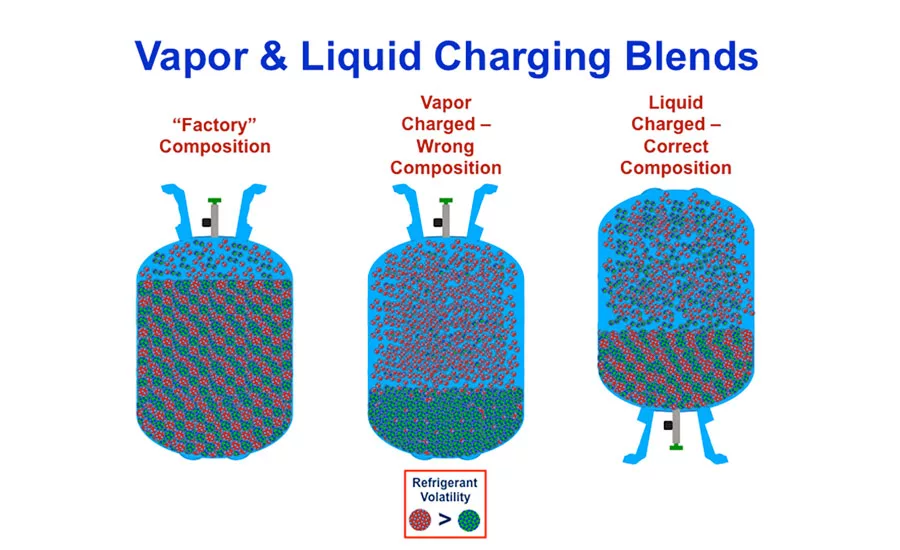
For zeotropic blends, charging in liquid form is best to avoid fractionation, where the blend components separate. This separation can cause system inefficiency and potential damage.
Pressure also plays a role. Since blends have different pressure-temperature relationships, relying on pressure gauges alone can be misleading. Using superheat or subcooling methods for charging often gives better results.
In my experience, ignoring temperature glide can lead to underperformance. Have you checked if your charging method accounts for the blend’s specific properties?

Credit: www.achrnews.com
Charging Methods For Blends
Charging refrigerant blends requires careful attention to maintain their precise composition. Different methods affect how the blend behaves in the system, so choosing the right technique is key to efficiency and safety. Understanding the pros and cons of each approach helps you avoid common pitfalls.
Liquid Charging Technique
This technique involves adding the refrigerant blend in liquid form directly into the system. It’s important to keep the blend in liquid state to ensure the proper ratio of components remains intact.
Be cautious: some blends separate if charged as liquid under certain conditions, which can cause system damage. Always check the manufacturer’s guidelines about pressure and temperature limits during liquid charging.
Vapor Charging Technique
Charging blends in vapor form means introducing the refrigerant as a gas rather than liquid. This method often prevents the risk of liquid slugging and helps maintain the blend’s stability.
However, vapor charging can be slower and may require precise control to avoid incorrect mixture ratios. Are you ready to monitor pressure and temperature closely to make vapor charging work effectively?
Combining Methods
Sometimes, technicians use a mix of liquid and vapor charging to balance speed and blend integrity. For example, starting with vapor charging and finishing with liquid can help maintain the correct refrigerant proportions.
This approach demands a good understanding of the system’s operating conditions and refrigerant properties. Have you considered how combining methods might improve your charging process without compromising the blend’s balance?
Tools And Equipment Needed
Proper tools and equipment are essential for charging refrigerant blends accurately. They ensure safety, precision, and efficiency during the process. Using the right devices helps avoid leaks and contamination. It also protects the environment and the system being serviced.
This section covers key tools needed for refrigerant charging. Each tool plays a specific role in maintaining system integrity and achieving proper refrigerant levels.
Charging Scales And Gauges
Charging scales measure the exact amount of refrigerant added. Accuracy is vital to prevent overcharging or undercharging. Scales come in digital or mechanical types. Digital scales offer quick, precise readings.
Pressure gauges monitor system pressures. They help detect leaks and verify correct charge levels. Use gauges compatible with the refrigerant blend type. Always check calibration before use.
Recovery And Recycling Units
Recovery units safely remove refrigerant from the system. They prevent harmful gas release into the air. These machines capture refrigerant for reuse or disposal.
Recycling units clean recovered refrigerant by removing impurities. This process extends refrigerant life and reduces waste. Use certified recovery and recycling equipment for compliance with regulations.

Credit: www.achrnews.com
Common Charging Mistakes
Charging refrigerant blends correctly is crucial for the efficiency and longevity of your HVAC system. Yet, many technicians and DIY enthusiasts make simple mistakes that can lead to costly repairs and poor system performance. Understanding these common errors can save you time and money.
Incorrect Blend Ratios
Refrigerant blends contain multiple components, each with a specific function. Charging the blend in the wrong ratio can cause the system to behave unpredictably. For example, a higher concentration of one component might increase pressure beyond safe limits, risking damage.
Have you ever wondered why a system with a charged blend sometimes cools poorly despite no leaks? It could be due to an incorrect blend ratio. Always use a precise scale and verify the manufacturer’s specifications before adding refrigerant.
Overcharging And Undercharging Risks
Adding too much or too little refrigerant blend can seriously harm your system. Overcharging raises the pressure, which stresses the compressor and reduces efficiency. On the other hand, undercharging leads to insufficient cooling and can cause the compressor to overheat.
Think about the last time you adjusted refrigerant levels—did you check the pressure readings carefully? Using gauges and following the exact recommended charge amount prevents these risks. Always remember, the goal is to balance the system, not just fill it up.
Safety Tips During Charging
Charging refrigerant blends requires careful attention to safety. Mistakes can harm your system or put you at risk. Paying close attention to safety tips during charging helps you protect both your equipment and yourself.
Handling Refrigerants Safely
Always wear protective gloves and goggles when working with refrigerants. These chemicals can cause frostbite or eye injuries if they come in direct contact with your skin or eyes.
Work in a well-ventilated area to avoid inhaling harmful fumes. Have a refrigerant leak detector handy to spot any leaks early.
Remember to store refrigerants properly in approved containers. Never mix different types of refrigerants in the same container, as this can create dangerous reactions.
Preventing System Damage
Use the correct charging method for the refrigerant blend you are working with. Charging by liquid can cause compressor damage if the system isn’t designed for it.
Charge slowly and monitor system pressures closely. Rapid charging can cause pressure spikes that harm components.
Check the system for leaks before and after charging. Even a small leak can reduce efficiency and cause environmental harm.
Have you ever rushed charging and ended up with a costly repair? Taking your time and following these safety tips helps you avoid such setbacks.
Troubleshooting Charging Issues
Troubleshooting charging issues is crucial for refrigerant blends. Correct charging ensures efficient system performance and longevity. Problems in charging can lead to pressure imbalances and reduced cooling capacity. Understanding common signs and how to adjust the charge helps prevent damage and costly repairs.
Identifying Pressure Irregularities
Pressure irregularities often signal charging problems. Check both high and low side pressures carefully. Low pressure may indicate undercharging or leaks. High pressure can mean overcharging or blockages. Use a gauge set to monitor pressure during operation. Compare readings with manufacturer specifications for the refrigerant blend. Watch for fluctuating or unstable pressures, which suggest improper charging.
Adjusting Charge For Performance
Adjust the refrigerant charge based on pressure readings and system behavior. Add refrigerant slowly if pressure is too low. Remove refrigerant carefully if pressure is too high. Always measure performance metrics like temperature and airflow. Small adjustments improve efficiency and avoid system stress. Recheck pressures after each adjustment to confirm improvement. Proper charging supports optimal cooling and protects components.
Environmental And Regulatory Considerations
Charging refrigerant blends requires more than just technical know-how; you must also consider environmental impact and legal rules. Handling refrigerants improperly can lead to harmful leaks and hefty fines. Your approach to charging blends should align with current environmental goals and regulations to protect the planet and stay compliant.
Compliance With Standards
Every region has specific standards for refrigerant use and handling, such as EPA regulations in the US or F-Gas rules in the EU. You need to be familiar with these rules before charging refrigerant blends. Ignoring them can lead to penalties and damage your reputation.
Check the type of refrigerant blend and confirm it is approved for use in your system. Use proper leak detection and recovery equipment certified by relevant authorities. Keeping detailed records of your charging process can also prove compliance during inspections.
Eco-friendly Charging Practices
Charging refrigerant blends with the environment in mind means minimizing leaks and waste. Always use recovery machines to capture leftover refrigerant instead of releasing it into the atmosphere. Small leaks might seem harmless, but they add up quickly and harm the ozone layer and climate.
You can also reduce environmental impact by choosing refrigerants with lower global warming potential (GWP). Think about how you dispose of empty containers and unused refrigerants—they should never go to landfills or drains. Have you ever considered how much difference careful charging can make to the planet?

Credit: www.reddit.com
Frequently Asked Questions
What Is The Best Method To Charge Refrigerant Blends?
Charging refrigerant blends requires using the liquid phase to ensure proper mixture. This method prevents fractionation and ensures system efficiency. Always follow manufacturer guidelines for specific refrigerant blends. Using the correct charging tools and techniques ensures optimal performance.
Why Is Liquid Charging Important For Blends?
Liquid charging is crucial to maintain the correct blend ratio of refrigerants. It prevents separation of components, ensuring consistent cooling performance. This method also enhances system efficiency and longevity. Proper charging techniques safeguard your equipment and ensure optimal function.
Can Refrigerant Blends Be Charged In The Gas Phase?
Charging in the gas phase can cause fractionation in blends. This leads to inefficiency and potential system damage. Always use liquid charging for refrigerant blends to maintain the correct composition. Following recommended procedures ensures optimal performance and longevity.
What Tools Are Necessary For Charging Refrigerant Blends?
Essential tools include a manifold gauge set, scale, and refrigerant cylinder. These ensure accurate measurement and proper charging. Always use equipment compatible with the refrigerant blend being used. Correct tools help maintain system efficiency and prevent costly errors.
Conclusion
Charging refrigerant blends needs careful attention to detail. Follow the manufacturer’s instructions step by step. Use proper tools to measure the charge accurately. Always check the system pressure and temperature during charging. Avoid overcharging or undercharging to keep the system efficient.
Regular maintenance helps spot issues early and improves performance. Remember, correct charging extends equipment life and saves energy. Practice safety and stay informed about the refrigerant type used. Proper charging ensures your cooling system runs smoothly and reliably. Simple steps make a big difference in system health.