Is your refrigerator acting up, leaving you wondering how much it will cost to fix? You’re not alone.
When your fridge stops working properly, it can disrupt your daily routine and cause stress. But before you panic, it’s important to understand the factors that affect repair costs. Knowing what to expect can save you time, money, and headaches.
You’ll discover clear answers about refrigerator repair prices and tips to help you make the best decision for your home. Keep reading to find out what fixing your fridge might really cost you.
Common Refrigerator Issues
Refrigerators can face many common problems that affect their performance. Knowing these issues helps in understanding repair costs. Simple faults often cause big worries for home users. Identifying the problem early saves time and money.
Cooling Problems
The fridge may stop cooling properly. This happens due to dirty coils or a broken thermostat. Sometimes, the compressor fails and needs repair or replacement. Poor cooling can spoil food quickly and increase energy bills.
Leaking Water
Water leaks inside or outside the fridge. The drain hole may be clogged, causing water to pool. A broken water filter or faulty door seal also leads to leaks. Leaks can cause floor damage and need quick fixing.
Strange Noises
Unusual sounds often signal a mechanical problem. The fan or compressor could be damaged or blocked. Loose parts inside the fridge may rattle during operation. Strange noises can mean a need for professional repair.
Faulty Ice Maker
The ice maker may stop producing ice or jam frequently. Issues include frozen water lines or a faulty motor. Sometimes, the water inlet valve stops working. Fixing the ice maker ensures steady ice supply for daily use.

Credit: www.selecthomewarranty.com
Typical Repair Costs
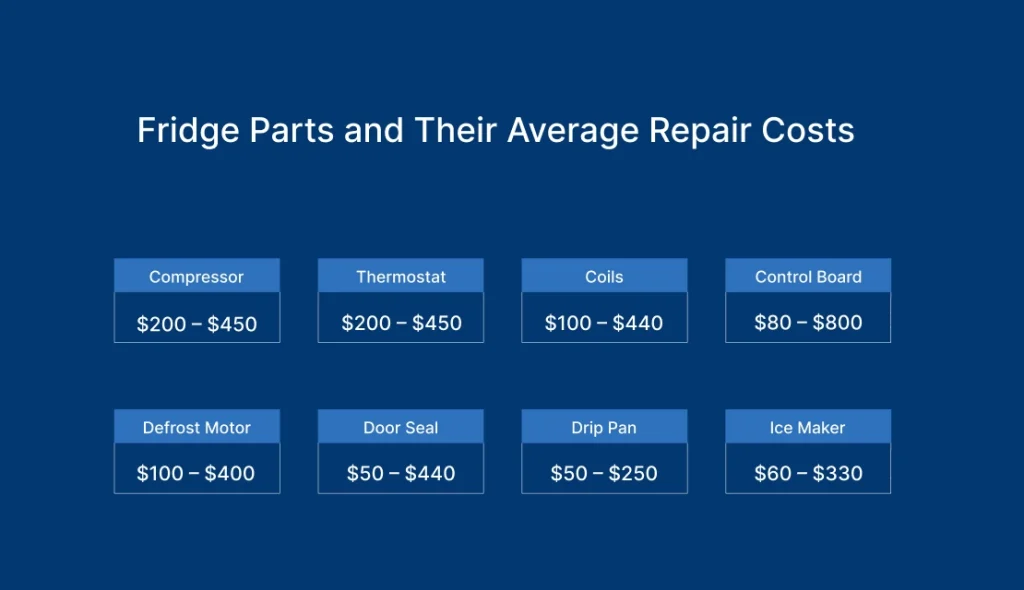
Understanding typical repair costs helps you decide whether to fix your refrigerator or consider a replacement. Repair prices vary widely depending on the issue and your location. Knowing what each repair might cost prepares you for the conversation with your technician and helps avoid unexpected expenses.
Thermostat Replacement
The thermostat controls the fridge’s temperature, so a faulty one can lead to spoiled food. Replacing a thermostat generally costs between $100 and $250, including parts and labor. If you notice your fridge is too warm or too cold, this could be the culprit.
Compressor Repair
The compressor is the heart of your refrigerator’s cooling system. Repairing or replacing it is often the most expensive fix, with costs ranging from $400 to $1,200. Since this repair can be pricey, ask your technician if replacement is a better option for older units.
Condenser Coil Cleaning
Dirty condenser coils can reduce efficiency and increase energy bills. Cleaning them is a simple fix, usually costing between $100 and $200. You can even clean them yourself with a vacuum, but professionals ensure a thorough job that might prevent future breakdowns.
Door Seal Fixes
A broken or worn door seal causes cold air to leak, forcing your fridge to work harder. Fixing or replacing the seal typically costs $75 to $200. Have you checked your door seals recently? Simple maintenance here can save you money on energy.
Factors Affecting Repair Prices
Repair costs for refrigerators vary widely. Several key factors influence the final price. Understanding these can help manage expectations and budget wisely.
Each factor impacts how much you will pay for parts and labor. Some cause small price changes, while others can greatly increase the cost.
Brand And Model
High-end brands often have more expensive parts. Popular models may have more repair options available. Rare or discontinued models can raise repair costs due to limited parts.
Age Of Refrigerator
Older refrigerators tend to need more repairs. Worn-out components can be costly to replace. Newer models might be cheaper to fix but may require specialized parts.
Parts Availability
Easy-to-find parts lower repair prices. Hard-to-source components increase costs. Some parts need to be ordered, adding to wait times and expenses.
Labor Charges
Technician rates vary by location and expertise. Complex repairs take more time and cost more. Emergency or after-hours services usually have higher fees.

Credit: www.angi.com
Diy Vs. Professional Repair
Deciding whether to fix your refrigerator yourself or hire a professional is important. Each choice has its own costs and benefits. Understanding these can help save money and avoid further damage.
When To Attempt Diy
Simple problems like cleaning coils or replacing a light bulb are good for DIY. Basic tools and clear instructions make these fixes easy. Checking the thermostat or unclogging a drain can also be done at home.
DIY is suitable if you have some repair experience and feel confident. Small repairs can cost less and take less time when done yourself.
Risks Of Diy Repair
Complex issues like compressor failure or refrigerant leaks need special skills. Mistakes can cause more damage or safety hazards. Handling refrigerants requires certification and proper equipment.
Wrong repairs may void warranties or increase electricity bills. There is also risk of electric shock or injury during repair.
Benefits Of Hiring Experts
Professionals diagnose problems accurately and fix them quickly. They have the right tools and training to handle all refrigerator parts safely.
Hiring experts protects your appliance warranty and ensures long-lasting repairs. It also saves time and avoids costly mistakes.
Cost-saving Tips
Fixing a refrigerator can be costly, but there are smart ways to keep expenses down without sacrificing quality. Knowing where to save money helps you avoid unnecessary repairs and extends your fridge’s life. Let’s look at practical tips that put you in control of your repair budget.
Regular Maintenance
Keeping your fridge clean and well-maintained prevents many common problems. Simple tasks like cleaning the coils and checking door seals can stop small issues from turning expensive. Have you checked your fridge’s temperature settings lately? Setting it too low can strain the compressor and increase repair chances.
Scheduling a professional tune-up once a year can catch hidden problems early. This small investment often saves you from costly breakdowns down the road.
Warranty And Insurance
Before paying out of pocket, check if your refrigerator is still under warranty. Manufacturers sometimes cover parts and labor for repairs, which can save you a significant amount. Don’t forget to review any extended warranties or service plans you might have purchased.
Also, some home insurance policies cover appliance repairs or replacements. It’s worth calling your provider to find out if your fridge repair qualifies. Have you ever explored your insurance options before calling a technician?
Choosing The Right Technician
Picking a skilled and trustworthy technician can make a big difference in cost and quality. Ask for recommendations and read reviews to avoid costly mistakes. A less experienced repair person might charge less upfront but cause more problems later.
Request detailed estimates and compare prices before committing. Sometimes paying a bit more upfront saves you from repeat repairs and wasted time. What questions do you usually ask before hiring a repair service?

Credit: www.searshomeservices.com
When To Replace Instead Of Repair
Repair costs near or above half the price of a new refrigerator often mean replacement is better. Frequent breakdowns or outdated models also suggest buying new saves money in the long run. Consider energy efficiency and repair history before deciding.
Deciding whether to repair or replace your refrigerator can be quite a dilemma. You might find yourself weighing the costs of repair against the benefits of a brand-new appliance. While repairs can sometimes breathe new life into your fridge, there are times when replacement might be the more sensible choice. Understanding when to make this call can save you time, money, and energy.Repair Cost Vs. Replacement Cost
When your refrigerator starts misbehaving, the first thing to consider is the cost of repair versus the cost of a new one. A good rule of thumb is the 50% rule: if the repair costs more than half the price of a new fridge, replacement might be the better option. For instance, if repairing a faulty compressor costs $500 and a new fridge costs $1000, it might make more sense to invest in a new appliance. Plus, a new purchase often comes with a warranty, offering peace of mind.Energy Efficiency Considerations
Older refrigerators can be energy hogs, significantly adding to your electricity bill. Newer models are designed to be more energy-efficient, which can lead to substantial savings over time. Check the energy efficiency rating of your current fridge. If it’s rated poorly, replacing it with an energy-efficient model could reduce your monthly expenses and benefit the environment.Signs Your Fridge Is Beyond Repair
Some telltale signs indicate when a fridge is beyond saving. If it’s constantly breaking down or you notice excessive frost buildup, it might be time to let go. Water leakage, unusual noises, or a fridge that won’t maintain consistent temperatures are red flags. If you’ve repeatedly called the repairman for the same issues, it’s time to question whether continued repairs are worth the hassle. Have you ever found yourself frustrated with persistent fridge issues? Share your experiences and insights in the comments. Would you opt for a repair or a replacement?Frequently Asked Questions
How Much Does Refrigerator Repair Cost On Average?
Refrigerator repair typically costs between $150 and $400. The price varies by issue type and part replacement. Labor fees and brand also affect the total cost. Minor fixes are cheaper, while compressor repairs are pricier.
What Factors Influence Refrigerator Repair Pricing?
Repair costs depend on the problem’s complexity, part prices, and technician fees. Brand and refrigerator model also impact costs. Emergency services or same-day repairs might increase charges. Location and service provider reputation can affect pricing too.
Can I Fix My Refrigerator Myself To Save Money?
Simple issues like cleaning coils or replacing filters are DIY-friendly. Complex problems need professional expertise to avoid damage. DIY repairs can save money but risk voiding warranties or causing further issues.
When Is Refrigerator Repair Not Worth The Cost?
If repair costs exceed 50% of a new fridge price, replacement is better. Frequent breakdowns or outdated models also justify buying a new refrigerator. Energy efficiency and warranty status should influence your decision.
Conclusion
Fixing a refrigerator can cost less than buying a new one. Small repairs often save money and extend its life. Always check the problem carefully before deciding. Some issues need a professional’s help for safety. Regular maintenance keeps your fridge working well longer.
Knowing repair costs helps you plan your budget. Don’t ignore strange noises or leaks; they matter. A working fridge keeps your food fresh and safe. Take action soon to avoid bigger problems later. Simple steps can protect your investment and peace of mind.