Is your refrigerator acting up, leaving you wondering how much a repair might cost? You’re not alone.
When your fridge stops working properly, it can cause stress and disrupt your daily routine. But before you panic or rush to replace it, understanding the typical expenses for refrigerator repair can save you both time and money. You’ll discover clear answers about repair costs, what affects those prices, and how to decide if fixing your fridge is worth it.
Keep reading to make the smartest choice for your home and budget.
Factors Affecting Repair Costs
Understanding the factors that affect refrigerator repair costs can help you make smarter decisions when your appliance breaks down. Repair prices aren’t fixed—they vary depending on several key elements. Knowing what influences these costs prepares you for unexpected expenses and helps you decide whether to repair or replace.
Type Of Refrigerator
The model and style of your refrigerator play a big role in repair costs. Basic top-freezer models usually have cheaper parts and simpler repairs. On the other hand, French door or built-in refrigerators often require specialized components and more labor, driving up the price.
Have you noticed how some newer refrigerators come with smart features? These can complicate repairs, as technicians may need extra training or tools. So, your fridge’s design directly impacts how much you’ll pay to fix it.
Common Issues
Not all refrigerator problems cost the same to fix. Simple issues like a clogged defrost drain or a faulty thermostat are usually affordable. More serious problems, such as compressor failure or coolant leaks, can be quite expensive.
Think about your last fridge repair: was it a quick fix or a major overhaul? Minor repairs can often be done in under an hour, while complex issues might require multiple visits. The nature of the problem heavily influences the final bill.
Parts And Labor
Parts can vary widely in cost depending on brand and availability. Original equipment manufacturer (OEM) parts typically cost more than generic alternatives. Sometimes, waiting for a part to be shipped can add to labor charges if the technician has to return for a second visit.
Labor rates differ based on the technician’s expertise and the time needed. Some repairs are straightforward, while others require dismantling key components, which takes longer. Always ask if the quote includes both parts and labor to avoid surprises.
Location And Service Provider
Where you live affects repair costs too. Urban areas with higher living costs usually have higher service charges. Rural locations might have fewer repair shops, which can lead to higher travel fees or longer wait times.
Your choice of service provider matters as well. Authorized dealers might charge more but offer warranty coverage. Independent repair shops often provide competitive prices but vary in quality. Have you checked reviews or asked for multiple quotes before deciding?

Credit: www.searshomeservices.com
Average Repair Costs By Issue
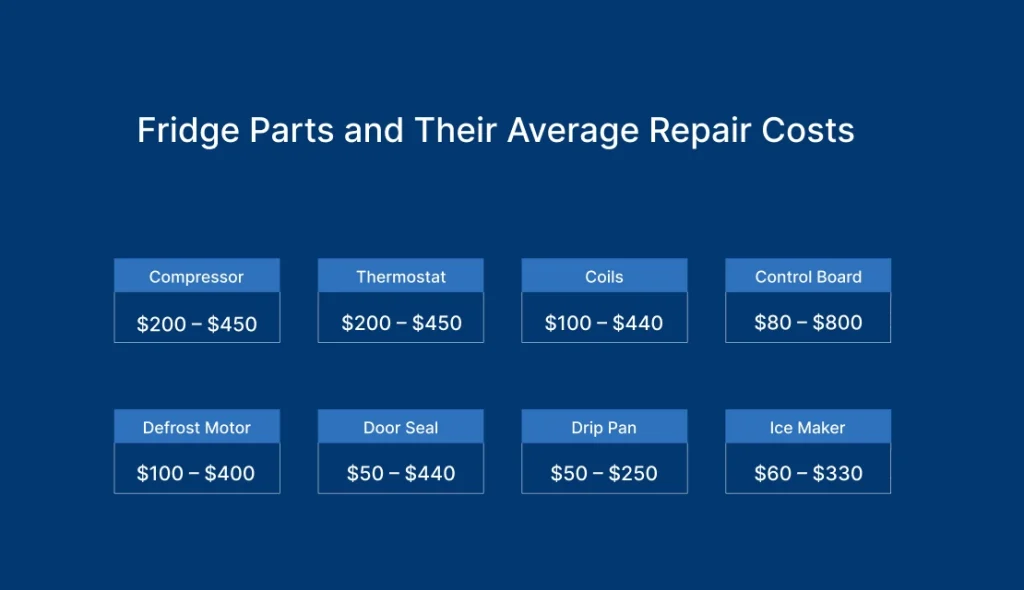
Understanding average repair costs helps plan your budget better. Different refrigerator problems vary in repair expenses. Some repairs are quick fixes, while others need parts replacement. Knowing common issue costs avoids surprises and stress.
Thermostat Replacement
Replacing a thermostat usually costs between $100 and $200. The part itself is affordable. Labor charges depend on technician rates and time needed. A faulty thermostat causes cooling problems, making repair necessary.
Compressor Repair
Compressor repairs are among the most expensive, ranging from $300 to $700. The compressor is the fridge’s engine. Repair or replacement requires skill and special tools. Sometimes, replacing the compressor saves more money than repairing.
Condenser Coil Cleaning
Cleaning condenser coils costs $50 to $150 on average. Dirty coils reduce cooling efficiency and increase energy use. This service is simple but important for fridge health. Regular cleaning prevents bigger, costly repairs later.
Door Seal Fixes
Fixing or replacing door seals costs $80 to $200. Worn seals let cold air escape, raising energy bills. New seals keep the fridge airtight and efficient. This repair is quick but important for proper cooling.
Diy Vs Professional Repair
Repair costs vary greatly between DIY fixes and professional services. DIY saves money but needs skills and tools. Professionals charge more but ensure safe, lasting repairs.
Deciding between DIY and professional refrigerator repair can be a challenging choice. On one hand, handling the repair yourself could save you money. On the other, hiring a professional might ensure a job well done without the hassle or risk.When To Diy
Tackling a DIY repair can be rewarding, especially for minor issues like replacing a light bulb or cleaning the condenser coils. These are tasks you can handle with basic tools and minimal technical know-how. If you’re comfortable with simple repairs, you can save both time and money. However, be realistic about your skills. If the issue involves electrical components or refrigerant, it might be best to step back. Consider your comfort level and the complexity of the task before diving in.Risks Of Diy
DIY repairs carry certain risks, including the potential to cause further damage. A small mistake can lead to costly repairs or even a complete refrigerator replacement. You might also void any warranty if you tamper with parts you’re not supposed to. There’s also a safety concern. Refrigerators involve electrical parts, and mishandling can result in injury. Always prioritize safety and know your limits.Choosing A Technician
Hiring a professional technician can offer peace of mind and expertise. To find the right one, start by asking for recommendations from friends or checking online reviews. Look for technicians who are certified and have a good track record. Consider the cost of repair versus replacement. A professional can provide an accurate estimate and help you make an informed decision. Remember, the cheapest option isn’t always the best, so weigh the potential savings against the quality of service.
Credit: www.wacoappliancerepairs.com
Cost-saving Tips
Repairing a refrigerator can be expensive, but there are ways to save money. Smart practices help keep your fridge in good shape and lower repair costs. Knowing how to protect your investment pays off in the long run.
Maintenance Practices
Regular care prevents many common fridge problems. Clean condenser coils every few months to improve efficiency. Check door seals to keep cold air inside. Defrost manually if ice builds up too much. Keep the fridge level to avoid strain on parts. These simple steps reduce the chance of costly repairs.
Warranty And Insurance
Check if your refrigerator still has a warranty. Many models come with a one-year or longer coverage. Some credit cards offer extended warranty when you buy appliances. Home insurance policies sometimes cover appliance repairs or replacements. Read terms carefully to know what is covered. Using warranty or insurance saves money on parts and labor.
Comparing Quotes
Get multiple repair quotes before choosing a service. Prices vary between companies and technicians. Ask for detailed estimates including parts and labor. Check reviews and reputation for quality work. Choose a reliable service with fair pricing. Comparing quotes ensures you pay a reasonable price for repairs.
Signs You Need Repair
Recognizing the signs that your refrigerator needs repair can save you from spoiled food and unexpected expenses. Ignoring early warnings often leads to bigger problems that cost more to fix. Here are some key signals to watch for that indicate it’s time to call a professional.
Temperature Fluctuations
Is your fridge failing to keep things consistently cold? When you notice your ice cream melting faster or vegetables wilting sooner, temperature swings might be the culprit. This issue can point to a faulty thermostat or compressor, which needs immediate attention to prevent food spoilage.
Have you checked if the fridge feels warmer inside than usual? Even small changes can be a red flag. Don’t wait until your groceries turn bad—address temperature problems early.
Strange Noises
Does your refrigerator make buzzing, clicking, or rattling sounds that weren’t there before? These noises often indicate mechanical parts struggling or electrical issues starting to develop. Ignoring unusual sounds can lead to complete breakdowns.
Think about the last time you heard a loud hum or irregular clicking. That could mean the fan motor or compressor is failing. Listening closely can help you catch problems before they worsen.
Water Leaks
Finding puddles or moisture around your fridge is more than just an annoyance—it’s a sign something is wrong. Leaks often come from clogged defrost drains or damaged seals, which can cause water to pool and damage floors.
Have you noticed any water collecting inside or outside your refrigerator? This might seem minor but can lead to mold or electrical hazards if left unchecked. Fixing leaks promptly protects your home and your appliance’s health.

Credit: www.selecthomewarranty.com
Frequently Asked Questions
How Much Does Refrigerator Repair Usually Cost?
Refrigerator repair costs vary from $150 to $400 on average. The price depends on the issue, parts, and labor charges. Minor repairs cost less, while compressor or motor replacements are pricier. Always get a detailed estimate before authorizing repairs.
What Factors Affect Refrigerator Repair Prices?
Repair prices depend on the type of problem, part availability, and labor time. Brand and model complexity also influence costs. Emergency or same-day service may add extra fees. Understanding these factors helps manage expectations and budget accordingly.
Are Refrigerator Repair Costs Worth It?
Repairing is often cost-effective for minor issues or newer models. For older or heavily damaged units, replacement might be cheaper long-term. Evaluate repair quotes against the cost of a new fridge before deciding.
Can I Save On Refrigerator Repair Expenses?
You can save by comparing multiple repair quotes and choosing certified technicians. Regular maintenance prevents costly breakdowns. DIY fixes are risky but might help with minor issues, saving service fees.
Conclusion
Refrigerator repair costs vary depending on the problem. Simple fixes often cost less than major repairs. Knowing common prices helps you plan your budget. Always compare repair quotes from trusted technicians. Fixing your fridge early can save money later. Understanding repair costs keeps your kitchen running smoothly.
Choose repairs wisely to avoid unnecessary expenses. Keep your fridge maintained to reduce future problems. A working refrigerator is key for fresh food daily.