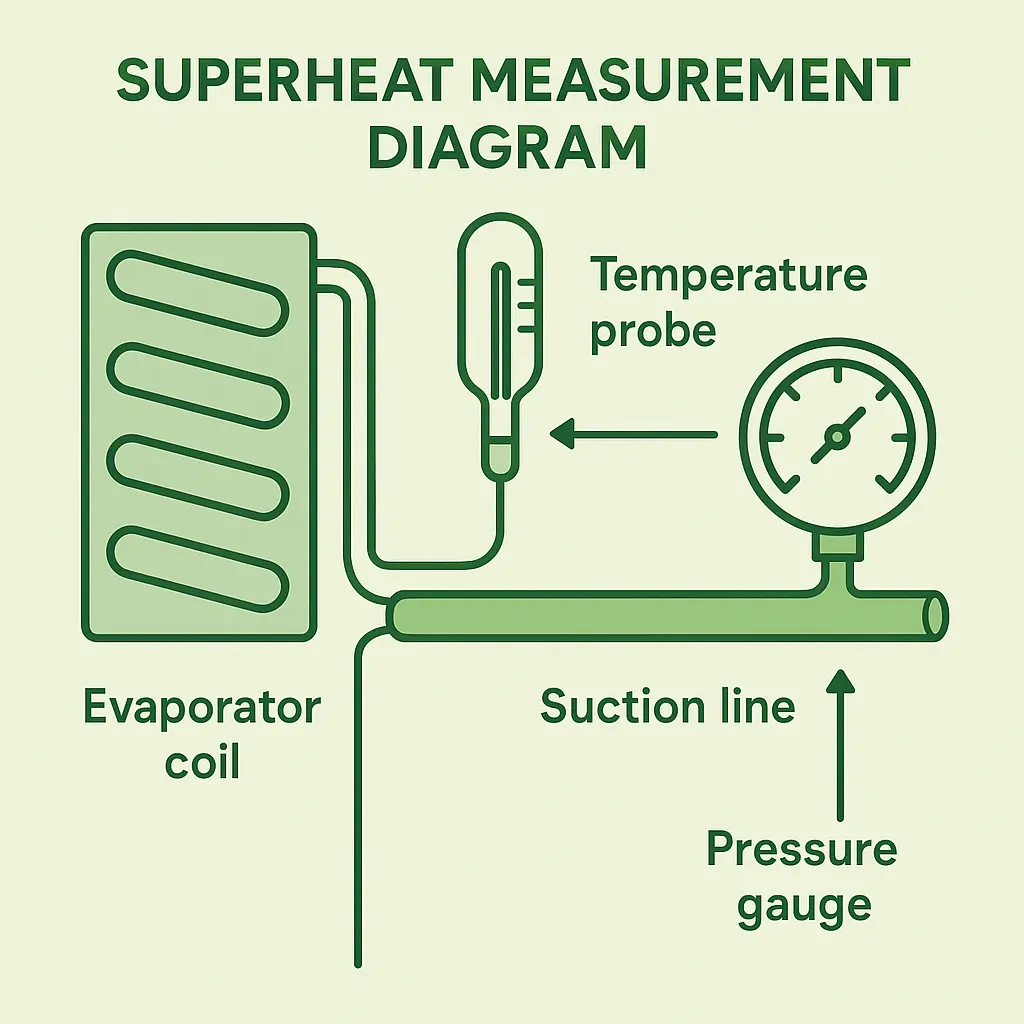
Have you ever noticed your air conditioner or refrigerator not cooling as well as it should? One hidden culprit might be an increase in refrigerant superheat.
But what exactly causes this change, and why should you care? Understanding which system condition leads to higher superheat can help you spot problems early, save money on repairs, and keep your equipment running smoothly. Keep reading to discover the key factors that could be affecting your system’s performance—and how knowing this can make a real difference for you.
Basics Of Refrigerant Superheat
Understanding refrigerant superheat is key for HVAC system health and efficiency. It tells us how much the refrigerant heats up after turning into a gas in the evaporator. This simple measure helps technicians check if the system works right. The basics of superheat reveal much about system performance and safety.
What Is Superheat
Superheat is the temperature increase of refrigerant vapor above its boiling point. It happens after the refrigerant fully evaporates inside the evaporator coil. This extra heat ensures the refrigerant leaves as a dry vapor, not a liquid. Measuring superheat helps avoid liquid refrigerant reaching the compressor, which can cause damage.
Role In Hvac Systems
Superheat protects the compressor by ensuring only vapor returns to it. It indicates how well the evaporator uses the refrigerant. Low superheat means the coil might flood with liquid, risking damage. High superheat suggests the coil isn’t getting enough refrigerant, lowering cooling efficiency. Proper superheat helps balance system safety and performance.

Credit: www.pureecoinc.com
Impact Of Low Refrigerant Charge
Low refrigerant charge can significantly impact the performance of your cooling system, especially when it comes to refrigerant superheat. When the system doesn’t have enough refrigerant, the superheat value tends to increase, signaling an imbalance. Understanding why this happens helps you catch issues early and maintain efficient system operation.
How Low Charge Affects Superheat
When there isn’t enough refrigerant, less liquid enters the evaporator coil. This causes the coil to receive more heat than usual, raising the temperature of the refrigerant vapor leaving the coil.
The result? Superheat increases because the vapor is hotter relative to its saturation temperature. This condition often means the evaporator isn’t fully saturated with liquid refrigerant, reducing cooling capacity.
Have you ever noticed your AC running longer but not cooling effectively? That could be a sign of low refrigerant causing higher superheat and reduced efficiency.
Signs Of Refrigerant Leak
Low refrigerant charge usually points to a leak somewhere in the system. Spotting the leak early can save you from costly repairs and energy waste.
- Unusual hissing sounds near refrigerant lines
- Oil residue or stains around fittings and connections
- Frequent need to recharge refrigerant
- Reduced cooling performance despite normal system operation
If you notice any of these signs, it’s time to inspect your system or call a professional. Ignoring leaks not only raises superheat but also risks damaging the compressor and other components.
Effect Of Blocked Or Dirty Evaporator Coils
Blocked or dirty evaporator coils can have a significant impact on the performance of your HVAC system, particularly affecting the refrigerant superheat levels. When these coils, which are responsible for absorbing heat from the air, become clogged, they hinder the system’s ability to efficiently transfer heat. This can lead to an increase in refrigerant superheat, causing your air conditioning unit to work harder and less efficiently.
Restricted Refrigerant Flow
When evaporator coils are blocked or dirty, the flow of refrigerant is restricted. This restriction prevents the refrigerant from absorbing enough heat as it passes through the coils. As a result, the refrigerant leaves the evaporator at a higher temperature than normal, leading to increased superheat levels.
Consider this: your HVAC system is trying to cool your home on a hot day, but the refrigerant can’t pick up enough heat due to restricted flow. This means your system is not only working harder, but it’s also not cooling as effectively. It’s like trying to breathe through a straw—you’re working more but achieving less.
Impact On Heat Exchange
Blocked or dirty evaporator coils also impede the heat exchange process. When the coils are not clean, they cannot effectively absorb heat, which is essential for cooling the air that circulates through your home. This inefficiency in heat exchange results in warmer air being blown back into your living space, defeating the purpose of running your air conditioner.
Imagine expecting a cool breeze on a scorching day, but receiving a warm gust instead. That’s what happens when your system struggles with heat exchange due to dirty coils. Regular maintenance and cleaning of these coils can prevent this issue, ensuring your system operates at peak efficiency.
Have you checked your evaporator coils lately? A simple cleaning could make all the difference in your system’s performance and your comfort.

Credit: www.pureecoinc.com
Influence Of Faulty Expansion Valve
The expansion valve plays a crucial role in regulating refrigerant flow into the evaporator. When this valve malfunctions, it directly impacts the superheat levels, often causing them to rise unexpectedly. Understanding how a faulty expansion valve influences superheat can help you diagnose cooling system issues more accurately and save you from unnecessary repairs.
Malfunction Types
- Sticking Valve:The valve may stick partially or fully closed, restricting refrigerant flow.
- Valve Overfeeding:Sometimes the valve opens too much, allowing excess refrigerant into the evaporator.
- Sensor or Bulb Issues:Faulty sensing bulbs or thermostatic elements can misread temperatures, causing improper valve adjustments.
Each type of malfunction creates distinct problems, but they all tend to disturb the delicate balance needed for correct superheat levels.
Consequences On Superheat Levels
A sticking valve reduces refrigerant entering the evaporator, causing the refrigerant to evaporate too quickly. This leaves more vapor to absorb heat, which increases the superheat reading. Have you noticed your system running hotter than usual without a clear reason? This could be the culprit.
On the other hand, an overfeeding valve floods the evaporator with liquid refrigerant, reducing superheat and risking compressor damage. But focusing on increased superheat, the common sign points back to restrictions or sensing errors in the expansion valve.
By spotting these signs early, you can prevent system inefficiencies and costly repairs. Next time you face high superheat values, check the expansion valve condition before jumping to other conclusions.
Role Of High Load Conditions
High load conditions significantly impact refrigerant superheat levels in cooling systems. When the system experiences a high load, it must work harder to absorb and transfer heat. This increased demand can lead to changes in refrigerant behavior, especially in the superheat value.
Excessive Heat Absorption
Under high load, the system absorbs more heat from the environment. The refrigerant evaporates faster to handle this extra heat. This process increases the vapor temperature at the evaporator outlet.
Higher vapor temperatures mean the refrigerant has more superheat. The refrigerant leaves the evaporator as a hotter vapor, raising the superheat value. Excessive heat absorption strains the system and changes refrigerant properties.
System Response To Increased Load
The system adjusts to handle the higher load by increasing compressor work. The refrigerant flow may not keep up with the heat absorbed. This imbalance causes the refrigerant to become more superheated.
Expansion valves might also react by restricting or allowing more refrigerant flow. If the valve restricts flow, superheat rises even more. The system’s protective mechanisms try to avoid liquid refrigerant reaching the compressor.
Impact Of Improper Airflow
Improper airflow can significantly affect the performance of an HVAC system. When air does not flow correctly, it disrupts the heat exchange process. This disruption often leads to an increase in refrigerant superheat. Understanding the impact of airflow issues helps identify and fix system problems quickly.
Causes Of Airflow Issues
- Dirty or clogged air filters block airflow.
- Closed or blocked vents reduce air movement.
- Faulty blower motors fail to push enough air.
- Duct leaks cause air to escape before reaching coils.
- Improperly sized ducts restrict air volume.
Effect On Refrigerant Temperature
Poor airflow causes the evaporator coil to get less air. The coil cannot absorb enough heat from the air. As a result, the refrigerant stays cooler longer inside the coil.
This causes the refrigerant to evaporate too early. The superheat value rises because the refrigerant becomes hotter after evaporation. Higher superheat means the system works harder and less efficiently.
Effects Of Sensor Or Control Failures
Sensor or control failures can significantly impact the refrigerant superheat in your HVAC system. These issues often lead to inaccurate readings or improper adjustments, causing the system to either overcompensate or underperform. Understanding how these failures affect superheat can help you spot problems early and maintain efficient cooling.
Thermostat And Sensor Errors
Thermostats and sensors are critical for measuring temperature and controlling refrigerant flow. If a sensor gives false readings, the system may think the refrigerant is cooler than it actually is. This can cause the system to reduce refrigerant flow, increasing superheat.
Imagine your thermostat sensor is placed near a heat source like a lamp. It might read higher temperatures and signal the system to adjust incorrectly. This misreading leads to inefficient cooling and higher energy bills.
To avoid this, regularly check sensor placement and calibration. Faulty sensors should be replaced promptly to keep superheat in the correct range.
Control System Malfunctions
The control system manages how refrigerant circulates based on sensor inputs. When it malfunctions, it may fail to regulate the refrigerant flow properly. This often results in excessive superheat, as the system cannot maintain the right balance.
A control board glitch or wiring issue can disrupt the system’s response, leaving your compressor at risk of damage from overheating. Have you ever noticed your AC running but the air feels less cool? Control failures might be the culprit.
Routine inspections and software updates can prevent control malfunctions. If you suspect a control problem, getting a professional diagnosis can save you from costly repairs down the line.

Credit: www.pureecoinc.com
Summary Of Common Causes
Refrigerant superheat can rise due to several common system conditions. Understanding these causes helps maintain efficient cooling and prevents damage. Each condition affects superheat differently, requiring specific attention. This summary highlights typical reasons for increased refrigerant superheat.
Comparing Different Conditions
- Low refrigerant charge reduces liquid supply to the evaporator.
- Dirty or clogged filters limit airflow over the coil.
- Incorrect expansion valve settings restrict refrigerant flow.
- Evaporator coil frost or dirt lowers heat transfer efficiency.
- Excessive compressor speed can cause high superheat readings.
Each condition changes how much refrigerant evaporates, impacting superheat levels. Low refrigerant means less liquid to absorb heat. Blocked airflow means the coil can’t absorb heat well. The expansion valve controls refrigerant flow; if wrong, superheat rises. Dirty coils reduce heat exchange, increasing superheat. Fast compressor speed can push refrigerant too quickly, causing high superheat.
Troubleshooting Tips
- Check refrigerant levels regularly to avoid low charge.
- Clean or replace filters to ensure proper airflow.
- Inspect and adjust expansion valve settings carefully.
- Examine evaporator coils for frost or dirt buildup.
- Monitor compressor operation for unusual speeds.
Start troubleshooting with the simplest checks, like filters and refrigerant levels. Use temperature and pressure gauges to measure superheat. Adjust components step-by-step and observe changes. Proper maintenance prevents many superheat issues. Document all changes for future reference.
Frequently Asked Questions
What Causes Refrigerant Superheat To Increase?
Refrigerant superheat increases when the evaporator is starved of liquid refrigerant. This can happen due to low refrigerant charge, restricted flow, or malfunctioning metering devices. Higher superheat indicates less liquid refrigerant entering the evaporator, causing inefficient heat absorption and potential compressor damage.
How Does Low Refrigerant Charge Affect Superheat?
Low refrigerant charge reduces the amount of refrigerant entering the evaporator coil. This causes the refrigerant to vaporize earlier, raising the superheat value. Elevated superheat signals insufficient cooling capacity and risks overheating the compressor, potentially leading to system failure.
Can A Faulty Expansion Valve Increase Superheat?
Yes, a faulty expansion valve can cause higher superheat. If the valve is stuck partially closed or clogged, it restricts refrigerant flow. This limits liquid refrigerant supply to the evaporator, increasing superheat and reducing cooling efficiency.
Does Evaporator Coil Freezing Affect Superheat Levels?
Evaporator coil freezing usually decreases superheat because liquid refrigerant doesn’t fully vaporize. However, if the coil thaws unevenly or airflow is restricted, it can cause superheat to rise. Proper airflow and coil maintenance are essential for stable superheat readings.
Conclusion
Refrigerant superheat can rise due to several system issues. Low refrigerant charge often causes this problem. Blocked or dirty filters also increase superheat. Faulty expansion valves may let less refrigerant flow. These conditions reduce cooling efficiency and risk damage. Regular system checks help catch problems early.
Keeping the system clean and charged is key. Understanding these causes helps maintain HVAC performance. Stay alert to changes in superheat readings. Proper care extends system life and saves costs.