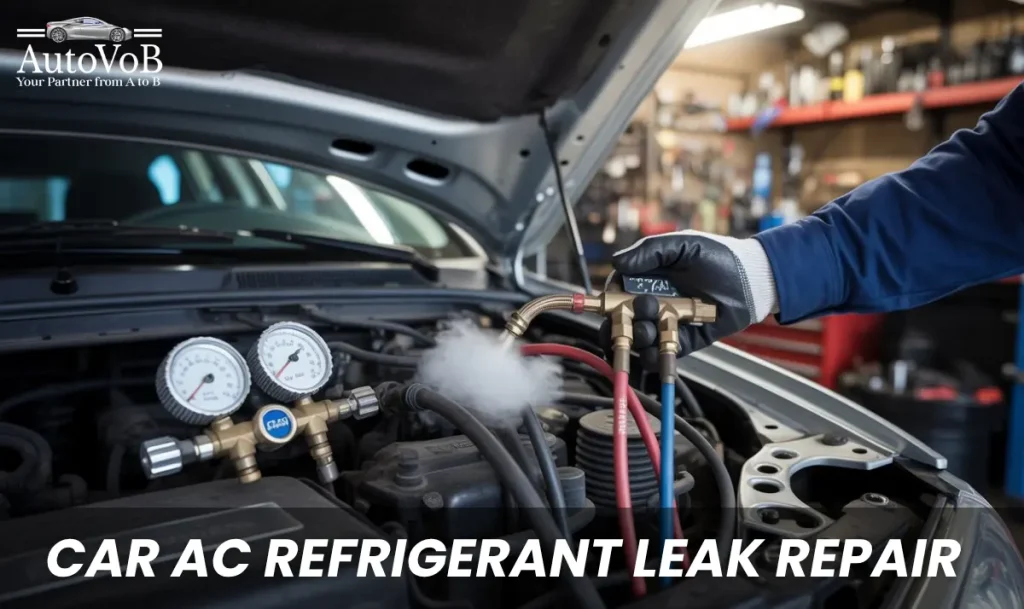
Is your car’s air conditioner not cooling like it used to? You might have a refrigerant leak.
This common problem can make your drive uncomfortable, especially on hot days. But don’t worry—you don’t have to be an expert to fix it. You’ll learn simple, step-by-step ways to find and repair a refrigerant leak in your car. By the end, you’ll know how to save money and get your AC blowing cold again.
Keep reading, and take control of your car’s comfort today.
Signs Of Refrigerant Leak
Detecting a refrigerant leak early saves your car’s air conditioning system. Leaks reduce cooling power and may cause damage. Knowing the signs helps you act fast and avoid costly repairs.
Common Symptoms
- Air conditioner blows warm or less cold air than usual.
- Unusual hissing or bubbling sounds near AC components.
- Visible oily residue around AC fittings or hoses.
- Frost buildup on AC pipes or compressor.
- Car’s AC compressor cycles on and off frequently.
Impact On Car Performance
Low refrigerant affects engine efficiency and fuel consumption.
The AC system may strain, causing increased engine load.
Uneven cooling creates discomfort during drives.
Prolonged leaks can damage the compressor, leading to expensive repairs.
Credit: wefixautoservices.com
Tools And Materials Needed
Fixing a refrigerant leak in your car requires the right tools and materials. Having these ready makes the repair easier and safer. The tools help you find and fix the leak quickly. Safety gear protects you during the process.
Essential Equipment
- Refrigerant Leak Detector – to locate the leak precisely
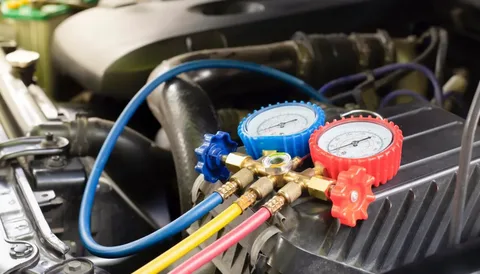
- Manifold Gauge Set – to check system pressure
- Vacuum Pump – to remove air and moisture from the system
- Refrigerant Recharge Kit – to refill the system with the correct refrigerant
- UV Dye and UV Light – to spot leaks with glowing dye
- Wrenches and Screwdrivers – for loosening and tightening fittings
- Sealant or Leak Repair Kit – for small leaks in hoses or joints
Safety Gear
- Safety Glasses – to protect your eyes from chemicals
- Gloves – to avoid skin contact with refrigerant
- Protective Clothing – to prevent refrigerant burns
- Face Mask – to avoid inhaling fumes
- Fire Extinguisher – in case of accidental fire
Locating The Leak
Finding the source of a refrigerant leak is crucial for fixing your car’s AC system. It saves time and avoids unnecessary repairs. Leaks often appear in hard-to-see places. Careful checking can reveal where the problem lies.
Visual Inspection
Start by cleaning the AC system components. Look for oily residue or stains around hoses, connections, and the compressor. These marks often indicate a leak spot. Check the condenser and evaporator for damage or corrosion. Pay special attention to rubber seals and O-rings. Cracks, cracks, or loose fittings may cause leaks. Use a flashlight to see tight or dark areas clearly. Small leaks might only show tiny bubbles or wet spots.
Using Leak Detection Methods
Visual checks might miss small leaks. Use detection tools to find hidden problems. A UV dye can be added to the refrigerant. Run the AC system for some time, then use a UV light. Leaks glow under this light, making them easy to spot.
Another option is an electronic leak detector. It senses refrigerant gas in the air near components. Move it slowly along pipes and joints. The device beeps or lights up near leaks.
Soap water also helps. Apply a soap solution to suspected areas. Watch for bubbles forming, which show escaping gas. This method is simple and effective for small leaks.
Preparing For Repair
Preparing for a refrigerant leak repair in your car is a crucial step that sets the foundation for a successful fix. Before diving into the repair, you need to ensure the system is safe to work on and that the affected area is ready for inspection and sealing. Taking these precautions not only protects you but also increases the chance of catching the leak early and fixing it effectively.
Discharging The System
Before you start repairing, safely discharge the AC system to avoid any pressure buildup. This means releasing the refrigerant in a controlled way, which often requires specialized equipment or professional help. Handling refrigerant improperly can be dangerous, so check local regulations and consider visiting a certified technician if you’re unsure.
Have you ever thought about the environmental impact of releasing refrigerant into the air? It’s important to use recovery machines that capture the gas instead of letting it escape. This step not only protects the environment but also helps you comply with legal standards.
Cleaning The Area
Once the system is discharged, clean the area around the suspected leak. Dirt, oil, and debris can hide the source and make sealing difficult. Use a clean cloth and mild cleaner to wipe down hoses, connections, and compressor surfaces.
Take your time here; a clean surface helps you spot tiny cracks or holes. Plus, it ensures that sealants or patches adhere properly. Have you noticed how a small amount of grime can completely hide a problem? Don’t rush this step—your success depends on it.
Fixing Small Leaks
Fixing small refrigerant leaks in your car can save you a trip to the mechanic and prevent further damage to your vehicle’s AC system. These leaks often occur in hoses, connections, or small cracks that are sometimes hard to spot. Acting quickly and using the right approach can keep your AC running smoothly and save money on expensive repairs.
Using Sealants
Sealants are a popular choice for handling minor refrigerant leaks. These are chemical additives you pour into your AC system, and they travel through the refrigerant lines to the leak site.
Sealants work by solidifying upon contact with air, filling tiny cracks or holes. However, not all sealants are compatible with every AC system, so check your car’s manual or product instructions carefully.
Remember, sealants are a temporary fix. They’re best for tiny leaks and can sometimes cause blockages if overused. Have you ever tried a sealant and noticed your AC performance improving immediately? That quick fix can be a lifesaver during hot days.
Applying Patches
Patching is a hands-on way to fix leaks, especially if you locate the exact spot of the damage. You can use specialized AC repair patches designed to stick onto hoses or metal parts.
Before applying, clean the area thoroughly to remove dirt and oil, which helps the patch stick better. Press the patch firmly and hold it in place for a few minutes to ensure a strong bond.
This method works well for leaks on accessible parts of the AC system but isn’t ideal for hidden or internal leaks. Have you checked your AC hoses closely? A simple patch might just be all your car needs to keep cool.
Repairing Larger Leaks
Repairing larger refrigerant leaks in your car’s AC system requires more than just a quick patch. These leaks often involve damaged components or cracks that demand thorough attention. Tackling them properly not only restores your AC’s efficiency but also prevents further damage and costly repairs down the road.
Replacing Components
When a leak is too large or the part is severely damaged, replacing the faulty component is often the best solution. Parts like hoses, O-rings, or even the condenser might need swapping out to ensure the system seals correctly.
Check the damaged area carefully to identify the exact part causing the leak. Sometimes, a worn-out hose can be the culprit, and replacing it can save you from repeated leaks.
Make sure to get parts that match your car model to avoid compatibility issues. Have you ever tried fixing a leak only to realize the replacement part didn’t fit? Avoid that hassle by double-checking part numbers before purchasing.
Soldering And Welding Tips
If you’re skilled with tools, soldering or welding can be effective for sealing cracks in metal components like the condenser or evaporator. Proper technique is crucial to create a leak-proof seal.
Before you start, clean the area thoroughly to remove dirt, grease, and old sealant. This helps the solder or weld adhere better and last longer.
Use a suitable solder or welding rod designed for automotive AC systems, and apply heat carefully to avoid damaging nearby parts. Patience is key—rushing the process can lead to weak spots that leak again.
Have you noticed how a small imperfection in your weld can cause a big problem later? Paying attention to detail during this step saves you time and money in the long run.
Refilling Refrigerant
Refilling refrigerant is a key step after fixing a leak in your car’s air conditioning system. Without the right amount of refrigerant, the system cannot cool properly. It is important to choose the correct type of refrigerant and follow proper refilling methods. This ensures the AC works efficiently and lasts longer.
Choosing The Right Refrigerant
Use the refrigerant type recommended by your car manufacturer. Common types include R-134a and R-1234yf. Check your owner’s manual or label under the hood for the correct type. Using the wrong refrigerant can damage the system or reduce cooling performance.
Buy refrigerant from trusted sources. Avoid cheap or counterfeit products. Proper refrigerant protects your car and the environment.
Proper Refilling Techniques
Refill refrigerant in a well-ventilated area. Wear safety goggles and gloves to protect yourself. Attach the refrigerant can to the low-pressure service port using a proper hose and gauge set.
- Turn on the car and set AC to the highest cooling setting.
- Open the valve on the refrigerant can slowly to release gas.
- Monitor the pressure gauge closely to avoid overfilling.
- Stop refilling once the recommended pressure level is reached.
- Close the valve and remove the hose carefully.
Overfilling can cause system damage. Underfilling reduces cooling efficiency. Accurate refilling balances performance and safety.

Credit: m.youtube.com
Testing The Repair
After fixing a refrigerant leak in your car, it’s crucial to verify that the repair holds up under real conditions. Testing the repair ensures your air conditioning system runs efficiently and prevents future issues. Skipping this step could leave you with persistent problems and unexpected expenses.
Pressure Testing
Pressure testing helps confirm there are no remaining leaks in your AC system. You connect a pressure gauge to the system and observe the readings over time. A stable pressure reading means the refrigerant is staying put, while any drop signals a continuing leak.
During pressure testing, use nitrogen or dry air to pressurize the system safely. Avoid using oxygen, as it can be dangerous. If you notice pressure falling quickly, inspect the repair area again and tighten fittings or reseal as needed.
Performance Check
Once the pressure holds steady, it’s time to check how well your AC cools the cabin. Turn on your car’s air conditioning and measure the temperature difference between the vents and ambient air. A good system should cool the air by at least 20 degrees Fahrenheit.
Listen for unusual noises or watch for inconsistent airflow, which could indicate hidden issues. If your AC still isn’t performing, consider recharging the refrigerant or consulting a professional. Have you ever thought about how much energy your car’s AC uses when it’s not sealed properly?
Maintenance Tips To Prevent Future Leaks
Preventing refrigerant leaks in your car starts with good maintenance habits. Simple steps can save you from costly repairs and keep your AC running smoothly. Let’s look at practical tips you can apply to avoid leaks in the future.
Regular Inspections
Make it a habit to check your car’s AC system regularly. Look for signs like oily spots around hoses and connections, which often indicate leaks. Catching these early can prevent bigger problems down the road.
During inspections, pay close attention to the condition of hoses and fittings. Rubber parts can crack or wear out over time, creating openings for refrigerant to escape. Replace any damaged components promptly to keep the system sealed tight.
Have you ever noticed your AC blowing warm air unexpectedly? That’s often a sign that refrigerant levels are low due to leaks. Regular checks allow you to top off refrigerant before performance drops significantly.
Proper Usage Practices
How you use your car’s AC impacts its longevity. Avoid running the AC at maximum settings for long periods, especially in extreme heat. This puts extra pressure on the system and increases the risk of leaks.
Turn off the AC a few minutes before you park your car to reduce pressure buildup. Also, don’t ignore strange noises or smells from the AC; they can be early warnings of system issues.
Simple habits like keeping your car’s engine tuned and ensuring the cooling fans work correctly help the AC system stay balanced. When your engine overheats, it can stress the refrigerant lines and cause leaks.
Have you checked your AC settings today? Small changes in usage can protect your system and keep your car cool for years.

Credit: www.youtube.com
Frequently Asked Questions
How Do I Detect A Refrigerant Leak In My Car?
Look for oily residue around AC components and listen for hissing sounds. Reduced cooling efficiency and a sweet smell may also indicate a leak.
Can I Fix A Refrigerant Leak Myself?
Minor leaks can be fixed using sealants, but large leaks need professional repair. Always follow safety guidelines and use proper tools.
What Tools Are Needed To Repair Refrigerant Leaks?
You need a refrigerant leak detector, UV dye kit, sealant, and proper safety gear. A vacuum pump and manifold gauge set may be required.
How Much Does It Cost To Fix A Refrigerant Leak?
Repair costs vary from $150 to $500 depending on leak size and location. DIY fixes are cheaper but less reliable than professional repairs.
Conclusion
Fixing a refrigerant leak keeps your car’s air cool and fresh. Small leaks can turn into big problems fast. Catching the leak early saves money and time. Always check for leaks regularly to avoid surprises. Use the right tools and follow safety steps.
When unsure, ask a professional for help. A well-maintained AC system makes driving more comfortable. Don’t wait for the heat to become unbearable. Taking care now means better comfort later. Simple steps can keep your car’s cooling system strong.