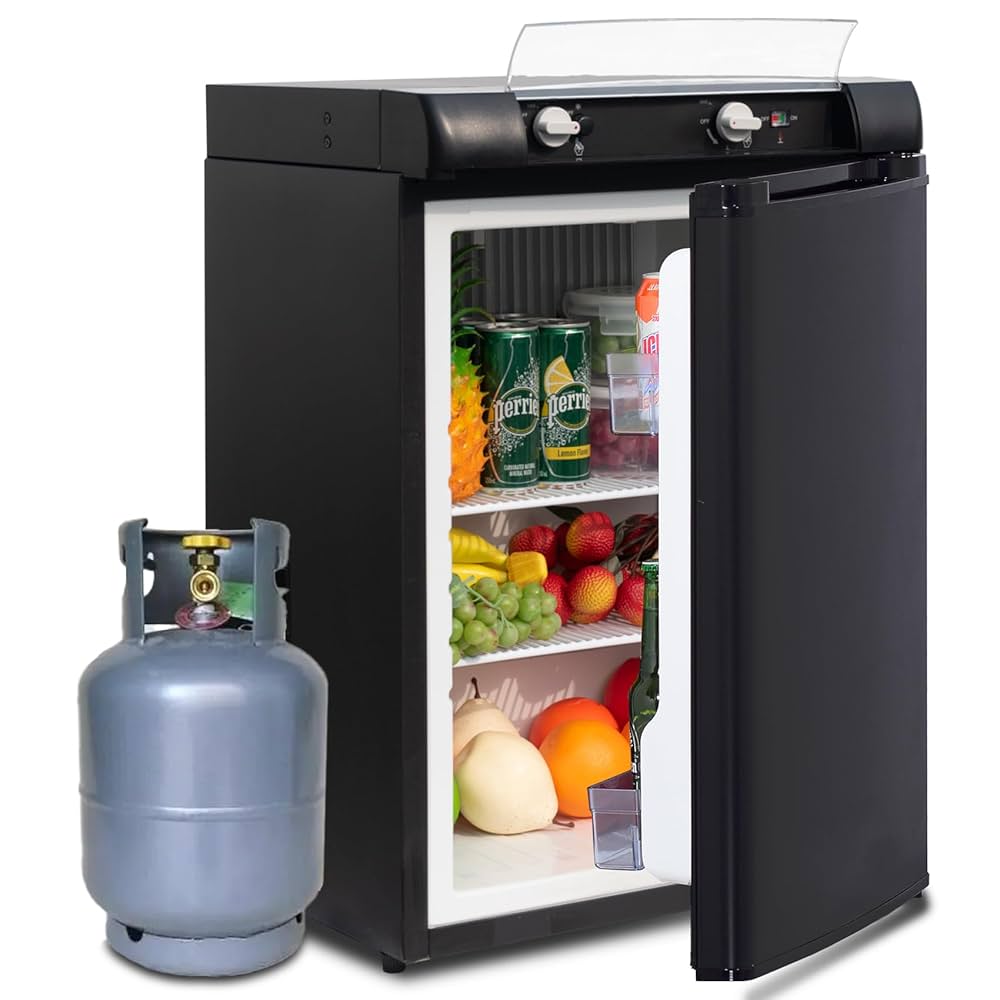
Are you wondering how much propane your camper refrigerator uses? Knowing this can help you plan better for your trips and avoid running out of fuel when you need it most.
Whether you’re camping off-grid or just want to keep your food fresh on the road, understanding propane consumption is key. You’ll discover exactly how much propane your camper fridge uses and learn simple tips to make it last longer. Keep reading to make your camping experience smoother and more enjoyable!

Credit: www.amazon.ca
Camper Refrigerator Basics
Understanding the basics of camper refrigerators is key to managing your propane use efficiently. These appliances keep your food fresh and drinks cool, even when you’re far from traditional power sources. Knowing how they work and the types available can help you choose the right model and estimate propane consumption accurately.
Types Of Camper Refrigerators
Camper refrigerators mainly come in three types:
- Absorption Refrigerators:These are common in RVs and use a heat source like propane to create a cooling effect.
- Compressor Refrigerators:Similar to home fridges, they run on electricity and are very energy-efficient but require a reliable power source.
- Thermoelectric Refrigerators:Less common and typically used for small coolers, they use electricity to transfer heat but are less powerful.
Absorption models are popular for camping because they can run on propane, 12V DC, or 110V AC power, giving you flexibility on the road.
How Propane Powers Refrigerators
Propane refrigerators use a simple but effective process. The propane flame heats a special liquid inside the cooling unit, which causes a chemical reaction that absorbs heat from the fridge’s interior.
This process has no moving parts, which means it is quiet and reliable. However, the flame needs a steady supply of propane to keep running.
On average, a camper refrigerator burns about 1/4 to 1/2 pound of propane per day. But this can vary based on factors like outside temperature, fridge size, and how often you open the door.
Have you noticed your fridge working harder on hot days? That’s because it uses more propane to maintain a cool temperature inside.

Credit: www.amazon.com
Factors Affecting Propane Usage
Understanding what affects propane usage in a camper refrigerator can help you manage fuel efficiently and avoid running out unexpectedly. Several factors influence how much propane your fridge consumes, and knowing these can guide you in adjusting settings or habits to save fuel during your trips.
Temperature Settings
The colder you set your refrigerator, the more propane it uses. Lower temperature settings require the fridge to work harder and run longer cycles. Try to keep your fridge at a moderate temperature that still keeps your food safe but doesn’t overwork the system.
Have you noticed how adjusting the thermostat just a few degrees can extend your propane supply? Small changes can make a big difference over several days on the road.
Ambient Temperature Impact
The outside temperature plays a huge role in propane consumption. Hot weather forces the fridge to run more to maintain coolness inside. If you’re camping in summer heat, expect your propane usage to increase.
Conversely, cooler environments reduce the workload on your fridge, saving propane. Planning your camping season or location with ambient temperature in mind can help stretch your fuel supply.
Frequency Of Door Opening
Every time you open the fridge door, cold air escapes and warm air rushes in. This makes the fridge cycle on more often to cool back down, increasing propane use. Being mindful about how often and how long you open the door can save fuel.
Try organizing your fridge so you find things quickly, reducing the time the door stays open. Have you tracked how your propane usage changes with your daily habits around the fridge?
Estimating Propane Consumption
Estimating propane consumption for a camper refrigerator helps plan your fuel supply. Knowing how much propane the fridge uses prevents running out during trips. It also helps to manage costs and camping logistics. Propane use varies by fridge size, temperature, and usage frequency.
Average Usage Rates
Most camper refrigerators use propane at a rate between 0.2 to 0.5 pounds per hour. Smaller models tend to use less propane, closer to 0.2 pounds per hour. Larger or older fridges may consume up to 0.5 pounds per hour. Usage depends on the fridge running cycle and ambient temperature.
Here is a simple table showing average propane use:
| Fridge Size | Propane Use (pounds/hour) |
|---|---|
| Small (1.5-3 cu.ft.) | 0.2 – 0.3 |
| Medium (3-5 cu.ft.) | 0.3 – 0.4 |
| Large (5+ cu.ft.) | 0.4 – 0.5 |
Calculating Daily Propane Needs
To estimate daily propane use, multiply the hourly rate by the number of hours the fridge runs. Camper refrigerators cycle on and off, usually running about 50% of the time. For example, a fridge using 0.3 pounds per hour runs 12 hours daily.
- Hourly propane use × hours running per day = daily propane consumption
- Example: 0.3 lbs/hour × 12 hours = 3.6 pounds per day
Knowing this helps choose the right propane tank size. It also ensures you carry enough propane for your trip length. Adjust calculations for hotter days or more frequent door openings, as these increase propane use.
Maximizing Efficiency
Maximizing the efficiency of your camper refrigerator directly impacts how much propane you use. Reducing propane consumption not only saves money but also means fewer trips to refill your tank. Small changes in how you maintain and operate your fridge can lead to significant fuel savings.
Proper Maintenance Tips
Keeping your camper refrigerator in good shape helps it run smoothly and use less propane. Check the door seals regularly; worn or damaged seals let cold air escape, making the fridge work harder. Clean the cooling fins and vents often to prevent dust buildup, which can reduce efficiency.
Have you ever noticed your fridge running constantly during a trip? That might be a sign it needs servicing or the gas flame is not burning properly. Adjusting the flame to the right size according to the manufacturer’s guide can lower propane use.
Energy-saving Practices
Simple habits can make a big difference in propane consumption. Try to keep the fridge door closed as much as possible—each opening lets cold air out and propane use spikes to cool the interior again.
- Pre-cool your food before placing it inside to reduce the fridge’s workload.
- Organize the contents so you can find items quickly without leaving the door open.
- Use a thermometer to monitor the temperature and avoid setting it colder than necessary.
Have you considered the placement of your camper fridge? Keeping it out of direct sunlight or hot spots inside your camper lowers the energy needed to maintain cold temperatures. These small steps can keep your propane use in check and your food fresh longer.
Propane Tank Sizes And Duration
Understanding propane tank sizes and how long they last is key for camper refrigerator use. Different tanks hold various amounts of propane, affecting how long your fridge can run. Knowing these details helps plan your trips better and avoid running out of fuel unexpectedly.
Common Tank Capacities
Propane tanks come in several standard sizes. The most common ones for campers are:
- 5 pounds (1.2 gallons)
- 10 pounds (2.4 gallons)
- 20 pounds (4.7 gallons)
- 30 pounds (7 gallons)
Smaller tanks are easy to carry but hold less propane. Larger tanks last longer but add weight and take up more space.
How Long Propane Lasts
The amount of propane your camper refrigerator uses depends on its size and settings. On average, a fridge uses about 1 pound of propane every 24 hours.
Here is an estimate of how long each tank size can power a camper fridge:
| Tank Size | Propane Capacity (gallons) | Estimated Duration (hours) |
|---|---|---|
| 5 pounds | 1.2 | 24 |
| 10 pounds | 2.4 | 48 |
| 20 pounds | 4.7 | 96 |
| 30 pounds | 7.0 | 144 |
Keep in mind, using the fridge more often or setting it colder can reduce propane duration. Check your fridge’s manual for specific propane use details.

Credit: www.amazon.ca
Alternative Power Options
Campers often seek alternatives to propane for running their refrigerators. Alternative power options offer flexibility and can save fuel. These options can keep your food fresh without relying solely on propane tanks. Exploring electric and solar choices can provide quiet, efficient cooling. Using more than one power source adds convenience and peace of mind during trips.
Electric And Solar Options
Electric refrigerators run on 12V or 120V power sources. Many campsites provide electrical hookups for easy use. Solar panels convert sunlight into electricity for off-grid cooling. Solar power suits long trips away from hookups. It requires a solar panel system and a battery to store energy. This setup is silent and eco-friendly. Electric and solar options reduce propane use and lower costs.
Using Dual Power Sources
Some camper refrigerators support dual power modes. They switch between propane and electric power automatically. This feature ensures the fridge stays cold in all conditions. If propane runs out, the fridge uses electricity instead. It is a practical solution for extended camping trips. Dual power sources increase reliability and reduce worries. Combining solar and propane can extend fridge run time significantly.
Safety Considerations
Using propane for your camper refrigerator comes with important safety considerations you can’t ignore. Propane is highly efficient but also highly flammable, so handling it incorrectly can lead to serious risks. Understanding how to manage propane safely and detect leaks early is crucial for your protection and peace of mind.
Handling Propane Safely
Always store propane tanks upright and in a well-ventilated area. Never keep tanks inside your camper or in enclosed spaces where gas can accumulate. When connecting or disconnecting tanks, make sure all appliances are turned off to prevent accidental ignition.
Wear gloves and eye protection when handling tanks to avoid injuries. If you ever smell gas or suspect a leak, turn off the propane supply immediately and ventilate the area. It’s better to be cautious than to risk a dangerous situation.
Detecting Leaks
Propane leaks can be sneaky, often going unnoticed until they cause a problem. A simple way to check for leaks is to apply soapy water to connections and watch for bubbles. If bubbles form, it means gas is escaping and the connection needs tightening or replacing.
Have a propane detector installed in your camper for continuous monitoring. These devices alert you at the first sign of a leak, giving you time to act quickly. Remember, a faint gas odor or hissing sound can also be warning signs—never ignore them.
Frequently Asked Questions
How Much Propane Does A Camper Refrigerator Use Daily?
A camper refrigerator typically uses about 1 to 2 pounds of propane per day. Usage varies based on temperature, fridge size, and insulation quality. Proper maintenance helps optimize fuel efficiency during camping trips.
Does Ambient Temperature Affect Propane Consumption?
Yes, higher ambient temperatures increase propane usage. The refrigerator works harder to maintain coolness, consuming more propane. Cooler environments reduce fuel consumption and improve efficiency.
How Long Does One Propane Tank Last For A Camper Fridge?
A standard 20-pound propane tank can last 10 to 20 days. Duration depends on fridge size, outside temperature, and usage frequency. Monitoring propane levels ensures you don’t run out unexpectedly.
Can Propane Consumption Be Reduced Without Affecting Cooling?
Yes, improving fridge insulation and minimizing door openings reduce propane use. Using the fridge in eco-mode or shade also helps save fuel. Regular maintenance keeps the system efficient.
Conclusion
A camper refrigerator uses propane based on size and usage. Small fridges use less fuel, while larger ones need more. Running the fridge efficiently saves propane and money. Always check your fridge’s manual for exact consumption details. Knowing propane use helps plan trips better and avoid running out.
Keep your fridge clean and well-maintained to reduce fuel use. Understanding propane needs makes camping more comfortable and stress-free. Simple steps can extend your propane supply and keep food fresh.