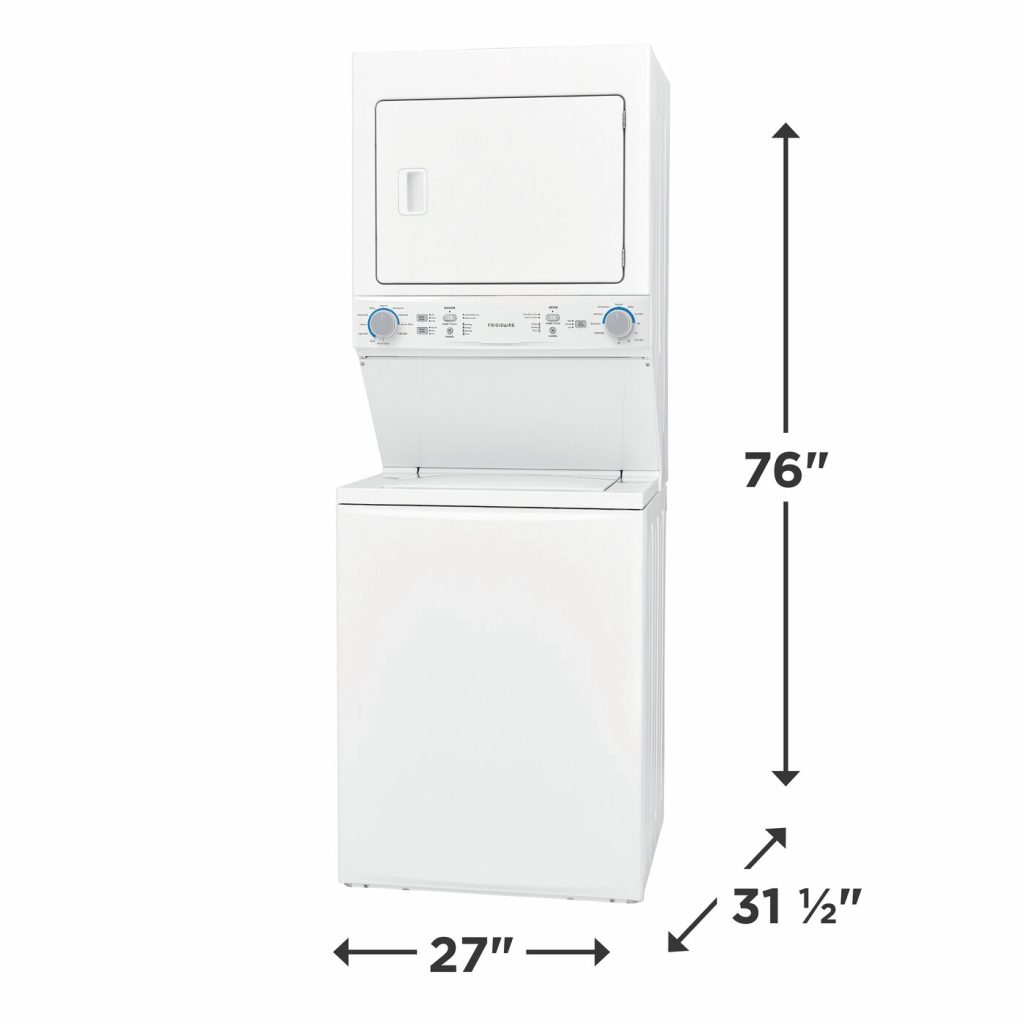
Are you thinking about getting a stackable washer dryer but unsure if it will fit your space? Knowing the exact size of these machines is key to making the right choice for your home.
You don’t want to buy a unit that’s too big or too small, causing frustration and wasted time. You’ll discover the typical dimensions of stackable washer dryers and how to measure your space to ensure a perfect fit. By the end, you’ll feel confident about selecting the right model that suits your needs and maximizes your laundry area.
Keep reading to find out everything you need to know!
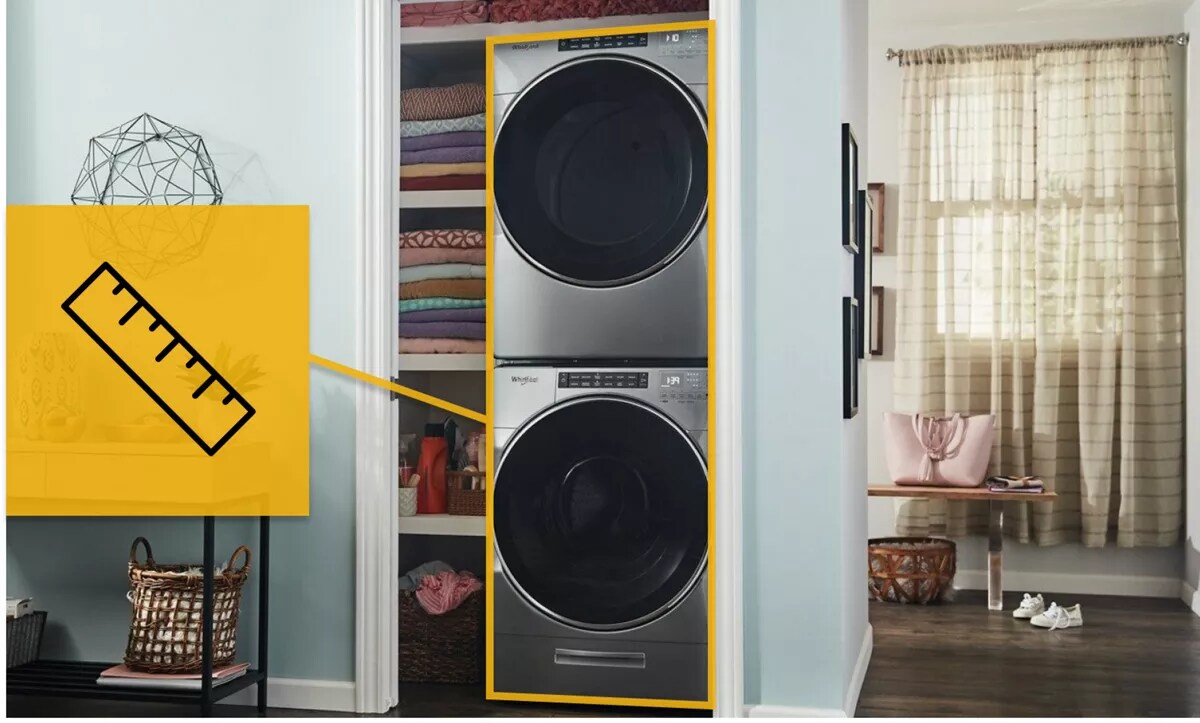
Credit: www.whirlpool.com
Stackable Washer Dryer Dimensions
Stackable washer dryers save space by combining two machines into one unit. Knowing their size helps you plan your laundry area well.
This guide covers the common width, depth, and height of stackable washer dryers. These measurements vary slightly by model.
Standard Width And Depth
The width and depth of most stackable washer dryers fit standard laundry spaces. They are designed to fit side by side or in closets.
- Standard width is usually 24 to 27 inches.
- Depth ranges from 24 to 34 inches.
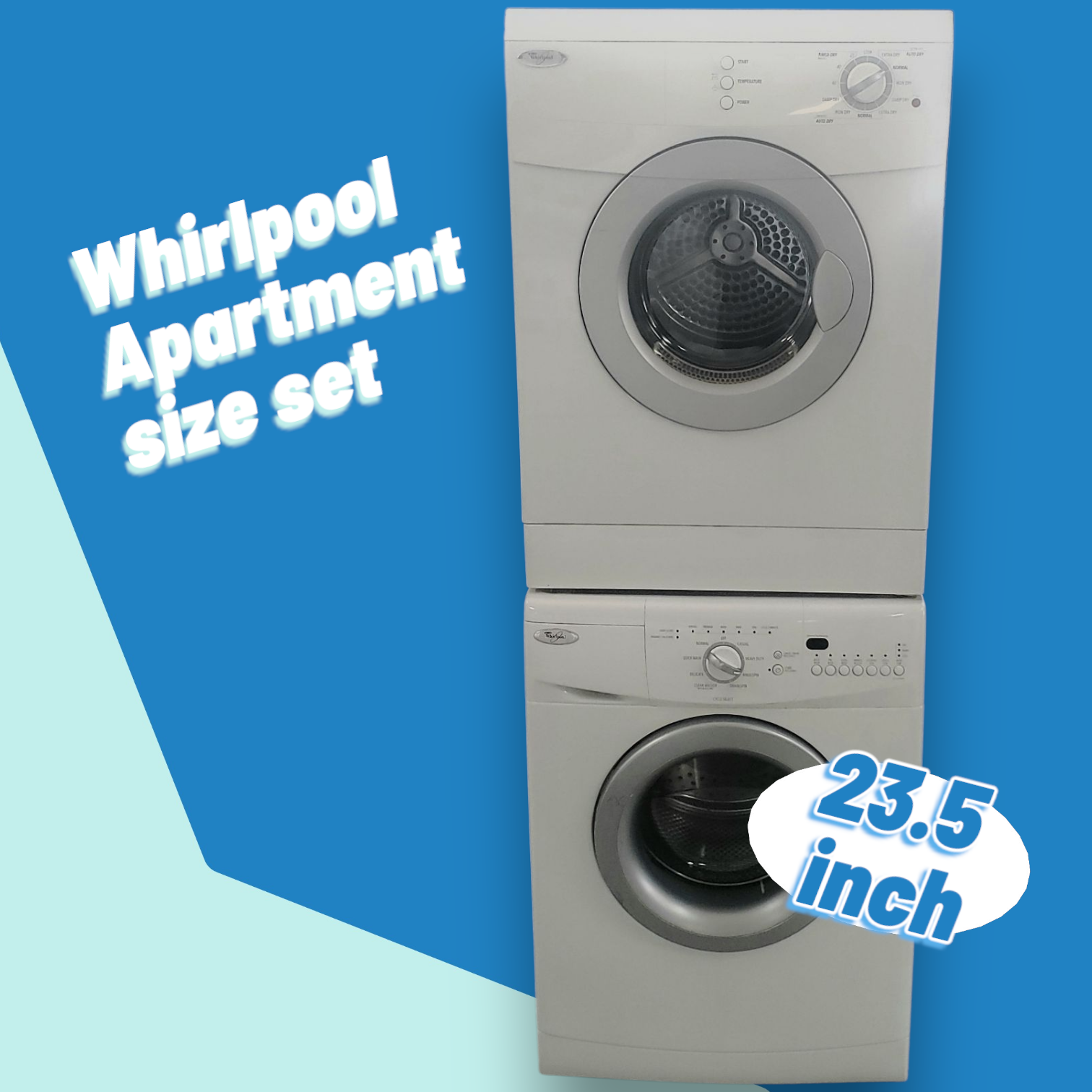
- Compact models may be narrower and shallower.
- Check door clearance for front-loading units.
Typical Height Range
Stackable units combine washer and dryer heights to save vertical space. Height varies by model and features.
| Height Range | Description |
|---|---|
| 65 to 70 inches | Common height for most stackable washer dryers |
| 70 to 75 inches | Taller models with extra capacity or controls |
| Under 65 inches | Compact units for small spaces |
Benefits Of Compact Stackable Units
Stackable washer dryers combine washing and drying in one unit. Their compact size fits small spaces well. Many homes gain extra room using these units.
They are easy to install and offer convenience. This guide explains their space-saving benefits and ideal installation spots.
Space-saving Advantages
Compact stackable units take up less floor space than separate machines. They fit into closets, alcoves, or tight corners.
- Use vertical space efficiently
- Free up room for storage or other appliances
- Ideal for apartments and small homes
- Make laundry chores easier in limited areas
Ideal Locations For Installation
Choosing the right spot improves machine use and home layout. Stackable units fit well in places where traditional machines won’t.
| Location | Benefits |
| Closets | Hidden from view, saves floor space |
| Bathrooms | Easy access to water and drainage |
| Kitchens | Convenient for multitasking |
| Basements | Out of main living areas |
Measuring Your Space For Installation
Before buying a stackable washer dryer, measure your space carefully. Proper measurement helps avoid installation problems.
Check the area for height, width, and depth. Also, think about doorways and ventilation needs.
Checking Doorways And Hallways
Measure all doorways and hallways that the appliance must pass through. The washer dryer must fit easily without damage.
- Measure the width and height of each doorway.
- Check the width of hallways and turns.
- Account for any steps or thresholds.
- Compare these sizes with the appliance’s dimensions.
- Leave extra space for moving the machine safely.
Allowing For Ventilation And Clearance
Stackable washer dryers need space around them for air flow. This prevents overheating and helps the machine work well.
| Clearance Area | Recommended Space |
| Behind the unit | 4 inches (10 cm) |
| Sides | 1 inch (2.5 cm) |
| Above | 6 inches (15 cm) |
| Front (for door opening) | 24 inches (60 cm) |
Credit: www.bashappliances.ca
Comparing Stackable Vs. Side-by-side Models
Choosing the right washer and dryer setup depends on space and laundry needs. Stackable and side-by-side models fit different rooms.
This guide looks at the size differences and capacity to help you decide which style suits your home better.
Footprint Differences
Stackable units save floor space by placing the dryer on top of the washer. Side-by-side models need more width but offer easier access.
| Type | Width | Depth | Height |
|---|---|---|---|
| Stackable | 27 inches | 30 inches | 74-76 inches |
| Side-by-Side | 54 inches | 30 inches | 36-43 inches |
Capacity Considerations
Both types offer similar washer and dryer capacities. Stackable units may have slightly smaller drums due to design limits.
- Stackable washers typically hold 3.5 to 4.5 cubic feet.
- Side-by-side washers often range from 4.0 to 5.0 cubic feet.
- Dryer sizes generally match the washer capacity in both setups.
- Side-by-side models may allow simultaneous use of washer and dryer.
Popular Stackable Washer Dryer Models
Stackable washer dryer units save space in small homes. They are perfect for apartments and condos.
These models offer convenience and efficiency. They are popular for their compact size and features.
Top Compact Units By Size
Compact models fit in tight spaces. They measure around 24 inches in width.
- LG WM3400CW – 27 inches wide
- GE GUD24ESSMWW – 24 inches wide
- Samsung WW22K6800AW – 24 inches wide
Energy Efficiency Ratings
Energy-efficient models save money on utility bills. They have better performance ratings.
Look for Energy Star ratings. These units use less water and electricity.
| Model | Energy Star Rating |
| LG WM3400CW | Yes |
| GE GUD24ESSMWW | No |
| Samsung WW22K6800AW | Yes |
Installation Tips And Requirements
Stackable washer dryers save space in small homes or apartments. Proper installation is key for safe use and good performance.
Before installing, check the space size and prepare plumbing and electrical connections. Also, consider the floor strength for stability.
Plumbing And Electrical Needs
Stackable washer dryers need correct water and power connections. Both are important to avoid leaks and electrical problems.
Make sure the water supply and drain pipes are near the unit. Use proper hoses and check for leaks after installation.
- Cold and hot water connections are required
- Drain pipe should be near the washer
- Use strong, flexible water hoses
- Electrical outlet must match the machine’s power needs
- Grounded outlet is necessary for safety
Weight Support And Stability
Stackable units are heavy and create vibration during use. The floor must support the weight and keep the unit stable.
Check the floor type and strength before placing the washer dryer. Use anti-vibration pads to reduce noise and movement.
- Confirm floor can hold the combined weight of both machines
- Use a level surface for installation
- Install anti-vibration pads under the unit
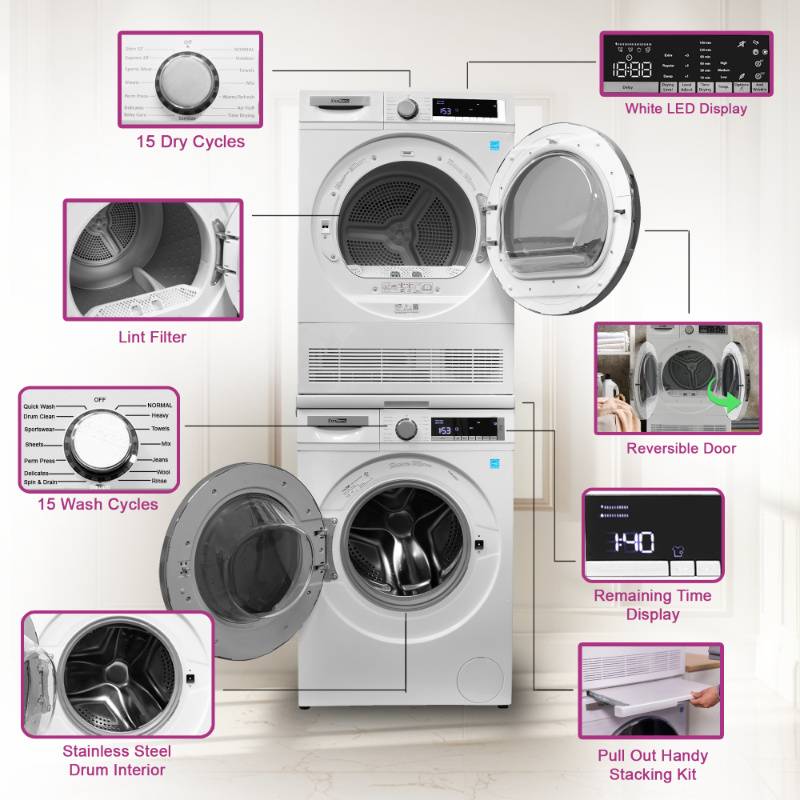
- Secure stacking kit properly to avoid shifting
Credit: equatorappliances.com
Frequently Asked Questions
What Are The Typical Dimensions Of A Stackable Washer Dryer?
Stackable washer dryers usually measure around 27 inches wide, 30 inches deep, and 74-76 inches high. These compact sizes fit well in small spaces like closets or apartments.
How Much Space Is Needed For Installation?
Allow at least 1 inch of clearance on all sides for ventilation and connections. Also, ensure enough room in front for door access and maintenance.
Do Stackable Washer Dryers Fit Standard Laundry Closets?
Yes, most stackable units are designed to fit standard laundry closets with a width of 27 inches and a height of 76 inches or less.
Can I Stack Any Washer And Dryer Model?
No, only compatible stackable models or those with a stacking kit should be stacked. This ensures safety and proper operation.
Conclusion
Stackable washer dryers save space in small homes or apartments. They usually measure about 27 inches wide and 30 to 34 inches deep. Knowing the size helps you plan your laundry area better. Choose a model that fits your space without crowding.
Remember to leave room for ventilation and easy access. A well-fitted stackable unit makes laundry tasks simpler and faster. Size matters for comfort and convenience. Keep these points in mind when picking your washer dryer.