Are you thinking about saving space in your laundry room? Stacking your washer and dryer might seem like a simple solution.
But can you stack any washer and dryer, or are there specific models you need? Understanding this can save you time, money, and frustration. You’ll discover the key things to know before stacking your machines. Keep reading to find out how to make the best choice for your home and laundry needs.
Washer And Dryer Compatibility
Stacking a washer and dryer saves space in small laundry rooms. Not all washers and dryers fit together safely. It is important to check their compatibility before stacking.
Different brands and models have specific stacking kits and design features. Understanding these helps avoid damage and ensures stable stacking.
Matching Brands And Models
Washers and dryers from the same brand usually fit best when stacked. Manufacturers design stacking kits for specific models. Using mismatched brands or models can cause instability or void warranties.
- Check if both units are designed to stack.
- Use official stacking kits recommended by the manufacturer.
- Avoid stacking top-load washers with dryers.
- Confirm weight limits for stacking kits.
Size And Dimensions
Washers and dryers must be similar in width and depth to stack safely. Size differences can cause the dryer to overhang or become unbalanced.
| Dimension | Washer | Dryer | Notes |
|---|---|---|---|
| Width | 27 inches | 27 inches | Must match for stable stacking |
| Depth | 30 inches | 28 inches | Dryer depth can be slightly less |
| Height | 38 inches | 38 inches | Stacking adds total height |
Front-load Vs Top-load
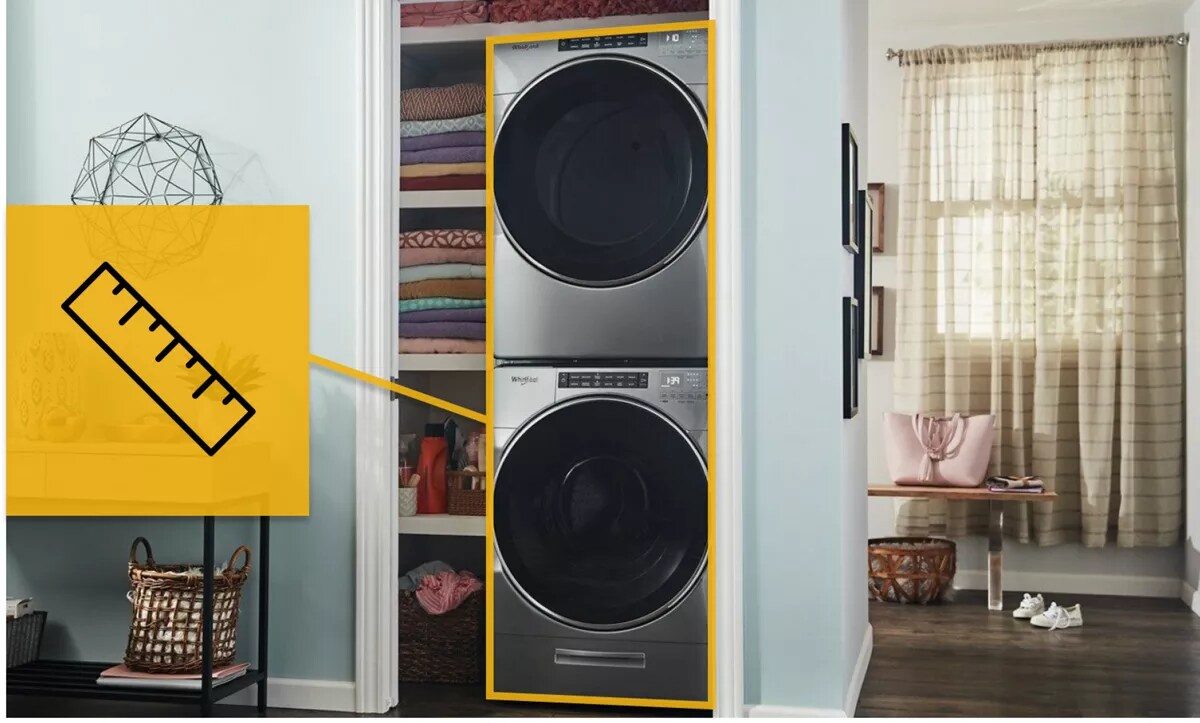
Only front-load washers can be stacked with a dryer. Top-load washers have lids that open from the top, blocking the dryer placement.
- Front-load washers have doors on the front for easy stacking.
- Top-load washers are not stackable due to lid access.
- Stacking kits are designed for front-load sets only.
Credit: www.whirlpool.com
Stacking Kits And Accessories
Stacking kits let you save space by placing your dryer on top of your washer. These kits include brackets and straps for a secure fit. Not all washers and dryers can be stacked, so accessories help make it possible.
Choosing the right stacking kit is important. It depends on the brand and model of your machines. Accessories also add safety and ease during installation.
Types Of Stacking Kits
Stacking kits come in different types to match washer and dryer styles. Some are universal, while others are brand-specific. They usually include brackets, screws, and straps.
- Universal stacking kits fit many models and brands.
- Brand-specific kits are designed for certain washer and dryer pairs.
- Adjustable kits allow changes to fit different heights and sizes.
- Heavy-duty kits support larger, heavier machines.
Installation Requirements
Proper installation keeps stacked machines stable and safe. You need the correct tools and space. Most stacking kits come with instructions for setup.
| Requirement | Details |
| Space | Enough room for washer and dryer height combined |
| Tools | Screwdriver, wrench, and level are commonly needed |
| Surface | Flat and sturdy floor to prevent movement |
| Compatibility | Check if stacking kit matches your machine models |
| Electrical & Venting | Ensure dryer vent and power are accessible after stacking |
Safety Features
Safety features prevent accidents and damage. Stacking kits often include straps or locking brackets to hold machines together. Some kits have rubber pads to reduce vibration.
- Anti-tip brackets keep the dryer from falling forward.
- Straps secure the dryer to the washer frame tightly.
- Vibration pads reduce noise and movement during cycles.
- Clearance space is required around machines to avoid overheating.
Weight And Stability Considerations
Stacking a washer and dryer saves space in small laundry areas. But not all machines fit safely on top of each other.
It is important to check the weight and stability before stacking. This helps avoid damage and accidents.
Load Capacity Limits
Each washer and dryer has a weight limit for stacking. The dryer usually sits on top and must not be too heavy.
Always check the user manuals for maximum load capacity. Exceeding this can cause the stack to fall or machines to break.
- Check washer’s top surface weight limit
- Confirm dryer’s base weight
- Use stacking kits recommended by brands
Vibration And Noise Control
Washers create vibrations when spinning. These can make a stacked dryer unstable or noisy.
Look for washers with good vibration control features. Secure stacking kits also reduce movement and noise.
- Use anti-vibration pads or mats
- Install proper stacking brackets
- Balance washer loads evenly
Floor And Wall Support
The floor must support the combined weight of both machines. Weak floors risk damage or collapse.
Secure the stack to a wall if possible. Wall brackets add stability and keep machines from tipping.
- Check floor strength for heavy loads
- Use wall anchors and brackets
- Place machines on level, solid surfaces
Ventilation And Electrical Needs
Stacking a washer and dryer saves space but needs careful setup. Proper ventilation and electrical arrangements keep your appliances safe and working well.
Check your laundry area for space and power before stacking. Follow rules to avoid damage or hazards.
Proper Ventilation Setup
Dryers need good airflow to remove heat and moisture. Poor ventilation can cause overheating and damage.
- Use a vent that leads outside, not just inside the house.
- Keep the vent hose short and straight for better air flow.
- Clean vents regularly to remove lint buildup.
- Check for any vent blockages before stacking machines.
Power Supply Compatibility
Washers and dryers may need different power types. Match your outlet and plug to the machine’s needs to avoid damage.
| Appliance | Voltage | Plug Type |
| Washer | 120V | Standard 3-prong |
| Dryer (Electric) | 240V | 4-prong or 3-prong |
| Dryer (Gas) | 120V | Standard 3-prong |
Avoiding Overloading Circuits
Stacked washers and dryers need enough electrical power. Overloading circuits can cause trips or fires.
- Check the circuit breaker rating for your laundry area.
- Use dedicated circuits for each appliance if possible.
- Do not plug both washer and dryer into the same outlet.
- Hire an electrician if unsure about your home’s wiring.
Common Mistakes To Avoid
Stacking a washer and dryer saves space in your laundry area. Many people try it without knowing the risks.
Some mistakes can cause damage or reduce the machines’ lifespan. Learn what to avoid before stacking.
Ignoring Manufacturer Guidelines
Each washer and dryer model has specific rules for stacking. Ignoring these can lead to problems.
- Not using the correct stacking kit may cause instability.
- Overlooking weight limits can damage the lower machine.
- Failing to follow clearance space can block vents or cause overheating.
- Ignoring electrical and plumbing requirements risks safety hazards.
Improper Installation
Even with the right parts, poor installation can cause issues. Machines may shake or fall.
| Common Installation Errors | Potential Problems |
|---|---|
| Uneven flooring | Vibration, noise, and damage |
| Loose stacking kit screws | Instability and risk of toppling |
| Incorrect dryer vent connection | Poor drying and fire hazard |
| Failing to level machines | Excessive wear and tear |
Mixing Different Washer And Dryer Types
Stacking different types or brands can cause fitting and function problems.
- Front-load washers stack better with matching front-load dryers.
- Top-load washers usually cannot be stacked safely.
- Different brands may have incompatible stacking kits.
- Mixing gas and electric units requires special attention to venting.

Credit: www.reddit.com
Expert Tips For Successful Stacking
Stacking a washer and dryer can be a convenient way to save space in your home. However, it requires careful planning and execution to ensure safety and efficiency.
In this article, we will provide expert tips for successful stacking, covering choosing the right models, professional installation, and maintenance and troubleshooting.
Choosing The Right Models
When selecting a washer and dryer for stacking, consider the following factors:
- Weight and size: Ensure the washer and dryer are compatible in terms of weight and size to prevent instability.
- Capacity: Choose a washer and dryer with similar capacity to maintain balance and efficiency.
- Power consumption: Select energy-efficient models to reduce energy costs and environmental impact.
Some popular washer and dryer models for stacking include the Whirlpool WTW5000DW and the LG DLEX3900W.
Professional Installation
It is recommended to hire a professional to install your stacked washer and dryer to ensure proper installation and safety.
| Installation Benefits |
|---|
| Improved safety: Professionals can identify potential hazards and take necessary precautions. |
| Increased efficiency: Proper installation ensures optimal performance and energy efficiency. |
| Warranty validity: Many manufacturers require professional installation to validate warranties. |
Maintenance And Troubleshooting
Regular maintenance and troubleshooting can help extend the lifespan of your stacked washer and dryer.
- Clean the lint filter after each use to prevent clogs and improve efficiency.
- Check and replace worn-out belts to prevent damage to the washer and dryer.
- Run a cleaning cycle on the washer and dryer regularly to remove built-up debris.

Credit: www.reddit.com
Frequently Asked Questions
Can Any Washer And Dryer Be Stacked Together?
No, not all washers and dryers can be stacked. They must be compatible in size and design. Use stacking kits recommended by manufacturers for safety and stability.
What Types Of Washers Can Be Stacked With Dryers?
Front-loading washers are designed to be stacked with dryers. Top-loading washers usually cannot be stacked. Always check the model specifications before stacking.
Is A Stacking Kit Necessary For Washer And Dryer?
Yes, a stacking kit is essential. It secures the dryer on top of the washer. This prevents accidents and ensures stability during operation.
Can Stacking Affect Washer And Dryer Performance?
Proper stacking does not affect performance. Incorrect stacking or incompatible models may cause vibration or damage. Always follow manufacturer guidelines to maintain efficiency.
Conclusion
Not all washers and dryers stack safely or fit well. Check size, weight, and brand compatibility first. Use a proper stacking kit for stability and safety. Avoid mixing brands or models that don’t match. Stacking saves space but requires careful planning.
Choose units designed for stacking to avoid problems. Proper setup keeps your laundry area neat and efficient. Take time to measure and research before buying. Safe stacking makes laundry easier and more organized.