
Are your non-stick baking sheets looking dull or sticky after use? Cleaning them the right way can be tricky, but it doesn’t have to be.
If you want your baking sheets to stay smooth, shiny, and ready for your next delicious creation, this guide is made just for you. Keep reading, and you’ll discover simple, effective tips to clean your non-stick baking sheets without damaging them.
Say goodbye to stubborn stains and hello to easy, stress-free cleaning!
Credit: www.spoken.io
Choosing The Right Cleaning Supplies
Cleaning non stick baking sheets needs care. The right supplies keep the coating safe. Using harsh products can damage the surface.
Selecting gentle cleaners and soft tools helps your sheets last longer. This guide covers safe cleaners and tools to protect your baking sheets.
Safe Cleaners For Non Stick Surfaces
Choose mild cleaners that do not scratch or wear down the coating. Avoid abrasive powders and strong chemicals. These can ruin the non stick finish.
- Use dish soap with warm water for regular cleaning.
- Baking soda mixed with water helps remove tough stains gently.
- White vinegar diluted in water can break down grease safely.
- Avoid bleach and ammonia products.
- Never use scouring powders or steel wool.
Tools That Protect The Coating
Soft cleaning tools help keep the non stick layer intact. Hard scrubbers and metal utensils can cause scratches and peeling.
| Tool | Why It’s Good | Tools to Avoid |
| Soft sponge | Gentle on coating, cleans well | Steel wool, rough scrubbers |
| Plastic or silicone spatula | Safe for scraping stuck food | Metal spatulas, knives |
| Microfiber cloth | Good for drying and wiping | Rough towels, abrasive pads |
Prepping Your Baking Sheet
Cleaning your non-stick baking sheet starts with proper preparation. Prepping helps protect the coating and keeps it working longer.
Follow simple steps to remove loose food and soften tough stains before washing. This makes cleaning easier and safer.
Removing Loose Debris
Begin by clearing away any crumbs or bits left on the baking sheet. Use a soft brush or cloth to avoid scratching the surface.
- Hold the sheet over a trash bin to catch loose pieces.
- Gently brush crumbs off with a dry cloth or soft sponge.
- Do not use metal utensils to scrape debris.
- Check all corners and edges carefully.
Soaking For Stubborn Residue
Soaking helps loosen baked-on food that won’t come off easily. Use warm water and mild soap for best results.
| What to Use | How to Soak |
| Warm water and dish soap | Fill the sink or basin with soapy water and submerge the sheet for 15–30 minutes. |
| Baking soda paste | Apply paste to tough spots, then soak for 20 minutes before scrubbing gently. |
| Vinegar solution | Mix equal parts vinegar and water, soak for 10 minutes to soften residue. |
Effective Cleaning Techniques
Non stick baking sheets need careful cleaning to keep their coating safe. Using the right methods helps remove food and grease without damage.
This guide shows simple ways to clean these sheets effectively and extend their life.
Gentle Scrubbing Methods
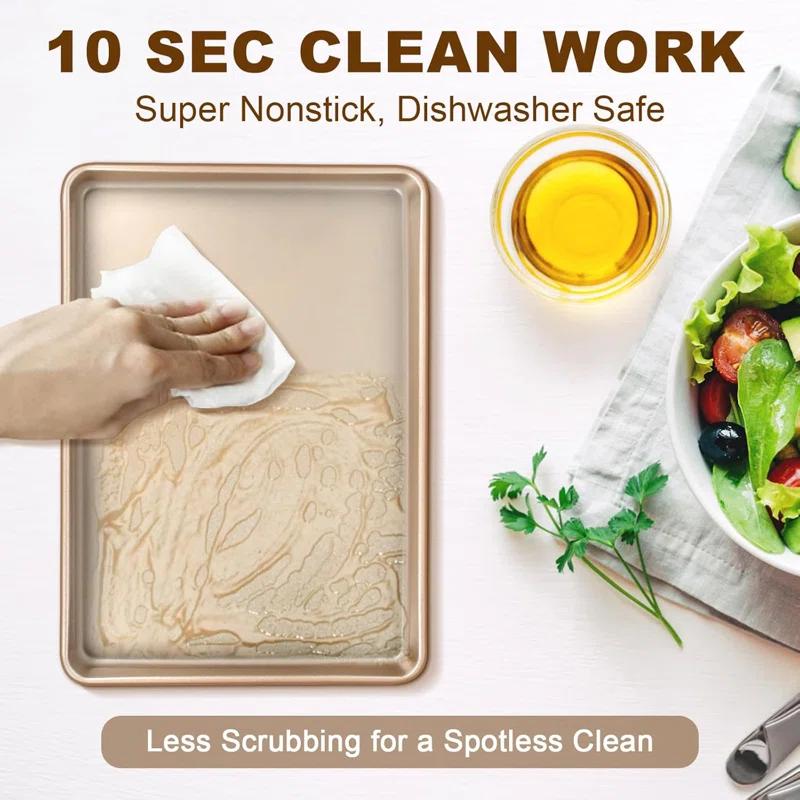
Use a soft sponge or cloth to clean your non stick baking sheets. Avoid steel wool or rough scrubbers that can scratch the surface.
Warm, soapy water helps loosen stuck food. Let the sheet soak for a few minutes before scrubbing gently.
Using Baking Soda And Vinegar
Baking soda and vinegar are safe cleaners for non stick surfaces. They remove stains and odors without harsh chemicals.
- Sprinkle baking soda over the baking sheet.
- Spray or pour white vinegar on top to create fizz.
- Let it sit for 10 to 15 minutes.
- Wipe clean with a soft cloth or sponge.
- Rinse with warm water and dry thoroughly.
Avoiding Harsh Abrasives
| Harsh Abrasives | Why to Avoid |
| Steel wool | Scratches and damages the coating |
| Metal scouring pads | Can peel off non stick layer |
| Strong chemical cleaners | May cause coating to wear out fast |
Use only soft cleaning tools and mild detergents to protect your baking sheets.
Credit: www.carawayhome.com
Handling Tough Stains
Non-stick baking sheets can get tough stains over time. Cleaning these stains is important to keep the sheets working well.
Using the right methods helps remove stains without hurting the surface. This guide shows how to handle tough stains safely.
Dealing With Burnt-on Food
Burnt food can stick hard to your baking sheet. Soaking the sheet in warm water softens the burnt parts.
Use a soft sponge or cloth to gently scrub the burnt food. Avoid metal scrubbers that can scratch the non-stick surface.
- Fill the sink with warm water and mild soap
- Let the baking sheet soak for 15-30 minutes
- Use a soft sponge to scrub the burnt areas
- Rinse well and dry completely
Restoring Shine Without Damage
To restore shine, use gentle cleaning products. Harsh chemicals can damage the non-stick coating.
Apply a small amount of baking soda paste to the sheet. Rub softly with a soft cloth, then rinse well.
- Mix baking soda with water to form a paste
- Apply paste to the baking sheet surface
- Rub gently with a soft cloth in circular motions
- Rinse thoroughly and dry with a soft towel
Drying And Maintenance Tips
Cleaning your non-stick baking sheets is only part of keeping them in good shape. Drying and storing them properly helps extend their life. This guide shares easy tips for drying and maintaining your sheets.
Following simple steps after washing prevents damage and keeps your baking sheets ready for use. Let’s look at how to dry and store them correctly.
Proper Drying To Prevent Rust
Non-stick baking sheets can develop rust if moisture stays on the surface. Proper drying stops this from happening. Always dry your sheets fully before storing.
- Use a soft cloth or towel to wipe off water after washing.
- Air dry the sheet standing up to let water drip off.
- Check corners and edges for trapped moisture.
- Avoid stacking wet sheets together to prevent rust spots.
- Dry sheets soon after washing, do not leave them wet for long.
Storing For Longevity
Storing your baking sheets correctly keeps their non-stick surface safe. Avoid scratches and dents by giving them enough space and protection.
| Storage Tip | Why It Matters |
|---|---|
| Store sheets flat or upright with dividers | Prevents bending and scratching |
| Place paper towels between stacked sheets | Protects the non-stick coating |
| Keep sheets in a dry area | Reduces moisture and rust risk |
| Do not stack heavy items on top | Avoids warping and damage |

Credit: www.amazon.com
Common Mistakes To Avoid
Cleaning non stick baking sheets needs care to keep them safe. Some habits can harm the surface. Avoid these mistakes to make your sheets last longer.
Read the tips below to learn what to avoid when cleaning your non stick baking sheets.
Using Metal Utensils
Metal utensils can scratch and damage the non stick coating. This damage lowers the sheet’s life and makes food stick more.
- Do not use metal spatulas or knives on the sheet.
- Use wooden, silicone, or plastic tools instead.
- Be gentle when scraping food off the surface.
- Avoid cutting food directly on the baking sheet.
Dishwasher Risks
Dishwashers can cause the non stick coating to wear out faster. Strong detergents and high heat harm the surface.
| Dishwasher Risks | Effect on Baking Sheet |
| Harsh detergents | Remove protective coating |
| High heat drying | Warp or damage sheet |
| Long washing cycles | Wear down non stick surface |
| Repeated exposure | Shorten sheet lifespan |
Frequently Asked Questions
How Do You Clean Non Stick Baking Sheets?
To clean non-stick baking sheets, use warm water and mild dish soap. Gently scrub with a soft sponge or cloth. Avoid abrasive cleaners and scouring pads to prevent damage. For stubborn stains, soak the sheet in warm soapy water for 15 minutes before scrubbing.
Can You Use Vinegar On Non Stick Sheets?
Yes, vinegar is safe for non-stick baking sheets. Mix equal parts of vinegar and water. Soak the sheet for 15 minutes. Gently scrub with a soft sponge. Rinse thoroughly with water. Vinegar helps remove stubborn stains and odors without damaging the non-stick surface.
Is Baking Soda Safe For Non Stick Pans?
Baking soda is safe and effective for cleaning non-stick pans. Make a paste with baking soda and water. Apply it to the surface and let it sit for 15 minutes. Gently scrub with a soft sponge. Rinse thoroughly with water to remove any residue.
How Often Should You Clean Baking Sheets?
Clean baking sheets after each use to maintain their non-stick properties. Regular cleaning prevents the buildup of grease and food residues. For deep cleaning, consider soaking and scrubbing once a month. Proper maintenance extends the life of your baking sheets.
Conclusion
Cleaning non-stick baking sheets keeps them safe and lasts longer. Use gentle scrubbing with warm, soapy water to remove stuck food. Avoid harsh brushes or strong chemicals that can damage the surface. Dry the sheets well before storing to stop rust or stains.
Regular care means better baking and easier cleaning next time. Simple steps make your baking sheets look and work like new. Keep your kitchen tools ready for every delicious meal.