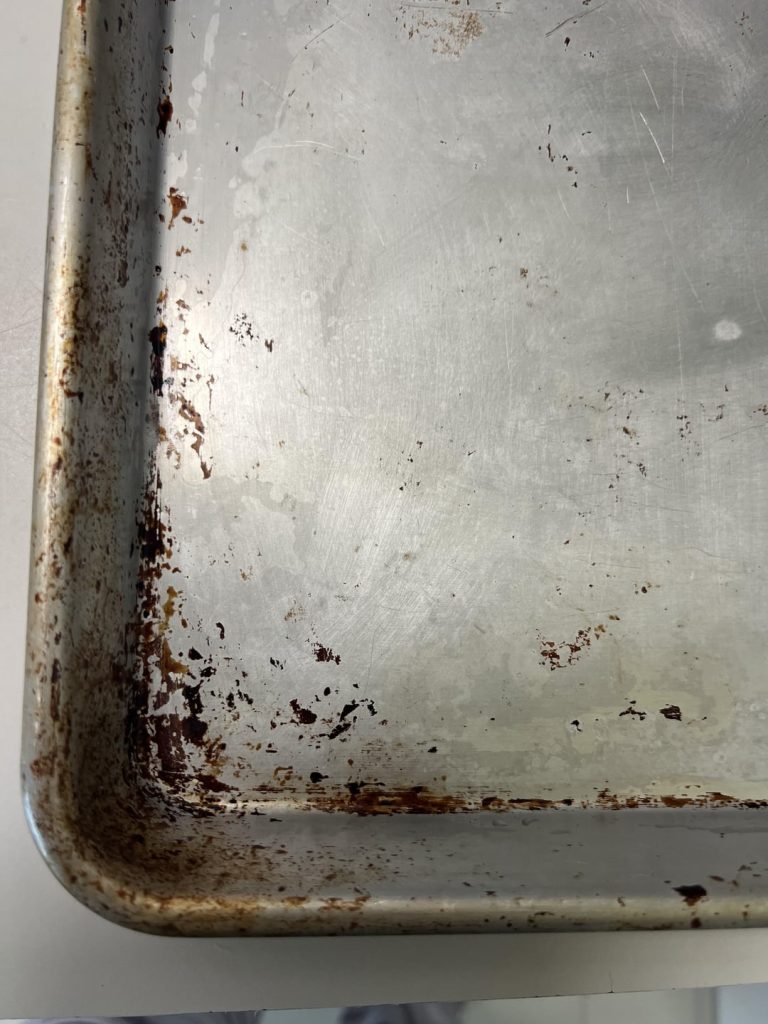
Your baking sheet is one of the hardest-working tools in your kitchen. After roasting, baking, or broiling, it often ends up covered in stubborn grease, burnt bits, and sticky residue.
You might wonder, “How do you clean a baking sheet without scrubbing forever or using harsh chemicals? ” This guide will show you simple, effective ways to get your baking sheet spotless again. Keep reading to discover easy tricks that save you time and effort—so your baking sheet looks and works like new every time.
Common Baking Sheet Stains
Baking sheets often get stained after repeated use. These stains can affect the look and performance of your sheet.
Knowing how to clean different types of stains helps keep your baking sheet in good condition.
Burnt-on Residue
Burnt-on residue forms when food or sugar burns onto the sheet. It can be tough and dark.
Soaking the sheet in hot water with baking soda helps soften the residue. Scrubbing gently with a sponge removes it without scratching.
Grease And Oil Build-up
Grease and oil stains happen from cooking fats. They make the surface sticky and dark.
- Use hot water and dish soap to break down grease.
- Apply a paste of baking soda and water for tough spots.
- Rinse well and dry to avoid rust.
Stubborn Discoloration
Discoloration appears as dark or rainbow-colored stains. It comes from heat and mineral deposits.
| Cause | Cleaning Tip |
| Heat stains | Use vinegar and water soak |
| Mineral deposits | Scrub with lemon juice and baking soda |
| Metal reactions | Avoid harsh cleaners; rinse thoroughly |

Credit: katieskottage.com
Basic Cleaning Steps
Cleaning a baking sheet keeps it ready for your next use. Dirt and food can stick after baking. Cleaning helps remove stains and smells.
Follow simple steps to clean your baking sheet well. Use the right tools and cleaners to avoid damage.
Soaking Techniques
Soaking softens stuck food and grease on the baking sheet. Use warm water to help loosen debris. Soak for at least 15 minutes for best results.
Adding a small amount of dish soap or baking soda to the water can improve cleaning. Avoid soaking too long if your sheet is aluminum.
- Fill the sink with warm water
- Add dish soap or baking soda
- Place the baking sheet in water
- Let it soak for 15 to 30 minutes
Scrubbing Tools To Use
Choose scrubbing tools that clean well but do not scratch the surface. Soft sponges and nylon scrubbers work best. Avoid steel wool on non-stick sheets.
Use a brush for tough spots or corners. Change tools if they get worn out to avoid damage.
- Soft sponge or cloth
- Nylon scrubber or brush
- Non-abrasive scrub pad
- Plastic scraper for burnt bits
Safe Cleaning Agents
Use safe cleaners that do not harm your baking sheet. Mild dish soap is the best choice. Baking soda and white vinegar work well for stains and odor.
Avoid harsh chemicals and bleach. These can damage metal and coatings on your baking sheet.
- Mild dish soap
- Baking soda
- White vinegar
- Warm water
Natural Cleaning Solutions
Cleaning a baking sheet can be easy with natural ingredients. These solutions save money and avoid harsh chemicals.
Using common kitchen items helps remove stains and grease safely. Here are some simple methods to try.
Baking Soda And Vinegar
Baking soda and vinegar work well together to clean baking sheets. Baking soda scrubs grime, while vinegar dissolves tough stains.
- Sprinkle baking soda over the dirty baking sheet.
- Spray or pour white vinegar on top of the baking soda.
- Let the mixture fizz and sit for 10 to 15 minutes.
- Scrub the sheet with a sponge or brush.
- Rinse with warm water and dry.
Lemon Juice Benefits
Lemon juice cleans and freshens baking sheets. Its natural acid breaks down grease and leaves a fresh scent.
| Benefit | Details |
| Grease Removal | Citric acid cuts through oily buildup |
| Stain Lightening | Natural bleaching effect brightens the surface |
| Fresh Scent | Leaves a clean, citrus smell |
Salt Scrub Method
Salt is a gentle abrasive that scrubs away stuck-on food. It works best combined with oil or water.
Try this salt scrub method:
- Sprinkle coarse salt on the baking sheet.
- Add a small amount of olive oil or water.
- Use a cloth or sponge to scrub the surface.
- Rinse with warm water and dry.
Credit: www.carawayhome.com
Deep Cleaning Methods
Baking sheets get dirty from repeated use. Grease, burnt food, and stains build up over time. Deep cleaning helps remove tough grime.
These methods clean your baking sheet well. They restore it for better cooking and longer use.
Oven Self-cleaning Feature
Many ovens have a self-cleaning mode. It heats the oven to very high temperatures. This burns off food and grease inside.
You can place the baking sheet inside the oven during this cycle. The high heat helps loosen stuck-on messes.
- Remove racks and other items from the oven.
- Place the baking sheet flat on the oven floor.
- Run the self-clean cycle as per your oven’s instructions.
- After cooling, wipe away the ash with a damp cloth.
Commercial Cleaners
Commercial oven cleaners are strong and work fast. They break down grease and burnt food on baking sheets.
Use gloves and work in a ventilated area. Follow the product instructions carefully to avoid damage.
- Spray the cleaner evenly on the baking sheet.
- Let it sit for the time shown on the label.
- Scrub with a non-abrasive sponge or brush.
- Rinse thoroughly with warm water.
- Dry completely before use.
Aluminum Foil And Cream Of Tartar
This natural cleaning trick uses aluminum foil and cream of tartar. It helps remove stains and burnt spots gently.
Make a paste with cream of tartar and water. Rub this paste on the baking sheet using crumpled aluminum foil.
- Mix 2 tablespoons cream of tartar with 1 tablespoon water.
- Make a thick paste.
- Crumple a small piece of aluminum foil.
- Rub the paste onto stains using the foil ball.
- Rinse with warm water and dry well.
Preventing Future Stains
Keeping your baking sheet clean is easier when you prevent stains before they start. Small habits can protect your sheet from tough marks and buildup.
Using the right tools and cleaning often helps your baking sheet stay in good shape for a long time.
Using Parchment Paper
Parchment paper creates a barrier between food and your baking sheet. It stops food from sticking and catching on the surface.
It also makes cleanup faster because you can lift out the paper and toss it after baking. This reduces the chance of stains forming.
Applying Non-stick Sprays
Non-stick sprays add a thin layer that protects your baking sheet. This layer stops food from sticking and reduces burnt spots.
- Spray a light coat before placing food on the sheet.
- Use sprays made for baking to avoid chemical buildup.
- Reapply sprays for every use to keep the sheet protected.
Routine Maintenance Tips
| Tip | How It Helps |
| Clean after every use | Prevents grease and food buildup that cause stains |
| Use warm soapy water | Loosens stuck food without harsh scrubbing |
| Dry completely before storing | Stops rust and water spots |
| Avoid metal scrubbers | Protects the baking sheet’s surface |
Tips For Different Baking Sheet Materials
Cleaning baking sheets properly keeps them in good shape. Different materials need different care. This guide helps you clean aluminum, non-stick, and stainless steel sheets.
Follow these tips to remove stains and grease without damaging your baking sheets.
Aluminum Sheets
Aluminum baking sheets can discolor if cleaned with harsh products. Use gentle methods to keep their shine.
- Soak the sheet in warm water with mild dish soap for 15 minutes.
- Use a soft sponge or cloth to remove stuck-on food.
- For tough stains, sprinkle baking soda and scrub gently.
- Rinse with warm water and dry immediately to prevent water spots.
Non-stick Coated Sheets
Non-stick sheets need special care to avoid damaging the coating. Avoid abrasive tools and strong chemicals.
- Wash with warm soapy water using a soft sponge.
- Do not use steel wool or rough scrubbers.
- Dry completely before storing to prevent rust on edges.
- If food sticks, soak in warm water for 10 minutes before washing.
Stainless Steel Options
Stainless steel baking sheets are durable but can develop stains. Use the right cleaners to restore their shine.
| Cleaning Method | Details |
| Soak | Use hot water and dish soap to loosen food |
| Scrub | Use a nylon scrub brush or sponge |
| Remove Stains | Apply a paste of baking soda and water; let sit for 20 minutes |
| Rinse and Dry | Rinse well and dry with a soft cloth to avoid water marks |

Credit: www.reddit.com
Frequently Asked Questions
How Do I Remove Burnt Food From A Baking Sheet?
To remove burnt food, sprinkle baking soda over the affected area. Add hot water and let it soak for 15 minutes. Use a non-abrasive scrubber to gently scrub away the residue. Rinse and dry thoroughly. This method helps in loosening stubborn food particles effectively.
Can I Use Vinegar To Clean Baking Sheets?
Yes, vinegar is effective for cleaning baking sheets. Mix equal parts of vinegar and water. Soak the baking sheet for 30 minutes. Scrub with a soft sponge to remove stains and odors. Rinse well with water and dry. Vinegar helps in breaking down grease and grime.
Are Baking Sheets Dishwasher Safe?
Most baking sheets are dishwasher safe, but hand washing is recommended. Dishwashers can cause warping or discoloration over time. Use mild soap and warm water for cleaning. A soft sponge is ideal for scrubbing. Hand washing ensures your baking sheet lasts longer.
What Is The Best Way To Prevent Rust On Baking Sheets?
To prevent rust, ensure your baking sheet is completely dry before storing. After washing, wipe with a clean towel. Store in a dry place. Avoid leaving it in damp environments. Regularly applying a thin layer of vegetable oil can also help protect against rust.
Conclusion
Cleaning a baking sheet does not have to be hard. Use warm water and gentle soap to start. Scrub with a soft sponge to avoid scratches. For tough stains, baking soda helps a lot. Always rinse well and dry completely.
Keeping your baking sheet clean saves time and keeps food tasty. Try these simple steps after every use. Your baking sheet will stay in good shape. Happy cooking!