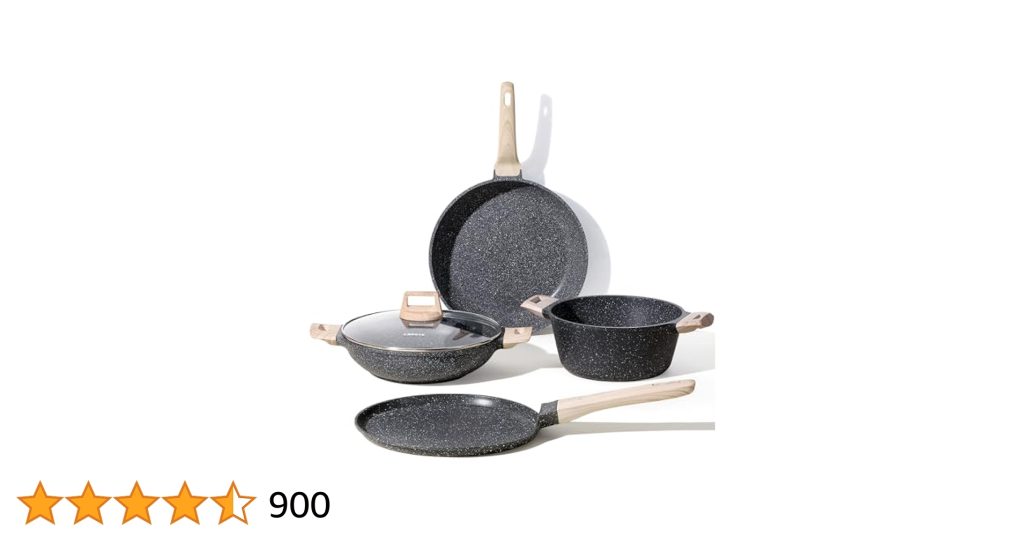
Are you curious about Carote cookware and whether it contains Teflon? If you care about what’s in your pots and pans, this question matters.
Knowing if your cookware has Teflon can affect your health and how you cook every day. You’ll get clear answers and important facts that help you make the best choice for your kitchen. Keep reading—you deserve to cook safely and confidently.

Credit: www.amazon.in
Carote Cookware Materials
Carote cookware is known for using different materials to make cooking easier. These materials affect how the cookware performs and how safe it is.
Understanding the materials helps you pick the right cookware for your kitchen needs.
Common Materials Used
Carote cookware mainly uses ceramic and aluminum in its products. Ceramic is popular because it is non-stick and safe. Aluminum helps with fast and even heating.
- Ceramic coating for non-stick surface
- Aluminum base for heat conduction
- Stainless steel handles for durability
- Some models may include glass lids
Presence Of Teflon
Carote cookware does not use Teflon in its products. Instead, it relies on ceramic coatings. This makes the cookware free from PTFE and PFOA chemicals, which are in Teflon.
| Coating Type | Contains Teflon? | Notes |
| Ceramic | No | Non-stick and eco-friendly |
| Teflon (PTFE) | Not used by Carote | Common in other brands, but absent here |
What Is Teflon?
Teflon is a brand name for a special chemical called polytetrafluoroethylene (PTFE). It is a type of plastic that does not stick to things easily. This makes it very useful for many products.
Teflon is often used to make surfaces smooth and slippery. It helps prevent food or other materials from sticking. People use Teflon in many kitchen tools and machines.
Chemical Composition
Teflon is made from carbon and fluorine atoms. These atoms connect to form long chains called polymers. The strong bonds between atoms give Teflon its unique properties.
The chemical formula for Teflon is (C2F4)n. This means each unit has two carbon and four fluorine atoms. The fluorine atoms create a shield around the carbon atoms, making Teflon very resistant to heat and chemicals.
Uses In Cookware
Teflon is popular in cookware because it stops food from sticking. It makes cooking and cleaning easier. Many non-stick pans use a thin layer of Teflon on the surface.
This coating allows you to cook with less oil. It also helps food cook evenly. Teflon cookware is common in homes and restaurants around the world.
- Non-stick frying pans
- Baking trays
- Griddles and skillets
- Egg poachers
Health Concerns With Teflon
Teflon is a coating used on many non-stick cookware. Some people worry about its safety. This is because Teflon can release harmful chemicals if heated too much.
This article looks at the health risks linked to Teflon. It also explains safe ways to use cookware with this coating.
Potential Risks
Teflon contains a chemical called PTFE. When heated above 500°F (260°C), it can break down. This releases fumes that may cause flu-like symptoms in people. This is called “Teflon flu” or polymer fume fever.
Animals exposed to high levels of these fumes have shown lung problems. People with pet birds should be extra careful. Birds are very sensitive to Teflon fumes.
- Fumes can cause short-term flu symptoms in humans
- Long-term exposure effects are still unclear
- Birds are highly sensitive to Teflon fumes
- Damaged or scratched Teflon cookware may release more chemicals
Safe Temperature Limits
Teflon-coated cookware is safe if used correctly. Keep the heat below 500°F (260°C) to avoid fumes. Most cooking methods do not reach this temperature.
Use medium or low heat for frying or cooking. Avoid preheating empty pans. Always follow the manufacturer’s instructions for safe use.
- Do not heat Teflon pans above 500°F (260°C)
- Use low to medium heat while cooking
- Do not leave pans empty on hot burners
- Replace pans if the coating is scratched or peeling

Credit: www.amazon.ae
Carote Nonstick Coating
Carote cookware is known for its nonstick surface. Many people ask if it contains Teflon. This article explains the type of coating used in Carote products.
We look at the coating’s durability and safety. This helps you decide if Carote suits your kitchen needs.
Type Of Coating Used
Carote uses a ceramic nonstick coating. This coating is free of PTFE and PFOA. These chemicals are found in Teflon coatings.
The ceramic surface allows easy food release. It also cleans easily after cooking.
Durability And Safety
The ceramic coating on Carote pans is strong. It resists scratches better than some nonstick coatings. You should still use wooden or silicone utensils.
Carote’s coating is safe to use at medium heat. High heat can damage the coating. The coating does not release harmful chemicals like Teflon can at high temperatures.
Comparing Carote And Teflon Cookware
Carote and Teflon cookware are popular choices in many kitchens. They both offer non-stick surfaces but differ in material and durability. Understanding their differences helps you pick the right cookware.
This comparison looks at how they perform in cooking and how easy they are to clean and maintain.
Performance Differences
Carote cookware often uses ceramic-based coatings, while Teflon uses a PTFE coating. This affects heat distribution and cooking results.
| Feature | Carote | Teflon |
| Non-stick Quality | Good, ceramic surface | Very smooth, PTFE surface |
| Heat Resistance | Higher heat tolerance | Lower heat tolerance, can degrade |
| Durability | Resistant to scratches | Can scratch easily |
| Cooking Speed | Even heat distribution | Quick heating but uneven sometimes |
Cleaning And Maintenance
Cleaning and care differ between Carote and Teflon cookware. Proper maintenance helps extend their life.
- Carote cookware can handle gentle scrubbing with non-abrasive pads.
- Teflon cookware needs soft sponges to avoid scratching the coating.
- Both should avoid metal utensils to keep surfaces intact.
- Hand washing is recommended for both types to maintain coating quality.
- Avoid very high heat to prevent damage to non-stick surfaces.
Safe Cooking Tips With Carote
Carote cookware is popular for its non-stick surface. Many wonder if it contains Teflon. Carote uses ceramic coatings, which are free of Teflon.
Using Carote safely helps keep your food healthy. Follow these tips to avoid damage and keep your cookware lasting longer.
Avoiding Overheating
Do not heat Carote cookware empty for a long time. High heat can damage the ceramic coating. Overheating may cause the surface to break down.
Always cook on medium or low heat. This keeps the coating safe and your food cooks evenly.
- Preheat on low heat only
- Never leave empty pans on high heat
- Use medium heat for most cooking
- Turn off heat after cooking
Proper Usage Practices
Use wooden, silicone, or plastic utensils to avoid scratching the surface. Metal tools can damage the ceramic coating.
Clean Carote cookware gently with a soft sponge. Avoid harsh scrubbers and strong detergents to keep the non-stick coating intact.
- Use non-metal utensils only
- Wash with soft sponges and mild soap
- Dry completely before storing
- Store with care to avoid scratches
Consumer Reviews And Feedback
Many consumers want to know if Carote cookware contains Teflon. This helps them decide if the product is safe for daily use. Feedback from users gives a clear picture of their real experience.
We look at what users say about Carote pans and pots. We also review expert opinions to provide a balanced view on the presence of Teflon in Carote products.
User Experiences
Many users report that Carote cookware does not have Teflon coating. They mention that the pans have a ceramic non-stick surface instead. This surface is often praised for being easy to clean.
- Users find the ceramic coating scratch-resistant
- Some mention the pans heat evenly without sticking
- Cleaning requires little effort, even with food residue
- Many feel safer using ceramic over Teflon coatings
- Some users note the coating lasts well with proper care
Expert Opinions
Experts confirm Carote cookware mostly uses ceramic coatings. These coatings do not contain PTFE or PFOA, chemicals found in Teflon. This means Carote products are free from traditional Teflon risks.
| Aspect | Carote Cookware | Teflon Cookware |
| Coating Type | Ceramic non-stick | PTFE-based non-stick |
| Toxic Chemicals | None | May contain PFOA/PTFE |
| Heat Resistance | High | Moderate |
| Durability | Good with care | Can scratch easily |
| Cleaning | Easy | Easy |

Credit: kitchenpluse.com
Frequently Asked Questions
Is Carote Cookware Made With Teflon?
No, Carote cookware is not made with Teflon. Instead, it uses a non-stick coating made from natural materials. This coating is free from PFOA and other harmful chemicals. Carote ensures that their products are safe for everyday cooking and environmentally friendly.
What Materials Are Used In Carote Cookware?
Carote cookware is primarily made from die-cast aluminum. It features a granite-based non-stick coating. This coating is derived from natural minerals, making it eco-friendly. The combination ensures even heat distribution and a non-toxic cooking surface.
Is Carote Cookware Safe For Health?
Yes, Carote cookware is safe for health. Its non-stick coating is free from PFOA, lead, and cadmium. This ensures a toxin-free cooking experience. Carote’s materials are chosen to prioritize user safety and environmental health.
How Durable Is Carote’s Non-stick Coating?
Carote’s non-stick coating is highly durable and scratch-resistant. It is designed to withstand daily cooking activities. With proper care, the coating maintains its non-stick properties for years. Always use wooden or silicone utensils to extend its lifespan.
Conclusion
Carote cookware does not contain Teflon. It uses safer non-stick materials instead. This makes it a good choice for those avoiding chemicals. The pans heat evenly and clean up easily. You can cook with less oil, making meals healthier. Always check product details before buying to be sure.
Choosing the right cookware helps keep your kitchen safe. Carote offers options that balance safety and performance well.