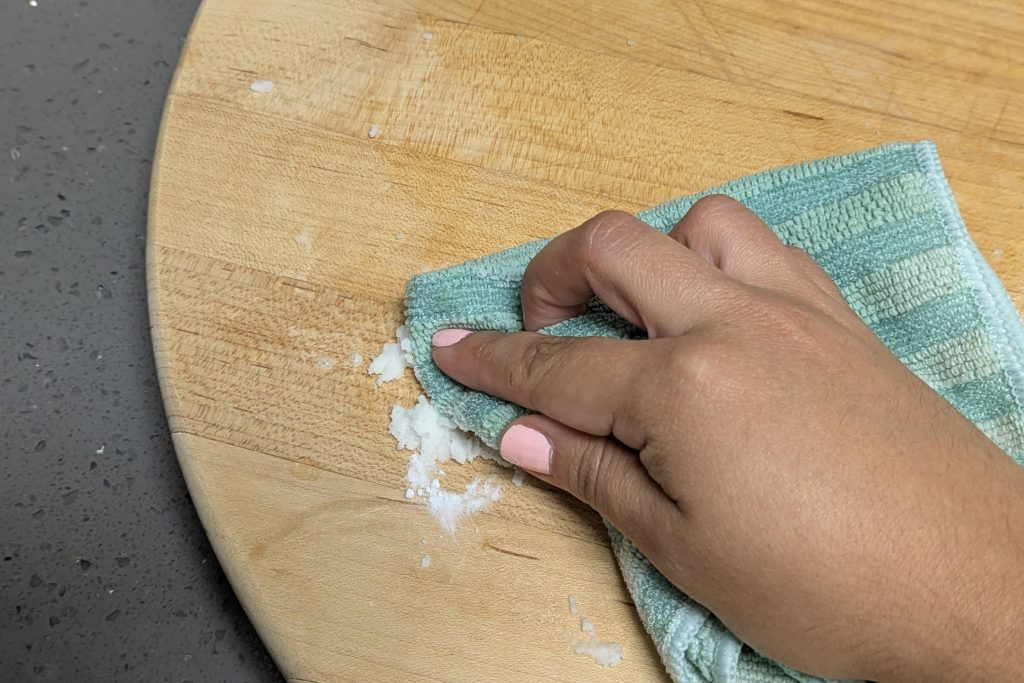
Your wooden cutting board is a kitchen essential, but do you know how to properly sanitize it? If you don’t clean it the right way, harmful bacteria can hide in the wood’s grooves and put your health at risk.
You want to keep your family safe and your board looking fresh for years. This guide will show you simple, effective steps to sanitize your wooden cutting board quickly and thoroughly. Keep reading to learn how to protect your kitchen and enjoy worry-free cooking every day.

Credit: homewithgraceandjoy.com
Choosing The Right Cleaning Tools
Cleaning a wooden cutting board requires the right tools. Using proper tools helps keep the wood safe and clean.
Choosing gentle and natural items protects the board from damage. It also removes bacteria effectively.
Soft Brushes And Sponges
Soft brushes and sponges clean the wood without scratching it. Hard tools can leave marks or damage the surface.
Use brushes with soft bristles or non-abrasive sponges. These help remove food bits and dirt gently.
- Soft nylon or natural bristle brushes
- Non-scratch sponges or cloths
- Avoid steel wool or rough scrubbers
Natural Cleaning Agents
Natural cleaners like vinegar and lemon are safe for wood. They kill germs and freshen the board.
These agents do not harm the wood or leave harmful residue. They are easy to find and use.
- White vinegar disinfects and cleans
- Lemon juice removes stains and smells
- Baking soda helps scrub and deodorize
Avoiding Harsh Chemicals
Avoid bleach and strong detergents on wooden boards. They can dry out and crack the wood.
Harsh chemicals may leave toxic residue. They reduce the board’s lifespan and safety.
- No bleach or ammonia-based cleaners
- No dishwasher soap with harsh agents
- Stick to mild or natural cleaning products
Daily Cleaning Steps
Keeping your wooden cutting board clean every day helps stop germs from spreading. It also keeps the board in good shape for a long time.
Follow simple steps to clean your board after each use. This keeps your kitchen safe and your board looking nice.
Rinsing And Scraping
Start by rinsing the board with warm water. This removes loose food bits and dirt.
Use a scraper or a spatula to gently scrape off stuck pieces. Avoid using metal scrapers to protect the wood.
- Rinse with warm water
- Scrape stuck food with a plastic scraper
- Do not soak the board
Soap And Water Wash
Wash the board with mild dish soap and warm water. Use a soft sponge or cloth to scrub the surface.
Rinse the soap off completely. Make sure no soap remains, as it can affect food taste.
- Use mild dish soap
- Scrub gently with sponge or cloth
- Rinse thoroughly with warm water
Drying Techniques
Dry your cutting board right away to prevent warping and bacteria growth. Use a clean towel to wipe off water.
Stand the board upright or place it in a well-ventilated area to air dry fully before storing.
- Wipe with a clean towel
- Place board upright to dry
- Ensure board is completely dry before storage
Deep Sanitizing Methods
Wooden cutting boards need regular deep cleaning to stay safe. Surface washing is not enough to kill bacteria inside the wood. Using natural products helps sanitize without damage.
Here are three effective ways to deep sanitize your wooden cutting board. Each method uses common household items that clean and deodorize well.
Vinegar And Hydrogen Peroxide
White vinegar kills many types of bacteria on contact. Hydrogen peroxide works well to remove germs and brighten the board. Use them one after the other for better results.
- Spray white vinegar on the board and let it sit for a few minutes.
- Rinse with water and then spray hydrogen peroxide.
- Wait 5 minutes before rinsing again with water.
- Dry the board thoroughly with a clean towel.
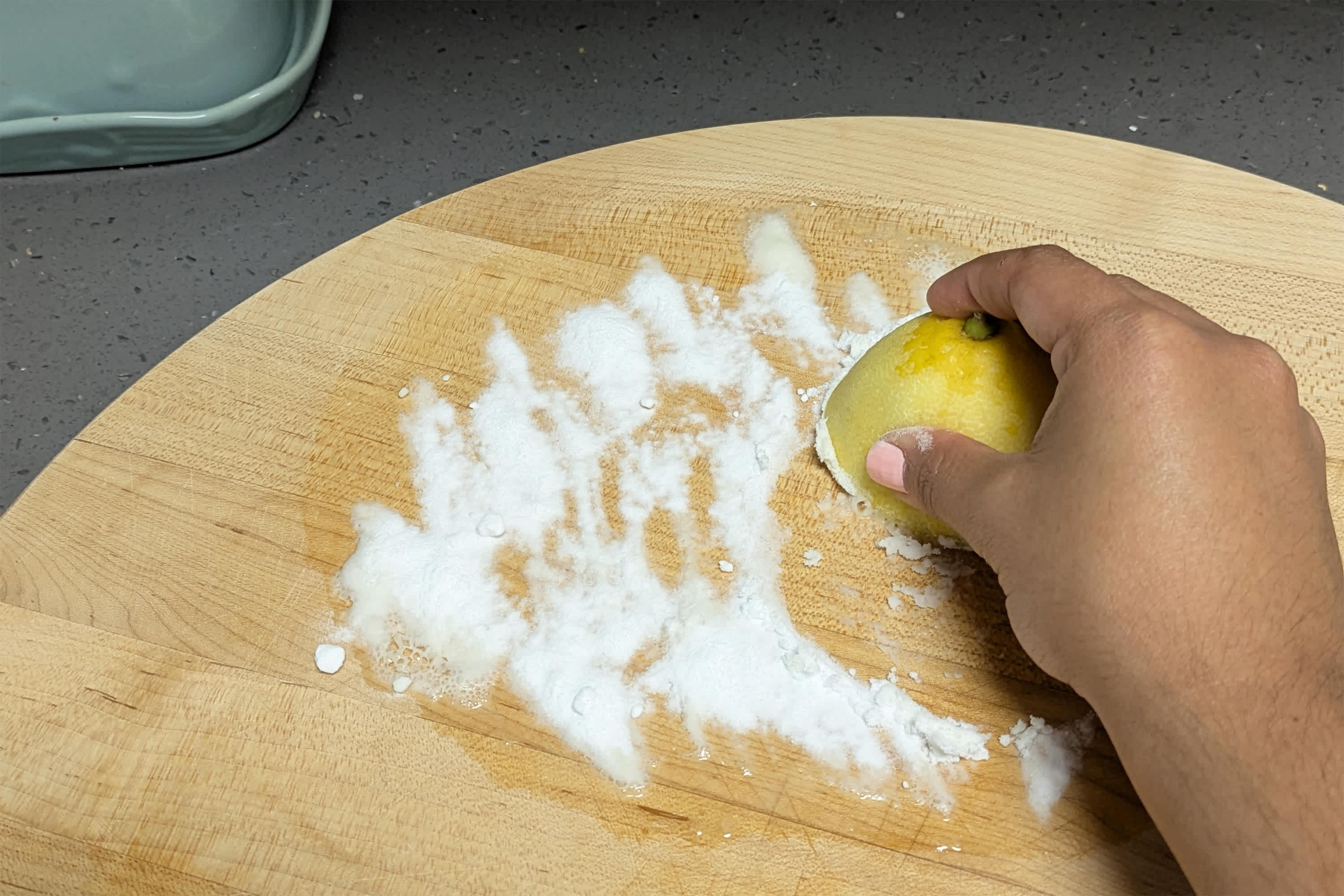
Salt And Lemon Scrub
Coarse salt helps scrub away stains and bacteria. Lemon juice adds acidity to kill germs and removes odors. This natural scrub refreshes your wooden board safely.
| Ingredients | Purpose |
|---|---|
| Coarse salt | Scrubs off dirt and bacteria |
| Lemon juice | Sanitizes and deodorizes |
To use, sprinkle salt on the board, then rub with half a lemon. Let it sit for 5 minutes before rinsing and drying.
Using Baking Soda Paste
Baking soda neutralizes odors and cleans deep inside the wood grain. It also helps remove tough stains while sanitizing the surface.
- Mix baking soda with water to form a thick paste.
- Spread the paste over the cutting board surface.
- Scrub gently using a brush or sponge.
- Let the paste sit for 10 minutes to work thoroughly.
- Rinse off with warm water and dry the board well.

Credit: food52.com
Preventing Bacteria Growth
Wooden cutting boards can harbor bacteria if not cleaned well. Proper care stops germs from growing on the wood.
Sanitizing wooden boards keeps your food safe and your kitchen healthy.
Regular Oiling
Oiling wood helps keep it strong and stops cracks. Cracks can trap bacteria and dirt.
Use food-safe mineral oil to coat the board. Apply oil once a month or when the wood looks dry.
- Clean the board before oiling
- Use a soft cloth to apply oil evenly
- Let oil soak in for a few hours
- Wipe off extra oil with a dry cloth
Proper Storage
Store your wooden cutting board in a dry place. Moisture helps bacteria grow on wood.
Keep it upright or on a rack to air dry after cleaning. Avoid stacking wet boards together.
- Dry completely before storing
- Keep away from sink or damp areas
- Store upright for air flow
- Use a board cover if needed
Avoiding Cross-contamination
Use separate boards for raw meat and vegetables. This stops germs from spreading between foods.
Clean boards well after each use to remove food bits and bacteria.
- Mark boards by food type
- Wash with hot, soapy water after use
- Sanitize with vinegar or diluted bleach
- Dry fully before next use
When To Replace Your Cutting Board
Wooden cutting boards are a great kitchen tool. They need care to stay safe and clean. Over time, they can wear out and become unsafe.
Knowing when to replace your wooden cutting board helps keep your food safe. It also keeps your kitchen hygienic and clean.
Signs Of Wear And Damage
Look closely at your cutting board for cracks, deep cuts, or splits. These can trap bacteria and make cleaning hard.
If your board has many knife marks or the surface feels rough, it is time to replace it. Warped or broken boards are unsafe too.
- Deep cracks or splits in the wood
- Many deep knife marks
- Rough or uneven surface
- Warped or bent shape
- Loose pieces or chunks missing
Health Risks Of Old Boards
Old cutting boards can hold harmful bacteria. These germs grow in cuts and cracks that are hard to clean.
Using a worn-out board may cause food poisoning. It can spread germs to your food and kitchen tools.
- Bacteria grow in deep cuts and cracks
- Hard to clean surfaces trap germs
- Cross-contamination risk between foods
- Possible foodborne illnesses
Credit: www.thekitchn.com
Frequently Asked Questions
How Often Should You Sanitize A Wooden Cutting Board?
You should sanitize a wooden cutting board after each use. This prevents bacteria buildup and ensures food safety. Regular cleaning with hot, soapy water is essential. Deep sanitize weekly using vinegar or hydrogen peroxide. Consistent maintenance helps prolong the board’s lifespan and keeps it hygienic.
Can You Use Bleach On Wooden Cutting Boards?
Using bleach on wooden cutting boards is not recommended. Bleach can damage the wood and leave harmful residues. Instead, use natural sanitizers like vinegar or hydrogen peroxide. These are effective and safe for wood. They kill bacteria without harming the material.
Always rinse thoroughly after sanitizing.
What Natural Products Sanitize Wooden Cutting Boards?
Vinegar and hydrogen peroxide are excellent natural sanitizers. They effectively kill bacteria without damaging the wood. Lemon juice is another good option for its antibacterial properties. Apply these liquids, let them sit for a few minutes, then rinse. These methods keep your board clean and safe.
How Do You Remove Stains From A Wooden Cutting Board?
To remove stains, sprinkle coarse salt on the board, then scrub with a lemon half. This natural method effectively lifts stains and deodorizes. Rinse well with warm water after scrubbing. For stubborn stains, a baking soda paste can be applied.
Regular maintenance prevents deep staining.
Conclusion
Sanitizing a wooden cutting board keeps your kitchen safe. Clean it well after every use. Use hot water and soap first. Then, apply a natural sanitizer like vinegar or lemon. Let the board dry completely to stop germs. Regular care helps wood last longer and stay fresh.
Your cutting board will stay clean and healthy this way. Simple steps make a big difference in food safety. Keep these tips in mind for daily use. Safe cooking starts with a clean cutting board.