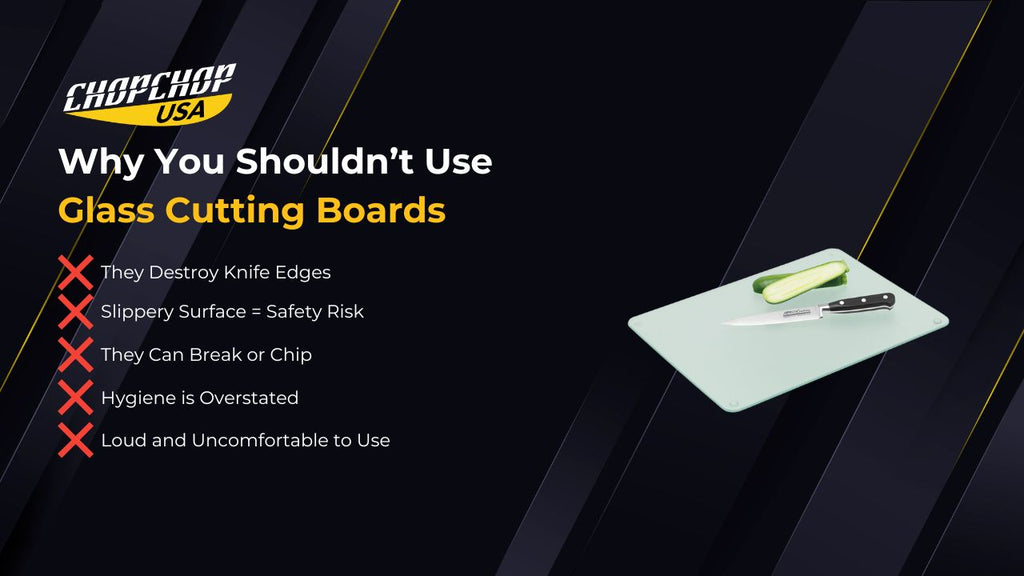
Are you wondering if glass cutting boards are safe to use in your kitchen? You might have seen them in stores and thought they looked stylish and easy to clean.
But before you bring one home, it’s important to know how they could affect your knives, your food, and even your safety. This article will give you clear answers and help you decide if a glass cutting board is the right choice for you.
Keep reading to find out what you need to know to protect your kitchen and your cooking experience.
Glass Cutting Boards And Safety
Glass cutting boards are popular in many kitchens. They look clean and are easy to wash.
People often ask if glass cutting boards are safe to use. This article explains their safety features.
Material Properties Of Glass Boards
Glass cutting boards are made from tempered glass. This glass is hard and smooth.
The surface does not absorb liquids or bacteria. It is easy to clean with soap and water.
- Tempered glass is very strong and resists scratches
- The hard surface keeps the board from staining
- Glass does not dull knives as much as some think
- Boards can break if dropped, so careful handling is needed
Comparison With Other Cutting Boards
Cutting boards come in wood, plastic, bamboo, and glass. Each type has safety points.
| Type | Safety Features | Drawbacks |
|---|---|---|
| Glass | Easy to clean, no bacteria buildup | Can break or chip if dropped |
| Wood | Knife-friendly, self-healing surface | Can harbor bacteria if not cleaned well |
| Plastic | Lightweight, dishwasher safe | Scratches easily, may hold bacteria |
| Bamboo | Hard surface, eco-friendly | Can dull knives, may crack over time |
Choosing a cutting board depends on your kitchen needs and cleaning habits.
Impact On Knives
Glass cutting boards are popular for their clean look and easy cleaning. Many wonder if they harm knife edges.
Understanding how glass boards affect knives helps you protect your tools better.
Effects On Knife Sharpness
Glass boards are very hard and smooth. This hardness can wear down knives faster than wood or plastic.
- Knives lose sharpness quickly on glass surfaces.
- Edges can chip or nick more easily.
- Repeated cutting on glass dulls blades faster.
- Glass does not absorb impact, increasing blade wear.
Maintenance Tips For Knives
Proper care helps keep knives sharp longer, even if you use glass boards.
| Tip | Description |
|---|---|
| Regular Honing | Use a honing rod to realign the blade edge often. |
| Sharpening | Sharpen knives with a whetstone or professional service regularly. |
| Use Appropriate Boards | Consider switching to wood or plastic boards to reduce wear. |
| Clean Properly | Hand wash knives and dry them immediately to prevent damage. |
Hygiene And Cleanliness
Glass cutting boards are popular in many kitchens. People want to know if they are safe to use. Hygiene and cleanliness are key parts of this question.
We will look at how glass boards resist bacteria and how to clean them properly. This helps you keep your kitchen safe.
Resistance To Bacteria
Glass is a non-porous material. It does not absorb liquids or food particles. This means bacteria cannot hide inside the surface. Glass cutting boards are less likely to grow germs than wood or plastic boards.
- Non-porous surface stops bacteria growth.
- Easy to see if the board is clean or dirty.
- No deep cuts or grooves for bacteria to live in.
- Does not stain or absorb odors from food.
Cleaning And Sanitizing Methods
Cleaning glass cutting boards is simple and effective. Proper cleaning removes bacteria and food residue. Sanitizing kills germs that remain after washing.
| Cleaning Method | Details | Effectiveness |
| Soap and Warm Water | Scrub with dish soap and rinse well. | Removes most dirt and food particles. |
| Dishwasher | Place board on top rack and run full cycle. | Kills bacteria with high heat and detergent. |
| Sanitizing Solution | Use diluted bleach or vinegar spray, then rinse. | Kills remaining germs after washing. |

Credit: www.amazon.ca
Durability And Damage Risks
Glass cutting boards are popular for their clean look and easy cleaning. They last long but can face damage from daily use.
Understanding how durable they are and the risks of damage helps you use them safely in your kitchen.
Chipping And Cracking Concerns
Glass boards can chip or crack if dropped or hit hard. Even small chips can grow bigger over time.
Using heavy knives or cutting hard foods may cause tiny cracks. These cracks are not always easy to see.
- Chips form when edges get hit
- Cracks appear from strong pressure
- Damage weakens the board’s strength
- Sharp knife edges can cause scratches
When To Replace Glass Boards
Replace glass cutting boards if you see cracks or deep chips. These can cause injury or spread bacteria.
Also, replace the board if it feels unstable or noisy during use. This shows hidden damage inside the glass.
- Visible cracks or large chips
- Uneven or rough cutting surface
- Board moves or slides easily
- Unusual sounds when tapping the board
Expert Recommendations
Glass cutting boards are popular for their sleek look and easy cleaning. Many people wonder if they are safe to use in the kitchen. Experts share advice to help you decide if glass boards fit your needs.
This guide covers who should use glass boards and shows safe alternatives. You will find useful tips to choose the right cutting surface.
Who Should Use Glass Boards
Glass cutting boards suit certain users well. They do not absorb odors or stains, making them easy to keep clean. People who want a non-porous surface may prefer glass.
- People who cut fruits and vegetables often
- Those who want a dishwasher-safe board
- Users who dislike wood or plastic stains
- Home cooks who prefer a smooth, hard surface
Alternatives To Glass Cutting Boards
Glass boards can dull knives quickly and may slip on counters. Here are safer alternatives that protect your tools and offer better grip.
| Material | Benefits | Drawbacks |
| Wood | Gentle on knives, natural antibacterial | Needs regular oiling, can stain |
| Plastic | Lightweight, dishwasher safe | Can scratch and hold odors |
| Bamboo | Eco-friendly, hard surface | Can dull knives faster than wood |
| Composite | Durable, resists cuts and stains | Usually expensive |

Credit: www.amazon.ca

Credit: www.amazon.com
Frequently Asked Questions
Are Glass Cutting Boards Safe For Knives?
Glass cutting boards are not ideal for knives as they can dull the blades quickly. The hard surface of glass can cause chips or nicks in the knife edge. For knife longevity, consider using wood or plastic cutting boards instead.
Do Glass Cutting Boards Harbor Bacteria?
Glass cutting boards are non-porous, making them resistant to bacteria buildup. They are easy to clean and do not absorb odors. Regular washing with hot, soapy water ensures they remain hygienic and safe for food preparation.
Can Glass Cutting Boards Break Easily?
Glass cutting boards are made from tempered glass, which is sturdy but not unbreakable. They can withstand regular kitchen use but may shatter if dropped. Handle them carefully to prevent accidents and ensure long-lasting use.
Are Glass Cutting Boards Dishwasher Safe?
Yes, glass cutting boards are typically dishwasher safe. Their non-porous surface makes them easy to clean in a dishwasher. However, check the manufacturer’s instructions to ensure they are suitable for dishwasher cleaning.
Conclusion
Glass cutting boards offer a clean and sturdy surface for food prep. They resist stains and odors, making them easy to keep fresh. Yet, they can dull knives faster than wood or plastic boards. Some may worry about slipping or breaking, so handle with care.
Choosing the right board depends on your cooking needs and habits. Overall, glass boards remain safe if used properly and cleaned well. Consider your priorities before picking one for your kitchen. Safety and convenience go hand in hand.