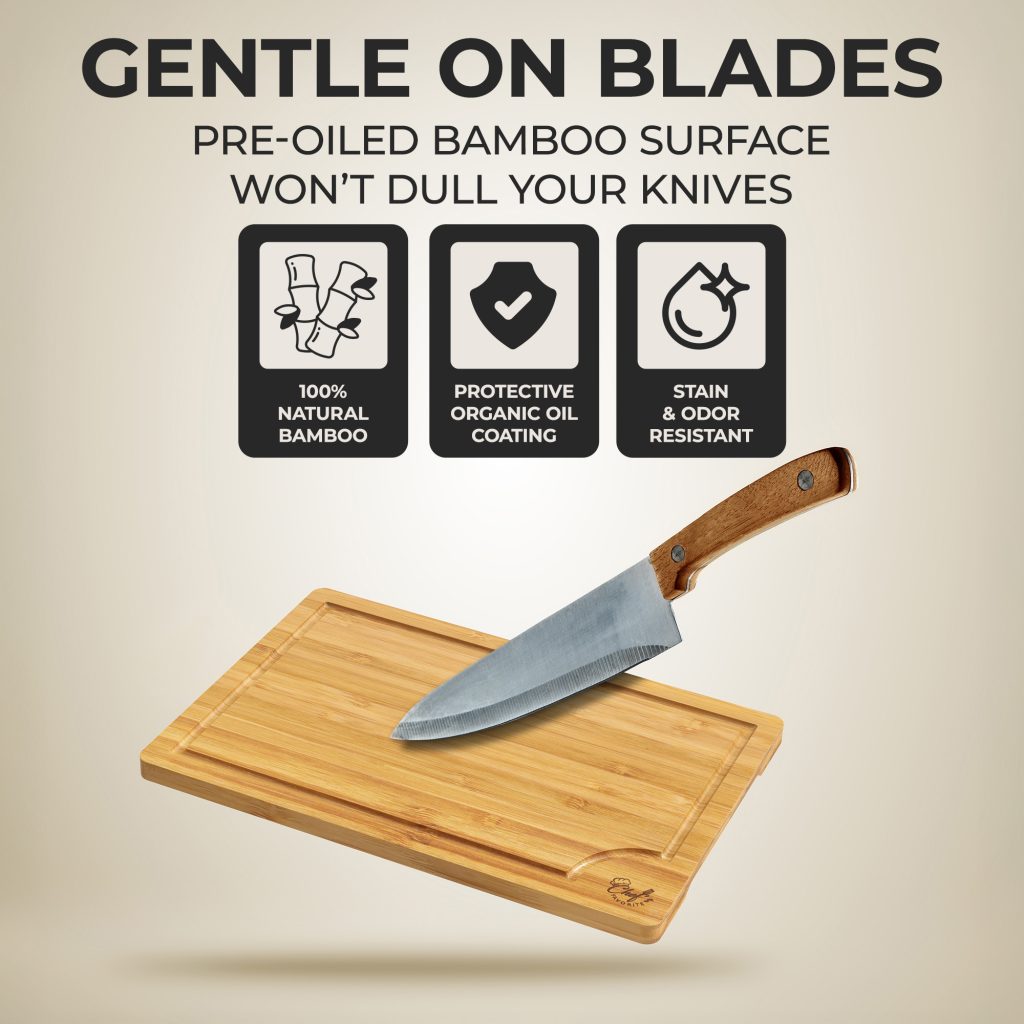
Have you ever noticed your knives getting dull faster than usual and wondered if your cutting board might be the cause? If you’re using a bamboo cutting board, you might be asking yourself, “Does bamboo dull knives?”
This question matters because a dull knife can make cooking frustrating and even unsafe. You’ll discover the truth about bamboo cutting boards and how they affect your knives. By the end, you’ll know exactly what to look for to keep your blades sharp and your kitchen running smoothly.
Keep reading—you’ll want to protect your knives while enjoying the benefits of bamboo.

Credit: miti-life.com
Why Board Material Matters
The material of a cutting board affects how it wears out knives. Some boards are gentle, while others can dull blades fast. Choosing the right board helps keep knives sharp longer.
This article looks at bamboo cutting boards and why the board’s material is important for your knives’ lifespan.
Comparing Bamboo To Other Woods
Bamboo is a popular choice for cutting boards. It is different from traditional hardwoods like maple or walnut. Bamboo grows quickly and is considered eco-friendly. It is also harder than many woods used for boards.
- Bamboo is harder than most hardwoods.
- Maple is softer and more common for cutting boards.
- Walnut offers a softer surface that is kind on knives.
- Bamboo may resist scratches better than softer woods.
Impact Of Hardness On Blades
Hardness affects how cutting boards impact knife edges. Harder boards like bamboo can dull knives faster than softer woods. The blade hits a tougher surface with more resistance.
| Board Material | Hardness Level | Effect on Knives |
| Bamboo | High | Can dull blades faster |
| Maple | Medium | Gentler on knives |
| Walnut | Low | Soft surface, less dulling |
Bamboo’s Surface Texture
Bamboo cutting boards are popular in many kitchens. Their surface texture plays a key role in how they affect knives.
This article looks at bamboo’s smoothness and grain patterns. These factors influence whether bamboo dulls knives or not.
Smoothness And Its Effects
Bamboo boards have a smooth surface but are not as soft as some wood boards. The smoothness helps protect knife edges from damage.
- Smoother surfaces cause less friction on knives.
- Less friction means knives stay sharper longer.
- Very rough surfaces can wear down blades faster.
- Bamboo offers a balanced smoothness that is gentle on knives.
Grain Patterns And Knife Contact
| Grain Type | Effect on Knife |
| Vertical Grain | Less wear, knife cuts with less resistance |
| Horizontal Grain | More resistance, can dull knife quicker |
| Strand-Woven | Very dense, may cause slight dulling |
Bamboo’s grain pattern affects how the knife blade touches the board. Vertical grains are easier on knives than horizontal or strand-woven patterns.
Testing Knife Sharpness On Bamboo
Bamboo cutting boards are popular for kitchen use. Many wonder if bamboo dulls knives faster than other boards. Testing knife sharpness on bamboo helps answer this question. It shows how bamboo affects blade edges after cutting.
Sharpness tests often involve cutting various materials on bamboo boards. These tests compare bamboo to plastic, wood, and other surfaces. The results help users choose the right board for their knives.
Common Experiments And Results
Researchers and home cooks test knife sharpness by performing similar cuts on bamboo boards. They then measure blade sharpness using tools or cutting tests. Most find that bamboo is softer than hardwood but harder than plastic. This means it causes moderate dulling.
- Cutting paper before and after using bamboo board to see edge difference
- Using a sharpness tester or magnifier to check the blade edge
- Comparing the number of cuts before the blade feels dull
- Testing different bamboo boards with varied hardness
- Measuring blade damage after repeated cutting on bamboo
Results show bamboo wears down knives slowly but not as fast as glass or ceramic boards. Bamboo’s natural fibers give enough grip to protect blades. The hardness varies depending on bamboo quality and board thickness.
User Experiences And Reviews
Many users share their personal views on bamboo cutting boards and knife sharpness. Some say bamboo dulls knives slightly after heavy use. Others notice no big difference compared to wood boards. Regular sharpening is important regardless of board type.
| User | Experience | Knife Type | Comments |
| Anna | Minimal dulling after months | Stainless steel chef knife | Easy to sharpen again |
| Mark | Slight dulling after heavy chopping | High-carbon steel knife | Prefers softer wood board |
| Lucy | No dulling noticed | Ceramic knife | Uses bamboo for light cutting |
| James | Moderate dulling after months | Damascus steel knife | Sharpens regularly |
How To Care For Bamboo Boards
Bamboo cutting boards are popular for their durability and eco-friendliness. Proper care keeps them lasting longer and prevents damage to your knives.
Cleaning and maintenance help maintain the board’s surface and protect your knives from dulling quickly.
Cleaning Techniques
Clean bamboo boards with mild soap and warm water after each use. Avoid soaking the board or placing it in the dishwasher to prevent warping.
- Use a soft sponge or cloth to wash the board gently.
- Rinse well to remove all soap residues.
- Dry the board immediately with a clean towel.
- Air dry the board standing upright to allow full drying.
- Disinfect occasionally with white vinegar or lemon juice.
Maintenance Tips To Protect Knives
Maintaining bamboo boards helps keep knives sharp and prevents damage. Apply oil regularly to keep the wood from drying and cracking.
| Maintenance Task | Frequency | Benefit |
| Apply food-safe mineral oil | Once a month | Prevents drying and cracking |
| Use cutting board conditioner | Every 2–3 months | Seals the surface and repels moisture |
| Avoid sharp chopping motions | Always | Reduces knife dulling |
| Sand rough spots lightly | As needed | Maintains smooth surface |
Alternatives To Bamboo Cutting Boards
Bamboo cutting boards are popular in many kitchens. Some people worry that bamboo can dull knives faster.
There are other materials to consider. These options can be gentler on knives and still work well.
Softwood Boards
Softwood boards come from trees like pine or cedar. They are softer than bamboo and hardwood. This softness helps protect your knife edges.
- Usually lighter and easier to handle
- Can show knife marks quickly
- May need more care to avoid stains and smells
- Best for light cutting tasks
Plastic And Composite Options
Plastic boards come in many colors and sizes. They are easy to clean and often dishwasher safe. Composite boards mix wood fibers with resins for extra strength.
| Type | Pros | Cons |
| Plastic | Easy to sanitize, dishwasher safe | Can get deep knife marks |
| Composite | Durable, gentle on knives | Usually more expensive |

Credit: www.amazon.com
Choosing The Right Cutting Board
Picking the right cutting board helps protect your knives. Different boards affect your knives in different ways.
Some boards are tough and last long but may dull knives faster. Others are softer and kinder to blades.
Balancing Durability And Knife Health
Bamboo cutting boards are very strong and last a long time. They resist cuts and scratches better than some wood boards.
Still, bamboo is harder than many woods. This hardness can cause knives to dull faster if you cut often on bamboo.
- Harder boards last longer but may wear knives faster
- Softer boards protect knives but may get damaged quickly
- Choose a board that fits how often you cook and your knife type
Factors Beyond Knife Dulling
Knife dulling is one factor to think about. Other things matter when choosing a cutting board.
Consider how easy the board is to clean and if it holds bacteria. Also, check if it is safe for food use.
- Boards with tight grains, like bamboo, resist stains and bacteria
- Plastic boards are easy to clean but can get deep cuts
- Wood boards may need oiling to stay in good shape
- Weight and size affect how easy the board is to handle

Credit: www.deerandoak.co.uk
Frequently Asked Questions
Do Bamboo Cutting Boards Damage Knives?
Bamboo cutting boards are generally safe for knives. They are less harsh than glass or ceramic surfaces. Bamboo’s natural fibers can help maintain the blade’s sharpness. However, regular maintenance of both the board and knife is essential. Proper care ensures longevity and optimal performance of your kitchen tools.
Is Bamboo Better Than Wood For Knives?
Bamboo is denser than many wood types, making it more durable. It offers a harder surface than some woods, which can be better for knives. Bamboo’s density can help resist knife marks. However, softer woods may be gentler on knives.
Choosing between them depends on personal preference and maintenance habits.
How To Maintain Bamboo Cutting Boards?
To maintain bamboo cutting boards, wash them with warm, soapy water. Avoid soaking or dishwashers as they can cause warping. Regularly oil the board to prevent drying and cracking. This helps maintain its surface and extends its lifespan. Proper care ensures the board remains a reliable kitchen tool.
Are Bamboo Cutting Boards Eco-friendly?
Bamboo is a sustainable resource, growing faster than most woods. It requires minimal pesticides and water, making it eco-friendly. Bamboo boards are biodegradable and have a low environmental impact. Choosing bamboo supports sustainable practices. It’s an excellent option for environmentally-conscious consumers seeking durable kitchen tools.
Conclusion
Bamboo cutting boards are gentle on your knives. They have a hard surface but still protect blades well. Knives stay sharp longer compared to glass or stone boards. Proper care of both board and knife matters a lot. Regularly oil your bamboo board to keep it smooth.
Sharpen your knives often for best results. Choosing bamboo helps balance durability and knife safety. It’s a smart choice for everyday kitchen use. Simple steps keep your knives sharp and your board lasting. A small effort makes a big difference.