Is your car’s air conditioner blowing warm air just when you need it most? It’s frustrating, uncomfortable, and can make every drive a struggle.
But don’t worry—you don’t have to spend a fortune at the mechanic or suffer through the heat. In this guide, you’ll discover simple, effective ways to fix your car air conditioner yourself. Whether it’s a minor issue or something that needs a bit more attention, you’ll learn how to get cool air flowing again quickly.
Keep reading, because the solution to your summer driving discomfort is easier than you think.

Credit: www.youtube.com
Common Car Ac Problems
No Cold Airmeans the AC is not cooling properly. This can happen if the refrigerant is low or the compressor is broken. Check for leaks or damage in the system.
Weak Airflowoccurs when the air coming from vents is too soft. This might be due to a clogged cabin air filter or a faulty blower motor. Cleaning or replacing the filter often helps.
Strange Noiseslike squealing or rattling can mean loose belts or worn-out parts inside the AC system. These sounds need quick attention to avoid bigger problems.
Unpleasant Odorsusually come from mold or bacteria in the AC vents. Running the AC with fresh air mode and cleaning the evaporator can reduce bad smells.
Basic Tools Needed
Pressure gaugeshelp check the air conditioner’s refrigerant pressure. They show if the system is too high or low. Using these gauges lets you know if the AC needs more refrigerant or if there is a leak.
Refrigerantis the fluid that cools the air inside the car. It must be the right type for your car’s AC system. Adding too much or too little can cause problems.
Leak detection kitsfind where refrigerant is escaping. Leaks stop the AC from working well. These kits usually use a dye or a sensor to spot leaks quickly.
Safety gearlike gloves and goggles protect you from chemicals and sharp parts. Always wear safety gear when fixing the AC to avoid injuries.
Checking Refrigerant Levels
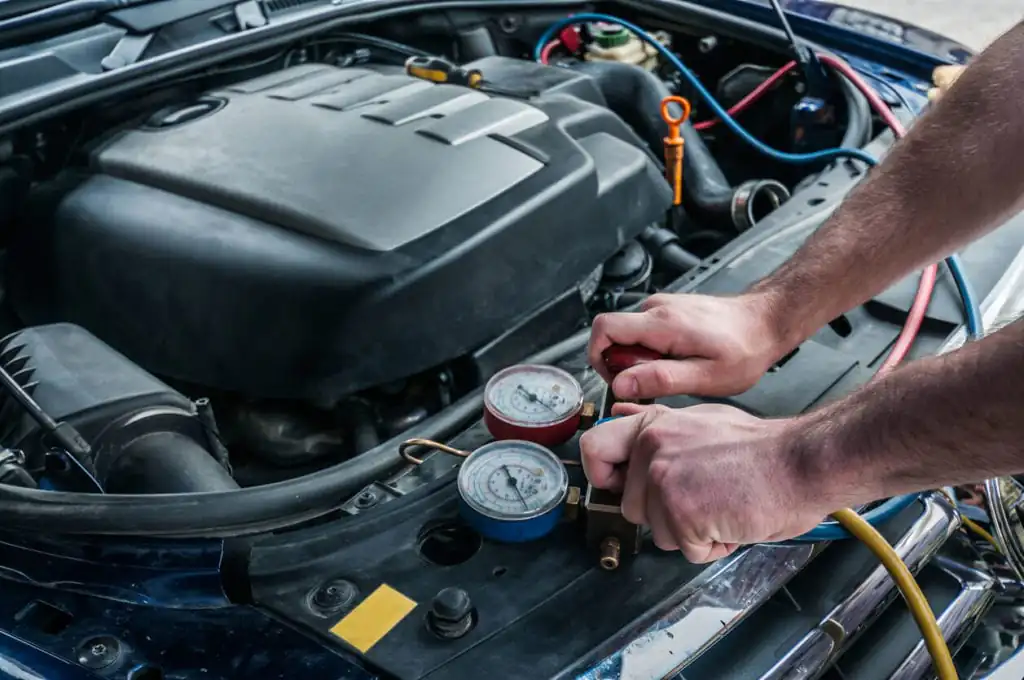
Find the service portsunder the hood near the air conditioner lines. These ports connect to the refrigerant system. Usually, one port is for low pressure and the other for high pressure.
Use pressure gaugesto check refrigerant levels. Attach the gauge hoses to the service ports carefully. Read the pressure according to the car’s manual. This shows if the refrigerant is low or normal.
Refill refrigerant only with the correct type for your car. Wear gloves and goggles for safety. Connect the refrigerant can to the low-pressure port using a hose. Add refrigerant slowly, checking pressure often.
- Locate service ports near AC lines.
- Attach pressure gauges to ports carefully.
- Read pressure to know refrigerant level.
- Use correct refrigerant type.
- Wear safety gear while refilling.
- Add refrigerant slowly and check pressure.
Credit: www.sunautoservice.com
Fixing Leaks
Leaks in a car air conditioner can cause poor cooling and damage. Finding the sourceis key. Check hoses, connections, and compressor seals carefully. Use a UV dye or leak detector to spot small leaks that are hard to see.
Sealants can help fix minor leaks. Choose a sealant made for car AC systems. Follow the instructions to add it to the system through the low-pressure port. Sealants work best on small cracks or holes.
Damaged hoses cause most leaks. Look for cracks, holes, or worn spots. Replace any hoses that look old or broken. Use new hoses made for your car model to ensure a tight fit and long-lasting repair.
Cleaning Ac Components
The condensershould be free of dirt and debris. Use a soft brush or low-pressure water to clean it gently. Avoid damaging the fins. This helps the AC cool properly.
Replacing the cabin air filterimproves air flow inside the car. Find the filter behind the glove box or under the dashboard. Remove the old filter and insert a new one. This keeps the air fresh and clean.
Drainage blockages can cause water leaks inside the car. Check the drain tubeunder the car for clogs. Use a thin wire or compressed air to clear any blockages. This prevents water buildup and bad smells.
Testing The Ac System
Start the engine and turn on the air conditioner. Let the car run for a few minutes to allow the system to stabilize. Check the air vents inside the car for cool air flow.
Use a thermometer to measure the air temperature coming out of the vents. A working AC should blow air around 40 to 50 degrees Fahrenheit. If the air is warm, there may be a problem.
- Listen for any unusual noises like hissing or rattling.
- Hissing could mean a refrigerant leak.
- Rattling might show a loose part in the AC system.
- Pay attention to the compressor clutch clicking sound.
When To Seek Professional Help
Complex electrical issuescan be tricky to fix. Faulty wiring or blown fuses need special tools. These problems can cause the AC to stop working completely. A professional can safely find and repair the problem.
Compressor problemsoften need expert care. The compressor is the heart of the AC system. If it fails, the air conditioner will not cool. Fixing or replacing it requires skill and correct parts.
Major refrigerant leaksreduce cooling power. Leaks can be hard to spot. Professionals use tools to detect and fix leaks safely. Handling refrigerants requires special knowledge and licenses.

Credit: www.youtube.com
Frequently Asked Questions
Why Is My Car Ac Not Blowing Cold Air?
Your car AC might not blow cold air due to low refrigerant levels, a faulty compressor, or a clogged condenser. Checking for leaks or blockages can help identify the issue. Regular maintenance ensures optimal performance and prevents costly repairs.
How Do I Recharge My Car Ac Refrigerant?
To recharge your car AC refrigerant, first locate the low-pressure port. Attach the refrigerant can and follow the instructions carefully. Ensure the engine is running and the AC is set to maximum. Avoid overcharging, which can damage the system.
What Causes Car Ac Compressor Failure?
Car AC compressor failure can be caused by low refrigerant, electrical issues, or worn-out components. Overheating and poor lubrication also contribute to compressor malfunction. Regular inspections help detect early signs and prevent complete failure.
How Often Should I Service My Car Ac?
It’s recommended to service your car AC every 1-2 years. Regular servicing ensures efficient operation and extends the system’s lifespan. It involves checking refrigerant levels, cleaning components, and inspecting for leaks. Timely maintenance prevents unexpected breakdowns.
Conclusion
Fixing your car air conditioner can save money and time. Start with simple checks like coolant levels and filters. Clean or replace parts as needed to improve cooling. Small repairs often stop bigger problems later. Keep your system maintained to enjoy cool rides.
Regular care helps your car last longer. Stay comfortable on every drive by acting early. Easy steps make your car’s air conditioner work well again.