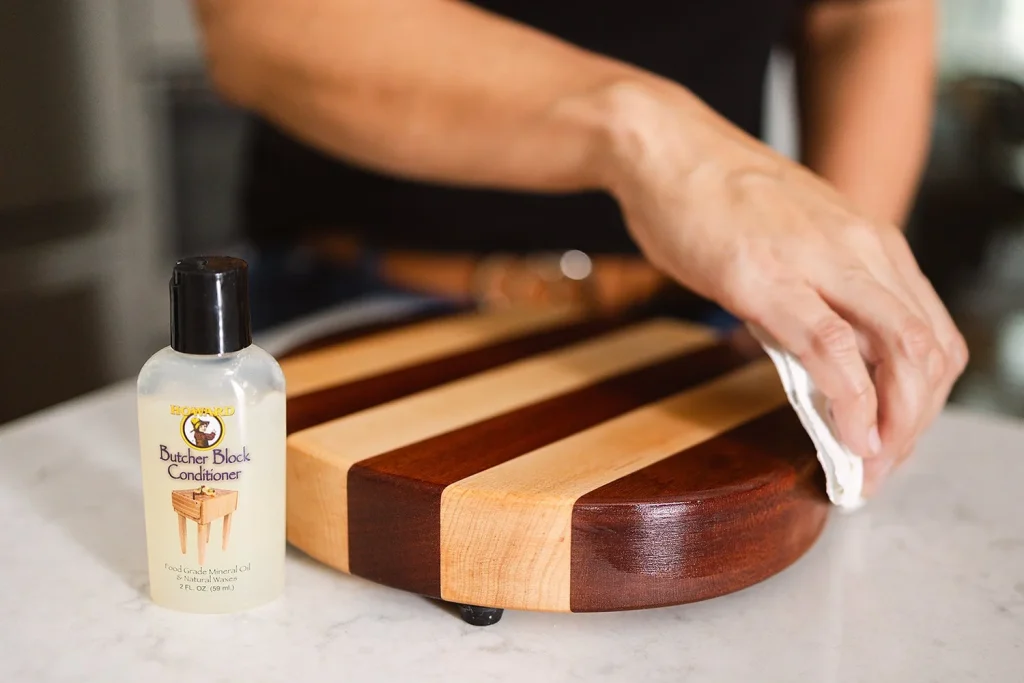
Ever noticed your cutting board looking a bit dull or dry? It’s not just a cosmetic issue.
A well-oiled cutting board not only looks great but also lasts longer and performs better. Oiling your cutting board with mineral oil is a simple yet vital task to keep it in top shape. But how exactly do you do it, and why is mineral oil the best choice?
This guide will walk you through the process, step-by-step, ensuring your board stays as good as new. Stick with us, and you’ll soon discover how this small act of care can make a big difference in your kitchen routine. Ready to give your cutting board the love it deserves? Let’s dive in!
Choosing The Right Mineral Oil
Oiling a cutting board keeps it strong and safe to use. Mineral oil is a popular choice for this job. It soaks into the wood and stops it from drying out.
Not all mineral oils are the same. Choosing the right type helps protect your board and food. This guide explains what to look for.
Food-grade Vs. Non-toxic Options
Food-grade mineral oil is safe for kitchen use. It meets rules for contact with food. Non-toxic options are also safe but may not be tested as strictly.
Choose food-grade oil to avoid chemicals that could harm you. Non-toxic oils that say “safe for food” are okay but check the label carefully.
- Food-grade oils are tested for safety
- Non-toxic oils may lack food safety certification
- Always read the label before buying
Avoiding Vegetable And Cooking Oils
Do not use vegetable or cooking oils on cutting boards. These oils can turn rancid and smell bad. They may also make the board sticky or messy.
Mineral oil stays fresh and does not spoil. It protects the wood without leaving a smell or sticky feel. This helps keep your board clean and safe.
- Vegetable oils can go bad over time
- Cooking oils leave a sticky surface
- Mineral oil does not spoil or smell
- Mineral oil keeps wood smooth and protected

Credit: www.amazon.com
Preparing Your Cutting Board
Oiling a cutting board helps keep it safe and lasts longer. Before oiling, prepare your board well.
Start by cleaning and drying the board. Then, smooth any rough surfaces.
Cleaning And Drying
Clean your cutting board to remove food and dirt. Use warm water and mild soap.
Rinse the board well and dry it fully. Use a clean towel and let it air dry for some time.
Sanding Rough Surfaces
Check your cutting board for rough or splintered spots. Sand these areas to make the surface smooth.
Use fine-grit sandpaper. Sand in the direction of the wood grain until smooth.
- Start with 120-grit sandpaper for rough areas
- Finish with 220-grit sandpaper for smoothness
- Wipe dust off with a damp cloth after sanding
Applying Mineral Oil
Applying mineral oil keeps your cutting board safe and clean. It helps stop the wood from drying out and cracking.
Using the right amount and method makes the oil work best. Let the board soak in the oil for a good finish.
Amount To Use
Use enough mineral oil to cover the entire surface. Too little will not protect the wood well. Too much can leave a sticky surface.
- Pour a small puddle of oil on the board.
- Spread the oil evenly with a clean cloth.
- Make sure all sides get oiled, including edges.
Techniques For Even Coverage
Spread the oil in smooth, circular motions. This helps the oil soak into the wood evenly. Avoid pouring oil in one spot only.
Tips for Even Coverage:
- Use a soft cloth or paper towel.
- Work the oil into cracks and grain.
- Flip the board and oil the other side.
- Wipe off extra oil after 10 minutes.
Allowing Absorption Time
Let the mineral oil soak into the wood for several hours. This gives the board time to absorb the moisture and stay protected.
| Absorption Time | Effect |
| 30 minutes | Some oil absorbed; board still needs more |
| 2-4 hours | Good absorption; wood feels nourished |
| Over 6 hours | Full absorption; best protection |

Credit: forest-decor.com
Maintaining Your Oiled Board
Keeping your cutting board oiled helps it last longer. Oil protects the wood from drying and cracking. It also keeps your board looking fresh and clean.
Regular maintenance is simple and prevents damage. You only need mineral oil and a soft cloth. Let’s look at how often to oil and signs your board needs it.
Frequency Of Oiling
How often you oil your board depends on use and climate. If you use it daily, oil it once a week. For lighter use, oil it every month or two.
- Daily use: oil once a week
- Weekly use: oil every 2-3 weeks
- Occasional use: oil monthly or bi-monthly
- Dry climates: oil more often
Signs Your Board Needs Oil
Watch for these signs to know when to oil your board. Dry or rough spots mean the wood is thirsty. Cracks or splits show the board needs care fast.
| Sign | What It Means |
| Dull, dry surface | Board needs oil to stay smooth |
| Water soaks in quickly | Oil layer is gone, wood is unprotected |
| Visible cracks or splits | Board is drying out and may break |
| Wood looks faded | Oil has worn off, board needs refreshing |
Avoiding Common Mistakes
Oiling a cutting board with mineral oil keeps it strong and clean. Many people make small errors that hurt the board.
Learn what to avoid so your cutting board lasts longer and works better.
Over-oiling Problems
Putting too much oil on your cutting board can cause damage. The board may become sticky and attract dirt.
Excess oil can also leave a wet surface that never dries. This can make the wood soft or cause bad smells.
- Too much oil blocks wood pores
- Sticky surface catches dust and crumbs
- Board stays wet, causing softness
- Bad smells may develop over time
Using The Wrong Oil Types
Not all oils are safe for cutting boards. Some oils can turn rancid and harm the wood or your food.
Mineral oil is best because it is food safe and does not spoil. Avoid cooking oils like olive or vegetable oil.
- Mineral oil is safe and does not spoil
- Vegetable oils can go rancid and smell bad
- Oils like coconut or olive may leave sticky residues
- Use only food-grade mineral oil for best results

Credit: www.amazon.com
Additional Care Tips
Oiling your cutting board with mineral oil keeps it in good shape. It helps stop cracks and warping. You should also follow other care steps to keep your board safe and clean.
These tips will help your cutting board last longer and stay hygienic. Proper care keeps it looking nice and working well.
Storing Your Cutting Board
Store your cutting board in a dry place. Avoid places with high humidity or direct sunlight. This stops the wood from swelling or cracking.
Keep the board upright or flat on a dry surface. Make sure air can flow around it to prevent moisture buildup.
- Place the board where it can dry after use
- Keep it away from heat sources like stoves
- Store upright to avoid trapping moisture underneath
Cleaning After Use
Clean your cutting board right after use. Use warm water and mild soap. Avoid soaking it or putting it in the dishwasher.
Dry the board with a clean towel. Let it air dry completely before storing. This stops bacteria and mold from growing.
- Wash with a soft sponge, not harsh scrubbers
- Rinse well to remove soap
- Dry board fully to prevent warping
Frequently Asked Questions
How Often Should I Oil A Cutting Board?
You should oil your cutting board every 3 to 4 weeks. Regular oiling prevents cracking and warping. It keeps the wood hydrated and extends the board’s lifespan. Frequency may vary based on use and climate.
Why Use Mineral Oil On Cutting Boards?
Mineral oil is food-safe and odorless. It penetrates wood to prevent drying and cracking. Unlike vegetable oils, it won’t go rancid. Mineral oil maintains the board’s appearance and hygiene effectively.
Can I Use Other Oils Instead Of Mineral Oil?
Avoid vegetable or cooking oils as they can spoil. Mineral oil is preferred due to its stability and safety. Food-grade mineral oil provides long-lasting protection without harmful effects.
How Much Mineral Oil Should I Apply?
Apply a generous coat of mineral oil to cover the board evenly. Use enough to soak in but avoid pooling. Let it absorb for several hours or overnight for best results.
Conclusion
Oiling your cutting board with mineral oil keeps it strong and clean. It stops cracks and warping from water damage. Regular oiling makes the wood look fresh and smooth. It also helps prevent bacteria from settling in. Just follow simple steps, and your board will last longer.
Take care of your cutting board, and it will serve you well. A little oil goes a long way in protecting your kitchen tool. Keep your board healthy with easy, regular oiling.