Is your air conditioner not cooling like it used to? You might be low on refrigerant, the key ingredient that keeps your home cool and comfortable.
Adding refrigerant isn’t as tricky as it sounds, but doing it right is essential for your AC’s performance and your safety. You’ll discover simple, step-by-step tips to add refrigerant to your air conditioner. By the end, you’ll know exactly what to do to keep your space cool all summer long.
Ready to take control of your comfort? Let’s get started.
Signs Your Ac Needs Refrigerant
Low refrigerant causes poor coolingand warm airfrom vents. The AC runs longer but does not cool well. You may hear hissing or bubbling soundsnear the outdoor unit. Ice can form on the evaporator coil or refrigerant lines. The system may turn on and off frequently, called short cycling. These signs mean the refrigerant is too low.
Refrigerant helps the AC absorb heatand cool your home. Low levels make the compressor work harder. This leads to higher energy billsand possible damageto the system. Proper refrigerant levels keep the AC running efficientlyand cooling effectively.
Essential Tools And Safety Gear
Essential tools for adding refrigerant include:
- Refrigerant gauge setto measure pressure accurately.
- Vacuum pumpto remove air and moisture from the system.
- Refrigerant tankwith the correct type for your AC.
- Protective gloves and gogglesto protect skin and eyes.
- Leak detectorto find any leaks before refilling.
- Thermometerto check temperature changes.
Safety precautions are very important. Always wear gloves and goggles. Work in a well-ventilated area. Avoid contact with refrigerant, as it can cause frostbite. Do not inhale fumes. Make sure the AC is turned offbefore starting. Check for leaks using the leak detector. Follow the refrigerant type specified by the manufacturer. Handle tools carefully to avoid damage. Keep children and pets away during the process.
Checking Refrigerant Levels
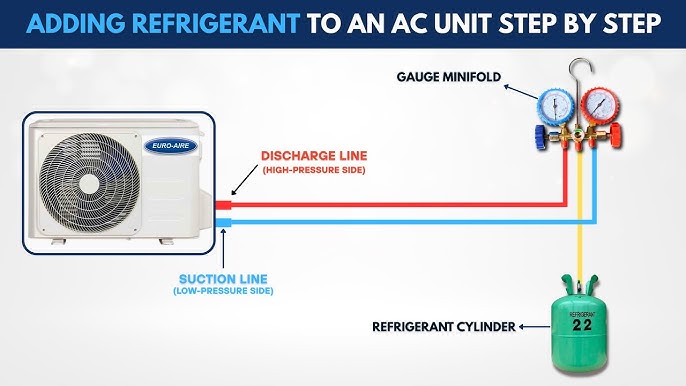
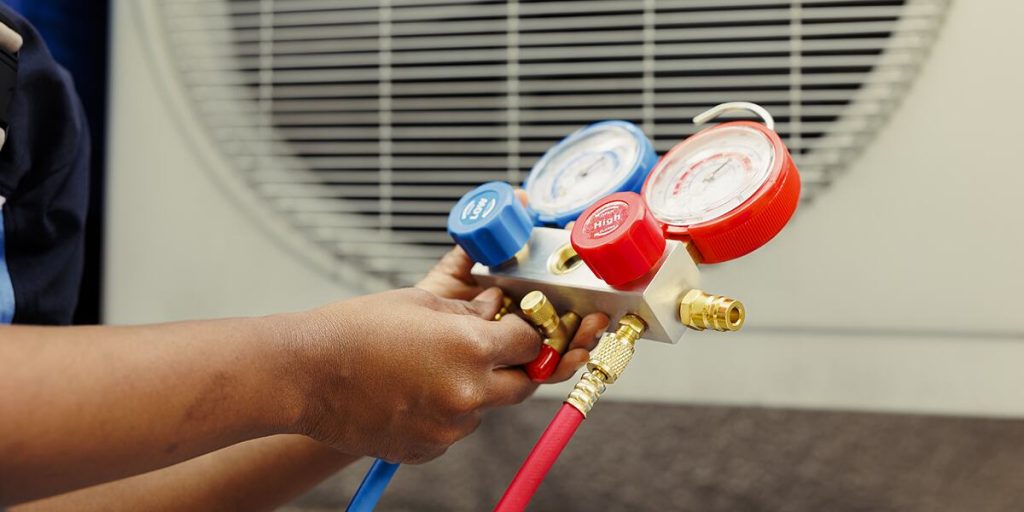
Pressure gauges help check the refrigerant levelin an air conditioner. Attach the gauges to the service ports on the AC unit. The low-pressure gauge connects to the suction side, while the high-pressure gauge connects to the discharge side. These gauges show pressure readings in psi or bar.
Gauge readings tell if the refrigerant level is low, normal, or high. Low pressure means the unit may need more refrigerant. High pressure might indicate a blockage or too much refrigerant. Normal readings depend on the AC model and outdoor temperature.
| Gauge Reading | Possible Meaning |
|---|---|
| Low Pressure | Refrigerant is low or leak present |
| Normal Pressure | Refrigerant level is adequate |
| High Pressure | Blockage or overcharged system |

Credit: www.youtube.com
Selecting The Right Refrigerant
There are several types of refrigerantsused in air conditioners. The most common ones include R-22, R-410A, and R-32. Each type has different properties and environmental impacts. R-22 is being phased out due to its harm to the ozone layer. R-410A is widely used in newer models because it is more efficient and eco-friendly. R-32 is gaining popularity for its lower global warming potential.
Matching the refrigerant to your AC unit is very important. Check the manufacturer’s labelon the unit for the recommended refrigerant type. Using the wrong refrigerant can damage the systemor cause poor performance. Always use the exact refrigerant type specified for your air conditioner.
Preparing The Ac Unit
Start by turning off the powerto the air conditioner. This is important for safety. Find the main power switch or circuit breaker and switch it off. This stops electricity from flowing to the unit.
Next, locate the service valveson the outdoor unit. These valves control the flow of refrigerant. You usually find two valves: a low-pressure valve and a high-pressure valve. They look like small round knobs with caps.
- Remove the caps gently to access the valves.
- Use a wrench to open the valves if needed.
- Be careful not to damage the valves or pipes.
These steps prepare your AC unit for adding refrigerant safely and correctly.

Credit: www.lochardplumbingheatingandcooling.com
Connecting The Refrigerant Canister
Attach the hoses tightly to the refrigerant canister and the air conditioner. Use the correct hose for each port: low-pressureand high-pressure. This prevents leaks and ensures safety.
Check that the connections are securebefore opening the valve. A loose hose can cause refrigerant to escape, which is harmful.
- Use a wrench to tighten hose fittings if needed.
- Make sure the valve on the canister is closed before connecting.
- Wear gloves and safety glasses to protect yourself.
After attaching, test the connection by gently pulling the hoses. They should not move or disconnect easily. This confirms a safe and tight seal.
Adding Refrigerant Step-by-step
Open the valve slowly to let refrigerant flow into the system. Avoid opening it too fast. Sudden pressure changes can damage the air conditioner.
Check the pressure and temperature often during filling. Use gauges to see if levels are correct. This helps prevent problems.
- Watch the pressure gauge carefully.
- Keep an eye on the temperature readings.
- Stop adding refrigerant if pressure is too high.
Do not add too much refrigerant. Overcharging can cause poor cooling and damage parts. Follow the manufacturer’s recommended amount.
Testing And Final Checks
Start the AC to check if the refrigerant is flowing well. The system should run quietly without strange noises. Feel the air coming out. It must be cold and steady.
Check all pipes and joints carefully for any leaks. Use a leak detector or soapy water to find bubbles. Fix any leaks before moving on.
| Checkpoint | What to Look For | Action Needed |
|---|---|---|
| AC Running | Quiet operation, steady cold air | Continue if normal |
| Leaks | Soap bubbles or detector alerts | Seal leaks immediately |
| Cooling Performance | Room temperature drops in 10-15 minutes | Recharge again if weak |
When To Call A Professional
Some air conditioner problems need expert help beyond just refilling refrigerant. Issues like leaks, compressor failures, or electrical troublesrequire special tools and skills. Handling these can be risky and might cause more damage.
Legal rules also limit who can add refrigerant. Professionals must have certificationsto handle certain gases safely. This keeps you and the environment safe. Without proper licensing, refilling refrigerant might be illegal.
| Complex Issues | Legal Requirements |
|---|---|
| Leaks in the system | Certified technician needed |
| Compressor or motor problems | Must follow environmental laws |
| Electrical or wiring faults | Proper tools and licenses required |
Credit: www.georgiaairrepair.com
Frequently Asked Questions
What Tools Are Needed To Add Refrigerant?
To add refrigerant, you’ll need a manifold gauge set and a refrigerant canister. Additionally, ensure you have safety goggles and gloves. These tools help in accurately measuring and safely adding refrigerant to your air conditioner system.
Can I Add Refrigerant To My Ac Myself?
Yes, you can add refrigerant yourself, but it’s risky. Improper handling can damage your system or cause injury. It’s best to have a certified HVAC technician perform this task. They ensure the right type and amount of refrigerant is used for optimal performance.
How Often Should Refrigerant Be Added?
Refrigerant should rarely need to be added. It’s a closed system, so if levels are low, there’s likely a leak. It’s crucial to identify and fix leaks before adding more refrigerant. Regular maintenance can prevent these issues and extend your air conditioner’s lifespan.
What Signs Indicate Low Refrigerant Levels?
Signs of low refrigerant include reduced cooling, hissing noises, and ice on evaporator coils. If you notice these, it might be time to check your refrigerant levels. Addressing these signs promptly can prevent further damage to your air conditioner.
Conclusion
Adding refrigerant to an air conditioner can improve its cooling power. Always check the type and amount of refrigerant needed. Use the right tools and follow safety steps carefully. Avoid overfilling, as it can harm the system. If unsure, ask a professional for help.
Proper maintenance keeps your AC running well and saves energy. Small efforts can lead to big comfort in hot weather.