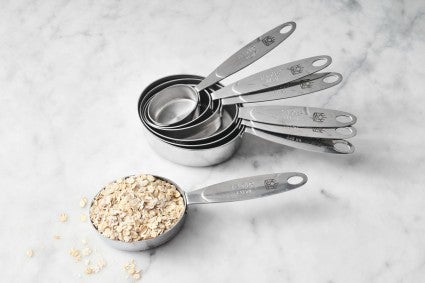
Have you ever reached for a measuring cup and wondered if you grabbed the right one? Knowing exactly what a dry measuring cup looks like can make a big difference in your cooking and baking.
Using the wrong cup might mean your recipe turns out too salty, too sweet, or just not quite right. You’ll discover how to spot a dry measuring cup quickly and why it’s so important for your kitchen success. Keep reading to avoid common mistakes and improve your cooking with a simple, easy tip.

Credit: www.amazon.com
Types Of Dry Measuring Cups
Dry measuring cups are tools used to measure solid ingredients like flour or sugar. They come in different materials and shapes.
Knowing the types helps you pick the right cup for your cooking or baking needs.
Metal Cups
Metal dry measuring cups are strong and last a long time. They usually have a shiny finish and clear measurement marks.
They are easy to clean and do not absorb stains or odors. Some are made from stainless steel to prevent rust.
- Durable and long-lasting
- Clear measurement markings
- Resistant to stains and odors
- May be dishwasher safe
Plastic Cups
Plastic dry measuring cups are lightweight and often come in bright colors. They can be less expensive than metal cups.
Some plastic cups have measurement marks on the inside or outside. They may not last as long as metal cups.
- Lightweight and colorful
- Usually more affordable
- May scratch or stain over time
- Some are dishwasher safe
Silicone Cups
Silicone dry measuring cups are flexible and easy to store. They often come in bright colors and can bend without breaking.
They are heat resistant and safe to use in the dishwasher. Silicone cups are good for sticky ingredients.
- Flexible and easy to store
- Heat resistant and dishwasher safe
- Good for sticky ingredients
- Colorful and soft to touch
Wooden Cups
Wooden dry measuring cups have a natural look and feel. They are less common but add a rustic style to your kitchen.
Wood can absorb moisture and stains, so cleaning needs care. They are not dishwasher safe and should be hand washed only.
- Natural and rustic appearance
- Needs careful hand washing
- Can absorb moisture and stains
- Not dishwasher safe
Common Sizes And Measurements
Dry measuring cups help you measure dry ingredients like flour, sugar, and oats. They come in many sizes for different needs.
Knowing the common sizes makes cooking easier and keeps your recipes accurate.
Standard Cup Sizes
Most dry measuring cups have standard sizes used in many recipes. These cups fit well in most kitchens.
- 1 cup (240 ml) – the most common size
- 1/2 cup (120 ml) – half of a full cup
- 1/3 cup (80 ml) – one-third of a cup
- 1/4 cup (60 ml) – a quarter cup
Smaller Portions
Smaller cups help measure tiny amounts. They are great for spices or baking powder.
- 1 tablespoon (15 ml)
- 1 teaspoon (5 ml)
- 1/2 teaspoon (2.5 ml)
- 1/4 teaspoon (1.25 ml)
Larger Volume Cups
Larger measuring cups hold more dry ingredients. They save time when cooking big meals.
- 2 cups (480 ml)
- 4 cups (960 ml)
- 5 cups (1.2 liters)
Key Features To Identify
Dry measuring cups are essential for cooking and baking. They help measure ingredients like flour and sugar accurately. Knowing their key features makes it easy to pick the right cup.
These cups have special designs that set them apart from liquid measuring cups. Look for certain traits to spot a dry measuring cup quickly.
Flat Tops For Leveling
Dry measuring cups usually have flat tops. This flat edge helps you level off ingredients. You can use a knife or spatula to scrape off extra material for an exact measure.
Clear Measurement Markings
The markings on dry measuring cups are easy to read and placed inside the cup. They show common measurements like cups, tablespoons, or milliliters. This clarity helps avoid mistakes while cooking.
- Markings are usually printed or engraved inside
- They show different sizes such as 1/4, 1/3, 1/2, and 1 cup
- Markings are visible even when the cup is full
Stackable Designs
| Feature | Benefit |
| Nested cups | Save kitchen space |
| Uniform shape | Easy to store and handle |
| Durable material | Long-lasting use |
Many dry measuring cups fit inside each other. This stackable design keeps your kitchen organized. It also makes carrying and storing them easier.
Differences From Liquid Measuring Cups
Dry measuring cups and liquid measuring cups look different. Each one is made for a special job in the kitchen.
Knowing their differences helps you measure ingredients correctly for recipes.
Shape And Design
Dry measuring cups are usually short and have flat tops. This lets you scoop dry ingredients and level them off easily. Liquid measuring cups are taller with a spout. This shape helps to pour liquids without spilling.
Measurement Mark Placement
| Dry Measuring Cups | Measurement marks are inside the cup, near the top edge. |
| Liquid Measuring Cups | Marks are on the outside for easy reading at eye level. |
Usage Tips
- Use dry cups for flour, sugar, and grains.
- Use liquid cups for water, milk, and oil.
- Level dry ingredients with a flat edge for accuracy.
- Check liquid levels at eye level to avoid mistakes.
- Never mix the two types to keep measurements correct.
Materials And Durability
Dry measuring cups come in different materials. Each type has strengths and weaknesses. Knowing these helps you pick the right one for your kitchen.
Durability depends on the material. Some cups last longer and resist damage better than others.
Pros And Cons Of Various Materials
- Plastic:Lightweight and cheap but can stain and scratch easily.
- Glass:Clear and easy to read. It is sturdy but can break if dropped.
- Metal:Very durable and long-lasting. It is hard to see measurements inside.
- Ceramic:Stylish and heavy. It can chip or crack with rough use.
Heat Resistance
Heat resistance varies with materials. Metal and glass cups handle heat well. Plastic cups may warp or melt. Ceramic cups resist heat but can crack from sudden changes.
Cleaning And Maintenance
| Material | Cleaning Tips | Maintenance Notes |
|---|---|---|
| Plastic | Hand wash to avoid scratches | Replace if stained or cracked |
| Glass | Dishwasher safe but handle carefully | Check for chips before use |
| Metal | Use mild soap and dry quickly | Can rust if not dried well |
| Ceramic | Clean gently to avoid chips | Avoid sudden temperature changes |

Credit: www.amazon.com
Visual Tips For Accurate Measuring
Using a dry measuring cup correctly helps get the right amount of ingredients. This improves your cooking and baking results.
Look closely at your dry measuring cup and follow some simple visual tips. They help avoid mistakes and save time.
Leveling Techniques
Fill the dry measuring cup until it is slightly over the mark. Use a flat edge like a knife to level the ingredient. This removes extra and gives an exact amount.
- Scoop the ingredient into the cup.
- Hold a flat tool over the cup’s top.
- Slide the tool across to level the ingredient.
- Remove excess back to the container.
Avoiding Overfill
Overfilling the dry measuring cup can cause errors in recipes. Watch the ingredient’s surface carefully. It should not bulge above the cup’s edge.
| Common Mistake | Visual Sign | Fix |
| Overfilled cup | Ingredient mounded above rim | Use a flat edge to level |
| Underfilled cup | Ingredient below measurement line | Add more to fill properly |
| Uneven surface | Ingredient tilted or sloped | Level with flat tool |
Using The Right Cup For Ingredients
Dry measuring cups come in different sizes and materials. Use the right one for each ingredient to get accurate results.
- Use smaller cups for spices or small amounts.
- Use larger cups for flour, sugar, or grains.
- Choose cups with clear markings for easy reading.
- Use metal or plastic cups based on ingredient type and ease of cleaning.
Popular Brands And Styles
Dry measuring cups come in many brands and styles. They help measure ingredients like flour and sugar accurately.
Choosing the right style depends on your budget and needs. Some cups offer simple designs, while others add useful features.
Budget-friendly Options
Many brands offer affordable dry measuring cups. These cups usually come in sets of different sizes.
- Plastic cups with clear markings
- Basic metal cups with handles
- Stackable designs for easy storage
Premium Designs
Premium dry measuring cups use high-quality materials. They often have better accuracy and durability.
| Brand | Material | Special Feature |
| OXO | Stainless Steel | Non-slip handles |
| All-Clad | Stainless Steel | Polished finish |
| Le Creuset | Enamel-Coated Steel | Bright colors |
Innovative Features
Some dry measuring cups include new features to improve use and accuracy.
- Adjustable measuring cups with sliding markers
- Cups with spouts for easy pouring
- Magnetic handles for storage convenience
- Clear cups with easy-to-read markings in multiple units

Credit: www.surlatable.com
Frequently Asked Questions
What Materials Are Dry Measuring Cups Made Of?
Dry measuring cups are typically made of plastic, metal, or ceramic. Plastic cups are lightweight and affordable, while metal ones are durable and long-lasting. Ceramic cups add a touch of elegance but can be fragile. Each material offers its own benefits, depending on your needs.
How Do You Identify A Dry Measuring Cup?
A dry measuring cup is designed with a flat top for easy leveling. They often come in a set of different sizes, such as 1 cup, 1/2 cup, 1/3 cup, and 1/4 cup. These cups are sturdy and usually lack a pouring spout.
Can Dry Measuring Cups Measure Liquids?
Dry measuring cups are not ideal for measuring liquids. They are designed for accuracy with dry ingredients. Liquid measuring cups have a spout and measurements marked on the side, which makes them more suitable for measuring liquids precisely.
Why Use A Flat Edge With Dry Measuring Cups?
Using a flat edge helps level off excess ingredients for accurate measurements. This technique ensures consistent results in recipes. It also prevents overpacking, which can lead to dense and improperly mixed baked goods. Always use a straight edge like a knife for best results.
Conclusion
Dry measuring cups are simple tools with clear markings. They come in sets with different sizes. Usually made of plastic or metal, they have flat tops. These cups help measure dry ingredients like flour or sugar. Using the right cup ensures correct recipe results.
Knowing what a dry measuring cup looks like helps in cooking. Keep them handy for easy and accurate baking. Simple, useful, and essential in every kitchen.