Is your air conditioner blowing out a musty smell? That could be mold hiding inside, and it’s not just unpleasant—it’s unhealthy for you and your family.
Cleaning mold from your air conditioner might sound tricky, but with the right steps, you can tackle it yourself and breathe fresh, clean air again. In this guide, you’ll discover simple, effective ways to remove mold and keep your AC running smoothly.
Keep reading to protect your home and your health.

Credit: www.reddit.com
Signs Of Mold In Air Conditioners
Musty smellsnear the air conditioner often mean mold growth. Watch for visible black or green spotsinside vents or on filters. Mold may cause the unit to blow dust or sporesinto the air. You might notice water leaksor excessive moisture around the system. These signs show mold is present and needs cleaning.
Health problems linked to mold include coughing, sneezing, and itchy eyes. Mold spores can cause allergiesand breathing issues. People with asthma or weak immune systems are at higher risk. Mold exposure can also lead to headaches and skin irritation. Early detection helps protect health and keeps air quality safe.
Tools And Materials Needed
Essential cleaning suppliesinclude a soft brush, spray bottle, and cleaning solution. Use a mixture of water and white vinegaror a mild detergent to remove mold. A clean cloth or sponge helps wipe surfaces without damage. A vacuum cleaner with a HEPA filtercan remove loose mold particles safely.
For safety gear, wear glovesto protect your hands from mold and chemicals. A maskis important to avoid breathing in mold spores. Safety goggles protect your eyes from splashes. Old clothes or a disposable suit keep your skin safe and make cleanup easier.
Preparing Your Air Conditioner
First, turn off the powerto the air conditioner. This step is very importantfor safety.
Next, gently remove the filters and covers. These parts collect dust and mold.
Cleaning these parts separately helps the air conditioner work better. Use a soft brush or cloth.
Keep the removed parts in a clean area to avoid spreading mold.

Credit: www.youtube.com
Cleaning Mold From Filters
Cleaning moldfrom air conditioner filters is key for fresh air. Use warm water mixed with mild detergent. Gently scrub the filter with a soft brush to remove mold spores. Avoid harsh chemicals that can damage the filter material.
Rinse the filter well with clean water. Make sure no soap remains. This prevents clogging and keeps air flow smooth. Let the filter dry completelybefore putting it back. Moisture can cause mold to grow again.
If the filter looks old or damaged, replacing it is best. New filters improve air quality and help your AC run better. Regular cleaning and timely replacement keep your system healthy and mold-free.
Cleaning Mold From Coils And Fins
Start by turning off the air conditioner and unplugging it for safety.
Spray a mold removal solutionon the coils and fins. Let it sit for 10 minutes to kill mold spores. Use a soft brushor cloth to gently wipe away mold without bending the fins. Avoid harsh scrubbing to protect delicate parts.
For homemade solutions, mix equal parts water and white vinegar. Vinegar kills mold effectively and is safe for most surfaces.
Rinse the area with clean water using a spray bottle or damp cloth. Make sure no cleaning solution remains to avoid damage.
Allow the coils and fins to dry completely before turning the unit back on. Proper drying helps prevent mold from returning.
- Wear gloves and a mask for protection
- Work in a well-ventilated area
- Do not use bleach on metal parts as it can corrode
Cleaning The Drain Pan And Drain Line
The drain pan collects water from the air conditioner. It can get dirty and cause mold growth. Clear blockages by removing debris from the drain pan and drain line. Use a wet-dry vacuum or a flexible brush to clean inside the drain line. This helps water flow freely and stops mold buildup.
Disinfect surfaces with a mixture of water and mild bleach or vinegar. Spray the solution on the drain pan and drain line. Let it sit for 10 minutes, then wipe clean with a cloth. This kills mold spores and keeps the area fresh. Regular cleaning helps prevent mold from returning.
Preventing Mold Growth
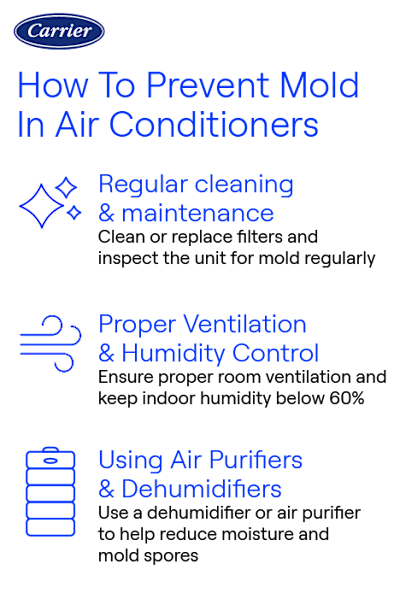
Maintaining proper humidityhelps stop mold from growing in air conditioners. Mold likes damp and wet places. Keep the humidity level in your home between 30% and 50%. Use a dehumidifierif your home feels too wet. Good airflow also helps. Open windows or use fans to keep air moving and dry.
Regular cleaningis key to prevent mold build-up. Clean the air conditioner filters every month. Wipe down the coils and drain pans with a mild detergent or vinegar solution. Check for standing water and fix leaks quickly. A clean unit works better and stays fresh.

Credit: www.reddit.com
When To Call A Professional
Persistent mold growthdespite cleaning is a clear sign to seek help. Mold that returns quickly means deeper issues.
Strong, musty odorsfrom the air conditioner can signal hidden mold. This smell is hard to remove with simple cleaning.
Visible mold inside unit partslike coils or vents needs expert attention. These areas are hard to reach and clean well.
Look for allergic reactionswhen the AC runs, such as sneezing or coughing. This could mean mold spores are spreading.
| Service Type | What They Do | Why Choose |
|---|---|---|
| HVAC Specialists | Inspect and clean internal parts safely | Experts in air systems and mold removal |
| Mold Remediation Experts | Remove mold and prevent future growth | Focus on mold safety and thorough cleaning |
| General Cleaners | Surface cleaning of air conditioner parts | Good for light, visible mold only |
Frequently Asked Questions
How Do I Identify Mold In My Air Conditioner?
To spot mold, look for black, green, or white patches. A musty smell is also a strong indicator. Check the air filter, ducts, and drip pan. Regularly inspect these areas to prevent mold growth and maintain a healthy indoor environment.
Can Mold In Air Conditioners Cause Health Issues?
Yes, mold can lead to respiratory problems and allergic reactions. Inhaling mold spores can cause coughing, sneezing, and skin irritation. Vulnerable groups like children and the elderly may experience more severe symptoms. Regular cleaning helps reduce these health risks.
What Tools Are Needed To Clean Mold?
You’ll need gloves, a mask, a brush, and a vacuum. Use a mold removal cleaner for effective cleaning. Ensure good ventilation while cleaning. These tools help ensure a thorough and safe cleaning process for your air conditioner.
How Often Should I Clean My Air Conditioner?
Clean your air conditioner every three to six months. This frequency helps prevent mold growth and maintains efficient operation. Regular maintenance also extends the lifespan of your unit, ensuring better indoor air quality and energy efficiency.
Conclusion
Cleaning mold from your air conditioner keeps the air fresh and healthy. Regular care stops mold from growing back. Use safe cleaners and follow steps carefully. Check your AC often for any signs of mold. Clean filters and vents to improve air flow.
A clean AC helps your home feel comfortable. Taking time to clean prevents bigger problems later. Stay safe and breathe easier with a mold-free AC. Simple habits make a big difference for your air quality.