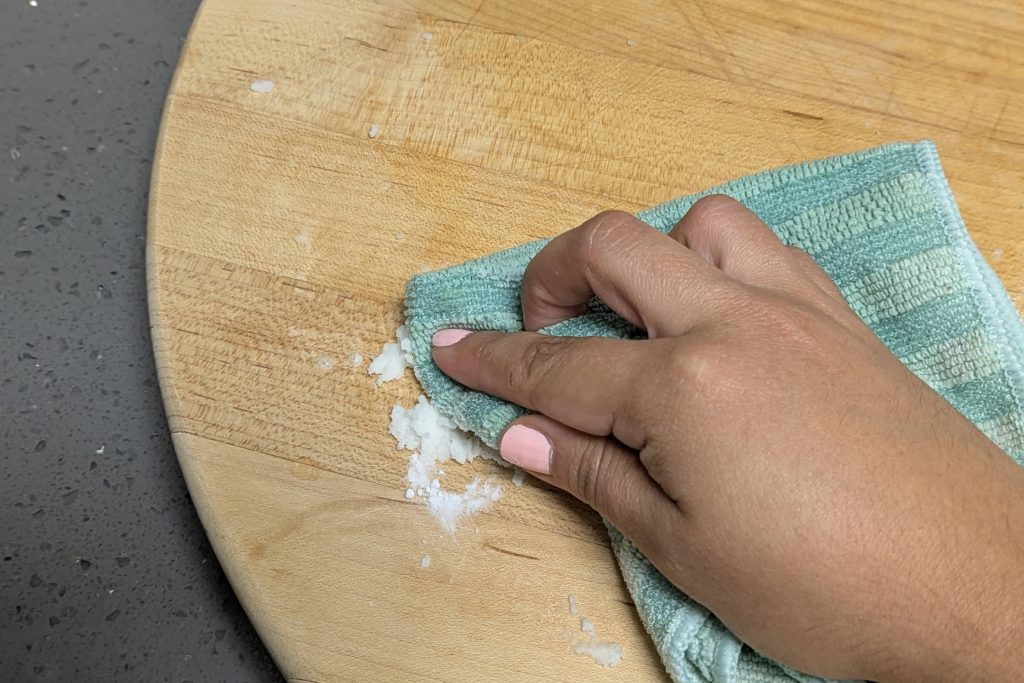
Your wooden cutting board is a kitchen essential, but do you know the best way to clean and sanitize it? If not done properly, harmful bacteria can hide in the grooves and cracks, putting your health at risk.
You’ll discover simple, effective steps to keep your cutting board safe and fresh. By following these tips, you’ll protect your family and make your board last longer. Keep reading to learn how easy it is to turn your wooden cutting board into a clean, safe surface every time you cook.

Credit: homewithgraceandjoy.com
Choosing The Right Cleaning Tools
Cleaning a wooden cutting board needs gentle tools to keep it safe. The right tools remove dirt without harming the wood.
Using the wrong tools can damage the board and make it harder to clean well. Choose tools that clean softly and well.
Soft Brushes And Sponges
Soft brushes and sponges clean wooden boards without scratching. They reach small grooves where food can hide.
- Use a soft-bristle brush to scrub gently.
- Pick a sponge that is soft and absorbent.
- Clean tools often to stop germs from growing.
- Replace sponges when they start to smell or fall apart.
Avoiding Harsh Scrubbers
Avoid steel wool and rough scrubbers that can scratch wood. Scratches let bacteria hide and damage the board.
| Harsh Scrubber | Why to Avoid |
| Steel Wool | Scratches wood surface |
| Metal Brushes | Leaves deep marks |
| Rough Scouring Pads | Wears down finish |
Daily Cleaning Steps
Keeping a wooden cutting board clean helps stop germs from spreading. Daily cleaning is easy and keeps your board safe for food.
Follow simple steps to wash and dry your wooden board after each use. This keeps it fresh and lasts longer.
Rinsing And Washing
Start by rinsing your wooden cutting board with warm water. This removes loose food bits before washing.
- Use a mild dish soap and a soft sponge to scrub the board.
- Clean all sides, including edges and corners.
- Rinse thoroughly with warm water to remove soap.
- Avoid soaking the board to prevent warping.
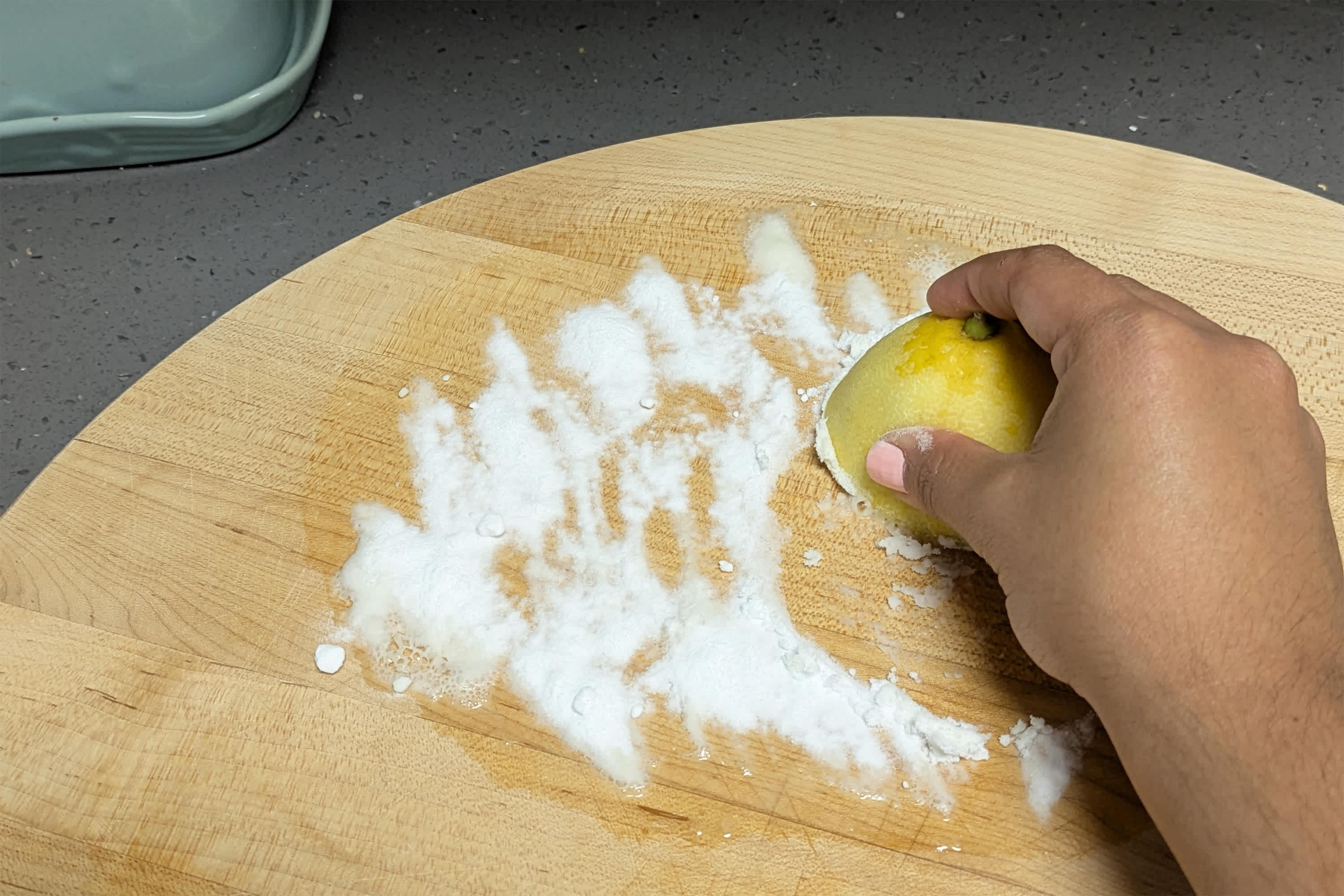
- For extra cleaning, rub the surface with coarse salt and a lemon half, then rinse.
Drying Properly
Dry your wooden cutting board well to stop moisture from causing damage or mold. Proper drying keeps it strong.
| Drying Method | Instructions |
|---|---|
| Air Dry | Place the board upright or on a rack in a well-ventilated area. |
| Towel Dry | Use a clean, dry towel to wipe off moisture after washing. |
| Avoid | Do not leave the board flat on the counter or in damp places. |
Deep Cleaning Methods
Wooden cutting boards need regular deep cleaning to stay safe. Dirt and bacteria hide in tiny cracks. Simple tools can clean and refresh your board.
This guide shows two natural ways to clean and sanitize your wooden cutting board. Both use ingredients you may already have at home.
Using Vinegar And Baking Soda
Vinegar kills bacteria, and baking soda removes stains and odors. Together, they clean deeply without harming the wood.
- Spray white vinegar on the board’s surface and let it sit for 5 minutes.
- Sprinkle baking soda evenly over the board.
- Use a damp sponge to scrub the board gently in circular motions.
- Rinse with warm water and dry with a clean towel.
- Let the board air dry standing upright to prevent warping.
Lemon And Salt Scrub
Lemon juice acts as a natural bleach and disinfectant. Salt works as a scrub to remove stuck-on food and stains.
| Ingredient | Purpose |
| Half a lemon | Disinfect and deodorize |
| Coarse salt | Scrub and remove stains |
Cut the lemon in half and sprinkle a thick layer of salt on the board. Rub the lemon over the salt and board surface. Focus on any stained areas. Rinse with warm water and dry completely.
Sanitizing Techniques
Keeping a wooden cutting board clean is important for food safety. Proper sanitizing removes harmful germs and bacteria.
This guide explains two simple ways to sanitize your wooden cutting board effectively.
Diluted Bleach Solution
Diluted bleach is a strong sanitizer that kills most bacteria. Use it carefully to avoid damage to wood.
- Mix 1 tablespoon of bleach with 1 gallon of water.
- Apply the solution to the cutting board with a clean cloth.
- Let it sit for 2 minutes to kill germs.
- Rinse the board well with clean water.
- Dry the board completely before use.
Hydrogen Peroxide Application
Hydrogen peroxide is a natural sanitizer that is safe for wood. It breaks down germs without harsh chemicals.
| Step | Action |
| 1 | Pour 3% hydrogen peroxide on the board’s surface. |
| 2 | Spread evenly with a clean sponge or cloth. |
| 3 | Let it sit for 5 minutes to disinfect. |
| 4 | Rinse off with warm water. |
| 5 | Dry the board fully before storing. |
Maintaining The Board’s Surface
Keeping a wooden cutting board in good shape helps it last longer. Regular care protects the wood from cracks and stains.
Two main ways to maintain the surface are oiling and sanding. These keep the board smooth and safe for food use.
Oiling With Food-safe Oils
Oiling your wooden board stops it from drying out and cracking. Use oils that are safe to eat, like mineral oil or beeswax blends.
- Apply a small amount of oil to a clean, dry board.
- Use a soft cloth to rub the oil evenly over the surface.
- Let the oil soak in for a few hours or overnight.
- Wipe off any extra oil with a clean cloth.
- Repeat this process once a month or more if the board looks dry.
Sanding Rough Spots
Sanding removes scratches and rough patches from your board. This keeps the surface smooth and safe to cut on.
| Tools Needed | Steps |
| Fine-grit sandpaper (220 grit) | Rub gently on rough spots until smooth |
| Medium-grit sandpaper (120 grit) | Use first for deep scratches or stains |
| Clean cloth | Wipe off dust after sanding |
| Food-safe oil | Apply oil to finish the surface |
Preventing Bacteria Growth
Keeping a wooden cutting board clean is important to stop bacteria from growing. Bacteria can cause food poisoning if they spread on your board.
Simple cleaning and storage steps help protect your health. These tips will guide you to keep your wooden board safe.
Avoiding Cross-contamination
Cross-contamination happens when bacteria move from one food to another. This can happen if you use the same board for raw meat and vegetables without cleaning it well.
- Use separate boards for raw meat, seafood, and vegetables.
- Wash your hands before and after handling food.
- Clean the board with hot soapy water after each use.
- Sanitize the board regularly with a vinegar or bleach solution.
- Dry the board completely to stop bacteria from growing.
Proper Storage Tips
How you store your wooden cutting board affects bacteria growth. A wet or closed space makes bacteria grow faster.
| Storage Method | Benefit |
| Store upright | Allows air to dry both sides |
| Keep in a dry place | Prevents moisture buildup |
| Avoid stacking | Stops bacteria from hiding in cracks |
| Apply mineral oil | Seals wood and blocks bacteria |
When To Replace Your Cutting Board
Wooden cutting boards can last a long time if cared for well. But they do not last forever. Knowing when to replace your board keeps your kitchen safe and clean.
Over time, boards get damaged or worn out. This can make them unsafe for food use. It is important to watch for signs that show your board needs to be replaced.
Signs Of Wear And Damage
Look closely at your wooden cutting board. If you see deep cuts or cracks, it may be time to replace it. These grooves can trap bacteria and dirt.
Boards that are warped, very rough, or have split edges are less safe. They are harder to clean properly and can break during use.
- Deep knife grooves and cuts
- Cracks or splits in the wood
- Warping or bending of the board
- Rough or splintered surface
- Loose or broken parts
Health Risks Of Old Boards
Old wooden boards can hold harmful bacteria inside cracks and cuts. These germs can contaminate your food and cause illness.
Using a worn board may also spread mold or cause food to spoil faster. This is unsafe for your family and guests.
- Bacterial growth in deep cuts
- Cross-contamination of foods
- Possible mold development
- Increased risk of food poisoning
Credit: www.thekitchn.com

Credit: ca.style.yahoo.com
Frequently Asked Questions
How Often Should I Clean A Wooden Cutting Board?
It’s best to clean a wooden cutting board after each use. This helps prevent bacteria buildup and keeps your board in good condition. Regular cleaning involves washing with hot, soapy water. For deeper cleaning, consider using white vinegar or lemon juice to sanitize your board weekly.
Can I Use Bleach On A Wooden Cutting Board?
Avoid using bleach on wooden cutting boards. Bleach can damage the wood fibers and leave harmful residues. Instead, opt for natural sanitizers like white vinegar or hydrogen peroxide. These are effective at killing bacteria without damaging the wood. Always rinse thoroughly and dry the board completely after sanitizing.
What Is The Best Way To Sanitize Wood Boards?
The best way to sanitize wood boards is using white vinegar. Vinegar is a natural disinfectant that effectively kills bacteria. Simply spray or wipe vinegar on the board, let it sit for a few minutes, then rinse. For added freshness, rub with lemon juice and rinse again.
How Can I Remove Stains From A Cutting Board?
To remove stains from a cutting board, sprinkle baking soda on the surface. Scrub gently with a damp cloth or sponge. Baking soda is abrasive enough to lift stains without harming the wood. Rinse with water and dry thoroughly. Repeat if necessary for stubborn stains.
Conclusion
Cleaning and sanitizing your wooden cutting board keeps it safe and long-lasting. Use mild soap and warm water for daily cleaning. Rinse well and dry it completely to avoid damage. Occasionally, treat the board with natural oils to protect the wood.
Sanitizing with vinegar or a diluted bleach solution kills harmful germs. Regular care prevents cracks and odors. A clean cutting board means healthier meals and a happier kitchen. Simple steps make a big difference. Keep your wooden board fresh and ready for every meal.