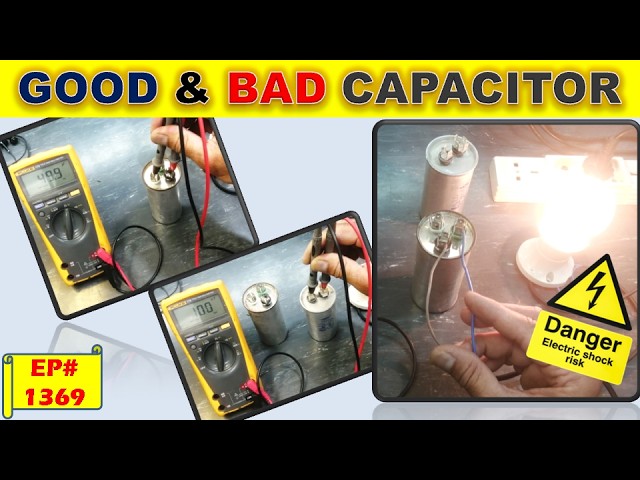
Is your air conditioner acting up and leaving you in the heat? One common but often overlooked problem could be a bad capacitor.
Knowing how to tell if your air conditioner capacitor is bad can save you time, money, and frustration. If you catch the issue early, you might avoid a costly repair or a complete system breakdown. Keep reading to learn the simple signs to watch for and what you can do next to keep your home cool and comfortable.

Credit: www.reddit.com
Common Capacitor Issues
A capacitor helps start and run the air conditioner’s motor. It stores and releases electrical energy quickly. This action gives the motor the power to turn the fan and compressor.
There are two main types of capacitors in AC units:
- Start Capacitor:Provides extra power to start the motor.
- Run Capacitor:Keeps the motor running smoothly after it starts.

Credit: www.youtube.com
Signs Of A Bad Capacitor
AC not cooling properlycan mean the capacitor is bad. The unit may run but not cool the air well. This happens because the capacitor helps start the motor that cools the air.
Humming or buzzing noisesoften come from a failing capacitor. This sound means the motor is trying to start but can’t. The capacitor may be stuck or damaged.
Unit fails to startis a clear sign. The capacitor provides the push for the motor to run. Without it, the air conditioner won’t turn on.
Frequent cycling on and offcan also show a bad capacitor. The motor may shut down quickly then restart. This wastes energy and can damage parts.
Visible physical damagelike bulging, leaking, or burnt spots on the capacitor is a strong hint. These signs mean the capacitor needs replacement right away.
Testing The Capacitor
Testing an air conditioner capacitorrequires some basic tools and safety steps. Essential tools include a multimeterand screwdrivers. Always turn off powerto the unit before starting to avoid shocks. Use insulated gloves for extra safety.
To test with a multimeter, first discharge the capacitorby touching the terminals with a screwdriver that has an insulated handle. Set the multimeter to the capacitance setting. Connect the meter leads to the capacitor terminals carefully. The reading should match the value written on the capacitor label, usually in microfarads (µF).
| Test Result | What It Means |
|---|---|
| Reading close to label value | Capacitor is good and working properly |
| Reading much lower or zero | Capacitor is bad and needs replacement |
| No reading or infinite resistance | Capacitor is faulty or open |
Replacing The Capacitor
Finding the right capacitor means matching the microfarad (µF)and voltage rating. Check the label on your old capacitor. It usually lists these numbers. Buy a new capacitor with the same ratings for safe use.
Turn off the power to your air conditioner before starting. Discharge the capacitor using a screwdriver with an insulated handle. Note the wire connections and take a photo for reference. Remove the old capacitor by loosening the terminal screws. Connect the new capacitor wires to the same terminals. Tighten screws securely. Restore power and test your AC to ensure it works properly.
Call a professional if the capacitor is hard to reach or you feel unsure. Professionals have the right tools and training to safely replace capacitors. They can also check for other issues your AC might have.
Preventing Capacitor Failure
Regular maintenancekeeps the air conditioner running well. Clean or replace air filters often. Dirt can cause the capacitor to work too hard. Check the unit for dust and debris. Clear any blockages around it. Tighten loose wires to avoid electrical issues.
- Avoid power surgesthat can damage the capacitor.
- Use a surge protectorto protect the unit.
- Turn off the air conditioner during storms or lightning.
Proper installationhelps prevent capacitor failure. Make sure the capacitor matches the unit’s specifications. Use the right tools and follow instructions carefully. Poor installation can cause short circuits or overheating.

Credit: www.reddit.com
Frequently Asked Questions
How Do I Know If My Ac Capacitor Is Bad?
A bad AC capacitor causes the unit to struggle starting or running. Look for bulging, leaks, or a burning smell. If your AC won’t turn on or cool properly, the capacitor may be faulty.
What Are Common Signs Of A Failing Capacitor?
Common signs include slow fan motor, humming noise, and AC not cooling well. The unit may also shut off unexpectedly or fail to start.
Can A Bad Capacitor Damage My Air Conditioner?
Yes, a faulty capacitor can strain the compressor and fan motor. This may lead to costly repairs or complete AC failure if not replaced promptly.
How Long Does An Ac Capacitor Usually Last?
An AC capacitor typically lasts 10 to 20 years. However, heat, moisture, and electrical surges can shorten its lifespan.
Conclusion
Checking your air conditioner’s capacitor is essential. It ensures smooth operation. A faulty capacitor can cause cooling issues. Look out for warning signs. These include odd noises and AC not starting. Testing the capacitor might require a multimeter. It’s wise to call a professional if unsure.
Regular maintenance can prevent capacitor problems. Always prioritize safety when handling electrical components. Understanding these basics helps in early detection. This way, you can ensure a cool, comfortable home environment. Save on energy bills and avoid bigger issues. Keep your air conditioner running efficiently.