Choosing the right wood for your chopping board might seem simple, but it can make a huge difference in your kitchen. You want a board that’s durable, safe, and gentle on your knives.
But with so many options out there, how do you know which wood is best for your chopping board? This guide will help you discover the top woods that combine strength, beauty, and hygiene. Keep reading to find out how to pick a chopping board that not only lasts but also makes your cooking experience better every day.
Types Of Wood For Chopping Boards
Choosing the right wood for chopping boards is important. The wood affects how safe and durable the board is.
Different types of wood have different qualities. Some are harder and last longer, while others are softer and easier to cut.
Hardwoods Vs Softwoods
Hardwoods come from trees that lose leaves in winter. They have tight grains and are tough. Softwoods come from trees with needles and stay green year-round. They are softer and less dense.
Hardwoods are better for chopping boards. They resist cuts and bacteria better. Softwoods can get damaged faster and may trap germs.
- Hardwoods: Dense, long-lasting, safe for food
- Softwoods: Softer, cheaper, less durable
- Hardwoods resist knife marks and bacteria
- Softwoods can wear out quickly
Common Wood Choices
Many chopping boards use common hardwoods. These woods are easy to find and affordable. They work well for daily kitchen use.
Maple, oak, and walnut are popular choices. Each has good hardness and looks nice on the kitchen counter.
- Maple:Hard, light color, smooth surface
- Oak:Strong, grainy texture, durable
- Walnut:Dark color, hard, elegant look
- Beech:Dense, light color, common in Europe
Exotic Wood Options
Exotic woods are less common but offer unique beauty and strength. Some come from tropical areas and have special grain patterns.
These woods can be very hard and resistant to cuts. They may cost more but last a long time and look great.
- Teak:Very hard, oily, resists water
- Purpleheart:Hard, purple color, rare
- Cherry:Smooth, reddish, hard
- Acacia:Dense, durable, rich color

Credit: woodforchef.com
Key Wood Properties For Chopping Boards
Choosing the right wood is important for a good chopping board. Wood quality affects how long the board lasts and how safe it is to use.
Different woods have different features. Some woods resist water well, while others are tough and hard. Let’s explore key wood properties for chopping boards.
Durability And Hardness
Durability means how well the wood holds up over time. Hardness shows how much force the wood can take without damage. Hard woods last longer and resist deep cuts.
Soft woods may get scratched and dented easily. Hard woods like maple and walnut are popular for chopping boards. They stay smooth and strong after use.
Grain And Texture
Grain means the pattern of the wood fibers. Fine and tight grain makes the surface smoother and easier to clean. Coarse grain may trap food particles.
- Closed grain woods are better for chopping boards.
- Open grain woods can absorb moisture and bacteria.
- Wood with tight grain looks nicer and lasts longer.
Moisture Resistance
Wood that resists water helps stop cracking and warping. It also lowers the chance of bacteria growing inside the board.
| Wood Type | Moisture Resistance |
| Maple | High |
| Teak | Very High |
| Walnut | Medium |
| Pine | Low |
Antibacterial Qualities
Some woods naturally fight bacteria. These woods help keep the chopping board cleaner. They reduce the risk of food contamination.
Woods with antibacterial properties include:
- Teak
- Black walnut
- Cherry
These woods contain natural oils that kill germs.
Top Woods For Chopping Boards In 2025
Choosing the right wood for chopping boards is important for durability and safety. Some woods are harder and resist cuts better. Others are easier to clean and maintain.
Here are the top woods used for chopping boards in 2025. Each has unique features and benefits for your kitchen.
Maple
Maple is a popular choice for chopping boards. It is hard and dense, which helps resist knife marks. Maple also has a fine grain that prevents bacteria from settling in.
Walnut
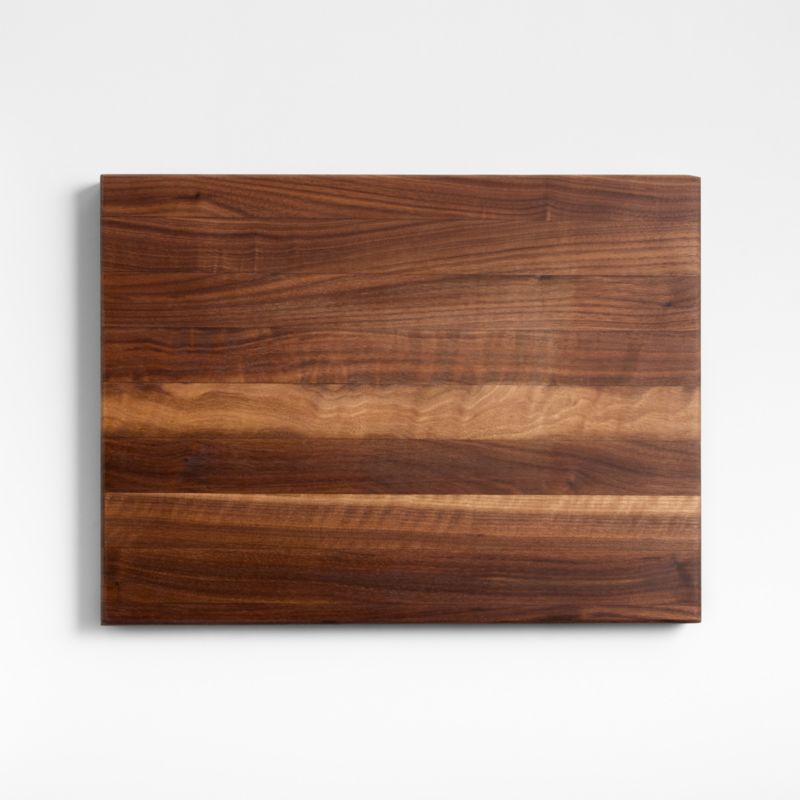
Walnut offers a rich, dark color and is very strong. It is less common but very durable. Walnut boards are gentle on knives and have natural antibacterial properties.
Cherry
Cherry wood has a warm reddish tone and smooth texture. It is moderately hard and ages beautifully over time. Cherry boards are ideal for light to medium chopping tasks.
Bamboo
Bamboo is a fast-growing grass, not a wood, but widely used for chopping boards. It is very hard and eco-friendly. Bamboo boards are lightweight and resist moisture well.
Teak
| Feature | Teak | Maple | Walnut | Cherry | Bamboo |
|---|---|---|---|---|---|
| Hardness | High | High | Medium | Medium | High |
| Water Resistance | Excellent | Good | Good | Fair | Excellent |
| Knife Friendly | Good | Good | Excellent | Good | Fair |
| Appearance | Golden Brown | Light Cream | Dark Brown | Reddish Brown | Light Tan |
Credit: www.crateandbarrel.ca
How Wood Affects Cutting Performance
Choosing the right wood for chopping boards helps protect your knives. It also keeps the board in good shape. Wood type changes how cutting feels and lasts.
Some woods are softer and kind to blades. Others need more care. Understanding wood features helps pick the best board for your kitchen.
Knife Friendliness
Wood hardness affects your knives. Softer woods like maple and walnut stop knives from dulling fast. Hard woods can wear blades quicker.
- Soft woods protect knife edges better
- Hard woods may cause faster blade wear
- Wood grain affects how smooth cutting feels
- Open grain woods might catch knife edges
Surface Maintenance
Wood boards need care to stay safe and strong. Oiling stops drying and cracking. Cleaning well prevents germs and stains.
| Wood Type | Maintenance | Durability |
| Maple | Oil monthly | High |
| Walnut | Oil monthly | Medium |
| Bamboo | Clean regularly, oil less | High |
| Teak | Oil often | Very High |
Wear And Tear
Some woods show marks and cuts faster. Softer woods heal better with sanding. Hard woods resist dents but can crack if dry.
- Soft woods absorb cuts easily
- Hard woods resist dents and scratches
- Regular sanding extends board life
- Keep boards dry to avoid cracking
Care And Maintenance Tips
Wood chopping boards need proper care to last long. Good maintenance keeps them safe and clean for food use.
Follow simple steps to clean, oil, and protect your board from damage. This will keep the wood strong and fresh.
Cleaning Methods
Clean your wood chopping board after every use. Avoid soaking it in water to prevent warping and cracking.
- Use warm water and mild dish soap.
- Scrub gently with a soft sponge or cloth.
- Rinse quickly with clean water.
- Dry immediately with a clean towel.
- Let it air dry standing up to avoid moisture buildup.
Oiling And Conditioning
Wood boards need oiling to stay moisturized and prevent cracks. Use food-safe oils made for cutting boards.
| Type of Oil | Purpose |
| Mineral Oil | Prevents drying and cracking |
| Beeswax | Adds a protective coating |
| Coconut Oil (Refined) | Moisturizes and resists bacteria |
Apply oil evenly with a clean cloth. Let it soak overnight, then wipe off any extra oil.
Avoiding Damage
Protect your chopping board from cuts and heat to keep it strong and safe.
- Do not use sharp knives to chop directly on the same spot repeatedly.
- Avoid placing hot pots or pans on the board.
- Do not put the board in the dishwasher or soak it for long.
- Store the board in a dry place away from direct sunlight.
Sustainability And Sourcing
Choosing the best wood for chopping boards means thinking about the environment. Sustainable wood helps protect forests and wildlife. It also supports healthy communities.
Knowing where wood comes from is important. Responsible sourcing reduces harm and keeps forests growing for the future.
Eco-friendly Wood Choices
Some woods are better for the planet than others. Hardwoods like maple and bamboo grow fast and last long. They need less cutting down and regrow quickly.
- Maple: strong, durable, and grows in well-managed forests
- Bamboo: technically a grass, grows very fast and renews easily
- Cherry: slow-growing but often sourced from sustainable forests
- Walnut: harvested carefully to avoid overcutting
Certified Wood Sources
Look for certifications to ensure wood is responsibly sourced. These labels show the wood meets strict environmental rules.
| Certification | Description | Focus |
|---|---|---|
| FSC (Forest Stewardship Council) | Ensures forests are managed socially, environmentally, and economically. | Forest health and worker rights |
| PEFC (Programme for the Endorsement of Forest Certification) | Supports sustainable forest management worldwide. | Forest protection and local communities |
| Rainforest Alliance | Protects biodiversity and promotes sustainable livelihoods. | Biodiversity and social benefits |
Impact Of Wood Harvesting
Wood harvesting affects ecosystems and people. Unsustainable cutting can cause soil loss, water problems, and harm wildlife.
- Loss of forest cover reduces animal habitats
- Soil erosion can lead to floods and poor water quality
- Overharvesting harms forest regeneration
- Responsible harvesting supports local jobs and culture
Choosing The Right Wood For Your Needs
Choosing the right wood for your chopping board is important. The wood affects durability, safety, and look.
You want a board that fits your budget, style, and how often you will use it.
Budget Considerations
Wood prices vary a lot. Some woods cost more but last longer. Others are cheap but wear out fast.
Think about how much you want to spend and how long the board will last.
- Hardwoods like maple and walnut cost more.
- Bamboo is affordable and eco-friendly.
- Pine is cheap but soft and less durable.
Aesthetic Preferences
The look of your chopping board matters. Wood colors and grain patterns vary widely.
Pick a wood that matches your kitchen style and personal taste.
- Maple has a light, clean look.
- Walnut offers a rich, dark color.
- Cherry wood darkens over time for a warm tone.
- Bamboo has a unique striped pattern.
Intended Use And Frequency
Think about how often you will use the board and what you will cut on it.
Harder woods handle heavy use better. Softer woods may get cuts and marks quickly.
- Maple and walnut resist knife marks well.
- Bamboo is hard but can be rough on knives.
- Softwoods like pine are best for light use.
Credit: www.forbes.com
Frequently Asked Questions
What Is The Best Wood For Chopping Boards?
Hardwoods like maple, walnut, and cherry are ideal for chopping boards. These woods are durable, resist cuts, and are easy on knives. They have natural antibacterial properties, making them safe for food preparation. Avoid softwoods like pine, which can easily scar and absorb moisture.
Why Choose Hardwood For Chopping Boards?
Hardwood is dense, durable, and resists knife scars. This makes it ideal for chopping boards. It doesn’t absorb moisture as easily as softwood. This helps in maintaining a hygienic surface. Its natural antibacterial properties also add an extra layer of safety for food preparation.
How Does Wood Grain Affect Chopping Boards?
Wood grain affects durability and knife impact. End-grain boards are gentle on knives and self-heal. They show fewer knife marks. Edge-grain boards are more affordable but may show wear faster. Both types offer excellent performance, but end-grain boards are often preferred by professionals.
Are Bamboo Boards Good For Chopping?
Bamboo boards are eco-friendly and affordable. However, they are harder and can dull knives faster. They are less forgiving than hardwoods. Bamboo also absorbs less moisture, making it hygienic. It’s a good choice for those looking for sustainable options but may not last as long.
Conclusion
Choosing the best wood for chopping boards depends on your needs. Hardwoods like maple and walnut work well and last long. They resist cuts and keep knives sharp. Soft woods may wear out quickly and trap bacteria. Regular cleaning and oiling help your board stay safe and strong.
A good wood board makes cooking easier and more enjoyable. Pick one that fits your kitchen style and use it with care. Your chopping board can be a trusted kitchen tool for years.