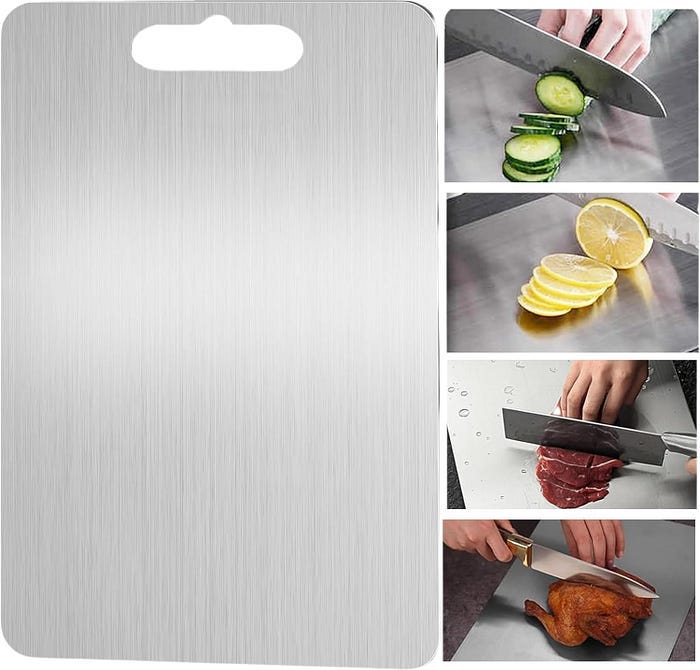
Are you wondering if a stainless steel cutting board is ruining your knives? You’ve probably noticed your blades aren’t as sharp as before and started to question if your cutting surface is to blame.
It’s frustrating when your favorite knives lose their edge quickly, especially when you want smooth, precise cuts every time. You’ll discover the truth about stainless steel cutting boards and how they affect your knives. Keep reading to protect your tools and make smarter kitchen choices.
Steel Cutting Boards And Knife Edges
Stainless steel cutting boards are popular for their durability and easy cleaning. Many cooks wonder if these boards dull their knives faster.
This article looks at how steel cutting boards affect knife edges and the hardness of the materials involved.
Material Hardness Compared
Material hardness shows how tough a surface is. Stainless steel is very hard. Most knife blades are softer than steel.
Wood and plastic cutting boards are softer. They help keep knife edges sharper longer because the blade cuts into a softer surface.
- Stainless steel hardness: about 5-6 on Mohs scale
- Typical knife steel hardness: around 5-6 Mohs, but edges are thinner
- Wood hardness: 2-3 Mohs, softer on knife edges
- Plastic hardness: varies, usually softer than steel
Impact On Knife Blades
Stainless steel boards can dull knives faster. The hard surface wears down the sharp edge with each cut.
Softer boards like wood or plastic cause less wear. They allow the blade to stay sharp longer by cushioning the edge.
- Hard steel boards resist cuts but dull knives quickly
- Softer boards absorb impact and protect blade edges
- Frequent use on steel boards may need more blade sharpening
- Careful cutting technique can reduce dulling on any board
Credit: medium.com
Types Of Cutting Boards And Their Effects
Cutting boards come in different materials. Each type affects your knives in a unique way.
Knowing how each board affects knife sharpness helps you choose the right one.
Wood Vs Stainless Steel
Wood cutting boards are gentle on knives. They help keep blades sharp longer.
Stainless steel boards are very hard. They can dull knives quickly by wearing the edges down.
- Wood absorbs impact, protecting knife edges
- Steel boards offer no give, causing more wear
- Wood boards need regular cleaning and care
- Steel boards are easy to clean but harsh on knives
Plastic Vs Stainless Steel
Plastic boards are softer than steel. They are less likely to dull knives fast.
Stainless steel boards can cause faster blade damage. Plastic offers a safer surface for blades.
- Plastic boards are affordable and light
- Plastic can get cuts and grooves that need replacing
- Steel boards stay smooth but harm knife edges
- Plastic boards are dishwasher safe, steel boards are easy to clean
Knife Materials And Blade Durability
Different knives have different blade materials. These materials affect how long the blade stays sharp.
Using a stainless steel cutting board can change how fast your knife dulls. The blade and board material both matter.
High Carbon Steel Blades
High carbon steel blades are very sharp and strong. They hold their edge well but need care to avoid rust.
Cutting on stainless steel boards can dull these blades faster. The hard board can wear the edge down over time.
Ceramic And Stainless Steel Blades
Ceramic blades are very hard but brittle. They can chip if used on hard surfaces like stainless steel boards.
Stainless steel blades are softer than ceramic but harder than high carbon steel. They resist rust but can dull from hard boards.
- Ceramic blades chip easily on stainless steel boards
- Stainless steel blades dull slowly on hard surfaces
- High carbon steel blades dull faster but are easier to sharpen

Credit: medium.com
How Stainless Steel Boards Affect Sharpness
Stainless steel cutting boards are popular for their durability and easy cleaning. Many people ask if these boards dull knives faster than other types.
This article explains how stainless steel boards affect knife sharpness by looking at surface texture, friction, and how often you use the board.
Surface Texture And Friction
Stainless steel boards have a very smooth surface. This smoothness means less friction when cutting. Less friction can help keep knives sharper longer.
But if the surface gets scratched or dented, it can increase friction. Higher friction can wear down the knife edge faster.
- Smooth surface causes less wear on knives
- Scratched surface can increase knife dulling
- Friction affects how fast knife edges wear down
Frequency Of Use And Wear
Using a stainless steel board every day can cause small marks and dents. These marks change the cutting surface over time. More marks mean more friction on the knife.
Switching between cutting boards or using a softer board sometimes can help protect your knives from dulling quickly.
- Daily use can wear down the board surface
- Worn surface increases knife dulling speed
- Alternating boards helps reduce wear on knives
Care Tips To Preserve Knife Sharpness
Using a stainless steel cutting board can affect your knife’s sharpness. Taking care of your knives will help keep them sharp longer. Proper cleaning and cutting techniques are key.
Sharp knives make cutting safer and easier. Follow simple tips to protect your blades when using stainless steel boards.
Proper Cleaning And Maintenance
Clean your knives carefully after each use. Avoid harsh scrubbing on the blade to keep edges sharp. Dry them well to prevent rust.
Regularly sharpen your knives using a proper sharpener. Store knives safely to avoid damage to blades.
- Wash knives with mild soap and warm water
- Dry blades immediately after washing
- Use a sharpening stone or professional sharpener often
- Store knives in a block or on a magnetic strip
Using The Right Cutting Techniques
Cutting with care helps protect your knife edges. Avoid pressing too hard or twisting the blade on the stainless steel board.
Use smooth, straight cuts rather than chopping or hacking. Keep your knife angle consistent to reduce dulling.
- Hold the knife firmly but do not force it
- Use a gentle rocking motion when cutting
- Avoid cutting frozen or very hard foods on the board
- Rotate the cutting board to use fresh surfaces
Credit: vocal.media
Alternatives For Knife-friendly Boards
Stainless steel cutting boards can make knives dull faster. Many cooks prefer boards that protect knife edges better. Choosing the right board helps keep knives sharp longer.
Wood and composite boards are popular alternatives. They are softer on blades but still strong and durable. Below are some good options to consider.
Bamboo And End Grain Wood
Bamboo boards are hard but less likely to dull knives quickly. Bamboo is a natural material that is eco-friendly and easy to clean. It resists moisture and damage well.
End grain wood boards are made by joining wood blocks with the grain facing up. This design is gentle on knives because the blade slides between the wood fibers. End grain boards also last a long time.
- Bamboo is harder than most woods but still knife-friendly
- End grain wood absorbs knife impact, preserving sharpness
- Both types require regular oiling to stay in good condition
Composite And Resin Boards
Composite boards combine wood fibers with resin to create a tough surface. They are hard enough for cutting but soft enough to protect knives. These boards are also dishwasher safe.
Resin boards are made from durable synthetic materials. They resist stains and odors well. Their smooth surface is less likely to dull knives compared to stainless steel.
- Composite boards balance durability and knife safety
- Resin boards are easy to clean and maintain
- Both materials resist bacteria better than wood
Frequently Asked Questions
Do Stainless Steel Boards Dull Knives?
Yes, stainless steel cutting boards can dull knives over time. The hard surface of stainless steel causes faster edge wear. It’s important to regularly sharpen your knives if you use a steel board. Consider using softer cutting boards, like wood or plastic, to maintain knife sharpness longer.
Are Stainless Steel Boards Safe For Knives?
Stainless steel boards are safe but not ideal for knives. They provide a hygienic surface but can damage knife edges. To protect your knives, use a cutting board made of softer materials. Regular maintenance is key to extending your knife’s lifespan.
What Are The Benefits Of Stainless Steel Boards?
Stainless steel boards are durable and hygienic. They resist bacteria and are easy to clean. Their sturdy surface makes them long-lasting. However, they can dull knives more quickly than other materials. Weigh the pros and cons before choosing a cutting board.
How To Maintain Knife Sharpness On Steel Boards?
To maintain sharpness, regularly hone and sharpen your knives. Use a quality knife sharpener or professional service. Consider alternating between a softer board and a steel one. This practice can help preserve your knife’s edge longer and improve overall performance.
Conclusion
Stainless steel cutting boards can dull knives faster than wood or plastic. The hard surface wears down the blade edge with use. Choosing the right cutting board helps keep knives sharp longer. Regular knife sharpening also matters a lot. For best results, use softer boards for delicate knives.
This way, your knives stay sharp and last longer. Think about your cooking needs before picking a cutting board. The right choice makes kitchen work easier and more enjoyable.