Have you ever wondered what makes your air conditioner cool the room so efficiently? Understanding the key components of an air conditioner can help you appreciate how this device works to keep you comfortable, especially during hot days.
Whether you want to troubleshoot minor issues or simply learn how your AC functions, knowing its parts is a great place to start. You’ll discover the main components that work together to bring cool air into your space—and why each one matters to your comfort and energy bills.
Keep reading to unlock the secrets behind your air conditioner’s cool power!
Main Parts Of An Air Conditioner
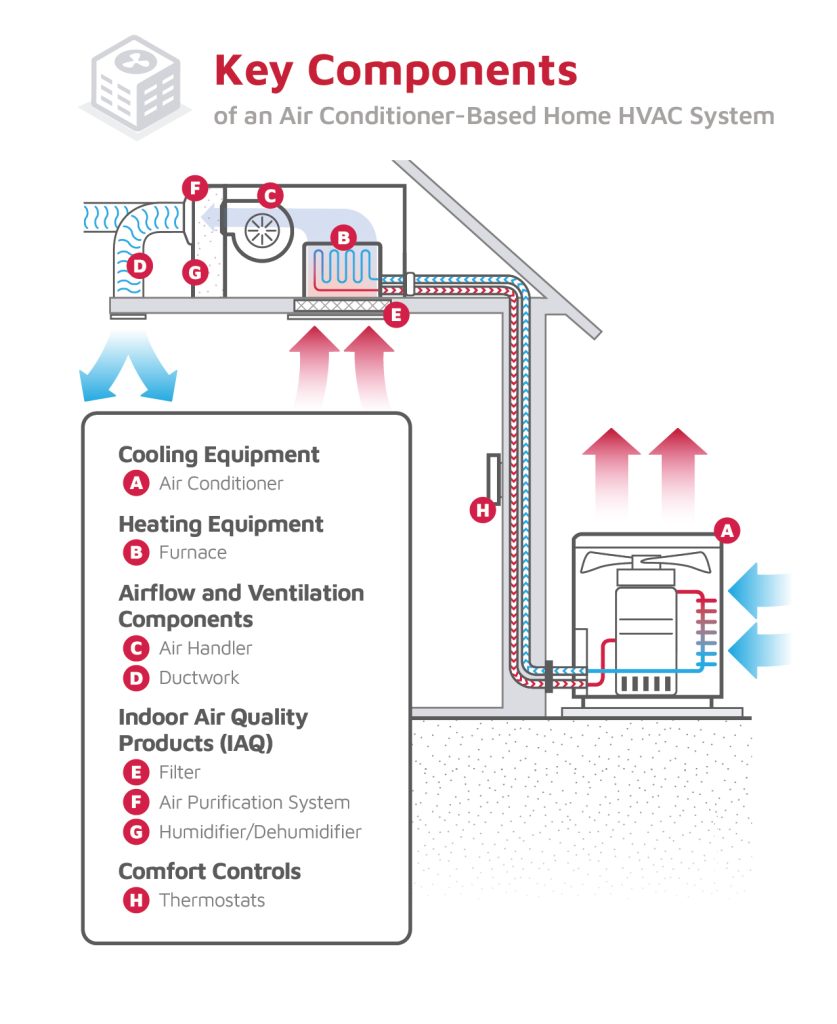
An air conditioner has several main partsthat work together to cool the air. The compressorpumps refrigerant through the system. It changes the refrigerant from gas to liquid and back again.
The condenser coilhelps release heat from the refrigerant. It cools the gas into a liquid. The evaporator coilabsorbs heat from inside the room. It turns the liquid refrigerant back to gas.
The expansion valvecontrols the flow of refrigerant. It lowers the pressure so the refrigerant can absorb heat. The blower fanmoves air across the evaporator coil. This air cools down and flows into the room.
The thermostatmonitors temperature and controls the system. It tells the air conditioner when to turn on or off.

Credit: www.searshomeservices.com
Compressor Role And Function
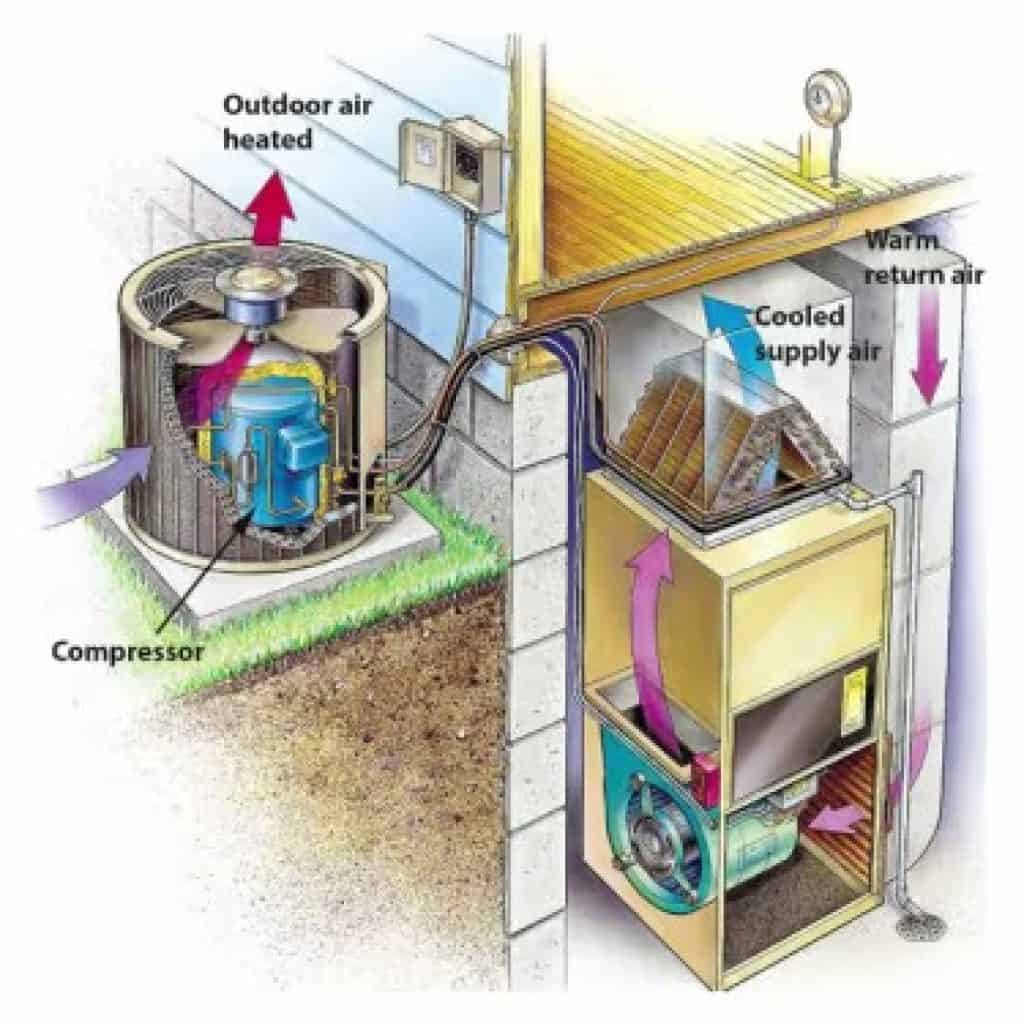
The compressoris the heart of an air conditioner. It pumps the refrigerant through the system. The compressor squeezes the refrigerant gas to raise its pressure.
This action causes the refrigerant to heat up. Then, it moves to the condenser coil. The heat leaves the refrigerant here.
The compressor also helps in circulating the refrigerant. It keeps the cooling cycle going smoothly. Without it, the air conditioner can’t cool the air.
Evaporator Coil Details
The evaporator coilis a key part of an air conditioner. It helps cool the air inside your home. The coil is filled with a cold refrigerant. Warm air from the room passes over the coil. The refrigerant absorbs the heat from the air.
This makes the air cooler and the refrigerant warmer. The coil then sends the warm refrigerant outside to release heat. The evaporator coil is usually made of copper or aluminum. It has thin metal fins to help cool air faster.
- Absorbs heat from indoor air
- Contains cold refrigerant
- Made of copper or aluminum
- Has thin metal fins for better cooling
- Works with other parts to cool your home
Condenser Coil Importance
The condenser coilplays a key rolein cooling air conditioners. It helps to release heatfrom the refrigerant. This coil is located outside the building.
Hot gas refrigerant flows through the condenser coil. The coil cools the gas by letting air pass over it. This changes the gas back to liquid form.
Without the condenser coil, the air conditioner cannot remove heat. It would not cool the indoor air properly. The coil also protects the system from damage.
Expansion Valve Functionality
The expansion valvecontrols the flow of refrigerant into the evaporator.
It lowers the refrigerant’s pressure, making it cold. This helps the air conditioner cool the air.
The valve adjusts to the cooling demand. When more cooling is needed, it opens more.
When less cooling is needed, it closes a bit. This saves energy and keeps the system efficient.
Without the expansion valve, the air conditioner cannot cool air properly.
Air Filters And Their Purpose
The air filterin an air conditioner traps dust, dirt, and pollen. It keeps the air clean and healthy. Filters also protect the AC’s internal parts from damage.
Dirty filters make the AC work harder. This can raise energy costs and lower cooling efficiency. Filters need regular cleaning or changing to work well.
- Removes particlesfrom the air
- Improves air qualityinside rooms
- Protects AC parts from dust and debris
- Helps save energy by keeping airflow smooth
- Needs regular cleaning or replacement
Thermostat And Controls
The thermostatcontrols the air conditioner’s temperature settings. It senses the room temperature and tells the system when to turn on or off. This keeps the room at the desired comfort level.
Controls include buttons or dials to set temperature and fan speed. Some modern units have digital displays for easy reading. Others might have remote controls for convenience.
Smart thermostats can connect to Wi-Fi. This allows users to control the AC from a phone or tablet. It helps save energy by adjusting settings when no one is home.
Credit: easy-peasy.ai
Fan And Blower Mechanism
The fan and blower mechanismhelps move air through the air conditioner. The fan pulls warm air from the room and pushes it over the cooling coils. This cools the air before it goes back into the room. The blower is a type of fan that works inside the unit. It moves air through the system quickly and evenly.
Fans and blowers come in different shapes and sizes. Some use bladesto spin fast, while others use centrifugal forceto push air. Their speed can change to control how much air flows. Proper airflow helps the air conditioner work well and save energy.
Refrigerant Role In Cooling
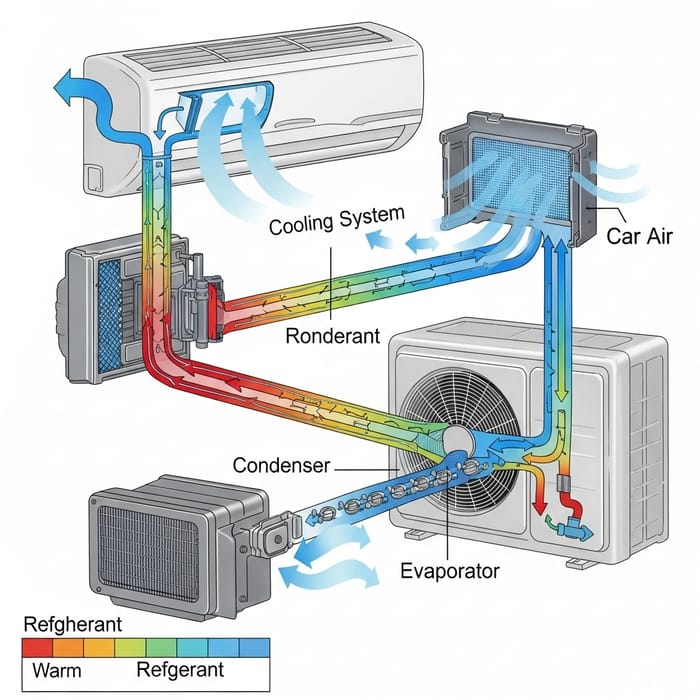
The refrigerantis a special fluid that moves inside the air conditioner. It carries heat from inside your room to the outside. This is how the air cools down.
The refrigerant changes from liquid to gas and back. As it evaporates, it absorbs heat from the air. When it condenses, it releases heat outside.
- Absorbs heatfrom indoor air.
- Changes stateto carry heat.
- Releases heatoutside the house.
- Keeps the air cool and fresh.
Credit: barineauac.com
Drainage System And Maintenance
The drainage systemof an air conditioner removes the water that forms during cooling. This water is called condensate. If the drainage system is blocked, water can leak inside the house.
Regular maintenancehelps keep the drainage system clean. This includes:
- Checking and cleaning the drain panto prevent mold growth.
- Clearing the drain lineto avoid water backup.
- Inspecting the pumpif the AC uses one to remove water.
Cleaning the drainage system improves AC efficiency and prevents damage. It also stops bad smells caused by stagnant water.
Frequently Asked Questions
What Are The Main Parts Of An Air Conditioner?
The main parts include the compressor, condenser, evaporator, expansion valve, and refrigerant. These components work together to cool air efficiently.
How Does The Compressor Function In An Air Conditioner?
The compressor compresses refrigerant gas, raising its pressure and temperature. This process circulates refrigerant through the system for cooling.
What Role Does The Evaporator Coil Play?
The evaporator coil absorbs heat from indoor air. It cools the air by evaporating the refrigerant inside the coil.
Why Is The Condenser Important In Ac Units?
The condenser releases absorbed heat from inside to the outside air. It converts high-pressure refrigerant gas back to liquid.
Conclusion
Understanding the main parts of an air conditioner helps you see how it works. The compressor, condenser, evaporator, and expansion valve all play key roles. Each part moves heat to cool your room. Knowing these helps you care for your AC better.
It also makes fixing problems easier. Next time your air conditioner runs, you’ll know what’s inside. Simple parts working together to keep you cool. That’s the power of an air conditioner’s components.