Mold growing in your air conditioner is more than just a nuisance—it can affect the air you breathe and harm your health. If you’ve noticed a musty smell or spots on your AC, it’s time to act fast.
Cleaning mold from your air conditioner doesn’t have to be complicated or expensive. In this guide, you’ll discover simple steps to get rid of mold safely and keep your AC running fresh and clean. Ready to breathe easier and protect your home?
Let’s dive in.

Credit: www.youtube.com
Signs Of Mold In Air Conditioner
Musty odorsnear the air conditioner often signal mold growth. This smell can be faint or strong and should not be ignored. It means moisture is trapped inside the unit, creating a good place for mold to grow.
Visible mold growthappears as black, green, or white spots on the air filter, vents, or coils. These spots can spread quickly if not cleaned. Checking the unit regularly helps catch mold early.
Reduced airflowhappens when mold blocks the air filter or vents. The air conditioner may work harder but cool less. This can cause higher energy bills and less comfort in your home.
Safety Precautions
Turn off the powerto the air conditioner before starting. This stops any risk of electric shock. Always unplug the unit or switch off the circuit breaker.
Wear protective gearlike gloves, goggles, and a mask. Mold spores can harm your skin, eyes, and lungs. Covering up helps keep you safe.
Make sure the room has proper ventilation. Open windows and doors to let fresh air in. This helps reduce mold spores in the air.
Tools And Materials Needed
Cleaning solutionshelp remove mold effectively. Use a mix of water and white vinegaror mild detergent. Avoid harsh chemicals that can damage the unit. Spray the solution gently on moldy areas.
Brushes and clothsare essential. Use a soft brushto scrub mold without scratching surfaces. Microfiber cloths work well to wipe away dirt and moisture. Keep cloths clean to avoid spreading mold.
A vacuum cleanerwith a HEPA filterhelps remove loose mold spores and dust. Vacuum the air conditioner vents and filters before cleaning. This step reduces airborne mold and improves air quality.

Credit: www.reddit.com
Step-by-step Mold Removal
Begin by turning off and unplugging the air conditioner for safety. Remove the filters and clean them with soap and water. Use a mold cleaner or vinegar to wipe down all moldy surfaces carefully. Let everything dry completely before reassembling the unit.
Remove And Clean Filters
Take out the air filter carefully. Rinse it with warm water and mild soap. Let it dry completely before putting it back. Dirty filters hold mold spores and reduce air quality.
Clean Evaporator Coils
Use a soft brush or coil cleaner to remove dirt and mold. Be gentle to avoid damage. Clean coils help the air conditioner work better and stop mold growth.
Disinfect Drain Pan
Empty the drain pan and scrub it with a mixture of water and bleach. This kills mold and stops water from standing. Clean drain pans prevent bad smells and leaks.
Vacuum Vents And Ducts
Use a vacuum with a brush attachment to clean vents and ducts. This removes dust and mold spores. Clean vents improve air flow and keep your home healthy.
Preventing Future Mold Growth
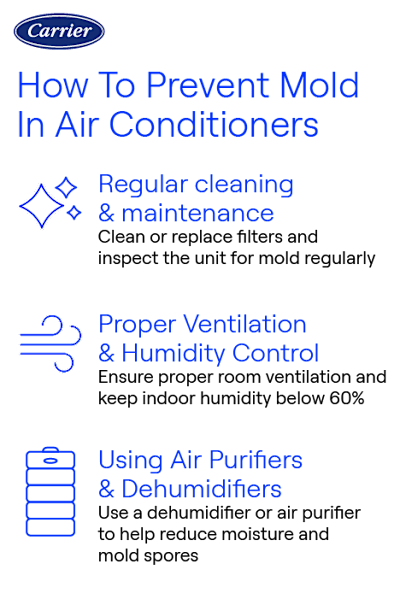
Regular maintenance keeps your air conditioner clean and mold-free. Change or clean filters every month. Check the drain pan and pipes to avoid water buildup. Clean coils and fins to stop mold growth.
Control humidity levels inside your home. Use a dehumidifier if air feels damp. Keep humidity below 60% to prevent mold. Good airflow helps too. Open windows or use fans.
Use mold-resistant products around your air conditioner. Seal any leaks and cracks. Choose mold-resistant paint or materials for nearby walls. These steps help stop mold from coming back.
When To Call A Professional
Extensive mold infestationinside the air conditioner needs expert help. Mold can hide in hard-to-reach areas. Professionals use special tools to clean it safely and fully.
Persistent odorsoften mean mold is still inside. A strong, musty smell shows the problem is bigger than surface mold. Experts can find the source and remove it.
System performance issueslike poor airflow or strange noises may indicate mold damage. Mold can clog parts or cause corrosion. A technician can inspect and fix these problems.

Credit: unitedstatesolutions.com
Frequently Asked Questions
How Do I Remove Mold From My Air Conditioner?
To remove mold, turn off the unit and clean the filters and coils with a mixture of water and vinegar. Use a soft brush to scrub affected areas gently. Ensure the AC is completely dry before restarting to prevent mold regrowth.
What Causes Mold Growth In Air Conditioners?
Mold grows due to moisture buildup, poor ventilation, and dirty filters. Warm, humid environments inside the AC provide ideal conditions for mold. Regular cleaning and proper airflow prevent mold formation and keep your air conditioner fresh and safe.
Can Mold In Air Conditioners Affect Health?
Yes, mold spores can cause allergic reactions, respiratory issues, and other health problems. People with asthma or allergies are especially vulnerable. Regular cleaning of your AC unit helps maintain healthy indoor air quality and reduces health risks.
How Often Should I Clean My Ac To Prevent Mold?
Clean your air conditioner every 1-3 months during heavy use periods. Regular maintenance includes cleaning filters, coils, and drain pans. Frequent cleaning stops moisture buildup, reducing the chance of mold growth and improving your AC’s efficiency.
Conclusion
Cleaning mold from your air conditioner keeps your home safe and fresh. Regular care stops mold from growing back quickly. Use gentle cleaners and take safety steps every time. A clean air conditioner works better and lasts longer. Don’t ignore small mold spots; act fast to prevent spread.
Healthy air means better breathing for everyone at home. Simple steps make a big difference in your indoor air quality. Stay consistent and keep your air conditioner mold-free year-round.