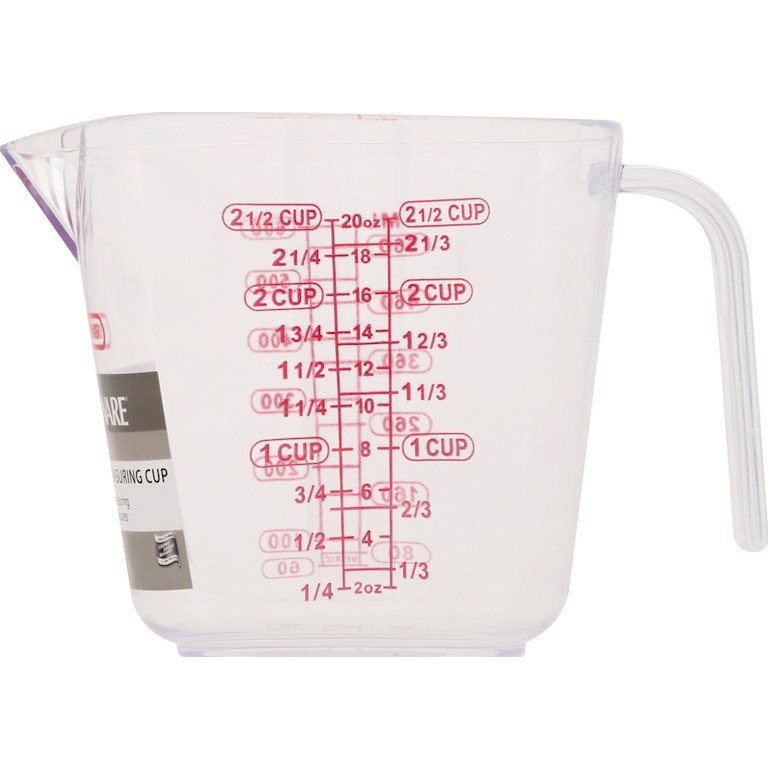
Have you ever found yourself staring at a measuring cup, wondering exactly where the 1/3 mark is? You’re not alone.
Measuring ingredients accurately can make or break your recipe, and knowing where to find 1/3 on your measuring cup is key. You’ll discover simple tips to quickly spot that elusive 1/3 line, so you can cook and bake with confidence every time.
Keep reading to unlock the secret to perfect measurements and better results in your kitchen!
Locating 1/3 On Different Cups
Finding the 1/3 mark on measuring cups can be confusing. Different cups show this measurement in different ways.
This guide helps you find the 1/3 mark on common types of measuring cups.
Standard Measuring Cups
Standard measuring cups usually come in sets with fixed sizes. One of these sizes is often 1/3 cup.
The 1/3 cup is marked on the side or shaped as a separate cup. It is easy to find because it is a common size.
- The 1/3 cup is smaller than 1/2 cup but larger than 1/4 cup.
- Look for the cup or marking labeled “1/3”.
- It is often used for baking and cooking recipes.
Liquid Measuring Cups
Liquid measuring cups are usually clear and have measurement lines on the side. They measure in cups, ounces, and milliliters.
To find 1/3 cup, look for the line between 1/4 and 1/2 cup marks. It may be labeled as 1/3 cup or 5 tablespoons plus 1 teaspoon.
- 1/3 cup equals about 5.3 fluid ounces.
- Check the side of the cup for a 1/3 mark.
- Use a flat surface to read the liquid level at eye height.
Dry Measuring Cups
Dry measuring cups come in sets with fixed sizes like 1/4, 1/3, 1/2, and 1 cup. They are meant for dry ingredients.
The 1/3 cup is usually a separate cup in the set. It is easy to scoop and level off dry ingredients.
- Look for the cup marked 1/3 in the set.
- Fill it to the top and level it off for accurate measurement.
- Dry cups do not have measurement lines inside.
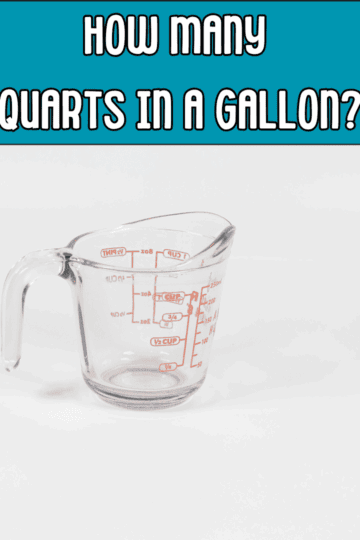
Credit: www.recipesandplaces.com
Reading The Measurement Markings
Measuring cups have markings to show liquid levels. Understanding these helps pour the right amount.
Finding one-third on a cup can be tricky. Knowing how markings work makes it easier.
Common Marking Styles
Measuring cups use different styles of marks. Some show fractions, others use decimals or lines.
- Fraction markings:Display common fractions like 1/4, 1/3, 1/2, and 3/4.
- Decimal markings:Show numbers like 0.25, 0.33, 0.50, and 0.75.
- Line marks:Simple lines with numbers beside them for easy reading.
| Style | Example Markings | Notes |
| Fraction | 1/3, 1/2 | Easy to read, common in cups |
| Decimal | 0.33, 0.50 | Good for precise measuring |
| Line Marks | Short lines with numbers | May require more focus |
Using The Meniscus For Accuracy
The meniscus is the curve at the liquid’s surface. Read the bottom of the curve to measure correctly.
- Place the cup on a flat surface.
- Get eye level with the markings.
- Look for the lowest point of the meniscus.
- Align this point with the 1/3 mark or desired level.
Tip:Use a steady surface and good lighting. This avoids mistakes.
Alternatives When 1/3 Mark Is Missing
Sometimes measuring cups do not have a 1/3 cup mark. This can make baking or cooking tricky.
You can still measure 1/3 cup by using other measurements or tools you have at home.
Using 1/4 And 1/8 Measurements
If your cup does not show 1/3, use 1/4 cup plus 1/8 cup. This adds up close to 1/3 cup.
Fill the 1/4 cup and then add half of a 1/4 cup to get 1/8 cup. Combine both for 1/3.
- 1/4 cup = 4 tablespoons
- 1/8 cup = 2 tablespoons
- 1/3 cup ≈ 1/4 cup + 1/8 cup
Estimating With Tablespoons
You can also use tablespoons to estimate 1/3 cup. One cup equals 16 tablespoons.
Since 1/3 cup is about 5 tablespoons plus 1 teaspoon, use this to measure closely.
- 1 tablespoon = 3 teaspoons
- 1/3 cup = 5 tablespoons + 1 teaspoon
- Measure 5 tablespoons and add 1 teaspoon

Credit: www.ebay.ca
Tips For Accurate Measuring
Measuring ingredients correctly is key to good cooking and baking. Using the right amount keeps your recipe balanced.
Knowing where the 1/3 mark is on a measuring cup helps you add just the right amount. Small errors can change the result.
Leveling Off Ingredients
Dry ingredients like flour or sugar should be leveled off for accuracy. Fill the cup, then use a flat edge to remove extra.
This method helps you avoid packing the ingredient too tightly or leaving it too loose. It gives a true 1/3 measurement.
- Fill the measuring cup slightly over the 1/3 line
- Use a knife or straight edge to level off
- Do not shake or tap the cup to settle ingredients
Measuring Liquids On A Flat Surface
Place your measuring cup on a flat surface to check liquid levels. This keeps your eye level with the 1/3 mark.
Look straight at the measuring cup to see the liquid line. This prevents reading errors caused by angles.
- Put the cup on a flat counter or table
- Bend down to eye level with the 1/3 mark
- Pour slowly until the liquid reaches the mark

Credit: rhondasues.com
Frequently Asked Questions
Where Is 1/3 On A Measuring Cup?
1/3 is usually marked between 1/4 and 1/2 cup lines. It is often labeled clearly for easy spotting. If not marked, estimate by dividing the space between 1/4 and 1/2 into three equal parts.
How To Measure 1/3 Cup Accurately?
Fill the measuring cup to the 1/3 line without overfilling. Use a liquid measuring cup for accuracy. Check at eye level to avoid misreading the measurement.
Why Is 1/3 Cup Important In Recipes?
1/3 cup provides precise ingredient amounts for recipe balance. It ensures consistent taste and texture. Using the correct measurement helps avoid cooking errors.
Can I Substitute 1/3 Cup With Other Measures?
Yes, 1/3 cup equals 5 tablespoons plus 1 teaspoon. You can use this alternative if no 1/3 mark exists. This substitution maintains recipe accuracy.
Conclusion
Finding 1/3 on a measuring cup is simple with practice. Most cups show 1/3 clearly marked. Look between the 1/4 and 1/2 lines for this measure. Using the right measurement keeps your recipe on track. Always check the cup at eye level for accuracy.
With these tips, measuring 1/3 becomes quick and easy. Keep your cooking smooth and your results tasty. Small steps like this make a big difference in the kitchen.