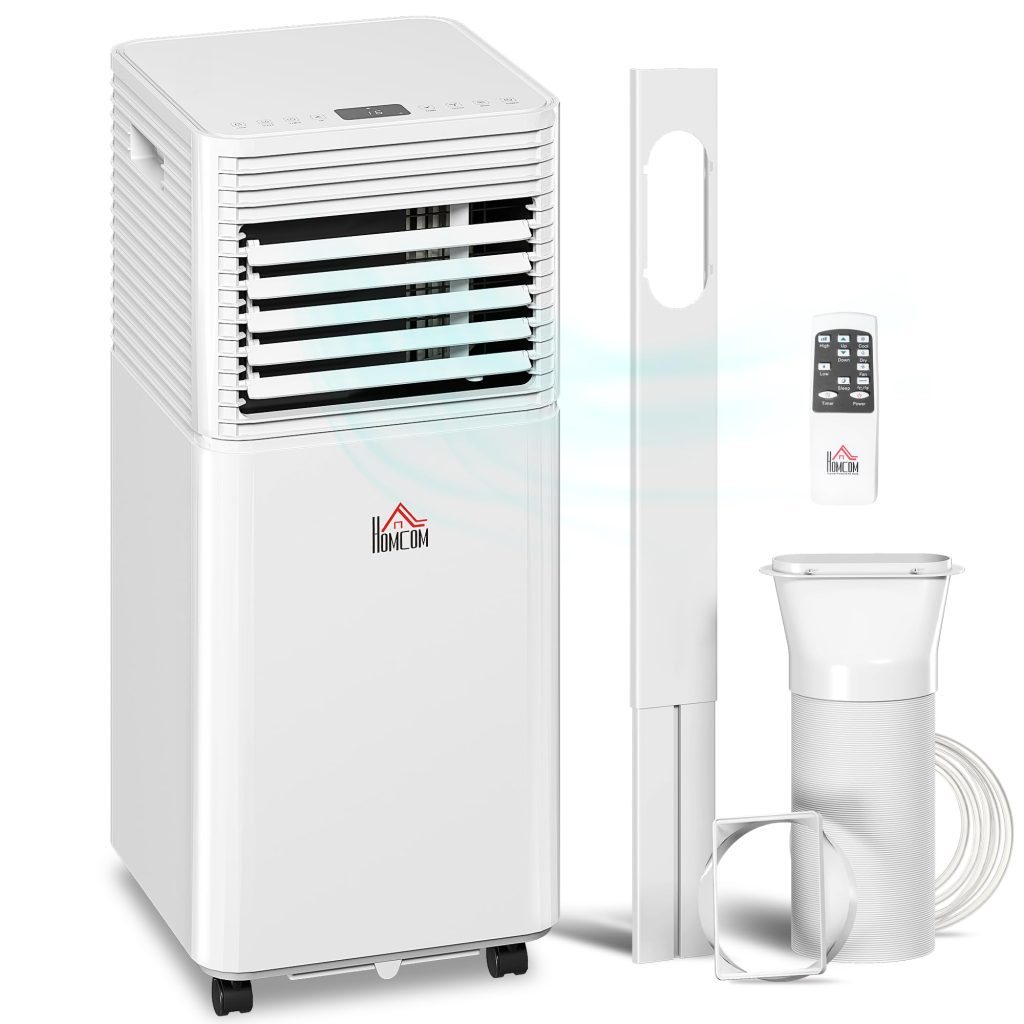
Are you wondering how many watts a portable air conditioner uses? Knowing this can help you save money and choose the right unit for your space.
Your electricity bill and comfort depend on it. You’ll discover the power needs of portable air conditioners, what affects their energy use, and simple tips to keep your room cool without wasting energy. Keep reading to find out exactly how to make your portable AC work best for you.

Credit: business.walmart.com
Power Basics
Wattsmeasure how much power a device uses. Portable air conditioners need watts to run. The higher the watts, the more electricity it uses.
BTUsshow how much cooling power the air conditioner has. More BTUs mean the unit cools bigger rooms faster.
| Term | What It Means | Example |
|---|---|---|
| Watts | Power used by the AC | 500 watts means moderate energy use |
| BTUs | Cooling capacity of the AC | 8000 BTUs cools a small room |
Typical Wattage Range
Portable air conditioners use different watts based on size. Small unitsuse about 500 to 900 watts. They cool small rooms or single areas efficiently.
Medium portable ACsneed around 900 to 1400 watts. These are good for medium rooms like bedrooms or offices.
Large portable AC unitsconsume 1400 to 1800 wattsor more. They cool bigger spaces but use more power.
| Unit Size | Typical Wattage Range | Room Size |
|---|---|---|
| Small | 500 – 900 watts | Small rooms or single areas |
| Medium | 900 – 1400 watts | Medium rooms like bedrooms |
| Large | 1400 – 1800+ watts | Large rooms or open spaces |
Factors Affecting Power Usage
Room sizegreatly affects the power usage of a portable air conditioner. Larger rooms need more watts to cool effectively. Smaller rooms require less power and run more efficiently.
Insulation qualityalso plays a key role. Well-insulated rooms keep cool air inside, reducing the unit’s workload. Poor insulation causes the unit to work harder, using more electricity.
Temperature settingsimpact power consumption too. Lower temperature settings demand more energy. Setting the temperature a few degrees higher can save power without losing comfort.

Credit: www.amazon.com
Energy Efficiency Ratings
EERmeans Energy Efficiency Ratio. It shows how much cooling a unit gives per watt of power used. Higher EER means better energy saving. SEERis Seasonal Energy Efficiency Ratio. It measures efficiency over a whole cooling season. A higher SEER means lower electricity bills and less energy waste.
Choosing a model with good EER or SEER helps save money. It also helps the environment by using less electricity. Look for portable air conditioners with EER above 10or SEER above 13. This means they use power smartly and cool well.
- Check the EER or SEER rating before buying.
- Higher ratings mean better energy use.
- Energy-efficient units cost less to run.
- They last longer and need less repair.
- Good ratings help reduce your carbon footprint.
Estimating Electricity Costs
Calculating daily electricity useof a portable air conditioner starts with knowing its wattage. For example, a unit rated at 1000 watts uses 1 kilowatt-hour (kWh) if it runs for one hour. Multiply the wattage by the number of hours used daily to get total energy used in kWh.
Electricity costs depend on your local rate per kWh. If the rate is $0.12 per kWh and the unit runs 8 hours daily, the daily cost is:
- 1000 watts = 1 kW
- 1 kW x 8 hours = 8 kWh
- 8 kWh x $0.12 = $0.96 per day
| Wattage | Hours per Day | Daily kWh | Cost per kWh | Daily Cost ($) | Monthly Cost ($) |
|---|---|---|---|---|---|
| 500 W | 6 | 3 kWh | $0.12 | $0.36 | $10.80 |
| 1000 W | 8 | 8 kWh | $0.12 | $0.96 | $28.80 |
| 1500 W | 10 | 15 kWh | $0.12 | $1.80 | $54.00 |
Power Supply Considerations
Most portable air conditioners need 110-120 voltsto work properly. This is the standard voltage for most home outlets in many countries. Some models may require 220 volts, so check the label before buying. Using the wrong voltage can cause damage or poor performance.
Make sure your home’s electrical circuit can handle the air conditioner’s power needs. Portable ACs often use 500 to 1500 watts, which can be a lot for some circuits. Avoid plugging the unit into an overloaded outlet to prevent tripping breakers.
| Feature | Details |
|---|---|
| Voltage | 110-120V or 220V (check model) |
| Power Usage | 500-1500 Watts |
| Circuit | Dedicated circuit recommended |
Tips To Reduce Power Consumption
Place the portable air conditionernear a window or vent. This helps hot air escape easily. Avoid placing it in direct sunlight. It makes the unit work harder and use more power.
Clean or replace filters regularly.Dust and dirt block airflow. This makes the unit less efficient and increases power use. Check the filters every two weeks during use.
Use timers and thermostatsto control the running time. Set the timer to turn off when you don’t need cooling. Thermostats keep the room at a steady temperature, saving energy.

Credit: nomadicsupply.com
Frequently Asked Questions
How Many Watts Does A Portable Air Conditioner Use?
Portable air conditioners typically use between 800 and 1500 watts. The exact wattage depends on the unit’s size and cooling capacity. Smaller units use less power, while larger ones consume more. Always check the product specifications before purchase.
What Wattage Is Needed For A 5000 Btu Unit?
A 5000 BTU portable air conditioner usually requires around 500 to 700 watts. This wattage is sufficient for cooling small rooms up to 150 square feet. Energy efficiency varies, so consider the EER rating for better power use.
Does Wattage Affect Portable Ac Cooling Efficiency?
Yes, wattage impacts cooling power but isn’t the only factor. Higher wattage often means stronger cooling but may use more electricity. Efficiency depends on design, insulation, and energy ratings. Balance wattage with room size for optimal comfort and savings.
Can I Run A Portable Ac On A 1000 Watt Generator?
Most portable air conditioners need between 800 and 1500 watts. A 1000 watt generator can run smaller units but may struggle with larger ones. Always verify the starting wattage of your AC and generator capacity before use.
Conclusion
Choosing the right wattage for your portable air conditioner saves energy and money. Smaller rooms need fewer watts, while larger rooms require more power. Check the product details before buying to match your space. Using the correct wattage keeps your room cool without wasting electricity.
This helps you stay comfortable and lowers your bills. Remember, a balanced choice means better cooling and efficiency. Keep these tips in mind for a smart purchase.