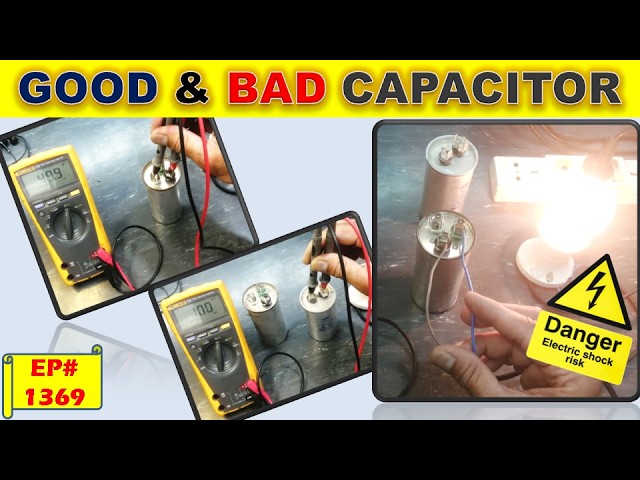
Is your air conditioner not cooling like it used to? One common culprit could be a faulty capacitor.
But how do you know if the capacitor is the problem? Testing a capacitor might sound tricky, but with the right steps, you can do it yourself and save time and money. You’ll learn simple, clear ways to check your air conditioner’s capacitor.
By the end, you’ll feel confident knowing exactly what to look for and when it’s time to call a pro. Keep reading to protect your AC and stay cool all summer long.
Types Of Capacitors In Ac Units
Start capacitorshelp the motor begin spinning. They give a quick boost of power. These capacitors work only for a short time at startup. If a start capacitor fails, the motor may struggle to start or not start at all.
Run capacitorskeep the motor running smoothly. They stay active while the motor runs. These capacitors help improve energy efficiency and reduce power use. A bad run capacitor can cause the motor to run poorly or stop.
Dual capacitorscombine both start and run capacitors in one unit. They save space and make installation easier. Dual capacitors have three terminals, labeled “C” for common, “FAN,” and “HERM.” Faulty dual capacitors can cause both starting and running problems.
Tools Needed For Testing
Testing a capacitor on an air conditioner needs the right toolsfor safety and accuracy.
- Multimeter:Measures voltage and resistance to check capacitor health.
- Capacitance Meter:Measures the capacitor’s ability to hold charge.
- Safety Gear:Gloves and goggles protect from electric shocks and debris.
These tools help find issues quickly and keep you safe during testing.
Safety Precautions Before Testing
Turn off the air conditioner completely. Unplug it from the power source. This stops all electricity flow.
Capacitors hold electric charge, even if unplugged. Discharge the capacitor safely before testing it. Use an insulated screwdriver to touch the terminals together. This removes stored electricity and lowers shock risk.
- Wear safety gloves and glasses.
- Work in a dry area to avoid slipping or shocks.
- Keep metal objects away from capacitor terminals.

Credit: www.youtube.com
Visual Inspection Steps
Check the capacitor’s surface for any bulgesor swelling. A bulging capacitor usually means it is damagedand needs replacement. Look closely for any leaking fluidaround the capacitor base or on the sides. Leaks show the capacitor is failingand unsafe to use.
Inspect the capacitor for burn marksor discoloration. These marks indicate overheatingor electrical problems. Burn marks can happen near the terminals or on the capacitor body. Any sign of burning means the capacitor should be tested carefully or replaced.
Testing With A Multimeter
First, unplug the air conditioner to ensure safety. Set the multimeter to the ohms (Ω)or resistancemode. Use the meter’s leads to connect to the capacitor terminals. Hold the leads steady for a clear reading.
Touch the multimeter leads to the capacitor’s terminals to measure resistance. The needle or display should start low and slowly rise to a higher value. This change shows the capacitor is charging. If the reading stays at zero or infinity, the capacitor might be bad.
| Reading | Meaning |
|---|---|
| Resistance rises slowly | Capacitor is good and charging properly |
| Resistance stays at zero | Capacitor is shorted or damaged |
| Resistance stays at infinity | Capacitor is open or broken |

Credit: www.youtube.com
Testing With A Capacitance Meter
First, disconnect power to the air conditioner to stay safe. Use a capacitance meter with leads. Attach the meter’s leads to the capacitor’s terminals firmly. Make sure no wires touch each other during this step.
Turn on the meter and read the capacitance value shown. The meter displays the capacitor’s microfarad (µF) rating. A stable reading means the capacitor holds charge well. Fluctuating or zero readings suggest a bad capacitor.
Compare the meter reading to the capacitor’s label. The label shows the manufacturer’s capacitance range, like 35 µF ± 5%. If the meter reading falls outside this range, the capacitor likely needs replacement.
Common Signs Of A Faulty Capacitor
A slow or no fan startoften shows a capacitor problem. The fan may take longer than usual to spin or not move at all. This happens because the capacitor helps start the fan motor.
When the AC unit is not cooling properly, the capacitor might be weak or dead. The compressor and fan need the capacitor to run well. Without it, the AC cannot cool your home effectively.
- Fan is slow to start or does not start
- AC cools less than before
- Strange buzzing or humming noise
- Unit stops working suddenly

Credit: www.youtube.com
Replacing A Faulty Capacitor
Choosing the right capacitoris key to fixing the air conditioner. Check the microfarad (µF) ratingprinted on the old capacitor. Match this number exactly to avoid damage. Also, match the voltage rating. Using a lower voltage capacitor can cause early failure. Buying from a trusted brandensures better quality and lifespan.
Follow this simple guide to replace the capacitor safely:
- Turn off power to the air conditioner at the breaker box.
- Discharge the capacitor by shorting its terminals with a screwdriver (wear insulated gloves).
- Note the wiring connections or take a photo.
- Disconnect the wires carefully from the old capacitor.
- Remove the capacitor from its mount or bracket.
- Install the new capacitor in the same position.
- Reconnect wires to the matching terminals on the new capacitor.
- Restore power and test the air conditioner for proper operation.
Preventive Maintenance Tips
Set a regular inspection scheduleto keep your air conditioner working well. Check the capacitor and other parts every few months. This helps find small problems before they grow.
Keep the unit clean by removing dust and debris. Dirt can block airflow and cause the system to work harder. Clean the fins and filters gently with a soft brush or cloth. This keeps the air conditioner running smoothly and saves energy.
- Inspect capacitors for bulges or leaks.
- Clean air filters at least once a month.
- Clear leaves and debris around the outdoor unit.
- Check wiring connections for any looseness.
- Test the capacitor using a multimeter for proper microfarad value.
Frequently Asked Questions
How Do You Safely Test An Ac Capacitor?
Turn off power, discharge the capacitor, then use a multimeter set to capacitance mode. Connect leads to terminals and read the value.
What Tools Are Needed To Test An Air Conditioner Capacitor?
You need a digital multimeter with capacitance testing function and insulated screwdrivers for safe discharge.
Can A Faulty Capacitor Cause Ac Not To Start?
Yes, a bad capacitor can prevent the compressor or fan from starting, causing the AC to fail.
How To Know If An Ac Capacitor Is Bad?
Look for bulging, leaking, or test readings far from the rated capacitance value.
Conclusion
Testing a capacitor on an air conditioner helps keep it running well. Use a multimeter to check the capacitor’s charge and condition. Safety matters—always turn off power before testing. Finding a bad capacitor early can save time and money. Regular checks help avoid bigger air conditioner problems later.
Simple steps make the process easier for anyone. Stay safe, follow the steps, and keep your AC cool.