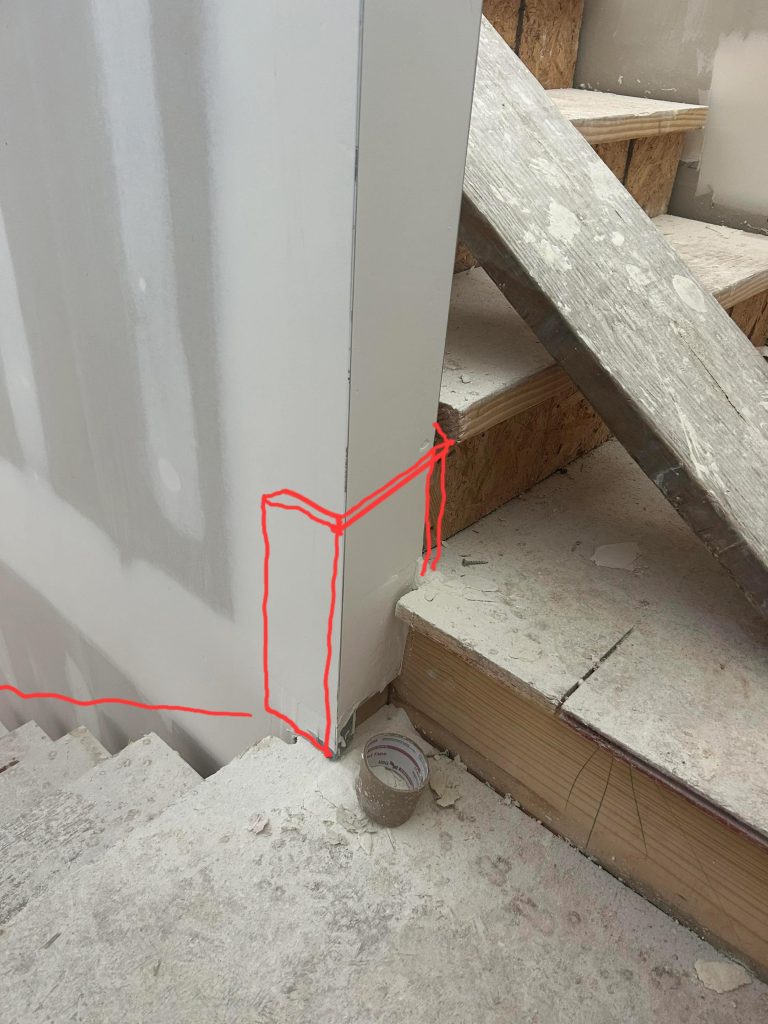
Are you planning to give your stairs a fresh, polished look? Cutting skirt boards for stairs might sound tricky, but with the right steps, you can do it yourself and save money.
Imagine how satisfying it will be to see your stairs transformed with clean, perfectly fitted boards. In this guide, you’ll learn simple, clear methods to cut skirt boards that fit just right. Stick with me, and by the end, you’ll have the confidence and know-how to tackle this project like a pro.
Let’s get started!
Tools Needed
Cutting a skirt board for stairs needs the right tools. Using proper tools makes the job easier and safer.
Below are the main tools you need. They fall into three groups: measuring tools, cutting tools, and safety equipment.
Measuring Tools
Accurate measuring is key for a perfect fit. These tools help you take correct measurements for the skirt board.
- Tape measure – for length and width measurements.
- Combination square – to mark straight lines and angles.
- Speed square – useful for quick angle checks.
- Pencil – for marking cut lines on the wood.
Cutting Tools
Cutting tools let you shape the skirt board to fit the stairs. Choose the right saw for clean cuts.
| Tool | Use |
|---|---|
| Miter saw | Make precise angled cuts. |
| Jigsaw | Cut curves and detailed shapes. |
| Handsaw | Make simple straight cuts by hand. |
| Clamps | Hold the wood steady while cutting. |
Safety Equipment
Safety gear protects you from accidents and injuries. Always wear these when cutting wood.
- Safety glasses – protect your eyes from dust and splinters.
- Ear protection – reduce noise from saws.
- Dust mask – prevent breathing in sawdust.
- Work gloves – guard your hands from cuts and scrapes.
Choosing The Right Skirt Board
Picking the right skirt board for your stairs adds a clean look and protects walls. It covers the gap between the wall and the stair stringer neatly.
Many factors affect your choice. Consider the material, size, thickness, and design style to match your home.
Material Options
Skirt boards come in several materials. Each has pros and cons depending on your budget and style.
- Wood:Classic and easy to paint or stain. Common types include pine, oak, and maple.
- MDF (Medium-Density Fiberboard):Smooth surface and affordable. It resists warping but may swell if wet.
- PVC:Water-resistant and good for humid areas. It is lightweight and easy to clean.
- Composite:Made from wood fibers and plastic. It combines durability with a wood-like look.
Size And Thickness
Choosing the right size and thickness helps the skirt board fit well and look balanced with your stairs.
| Dimension | Typical Use | Notes |
| 5 to 7 inches height | Most residential stairs | Matches standard baseboards |
| 8 to 12 inches height | Taller stairs or grand homes | Creates a bold look |
| 3/4 inch thickness | Standard thickness for wood and MDF | Strong enough for durability |
| 1/2 inch thickness | Used for PVC or lightweight materials | Easier to cut and handle |
Design Styles
Skirt boards come in various designs. The style you choose affects the overall look of your staircase.
- Simple straight edge:Clean lines and modern look.
- Beveled edge:Angled cut adds a subtle detail.
- Decorative molding:Classic style with patterns or grooves.
- Custom carved:Unique and detailed designs for traditional homes.
Measuring Stair Dimensions
Cutting a skirt board for stairs starts with accurate measurements. Knowing the stair dimensions helps you make precise cuts. This guide covers the key steps to measure stairs correctly.
Take your time to measure carefully. Mistakes in measuring can lead to wasted materials and a poor fit.
Calculating Rise And Run
The rise is the height of each stair step. The run is the depth of the stair tread. Measure both to get the total height and length of the stair stringer.
- Use a tape measure to find the height from one step to the next (rise).
- Measure the horizontal part of the step (run).
- Count the total number of steps to calculate full height and length.
- Write down all measurements for reference.
Marking Cut Lines
Marking cut lines on the skirt board ensures your cuts match the stair shape. Use a pencil and square tool for accuracy.
| Tool | Purpose |
| Pencil | Mark cut lines clearly |
| Carpenter’s square | Draw straight and angled lines |
| Tape measure | Check exact distances |
| Level | Ensure lines are horizontal or vertical |
Account For Angles
Stairs have angled cuts to fit the rise and run. Use an angle finder or protractor to measure these angles on your stairs.
Tips for measuring angles:
- Place the angle finder on the stair edge.
- Read the angle measurement carefully.
- Transfer the angle to the skirt board with a protractor.
- Double-check the angle before cutting.

Credit: www.reddit.com
Cutting Techniques
Cutting skirt boards for stairs needs careful technique to fit well. Each type of cut serves a different purpose in the staircase design.
Understanding straight, miter, and coping cuts helps achieve clean and precise joints along your stairs.
Straight Cuts
Straight cuts are simple and used for basic length adjustments. Use a saw to cut the skirt board straight across. Measure twice before cutting to avoid mistakes.
These cuts are common at the beginning or end of the skirt board installation.
Miter Cuts
Miter cuts create angled edges to join skirt boards neatly around corners. Set your miter saw to the correct angle, usually 45 degrees, for stair corners.
- Measure the angle where boards meet.
- Set the saw to that angle.
- Cut the board edges carefully.
- Test fit before final installation.
Coping Cuts
Coping cuts help fit skirt boards tightly around irregular surfaces or molding. This cut follows the profile of the first board for a perfect fit.
| Cut Type | Purpose | Tool Needed |
|---|---|---|
| Straight Cut | Basic length trimming | Hand saw or circular saw |
| Miter Cut | Joining corners at angles | Miter saw |
| Coping Cut | Fitting complex profiles | Coping saw or jigsaw |
Fitting The Skirt Board
Fitting the skirt board is a key part of finishing your stairs. It hides gaps and creates a clean look along the wall and stair edges.
This guide covers how to dry fit, adjust cuts, and secure the skirt board properly for a neat installation.
Dry Fitting
Dry fitting means placing the skirt board in position without fixing it. This step ensures the board fits well before cutting or nailing.
- Hold the skirt board against the wall and stairs.
- Check the board’s length and angle at the corners.
- Mark any spots where the board does not sit flush.
- Ensure the board follows the stair angle smoothly.
Adjusting Cuts
After dry fitting, adjust your cuts to fix any gaps or misalignments. Accurate cuts help the skirt board sit tight against surfaces.
| Cut Type | Purpose | Tip |
| Mitre Cut | For corners where two boards meet | Use a mitre saw at 45 degrees |
| Bevel Cut | To match the stair angle | Set saw angle to stair pitch |
| Straight Cut | For ends and straight runs | Measure twice before cutting |
Securing To Wall And Stairs
Once cuts fit well, secure the skirt board firmly. Use nails or screws to hold it against the wall and stair stringers.
- Pre-drill holes to prevent wood splitting.
- Use finishing nails for a clean look.
- Check alignment after every few nails.
- Fill nail holes with wood filler for a smooth finish.

Credit: www.reddit.com
Finishing Touches
Cutting skirt boards for stairs requires careful finishing to look neat. Finishing touches protect the wood and improve its appearance.
This section covers sanding edges, painting and staining, and sealing for durability. Follow these steps for a smooth and lasting finish.
Sanding Edges
After cutting the skirt board, smooth all edges with sandpaper. Sanding removes rough spots and sharp corners.
- Use medium-grit sandpaper first (around 120 grit)
- Follow with fine-grit sandpaper (220 grit) for a smooth finish
- Sand along the grain of the wood
- Wipe off dust with a clean cloth before painting or staining
Painting And Staining
Choose paint or stain to match your decor. Paint offers a solid color, while stain shows the wood grain.
| Finish Type | Advantages | Tips |
| Paint | Bright colors, covers imperfections | Use primer before painting |
| Stain | Enhances wood grain, natural look | Apply evenly with a brush or cloth |
Sealing For Durability
Seal the skirt board with a clear finish to protect it from moisture and wear. This step helps the skirt board last longer.
Use one of these sealers:
- Polyurethane for strong protection
- Lacquer for a shiny finish
- Wax for a soft sheen and easy touch-up
Apply sealers with a brush in thin coats. Let each coat dry before adding another.
Common Mistakes To Avoid
Cutting a skirt board for stairs needs care and precision. Many people make simple mistakes that cause poor results.
This guide points out common errors to help you avoid them. It covers measuring, tool use, and fitting the skirt board.
Incorrect Measurements
Measuring wrong is the biggest cause of mistakes. Skirt boards need exact cuts to fit stairs well.
- Not measuring both the rise and run of stairs accurately
- Forgetting to account for the thickness of the skirt board
- Ignoring the angle of the stair stringer
- Using a tape measure that is bent or not straight
- Writing down wrong numbers or mixing up measurements
Improper Tool Usage
Using the wrong tools or using them wrong leads to bad cuts and wasted material.
| Tool | Common Mistake | Tip |
|---|---|---|
| Miter Saw | Wrong angle set | Check and set correct angle before cutting |
| Measuring Tape | Loose tape causes error | Hold tape tight and straight |
| Pencil | Thick lines obscure marks | Use sharp pencil for thin, clear lines |
| Square | Not verifying right angles | Confirm square is true before marking |
Ignoring Stair Variations
Stairs are not always the same shape or size. Ignoring these differences causes fitting problems.
Things to check:
- Are the stair rises equal in height?
- Is the stair width consistent?
- Do the stairs have any curves or irregular angles?
- Is there any crown molding or trim affecting the fit?

Credit: www.youtube.com
Tips For Complex Staircases
Cutting skirt boards for stairs can be tricky when the staircase is not simple. Complex staircases need careful measuring and cutting. This guide helps you handle difficult shapes and angles.
Focus on the shape of the stairs and how the skirt board will fit. Take your time and check your measurements twice before cutting.
Curved Stairs
Curved stairs require skirt boards that bend smoothly along the curve. You must bend the board slowly or cut it into small sections to follow the curve.
Use a flexible template or thin plywood to trace the curve. This helps you mark the skirt board accurately before cutting.
- Trace the curve on a template first
- Cut the skirt board in small, curved pieces if needed
- Sand edges smooth for a clean fit
Multiple Landings
Staircases with multiple landings need skirt boards cut at several angles. Measure each section separately to match the landing angles.
Mark each angle clearly on the skirt board. Use a miter saw to cut precise angles for each part that meets a landing.
- Measure each landing angle carefully
- Cut skirt board sections for each landing
- Fit and adjust before fixing permanently
Uneven Steps
Uneven steps make it hard to cut skirt boards with one straight line. You must cut the skirt board in small sections to follow the step heights.
Measure the rise of each step and mark the skirt board accordingly. Use a level and square to keep cuts straight and accurate.
- Measure each step height individually
- Mark the rise on the skirt board carefully
- Cut and test fit each section for evenness
Frequently Asked Questions
How Do You Measure A Skirt Board For Stairs?
Measure the length along the wall where the skirt board will sit. Include the rise and run of each stair. Use a tape measure and note angles for accurate cutting. Proper measurement ensures a perfect fit and clean finish for your skirt board.
What Tools Are Needed To Cut A Skirt Board?
You need a miter saw, measuring tape, pencil, and safety gear. A coping saw helps with precise cuts on corners. These tools ensure accurate cuts and a professional look for your skirt board installation.
How To Cut Skirt Board Angles For Stairs?
Calculate the angle using a protractor or angle finder. Set the miter saw to the measured angle. Cut slowly and check the fit before final installation. Correct angles prevent gaps and improve the skirt board’s appearance.
Can I Use A Jigsaw For Skirt Board Cuts?
Yes, a jigsaw can cut curves and intricate shapes. However, it may not provide straight, clean cuts like a miter saw. Use it for detailed work or when a miter saw isn’t available. Sand edges smooth after cutting for best results.
Conclusion
Cutting skirt boards for stairs takes patience and careful measuring. Use the right tools and follow each step slowly. Check your angles twice before cutting to avoid mistakes. Take your time to fit the skirt board snugly along the stairs.
This helps your stairs look neat and finished. With practice, the task becomes easier and more precise. Keep your workspace clean and organized for better results. Trust your skills and enjoy the process of improving your home.