Is your air conditioner smelling musty or making your home feel less fresh? Mold growing inside your AC can cause that unpleasant odor and even affect your health.
You might think cleaning it is complicated or risky, but it doesn’t have to be. In this guide, you’ll discover simple, effective steps to clean your moldy air conditioner safely and quickly. By the end, your AC will not only look cleaner but also work better, giving you fresh, cool air again.
Keep reading—you’ll be glad you did.

Credit: www.youtube.com
Signs Of Mold In Your Air Conditioner
Mold in your air conditionercan cause bad smellsand poor air quality. You might see black or green spotson the vents or filters. The air might feel damp or musty. Sometimes, the AC may not cool well because mold blocks airflow. If you notice allergy symptomslike sneezing or coughing when the AC runs, mold could be the cause.
- Visible dark spotsinside or outside the unit
- Musty or wet smellsfrom the air vents
- Air feels humid or dampeven when AC is on
- AC performance drops suddenly
- Household members have allergy symptomsnear the AC

Credit: www.reddit.com
Health Risks Of Mold Exposure
Mold exposurecan cause many health problems. It may trigger allergic reactionslike sneezing, coughing, and itchy eyes. Some people might have a runny noseor skin rash. Breathing mold spores can make asthma worsefor some. Mold can also cause lung infectionsin people with weak immune systems.
Children, elderly, and sick people are more at risk. Mold exposure can cause headaches, fatigue, and difficulty breathing. Long-term exposure might lead to more serious health issues.
- Keep air conditioner clean to avoid mold growth.
- Use a mask when cleaning moldy areas.
- Ventilate rooms well to reduce mold spores.
- Seek medical help if mold exposure causes health problems.
Necessary Tools And Materials
Gather a soft brush, cloth, mild detergent, and protective gloves before cleaning. A spray bottle with vinegar or a mold cleaner helps remove mold safely. Proper tools make the job easier and prevent damage to the air conditioner.
- Protective glovesto keep hands safe from mold and cleaning chemicals.
- Face maskto avoid breathing in mold spores.
- Screwdriverto open the air conditioner cover.
- Soft brushor cloth to scrub mold without damaging parts.
- Vacuum cleanerwith a brush attachment to remove loose mold and dust.
- Spray bottlefor applying cleaning solutions evenly.
- White vinegaror mild detergentmixed with water for cleaning mold.
- Bucketto hold cleaning solution and water.
- Clean towelsfor drying the air conditioner parts after cleaning.
Preparation Before Cleaning
Turn off the air conditionerbefore starting any cleaning. This stops power flow and keeps you safe. Unplug the unit from the wall or switch off the circuit breaker. Never cleanthe air conditioner while it is running. This helps avoid electric shocks or damage.
Wear protective gear like gloves and a mask. Mold can cause health problems if touched or breathed in. Use goggles to protect your eyes from dust and mold spores.
- Unplug or switch off the power source
- Wear gloves to protect your hands
- Use a mask to avoid inhaling mold spores
- Wear goggles to protect your eyes
Step-by-step Cleaning Process
First, gently remove the air conditioner’s filter. Rinse it under warm water to remove dirt and mold. Use a soft brush to scrub away stubborn spots. Let the filter dry completely before placing it back.
The coils need careful cleaning to keep the AC efficient. Spray coil cleaner or a mix of water and mild soap. Use a soft brush to clean the coils without bending them. Rinse gently and allow to dry fully.
Disinfecting the drip pan stops mold from growing inside the unit. Remove the pan and clean it with a mix of water and bleach or vinegar. Scrub the pan well, rinse, and dry it before placing back.
Clearing the drain line helps prevent water buildup and mold. Use a wet/dry vacuum to suck out blockages. Pour a cup of bleach or vinegar down the drain line to kill mold and bacteria.
Natural Cleaning Solutions
Natural cleaning solutions work well to remove mold from air conditioners. Use white vinegarbecause it kills mold and is safe. Mix equal parts of vinegar and water in a spray bottle. Spray the affected areas and let it sit for about an hour. Then, wipe clean with a damp cloth.
Baking soda is another good choice. It helps remove mold and deodorizes. Mix two tablespoons of baking soda with water to form a paste. Apply the paste to moldy spots. Let it sit for 10 minutes, then scrub gently and rinse.
- Lemon juicecan also be used. Its acidity helps kill mold.
- Tea tree oilmixed with water acts as a natural mold killer.
- Always dry the cleaned parts well to stop mold from returning.
Preventing Future Mold Growth
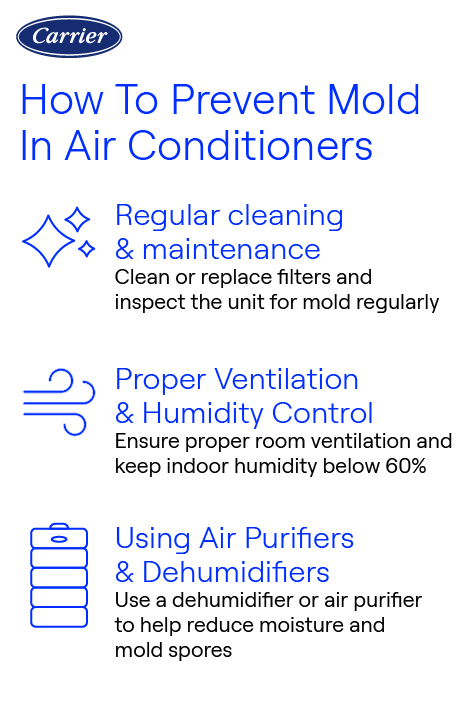
Keeping your air conditioner clean helps stop mold from growing again. Check and change the air filters often. Clean the drain lines to avoid water buildup. Wipe down the coils and vents to remove dust and dirt. Use a soft brush or cloth for cleaning.
Keep the area around the air conditioner dry. Fix any leaks quickly to prevent moisture. Make sure the unit has good airflow to dry out any damp parts. Run the fan regularly to keep air moving.
| Humidity Level | Effect on Mold |
|---|---|
| Below 50% | Stops mold growth, keeps air dry |
| 50% – 60% | Moderate risk, monitor closely |
| Above 60% | High risk, mold grows easily |
Use a dehumidifier if the room feels damp. Keep humidity below 50% for best results. This helps air conditioners stay fresh and mold-free.
When To Call A Professional
Call a professional if the mold covers a large area or returns quickly. Strong mold smells or visible black spots inside the unit need expert help. Professionals use special tools and cleaners to remove mold safely.
Signs that need a pro:
- Persistent mold despite cleaning
- Water leaks or clogged drains
- Health issues like allergies or breathing problems
- Electrical problems or strange noises
Cleaning mold can be risky. Experts protect your health and fix hidden issues. They check ducts and filters for mold spread. This keeps your air clean and safe to breathe.

Credit: www.reddit.com
Frequently Asked Questions
How Do I Safely Clean Mold From My Air Conditioner?
Turn off the AC and unplug it first. Wear gloves and a mask. Use a mixture of water and vinegar or a commercial cleaner to wipe moldy areas. Avoid spraying water directly inside the unit.
What Causes Mold Growth In Air Conditioners?
Mold grows due to moisture buildup and poor ventilation. Dirty filters and clogged drains trap water inside. Warm temperatures combined with humidity create ideal mold conditions.
How Often Should I Clean My Air Conditioner To Prevent Mold?
Clean your AC every 3 months during heavy use. Regular filter changes and coil cleaning help prevent mold growth. Inspect the unit monthly for any signs of moisture or mold.
Can Mold In Air Conditioners Affect My Health?
Yes, mold spores can cause allergies, respiratory issues, and irritation. Prolonged exposure may worsen asthma or other lung conditions. Regular cleaning reduces health risks and improves indoor air quality.
Conclusion
Cleaning a moldy air conditioner keeps your home fresh and safe. It stops bad smells and helps the air stay clean. Regular care can prevent mold from growing back. Use simple tools and safe cleaners for the job. Check your air conditioner often to catch problems early.
Clean air means better health for you and your family. Small steps make a big difference in air quality. Keep your AC mold-free for comfort all year.