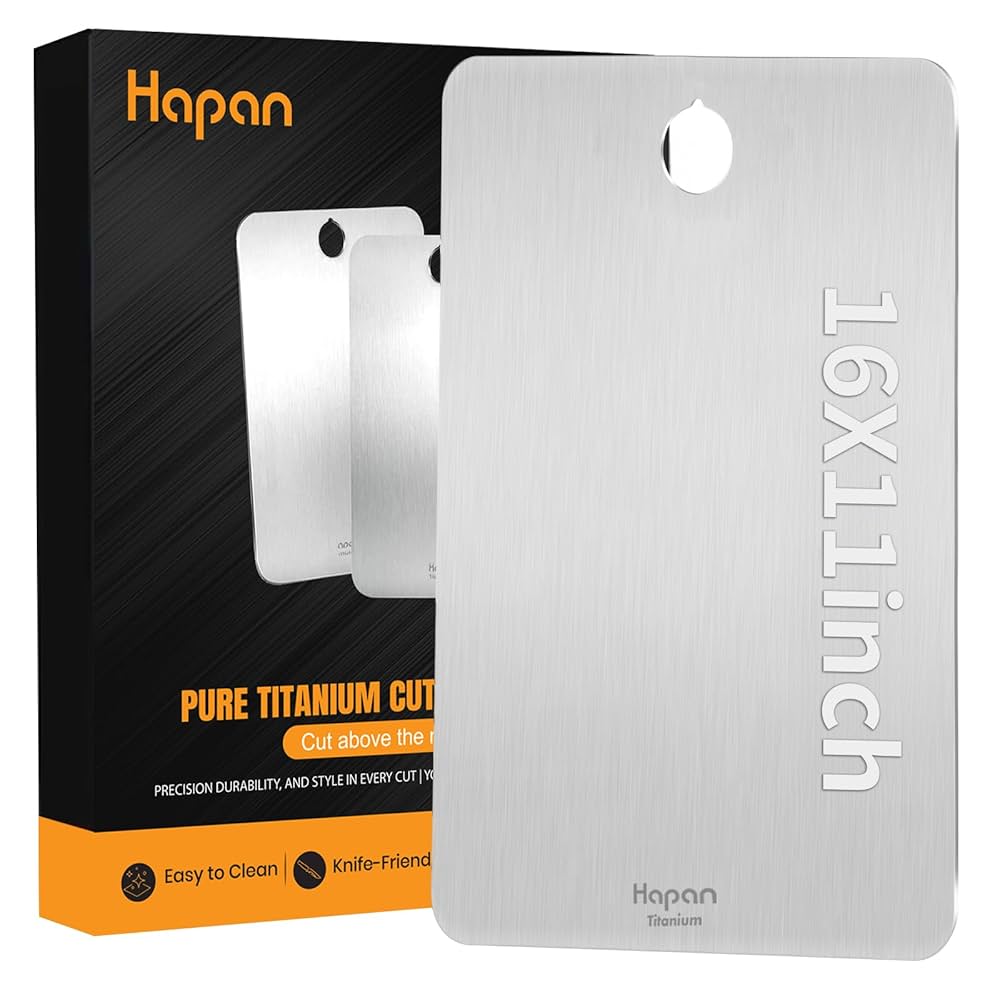
Are you worried about harmful chemicals leaching into your food from your cutting board? You’re not alone.
Many people want a safe, non-toxic surface for preparing meals. That’s why titanium cutting boards are gaining attention. But are they really non-toxic? You’ll discover the truth about titanium cutting boards and how they affect your health. Keep reading to find out if this kitchen tool is the safe choice you’ve been looking for.

Credit: www.amazon.com
Titanium Cutting Boards: An Overview
Titanium cutting boards are a newer option in the kitchen. They offer a mix of strength and lightness.
This article explains if titanium cutting boards are safe and non-toxic for food use.
What Is Titanium?
Titanium is a metal known for being strong and light. It does not rust or corrode easily.
It is often used in medicine and food tools because it does not react with many substances.
Are Titanium Cutting Boards Non-toxic?
Titanium is non-toxic and safe for contact with food. It does not release harmful chemicals.
This makes titanium cutting boards a good choice for people who want a safe surface for food.
Benefits Of Titanium Cutting Boards
Titanium cutting boards last long and resist scratches and stains. They stay clean and safe.
- Resistant to bacteria growth
- Do not absorb odors or liquids
- Easy to clean with soap and water
- Do not chip or crack easily
Considerations Before Buying
Titanium boards can be heavier than plastic or wood. They may also cost more.
They may not be as common in stores. Check if the surface is smooth to protect knife edges.
Material Composition
Titanium cutting boards are made mostly from pure titanium metal. This metal is light and strong.
Titanium is different from common materials like wood or plastic. It does not contain harmful chemicals.
Properties Of Titanium
Titanium is very strong but also light in weight. It does not rust or corrode easily.
This metal is safe for food because it does not react with acids or other kitchen substances.
- Strong and durable
- Lightweight
- Corrosion resistant
- Non-reactive with food
- Easy to clean
Comparison With Traditional Materials
Traditional cutting boards use materials like wood, plastic, or bamboo. These can hold bacteria if not cleaned well.
Titanium boards do not absorb water or food particles. They stay cleaner and safer for cooking.
| Material | Non-Toxic | Durability | Maintenance |
|---|---|---|---|
| Titanium | Yes | Very High | Easy to clean |
| Wood | Depends on treatment | Moderate | Needs regular oiling |
| Plastic | Can release chemicals | Low to Moderate | Easy but can scratch |
| Bamboo | Generally yes | Moderate | Needs drying |
Safety Concerns
Titanium cutting boards are popular for their durability. People often ask if they are safe to use in the kitchen.
This article looks at the safety concerns about titanium cutting boards. It covers non-toxic properties and food safety standards.
Non-toxic Properties
Titanium is a metal that does not react with food or liquids. This makes it a good choice for cutting boards. It does not release harmful chemicals or toxins.
- Titanium is corrosion resistant.
- It does not leach metals into food.
- It is hypoallergenic and safe for most users.
- It does not absorb bacteria or odors.
Food Safety Standards
Titanium cutting boards must meet strict food safety rules. These rules protect users from contamination and health risks.
| Standard | Description | Importance |
| FDA Compliance | Ensures materials are safe for food contact. | Prevents toxic exposure. |
| ISO 22000 | Focuses on food safety management systems. | Reduces contamination risk. |
| LFGB Certification | German standard for food-safe materials. | Guarantees no harmful substances. |

Credit: www.ebay.com
Durability And Longevity
Titanium cutting boards are known for their strong build. They last a long time without getting damaged easily.
People often ask if titanium boards are safe and non-toxic. Their durability also means they stay safe to use for years.
Resistance To Wear And Tear
Titanium is a hard metal that resists scratches and dents. This keeps the cutting board smooth and safe for food.
Because it does not wear down quickly, titanium cutting boards avoid cracks where bacteria can grow. This makes them non-toxic and hygienic.
- Strong surface stays intact after many uses
- Resists knife marks and cuts
- Does not chip or crack easily
Maintenance And Care
Cleaning titanium cutting boards is simple. They do not absorb stains or smells from food.
To keep the board in good shape, wash it with warm water and mild soap. Dry it well to avoid water spots.
- Wash by hand, avoid harsh chemicals
- Dry immediately after washing
- Store in a dry place to prevent moisture build-up
Environmental Impact
Titanium cutting boards are known for their durability and safety. It is important to look at how they affect the environment. This helps us understand if they are a good choice for the planet.
The production and disposal of titanium products have effects on the environment. We will explore these effects below.
Sustainability Of Titanium
Titanium is a natural metal found in the earth’s crust. It is strong and lasts a long time. This means products made from titanium do not need to be replaced often.
Mining titanium uses energy and resources. But titanium’s long life helps reduce waste. It also does not break down or wear out quickly.
- Titanium is abundant in nature
- It is corrosion-resistant and durable
- Long-lasting products reduce waste
- Mining impacts can be managed responsibly
Recycling And Waste Management
Titanium can be recycled many times without losing quality. Recycling titanium saves energy compared to mining new ore. This helps lower pollution and resource use.
Discarded titanium cutting boards can be sent to metal recycling centers. Proper recycling reduces landfill waste and recovers valuable materials.
- Titanium recycling uses less energy than mining
- Recycling reduces greenhouse gas emissions
- Metal scrap is reused for new products
- Proper waste management avoids environmental harm
Cost Considerations
Titanium cutting boards have unique cost factors. Understanding these helps buyers decide if they fit a budget.
This section compares titanium boards with other materials and looks at their long-term value.
Price Comparison With Other Materials
Titanium cutting boards usually cost more than wood, plastic, or bamboo boards. The price reflects their durability and material quality.
| Material | Average Price Range | Durability |
| Titanium | $80 – $150 | Very High |
| Wood | $20 – $60 | Medium |
| Plastic | $10 – $30 | Low to Medium |
| Bamboo | $15 – $40 | Medium |
Long-term Investment Value
Spending more on a titanium cutting board can save money over time. They resist damage and last longer than other boards.
- They do not warp or crack easily.
- Resistant to bacteria buildup due to non-porous surface.
- Require less frequent replacement compared to wood or plastic.
- Maintain appearance and function for years.
User Experiences
Many people wonder if titanium cutting boards are safe to use. Understanding user experiences helps answer this question. Both chefs and home cooks share their thoughts on titanium cutting boards and their toxicity.
This article presents opinions from professional chefs and reviews from home cooks. These insights give a clear view of titanium cutting boards’ safety and usability.
Professional Chef Opinions
Professional chefs often test cutting boards for durability and safety. Many chefs say titanium cutting boards do not release harmful chemicals. They find these boards to be very sturdy and easy to clean.
- Titanium boards resist scratches and stains well.
- They do not absorb liquids, preventing bacteria growth.
- Chefs report no metal taste or smell in food.
- Boards stay safe even after heavy use.
Home Cook Reviews
Home cooks share mixed but mostly positive reviews about titanium cutting boards. Many say these boards feel light and easy to handle. Users also appreciate the clean look and long life of titanium boards.
| Feature | Positive Feedback | Negative Feedback |
| Weight | Light and easy to move | Sometimes feels too thin |
| Cleaning | Easy to clean, no stains | Needs careful drying to avoid spots |
| Durability | Very strong, no cracks | Can be scratched by very hard knives |
| Safety | No toxic smell or taste | Some worry about metal allergy |
Alternatives To Titanium
Titanium cutting boards are known for being durable and non-toxic. Some people want to find other safe options for their kitchens.
This section looks at some other non-toxic cutting board materials. It helps you understand their benefits and drawbacks.
Other Non-toxic Options
Wood cutting boards are popular and safe. They are gentle on knives and have natural antibacterial properties.
Bamboo boards are a good choice too. Bamboo grows quickly and is eco-friendly. It is harder than many woods but still safe for food.
Plastic cutting boards made from food-grade materials are easy to clean. They do not absorb moisture or bacteria if cared for well.
Pros And Cons Of Alternatives
Each cutting board type has benefits and limits. Here is a simple overview to help you choose.
| Material | Pros | Cons |
|---|---|---|
| Wood | Natural antibacterial, knife-friendly, durable | Requires oiling, can stain, not dishwasher safe |
| Bamboo | Eco-friendly, hard surface, lightweight | Can dull knives, may crack if dry |
| Plastic | Easy to clean, affordable, dishwasher safe | Can scar easily, may hold bacteria in cuts |

Credit: www.amazon.com
Frequently Asked Questions
Are Titanium Cutting Boards Safe For Food Preparation?
Yes, titanium cutting boards are safe and non-toxic. They do not leach harmful chemicals into food and resist bacterial growth, making them ideal for food prep.
Do Titanium Cutting Boards Release Harmful Substances?
No, titanium cutting boards do not release harmful substances. Titanium is a stable metal that remains inert and does not react with food or cleaning agents.
How Durable Are Titanium Cutting Boards Compared To Wood?
Titanium cutting boards are extremely durable and resistant to scratches and dents. They last longer than wood and do not absorb moisture, preventing warping and bacterial buildup.
Can Titanium Cutting Boards Cause Knife Damage?
Titanium boards are harder than wood but still gentle on knives. They cause less dulling than glass or ceramic, preserving your knife’s sharpness longer.
Conclusion
Titanium cutting boards offer a safe option for your kitchen. They do not release harmful chemicals during use. These boards resist stains and bacteria well. Cleaning them is easy and quick. Their durability means they last a long time. Choosing titanium helps keep your food fresh and healthy.
Safe, strong, and easy to maintain—titanium boards fit many kitchens. A smart choice for those who care about safety and cleanliness.