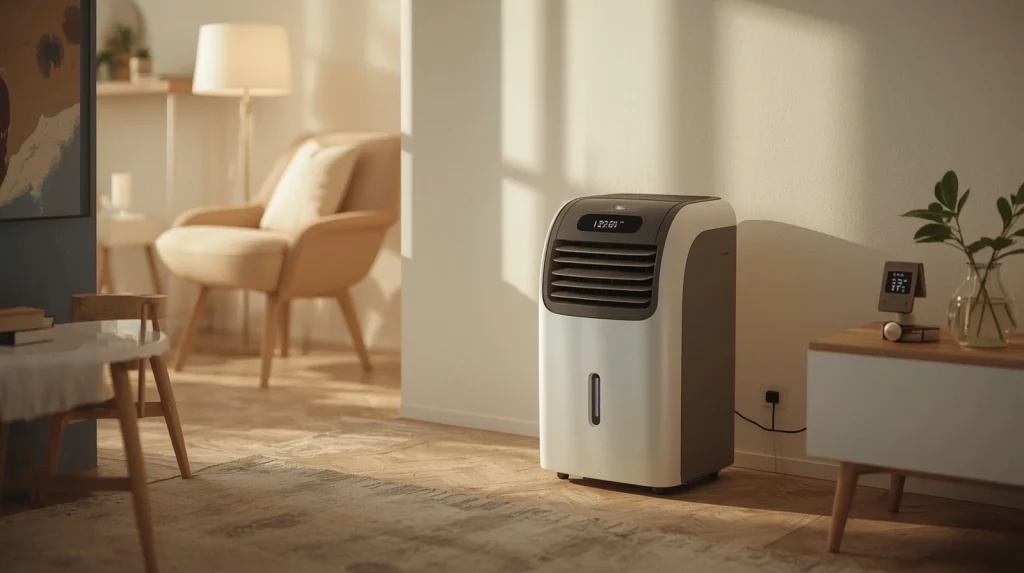
Are you wondering how much electricity your portable air conditioner really uses? Knowing the watts your unit consumes can help you save money and avoid surprise energy bills.
Whether you’re cooling a small room or a larger space, understanding power usage is key to making smart choices. You’ll discover exactly how many watts a portable air conditioner uses and learn simple tips to keep your energy costs low.
Keep reading—you’ll find the answers you need to stay cool without breaking the bank.
Credit: www.jackery.com
Portable Air Conditioner Basics
Portable air conditioners use electricity to cool a room. The amount of powerthey consume depends on their size and cooling capacity. Most models use between 500 and 1500 watts. Smaller units use less power but cool less space. Larger units use more power but cool bigger rooms.
Power usage also depends on how hard the air conditioner works. Hotter days make it work more, using more electricity. Units with energy-saving features use less power. Always check the wattagelabel before buying a unit.
| Unit Size (BTU) | Approximate Power Use (Watts) | Room Size (Square Feet) |
|---|---|---|
| 8,000 | 500 – 900 | 150 – 350 |
| 10,000 | 900 – 1200 | 300 – 450 |
| 12,000 | 1200 – 1500 | 400 – 550 |

Credit: business.walmart.com
Factors Affecting Energy Consumption
The size and capacityof a portable air conditioner affect its power use. Larger units use more watts because they cool bigger spaces. Small units are more energy-friendly for small rooms.
Efficiency ratingsshow how well the unit uses energy. A higher rating means less power is needed to cool the room. Look for models with good energy efficiency to save electricity.
Usage duration and patternsalso impact energy use. Running the unit for many hours increases power consumption. Using it only when needed helps reduce electricity bills.
Calculating Energy Usage
Wattsmeasure the power used by a portable air conditioner. BTUsshow how much heat the unit can remove. Higher BTUs mean more cooling power but usually more watts too.
To estimate daily energy use, multiply the watts by hours of use. For example, a 1000-watt unit running 8 hours uses 8000 watt-hours or 8 kilowatt-hours (kWh).
| Term | Meaning |
|---|---|
| Watts (W) | Power the AC uses |
| BTUs | Cooling capacity |
| Kilowatt-hours (kWh) | Energy used over time |
- Find watt rating on your unit
- Multiply watts by hours used daily
- Divide total watt-hours by 1000 to get kWh
- Check your electricity rate to estimate cost
Comparing Energy Costs
Electricity rates vary widely across different regions. This affects how much you pay to run a portable air conditioner. Some areas have rates as low as 8 cents per kWh, while others charge over 20 cents. Knowing your local rate helps estimate your cooling costs better.
Energy use changes with the seasons. Portable air conditioners work harder in hot months, using more power. Cooler months may not need as much energy. This means your bills can rise in summer and drop in winter.
- Use a timer to run the unit only when needed.
- Keep windows and doors closed to keep cool air inside.
- Choose energy-saving modes if your unit has them.
- Regularly clean filters to keep the unit efficient.
- Use fans to help spread cool air and reduce AC use.
Energy-saving Tips And Tricks
Proper installation keeps the unit running efficiently. Place the portable air conditioner near a window for venting hot air outside. Ensure the exhaust hose is not bent or blocked. Clean or replace air filters regularly to maintain good airflow. This helps the unit use less power and cool the room faster.
Set the thermostat to a comfortable but not too low temperature. Around 75°F (24°C) works well for many rooms. Avoid constant temperature changes. Let the air conditioner run steadily for better energy use. Using a timer can help control cooling periods and save electricity.
- Use fans to move cool air around the room.
- Close curtains or blinds to block sunlight during hot hours.
- Turn off heat-producing devices like ovens or lights near the unit.
These simple steps reduce the load on the air conditioner. They help lower power use and keep the room comfortable.
Choosing An Energy-efficient Model
Energy labelsshow how much power a portable air conditioner uses. Look for Energy Starratings or similar marks. These labels help compare models easily.
Smart features like auto shut-offand sleep modesave power. Some units use inverter technologyfor better efficiency. These features reduce energy use without losing comfort.
| Factor | Effect on Energy Use |
|---|---|
| Cooling Capacity (BTU) | Higher BTU means more power needed |
| Energy Efficiency Ratio (EER) | Higher EER means less energy used |
| Extra Features | Smart functions can lower power consumption |
Cheaper models may use more power. Investing in an efficient unit saves money over time. Balance the initial cost with energy bills for the best choice.

Credit: www.homedepot.com
Frequently Asked Questions
How Many Watts Does A Portable Air Conditioner Use?
Portable air conditioners typically use between 800 and 1500 watts. The exact wattage depends on the unit’s size and cooling capacity. Smaller units consume less power, while larger models use more. Checking the product label helps determine the exact wattage.
Does Wattage Affect Portable Ac Energy Efficiency?
Yes, wattage directly affects energy efficiency. Higher wattage units consume more electricity but may cool faster. Energy-efficient models balance wattage and cooling power to save energy. Look for units with Energy Star ratings for better efficiency.
How To Calculate Portable Ac Electricity Cost?
Multiply the unit’s wattage by hours of use, then divide by 1000 for kWh. Multiply kWh by your electricity rate to get cost. For example, a 1200-watt unit running 5 hours at $0. 12/kWh costs about $0. 72 daily.
Can Portable Ac Wattage Impact My Electric Bill?
Yes, higher wattage increases electricity consumption, raising bills. Using a portable AC frequently or for long hours will cost more. Choosing an energy-efficient model and limiting run time helps reduce expenses.
Conclusion
A portable air conditioner uses different watts depending on size and model. Smaller units use less power, saving energy and money. Larger models cool bigger rooms but need more electricity. Knowing the wattage helps you choose the right unit for your needs.
It also helps estimate your energy cost. Always check the product label before buying. This way, you stay cool without high bills. Simple steps make a big difference in comfort and cost.