
Is your air conditioner not cooling as well as it used to? One common reason might be the refrigerant level.
Knowing how to check the refrigerant level in your air conditioner can save you from costly repairs and keep your home comfortable. You’ll learn simple, clear steps to check your AC’s refrigerant level yourself. By the end, you’ll feel confident spotting problems early and knowing when to call a professional.
Keep reading to protect your AC and stay cool all year round.

Credit: morelliair.com
Safety Precautions
Always wear protective glovesand goggles before checking refrigerant levels. The refrigerant can cause skin burnsand eye damage. Work in a well-ventilated areato avoid inhaling harmful fumes. Keep a fire extinguishernearby as refrigerants can be flammable. Never touch refrigerant pipes with bare hands; they can be very coldand cause frostbite. Make sure the air conditioner is turned offbefore starting any inspection. Avoid using sharp tools that can puncture refrigerant lines. If unsure, contact a licensed technicianto handle refrigerants safely. Store refrigerants in approved containersto prevent leaks or accidents. Check for leakscarefully, as refrigerant leaks can harm the environment. Keep children and pets away during the check to ensure everyone’s safety.

Credit: www.youtube.com
Gathering Necessary Tools
Gathering the right toolsis key to checking refrigerant levels safely. You will need:
- Manifold gauge set:Measures pressure in the AC system.
- Thermometer:Checks temperature of the AC pipes.
- Protective gloves and goggles:For safety while handling refrigerants.
- Leak detector:Finds any leaks in the system.
- Service manual:Gives specific refrigerant info for your AC model.
Having these tools ready helps avoid mistakes and keeps you safe.
Locating The Refrigerant Lines
The refrigerant linescarry the coolant between the indoor and outdoor units. They usually consist of two pipes: a thick insulated lineand a thin uninsulated line. The thick line is called the suction line, and it usually has a foam sleeve around it. The thin line is the liquid line. Both lines come out of the outdoor unit and enter the indoor unit.
Check near the outdoor unit to find these lines. The thick lineoften feels cold and may have frost or condensation. The thin lineis warmer and usually dry. These lines connect to service valves or ports, where technicians attach gauges to check refrigerant levels.
Identifying Signs Of Low Refrigerant
Inadequate coolingis a clear sign of low refrigerant. The air conditioner may blow warm or less cool air.
Hissing or bubbling soundsnear the outdoor unit suggest a refrigerant leak. These noises mean gas is escaping.
Ice formation on coilscan happen if refrigerant is low. The coils may look frosty or frozen.
Using Pressure Gauges
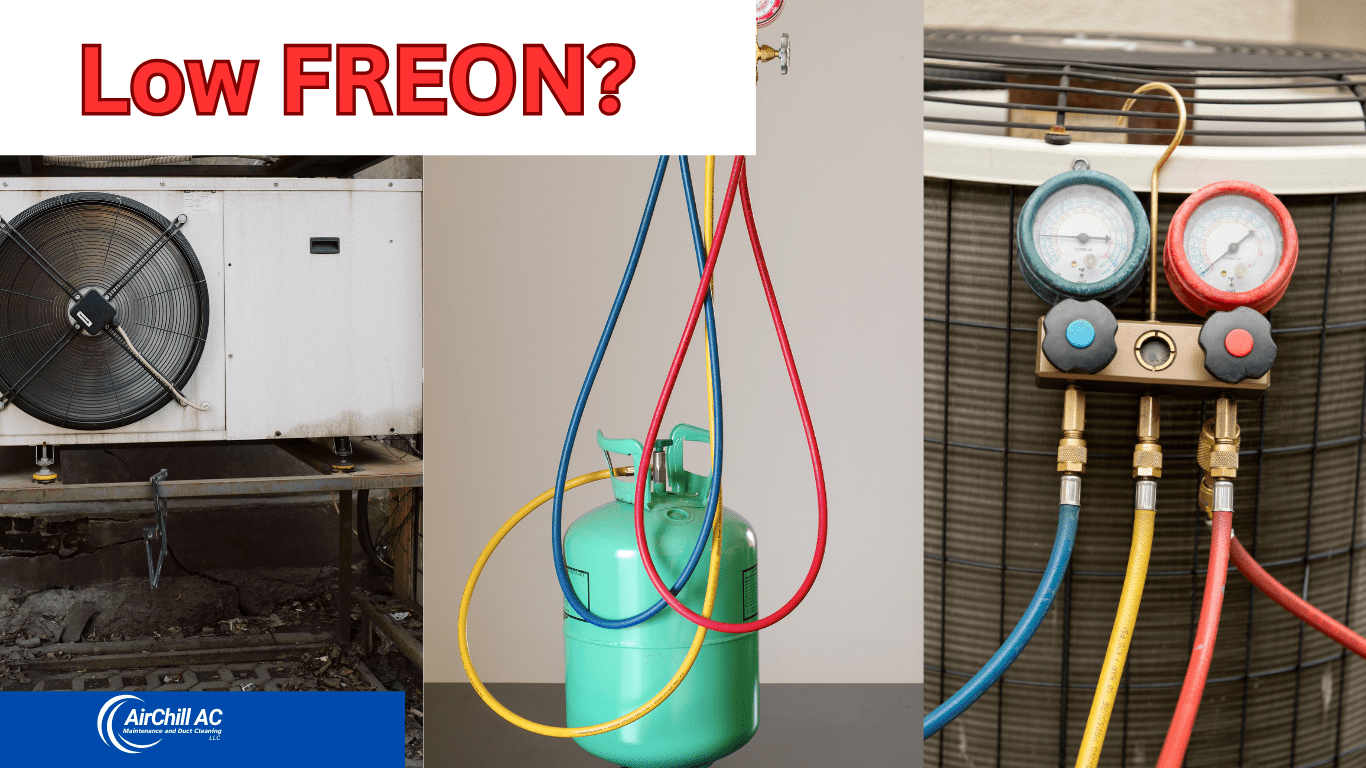
Connect the pressure gauges carefully to the air conditioner’s service ports. Use the low-pressure portfor the blue hose and the high-pressure portfor the red hose. Make sure connections are tight to avoid leaks. Keep the yellow hose free; it is for charging or vacuuming.
Turn on the air conditioner and let it run for a few minutes. Read the pressure values on both gauges. The low-pressure gaugeshows suction pressure, while the high-pressure gaugeshows discharge pressure.
Compare the readings with the recommended pressure levels for your unit. These values depend on the ambient temperatureand the type of refrigerant. If the pressure is too low, the refrigerant might be low. Too high pressure could mean a blockage or overcharge.
Interpreting Pressure Readings
The normal pressure rangefor most air conditioners is between 60 and 80 psion the low side. This range can vary slightly depending on the type of refrigerant used. Checking the pressure helps determine if the system has enough refrigerant to work well.
Low pressure indicationsmay include pressure readings below 60 psi. This often means the refrigerant level is too low. Symptoms include weak cooling, longer run times, or the unit freezing up. Low pressure can cause damage if not fixed quickly.
Checking For Refrigerant Leaks
Checking for refrigerant leaksis important to keep the air conditioner working well. Look for oily spots or stains near the unit. These can show where the refrigerant is escaping.
Use a leak detector or soapy water on joints and connections. Bubbles form if there is a leak. Listen for hissing sounds around pipes and valves.
Keep in mind that low refrigerant levels can cause poor cooling and higher energy bills. Call a professional if you find any leaks. They have the right tools to fix the problem safely.
Seeking Professional Help
Checking refrigerant levels requires special tools and skills. A trained technicianknows how to handle these safely. They use a gauge setto measure pressure accurately. This helps find if the refrigerant is too low or leaking.
Trying to check or refill refrigerant alone can be dangerous. Refrigerants are chemicals that need careful handling. A professional also follows rules to protect the environment. They ensure the air conditioner works efficientlyand safely.
- Technicians have the right equipment.
- They detect leaks and fix problems.
- Certified experts handle refrigerants properly.
- They keep your system running well.
Credit: airchillac.com
Frequently Asked Questions
How Do I Know If My Ac Refrigerant Is Low?
You might notice reduced cooling, longer run times, or ice on coils. These signs often indicate low refrigerant levels in your AC unit.
Can I Check Refrigerant Level Myself Safely?
Checking refrigerant requires special tools and knowledge. It’s safer to hire a certified technician to avoid risks and ensure accuracy.
Why Is Refrigerant Level Important For Ac Performance?
Proper refrigerant levels ensure efficient cooling and prevent damage. Low levels can cause poor cooling and increased energy use.
What Tools Are Needed To Check Ac Refrigerant Level?
You need a manifold gauge set and temperature sensors. These tools measure pressure and temperature to assess refrigerant levels accurately.
Conclusion
Checking the refrigerant level in your air conditioner helps keep it working well. Low refrigerant can cause poor cooling and higher energy bills. Regular checks save money and prevent bigger problems. Use simple tools and follow safety steps carefully. If unsure, ask a professional for help.
Keeping your AC in good shape means cool and comfortable days. A little effort goes a long way in home comfort.