Is your air conditioner supposed to warm your room, but it’s not blowing hot air? That can be frustrating, especially when you need comfort the most.
You might wonder what’s wrong and how to fix it quickly. Understanding why your air conditioner isn’t heating properly can save you time, money, and stress. Keep reading to discover the common reasons behind this issue and what you can do to get your unit working just the way you want.
Common Reasons For Cool Air
Your air conditioner might blow cool air due to several common reasons. A dirty air filtercan block airflow, making it hard for the unit to heat properly. Check and replace the filter regularly.
Low refrigerant levelscan stop the system from heating. This usually means there is a leak that needs fixing by a professional. The thermostat settings may also be incorrect. Make sure it is set to heat modeand the temperature is higher than the room temperature.
Faulty electrical componentsor a worn-out compressor can stop the heater from working. Sometimes, the outdoor unit might be blocked by debris or snow, so clear the area around it. Regular maintenance helps keep your air conditioner working well.
Thermostat Settings
The thermostat controls the air conditioner’s mode and temperature.
Check if the temperature is set higher than room temperature.
The AC will not blow hot air if the temperature is set too low.
Switch the thermostat from cooling to heating mode.
Heating mode is required to get warm air from the AC unit.
Sometimes the thermostat might accidentally stay on cooling mode.
Make sure the thermostat displays “heat” or “heating” for warm air.
Blocked Air Filters
Blocked air filtersstop air from flowing freely. This can make the air conditioner not blow hot air. Dirty filters hold dust, dirt, and pollen, which block air movement. This leads to poor heating and higher energy use.
Signs of a clogged filterinclude:
- Air feels weak or slow from vents
- Dust buildup around vents or filter area
- Unit runs longer but rooms stay cold
- Unusual smells or noises coming from the unit
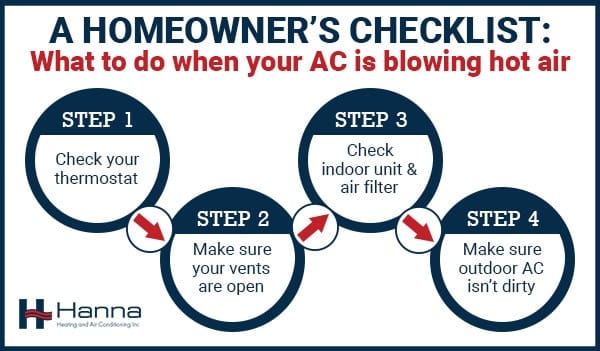
How to clean or replace filters:
- Turn off the air conditioner first
- Remove the filter carefully
- Use a vacuum or wash with water if reusable
- Let the filter dry fully before reinstalling
- Replace disposable filters with a new one
Credit: www.hannainc.com
Issues With The Compressor
The compressoris a key part of an air conditioner. It moves refrigerant through the system. If the compressor fails, the air conditioner may stop blowing hot air. Signs of compressor problems include strange noises, frequent cycling on and off, and warm air blowing from vents.
Basic steps to check the compressor:
- Listen for clicking or humming sounds.
- Check the air filter and clean it if dirty.
- Inspect the outdoor unit for debris or damage.
- Ensure the thermostat is set correctly.
- Look for visible signs of oil or refrigerant leaks.
| Symptom | Possible Cause | Troubleshooting Tip |
|---|---|---|
| Warm air blowing | Compressor not running | Check power supply to the unit |
| Clicking noise | Compressor trying to start | Inspect capacitor and wiring |
| Frequent on/off cycles | Overheating compressor | Clear debris from outdoor unit |
Refrigerant Levels
Low refrigerant levelscan stop your air conditioner from blowing hot air. This usually happens when there is a leak in the system. Detecting low refrigerantrequires checking the pressure in the AC lines with special tools. Signs include weak airflow and warm air coming out of the vents.
Here are simple signs of low refrigerant:
- Air feels less cool or warm
- Ice forms on the evaporator coil
- The AC runs longer than usual
- Higher energy bills
When to call a professional:Handling refrigerant needs special skills and tools. A trained technician can find leaks and refill refrigerant safely. If you notice any signs, do not try to fix it yourself. Call a professional for proper repair and safety.
Electrical Problems
Circuit breakerscontrol the power supply to your air conditioner. A tripped breaker can stop the unit from working properly. Check the breaker panel for any switches that are off or in the middle position. Flip them off and then back on to reset.
Electrical connections must be tight and free of corrosion. Loose wires or damaged connections can cause the air conditioner to stop blowing hot air. Inspect the wiring at the unit and the control board for any signs of wear or damage. Secure or replace any faulty connections.
Ductwork Obstructions
Blocked ducts can stop hot air from moving properly. Dust, dirt, and debris build up inside ducts. This makes air flow weak or stops it completely. Check vents and ducts for visible dust or damage. Small animals or nests can also block ducts.
Simple cleaning can help improve airflow. Use a vacuum with a brush to clean vent covers. Wipe inside vents gently with a damp cloth. Avoid using water deep inside ducts to prevent damage. Regular cleaning keeps air moving smoothly and your AC working well.

Credit: thebeehvac.com
Heat Pump Malfunctions
A heat pump may stop blowing hot air due to several common problems. Frozen coilsoften block heat transfer. Dust or debris can cause this freeze. Thermostat issuesmight prevent the pump from switching to heat mode. Faulty reversing valves can stop the heat flow, leaving only cold air. Another cause is a low refrigerant level, which reduces heating ability.
Recognizing heat pump issuesinvolves checking for:
- Ice build-up on outdoor unit
- Unusual noises during operation
- Air blowing cold even when set to heat
- Higher electricity bills without proper heating
Quick fixes to considerinclude:
- Cleaning or replacing air filters
- Clearing debris around the outdoor unit
- Resetting the thermostat or checking settings
- Turning off the system to let ice melt
- Ensuring vents and registers are open
Faulty Thermostat
A faulty thermostatcan cause your air conditioner to stop blowing hot air. The thermostat controls the temperature inside your home. If it breaks, the system may not work properly.
Testing the thermostat is simple. Use a multimeter to check if it sends power to the AC unit. Another way is to raise and lower the temperature setting and listen for any change in the system’s operation.
Replacing or repairing the thermostat depends on the problem found. Sometimes, a simple battery change fixes the issue. Other times, the whole thermostat needs replacement. A professional technician can help with proper repair or replacement.

Credit: www.carrier.com
When To Seek Professional Help
Seek professional help if your air conditioner stops blowing hot air after trying basic fixes. A trained technician can check for refrigerant leaks, which are hard to spot. They also test the compressor and thermostat, key parts for heating.
Call a pro if you hear strange noises or smell burning. These signs mean internal damage may be present. Professionals have the tools and knowledge to fix electrical issuessafely.
Try a technician visit when your unit turns off quickly or doesn’t turn on at all. Such problems need expert diagnosis to avoid costly repairs later.
Frequently Asked Questions
Why Is My Air Conditioner Not Blowing Hot Air?
Air conditioners are designed to cool, not blow hot air. If it’s blowing warm air, the system may be faulty or set to heating mode. Check the thermostat settings and ensure the unit is functioning correctly.
Can A Dirty Filter Cause Warm Air From Ac?
Yes, a dirty filter can restrict airflow, causing the AC to blow warm air. Regularly clean or replace filters to maintain efficient cooling and prevent system strain.
Could Low Refrigerant Levels Cause Warm Air Output?
Low refrigerant reduces the AC’s cooling ability, leading to warm air blowing. A professional technician should check and recharge refrigerant to restore proper cooling.
Is A Faulty Compressor Responsible For Warm Air?
A malfunctioning compressor can prevent the AC from cooling properly, resulting in warm air. Compressor repair or replacement by a qualified technician is often necessary.
Conclusion
A faulty air conditioner can cause discomfort at home. Check basic issues like thermostat settings or power supply first. Clean or replace dirty filters to improve airflow. Low refrigerant levels often stop cool air from coming out. Sometimes, electrical or mechanical problems may need a technician’s help.
Regular maintenance can prevent most common problems. Act quickly to avoid bigger repairs or higher bills. Stay comfortable by keeping your AC in good shape. Simple steps can bring back cool, fresh air fast. Don’t ignore signs of trouble; address them early.