Choosing the right knot for your braided fishing line can make all the difference between landing a big catch and losing it at the last moment. If you’ve ever struggled with knots that slip or break, you know how frustrating it can be.
But don’t worry—finding the best knot for braided line is easier than you think. You’ll discover simple, reliable knots that hold strong under pressure. Keep reading to learn how to tie them perfectly and boost your fishing success every time you cast.
Credit: medium.com
Braided Line Basics
Braided fishing line is made from several strands of strong fibers. It is thin but very strong. Anglers use it for many types of fishing.
This line does not stretch much. It helps anglers feel bites better and control fish well. Knowing how to tie the best knot is important.
Properties Of Braided Line
Braided line is made from woven fibers like Spectra or Dyneema. It has a small diameter but high strength. It floats on water and resists abrasion.
The line has little to no stretch. This helps with sensitivity and hook setting. It is also very durable and lasts long under tough conditions.
Advantages Over Monofilament
Braided line holds more strength in a thinner size compared to monofilament. It is less affected by water absorption. It also lasts longer without breaking down.
- Higher strength with smaller diameter
- Better sensitivity due to low stretch
- Longer durability in rough conditions
- Floats on water surface
- Less affected by water and UV
Common Uses In Fishing
Anglers use braided line for heavy cover fishing and deep water. It is good for casting long distances and fishing big fish. It works well with many rod types.
- Fishing in thick weeds or brush
- Deep sea or offshore fishing
- Big game fish like bass or pike
- Long casting or trolling
- Situations needing high sensitivity
Factors Influencing Knot Choice
Choosing the best knot for braided fishing line is important. Different factors can influence your decision. Understanding these factors helps you make the right choice.
These factors include line strength, water conditions, and the fish you aim to catch. Each aspect plays a role in knot performance.
Line Strength And Diameter
Line strength and diameter are crucial for knot choice. Stronger lines need knots that can handle the pressure. Thin lines require knots that do not slip easily.
Thicker lines can bear more weight but need larger knots. This ensures the knot holds under stress. Always match the knot type with your line’s thickness.
Water Conditions
Water conditions affect knot performance too. In calm waters, most knots work well. Rough waters need stronger, more secure knots.
Saltwater can weaken some knots over time. Choose knots that resist corrosion if fishing in the ocean. Freshwater fishing is less demanding on knots.
Target Fish Species
The type of fish you catch influences knot choice. Larger fish require knots that can handle more force. Smaller fish may allow for simpler knots.
Some fish have sharp teeth. This can damage knots if not chosen wisely. Always consider your target species when picking a knot.
- Heavy fish need strong, complex knots
- Small fish can be caught with simple knots
- Fish with teeth require extra knot protection
Top Knots For Braided Line
Braided fishing lines are strong but need the right knots. Using the best knots keeps your line secure. This helps you catch more fish without losing gear.
Not all knots work well with braided lines. Some knots slip or weaken the line. Here are four top knots that work great with braided fishing line.
Palomar Knot
The Palomar knot is simple and very strong. It keeps almost all of the line’s strength. You can tie it quickly and it works well with braided line.
This knot is good for tying hooks, lures, or swivels. It is less likely to slip than many other knots.
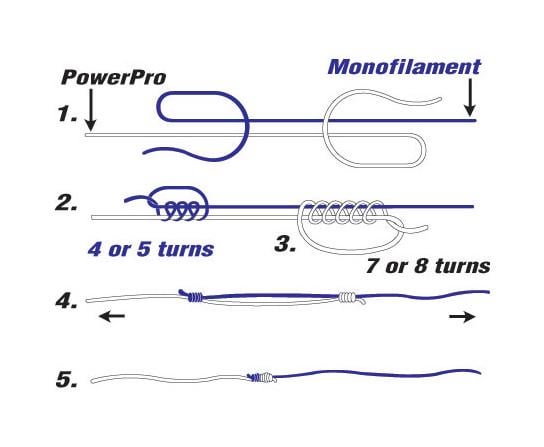
Double Uni Knot
The Double Uni knot is great for connecting braided line to a leader. It is easy to tie and very reliable. This knot keeps a smooth connection that passes through guides easily.
It is strong and does not weaken the line much. Many anglers use it for braided to fluorocarbon or monofilament leaders.
Fg Knot
The FG knot is popular for connecting braided line to a leader. It is very slim and strong. This knot slides through rod guides with little resistance.
The FG knot takes practice to tie correctly. It holds tight under heavy pressure and does not slip.
Improved Clinch Knot
The Improved Clinch knot is a classic for all lines. It works with braided line if tied carefully. It is simple and quick to tie.
This knot is best for light to medium fishing. Braided line can slip if the knot is not tight. Adding more wraps helps keep it secure.
Step-by-step Knot Tying
Choosing the best knot for braided fishing line helps keep your line strong. Braided lines need knots that hold tight and do not slip.
Here are clear instructions for four popular knots. Follow these steps to tie your knots correctly.
Palomar Knot Instructions
The Palomar knot is simple and strong. It works well with braided line and hooks or swivels.
- Double about 6 inches of line and pass it through the hook eye.
- Tie a loose overhand knot with the doubled line.
- Pass the hook through the loop of the overhand knot.
- Pull on both the tag end and standing line to tighten.
- Trim the tag end close to the knot.
Double Uni Knot Instructions
The Double Uni knot joins braided line to leader line. It keeps strength and is easy to tie.
- Overlap the ends of the braided line and leader line.
- Make a loop with the tag end of the braided line.
- Wrap the tag end around both lines 5 times.
- Pull the tag end to tighten the coils.
- Repeat these steps for the leader line.
- Pull both standing lines to slide the knots together.
- Trim the tag ends close to the knots.
Fg Knot Instructions
The FG knot is great for joining braided line to a fluorocarbon leader. It is slim and strong.
- Hold the leader line steady and wrap the braided line tightly around it.
- Make 10 to 12 tight wraps with the braided line around the leader.
- Keep tension on both lines during wrapping.
- After wrapping, pull the braided line tight to lock the wraps.
- Tie a few half hitches with the braided line around the leader to finish.
- Trim the tag ends close to the knot.
Improved Clinch Knot Instructions
The Improved Clinch knot works well for braided lines with small hooks. It is easy to tie and reliable.
- Thread the line through the hook eye.
- Wrap the tag end around the standing line 5 to 7 times.
- Pass the tag end through the small loop near the eye.
- Then pass it through the big loop just created.
- Pull the tag end slowly to tighten the coils.
- Slide the knot to the eye and pull tight.
- Trim the tag end close to the knot.
Tips For Stronger Knots
Choosing the best knot is key for braided fishing line. Strong knots stop slips and breaks. Learning to tie knots well helps catch more fish.
Below are tips that improve knot strength. These tips make your knot hold better and last longer on the line.
Proper Line Preparation
Prepare your braided line before tying the knot. Make sure the line is clean and dry. Dirt or water can weaken the knot.
Cut the line with sharp scissors or a line cutter. A clean cut helps the knot hold tight and avoids fraying.
- Remove any dirt or debris from the line
- Dry the line if it is wet
- Cut the line cleanly with sharp tools
Maintaining Knot Tightness
Tighten the knot slowly and evenly. Pull each end of the line carefully to avoid slipping. A tight knot holds better and lasts longer.
Keep your fingers wet while tightening. This reduces friction and stops the line from weakening. Avoid pulling too fast or hard.
- Pull the knot ends slowly and evenly
- Keep fingers wet to reduce friction
- Do not pull the knot too fast or too hard
Avoiding Common Mistakes
Do not skip steps or tie knots with wet or dirty hands. Avoid using knots that do not suit braided line. Some knots slip easily on smooth braided fibers.
Check your knot before each use. Look for loose ends or damage. Retie the knot if it shows signs of weakness.
- Do not tie knots with dirty or wet hands
- Use knots designed for braided line
- Inspect knots before fishing
- Retie knots if loose or damaged

Credit: www.reddit.com
Testing Knot Strength
Choosing the best knot for braided fishing line depends on its strength. Testing knots helps find the most secure option.
Strong knots prevent line breakage and lost fish. Testing shows which knots hold tight under pressure.
Simple Field Tests
Try pulling the knot by hand to check its strength. The knot should not slip or loosen easily.
Use a scale or fish scale to pull the line slowly. Note the force when the knot breaks or slips.
- Tie the knot on a strong hook or swivel
- Pull the line steadily until the knot fails
- Record the breaking strength in pounds or kilograms
- Repeat tests for accuracy
When To Retie Knots
Knots weaken after catching fish or heavy use. Retie knots before each fishing trip for safety.
Check knots if the line feels rough or the knot looks damaged. Replace knots that show wear or slip.
- Retie knots after a big catch
- Retie knots if the line is frayed
- Retie knots if the knot slips during use
- Regularly inspect knots for damage
Knot Selection For Specific Techniques
Choosing the right knot for braided fishing line is important for each fishing style. Different knots work better for certain techniques.
Using the correct knot can make your line stronger and your catch more secure. Here are the best knots for various fishing methods.
Bass Fishing
Bass fishing often requires strong knots because bass can be heavy and fight hard. Braided line is popular for its strength and sensitivity.
The Palomar knot is a top choice for bass fishing with braided line. It is simple and holds well under pressure.
- Easy to tie and reliable
- Maintains line strength
- Works well with lures and hooks
Saltwater Fishing
Saltwater fishing demands knots that resist slipping and corrosion. Braided line helps with strong fish in saltwater environments.
The Uni knot is a great option for saltwater fishing. It is strong and resists slipping even with braided line.
- Good for tying hooks and leaders
- Holds well with slick braided line
- Works on both light and heavy tackle
Fly Fishing With Braided Line
Braided line is less common in fly fishing but can be used for backing. Knots need to connect braided backing to fly line smoothly.
The Double Uni knot is best for joining braided backing to the fly line. It is strong and easy to adjust.
- Creates a smooth, strong connection
- Prevents line slippage
- Easy to tie in the field

Credit: www.wikihow.com
Frequently Asked Questions
What Knot Works Best With Braided Fishing Line?
The Palomar knot is ideal for braided fishing line. It maintains strength and is easy to tie. This knot resists slipping and works well with thin, slippery lines like braid.
How To Tie A Strong Knot For Braided Line?
To tie a strong knot, double the line and thread it through the hook eye. Tie a loose overhand knot, pass the loop over the hook, and pull tight. The Palomar knot is recommended for strength and reliability.
Why Avoid Certain Knots With Braided Line?
Braided lines are thin and slippery, so some knots may slip or weaken. Avoid knots that tighten too much or create friction. Using knots like the Palomar or Double Uni ensures better hold and line strength.
Can Braided Line Knots Affect Fishing Success?
Yes, knot strength affects fishing success. A weak knot can break, causing lost fish. Using the right knot, like the Palomar, ensures maximum strength and reliability, improving your catch rate.
Conclusion
Choosing the right knot makes fishing with braided line easier. Strong knots hold better and reduce line slipping. Try the Palomar or Double Uni knot for best results. Practice tying knots before you fish to gain confidence. A good knot keeps your catch safe and your line secure.
Keep your knots tight and neat for better performance. With the right knot, fishing becomes more enjoyable and successful.