Are you curious about how much electricity your portable air conditioner uses? Knowing this can help you save money on your energy bills and keep your home cool without surprises.
You’ll discover the real power consumption of these handy devices and simple tips to use them efficiently. By the end, you’ll feel confident managing your cooling needs without wasting energy. Keep reading to learn exactly what impacts your portable AC’s electricity use and how to make the most of it.
Credit: www.zerobreeze.com
Portable Ac Power Consumption
Portable air conditioners usually use between 500 and 1500 wattsof power. The exact amount depends on the size and model of the unit. Smaller units might use less power, while larger ones need more to cool a room effectively.
Several factors affect energy use:
- Room size – bigger rooms need more cooling power.
- Temperature setting – lower temperatures use more energy.
- Unit efficiency – newer models often use less electricity.
- Usage time – longer running increases power consumption.
- External heat – more heat means the AC works harder.

Credit: www.amazon.com
Energy Efficiency Ratings
Energy efficiency ratings show how much electricity a portable air conditioner uses. Higher ratings mean lower energy consumption and cost. Checking these ratings helps choose a model that saves power and keeps your space cool.
Energy Efficiency Ratio (EER) shows how much cooling a unit provides per watt. Higher EER means better efficiency. Seasonal Energy Efficiency Ratio (SEER) measures efficiency over a season. Higher SEER equals more savings. Compare EER and SEER before buying a unit. Energy Star models use less electricity. They save money and energy. Look for the Energy Star label on air conditioners. These models are tested for efficiency. Save more with these choices. They help the planet too. Always check the label for details. `Calculating Electricity Costs
Estimate daily use by checking the portable AC’s wattage. Most units use between 500 and 1500 watts. Multiply the wattage by the hours used per day for total watt-hours.
Convert watts to kilowatt-hours by dividing watt-hours by 1000. For example, 1200 watts × 8 hours = 9600 watt-hours, which is 9.6 kWh.
| Step | Calculation | Example |
|---|---|---|
| Find wattage | Check label or manual | 1200 watts |
| Multiply by hours used | Wattage × Hours | 1200 × 8 = 9600 watt-hours |
| Convert to kWh | Watt-hours ÷ 1000 | 9600 ÷ 1000 = 9.6 kWh |
Your electric bill shows the price per kWh. Multiply the kWh used by this rate to find daily cost. For example, if rate is $0.12 per kWh, then 9.6 kWh × $0.12 = $1.15per day.
Tips To Reduce Energy Use
Setting the temperatureto around 78°F (25°C)helps save energy. Cooler settings make the unit work harder. This leads to more electricity use. Adjust the temperature based on comfort, not too cold.
Good room insulationkeeps cool air inside. Use weather strippingon doors and windows. Close curtains during sunny hours. This reduces the air conditioner’s load and saves power.
- Use timersto run the air conditioner only when needed.
- Smart controlscan turn off the unit when no one is in the room.
- Set schedules to cool rooms before you arrive and turn off after you leave.
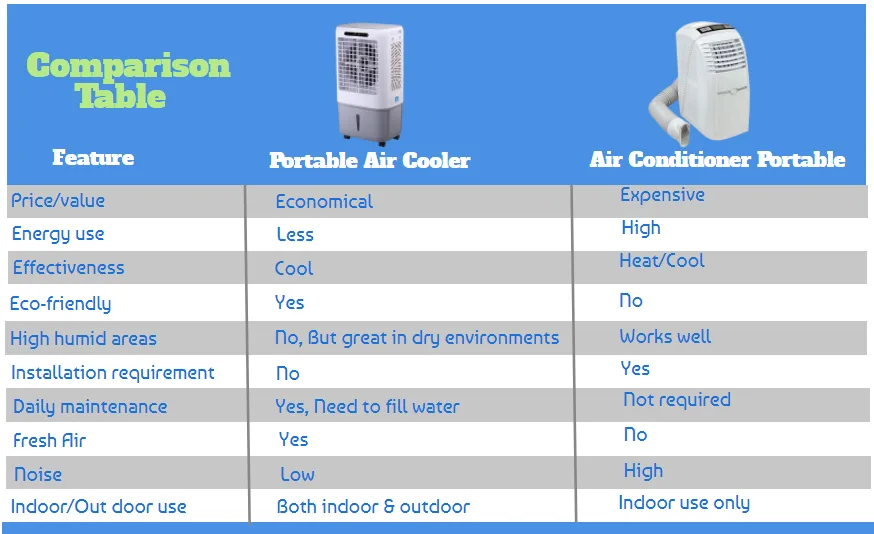
Comparing Portable Ac To Other Cooling Options
Portable air conditionersuse more electricity than fans but less than some window units. They cool a room by removing heat and moisture, which takes energy.
| Cooling Option | Electricity Use (approx.) | Cooling Ability | Best For |
|---|---|---|---|
| Portable AC | 1000-1500 watts | Medium | Small to medium rooms |
| Window Unit | 500-1500 watts | High | Medium to large rooms |
| Fan | 30-100 watts | Low (air movement only) | Personal cooling |
| Evaporative Cooler | 100-300 watts | Low to medium | Dry climates |
Fans use little electricity but only move air. Evaporative coolers use more power but cool by adding moisture, good for dry places. Window units often use less energy than portable ACs for the same room size.
Maintenance For Better Efficiency
Cleaning filtersregularly helps air flow freely. Clogged filters make the unit work harder. This raises electricity use and lowers cooling. Take out the filters and wash them with warm water. Let them dry fully before putting back.
Checking for leaks and blockageskeeps the air conditioner efficient. Leaks let cold air escape, wasting power. Blockages in the hose or vents stop cool air from reaching the room. Look for cracks or holes and seal them. Remove any dirt or objects blocking the air path.
Credit: sntoom.net
Frequently Asked Questions
How Much Electricity Does A Portable Ac Use Per Hour?
A portable air conditioner typically uses 0. 8 to 1. 5 kWh per hour. Usage depends on the unit’s size and cooling capacity. Energy-efficient models consume less electricity, saving on bills while cooling effectively.
What Affects The Electricity Consumption Of Portable Acs?
Electricity use depends on unit size, cooling power, room size, and temperature settings. Higher temperatures and larger rooms increase energy use. Energy Star-certified models offer better efficiency and lower electricity consumption.
Can I Reduce Electricity Use With A Portable Ac?
Yes, by setting higher temperatures, using timers, and maintaining filters. Regular cleaning and proper insulation also reduce workload. These steps help portable ACs run efficiently and minimize electricity consumption.
How Does Portable Ac Electricity Use Compare To Window Units?
Portable ACs generally use more electricity than window units due to less efficient exhaust systems. However, they offer flexibility and easy installation. Choosing energy-efficient models narrows the consumption gap between types.
Conclusion
Portable air conditioners use varying electricity based on size and settings. Smaller units often consume less power, saving energy and money. Running them on lower settings helps reduce electricity use. Regular maintenance keeps the unit efficient and cools better. Knowing how much power your portable AC uses helps manage your bills.
Choose wisely to stay comfortable without high energy costs. Simple steps make a big difference in electricity use. Stay cool and save energy at the same time.