Have you ever wondered what makes your air conditioner cool your home so efficiently? One small but powerful part plays a big role in this process—the expansion valve.
Understanding how an air conditioner expansion valve works can help you appreciate how your system stays cool and runs smoothly. You’ll discover the simple yet smart way this valve controls the flow of refrigerant, keeps your air conditioner balanced, and ultimately keeps you comfortable.
Keep reading, and you’ll see why this tiny component is a real game-changer for your cooling system.
Credit: comforttemp.com
Air Conditioner Expansion Valve Basics
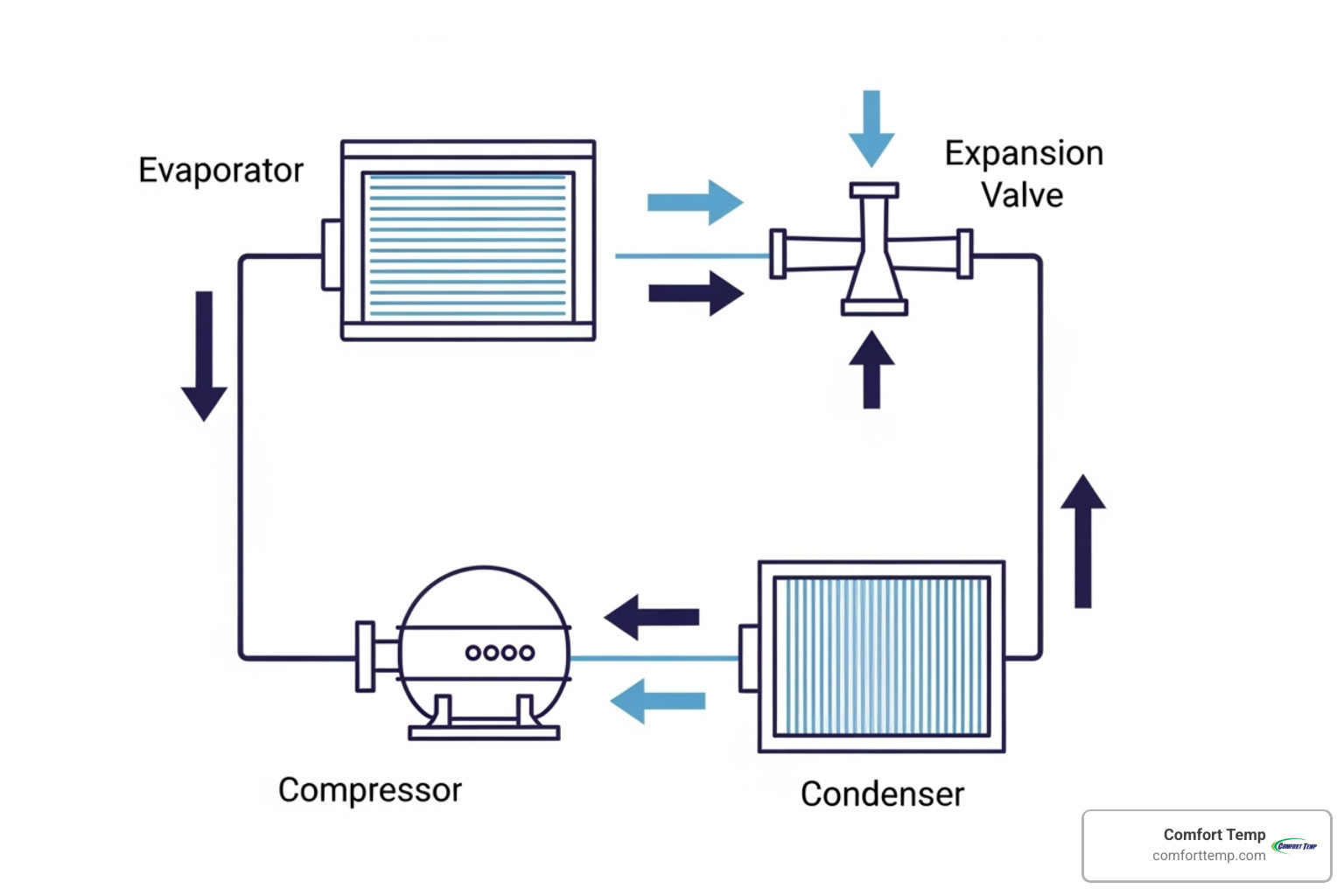
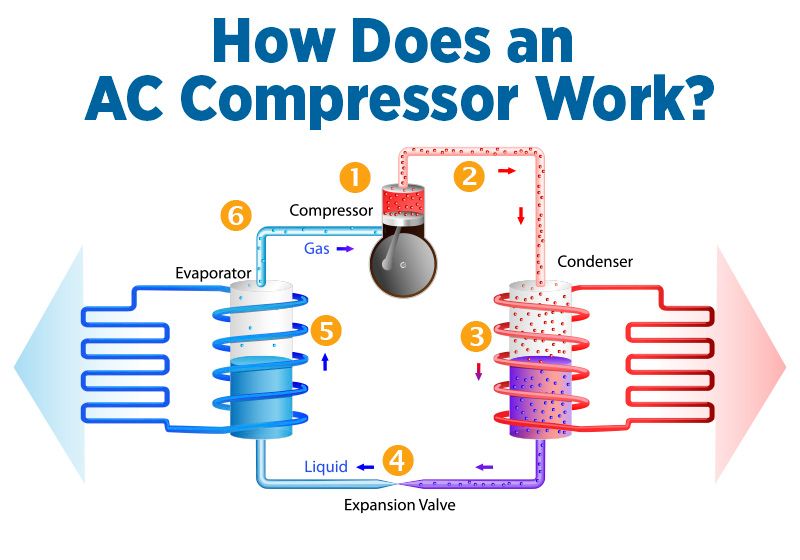
An expansion valve controls the flow of refrigerant in an air conditioner. It changes the pressure and temperature of the refrigerant.
This part helps the system cool the air efficiently. It works between the condenser and the evaporator.
Purpose In Ac Systems
The expansion valve lowers the refrigerant pressure. This causes the refrigerant to cool down quickly. The cool refrigerant then absorbs heat inside the building.
- Regulates refrigerant flow to the evaporator
- Reduces refrigerant pressure and temperature
- Prevents liquid refrigerant from entering the compressor
- Maintains system efficiency and performance
Types Of Expansion Valves
Different types of expansion valves fit various air conditioning needs. Each type controls refrigerant flow in a unique way.
| Type | Description | Common Use |
| Thermal Expansion Valve (TXV) | Adjusts flow based on temperature | Residential and commercial AC |
| Capillary Tube | Fixed orifice, simple design | Small AC units and refrigerators |
| Electronic Expansion Valve (EEV) | Uses sensors and motors for control | Advanced and large systems |
Credit: www.logan-inc.com
Key Components Of The Valve
An air conditioner expansion valve is crucial for temperature control. It regulates the refrigerant flow in the system. Understanding its components is essential.
Each part plays a vital role in ensuring efficient cooling. Let’s explore the key components of this valve.
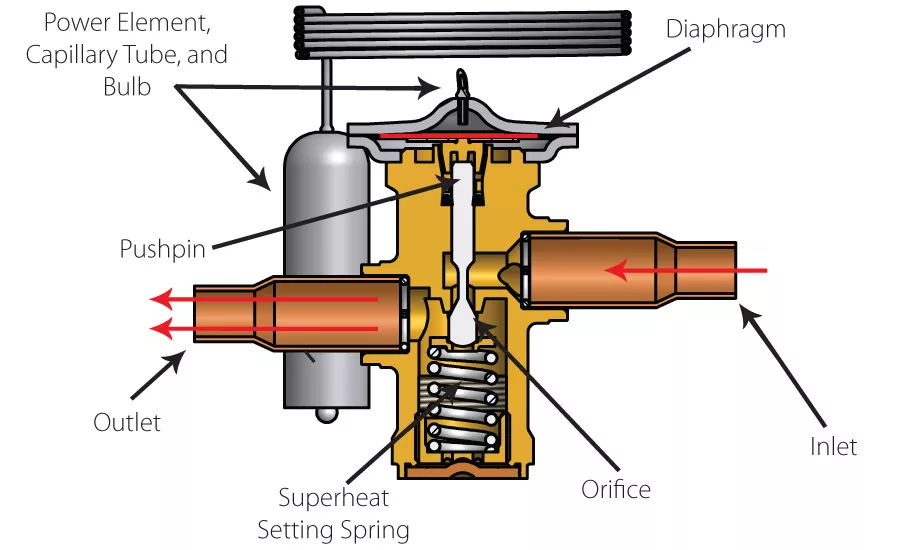
Sensing Bulb
The sensing bulb detects temperature changes. It is filled with a gas that reacts to heat. This helps adjust the valve opening.
Its position is crucial for accurate readings. It is usually clamped onto the evaporator outlet.
- Located at the evaporator outlet
- Filled with a temperature-sensitive gas
- Adjusts valve opening based on temperature
Needle And Seat
The needle and seat control refrigerant flow. The needle moves to open or close the valve. This controls how much refrigerant enters the evaporator.
Proper positioning ensures efficient operation. It prevents too much or too little refrigerant from passing through.
- Regulates refrigerant flow
- Prevents flooding or starvation of refrigerant
- Ensures balanced cooling
Valve Body
The valve body houses all components. It is made of durable materials to withstand pressure and temperature changes. It connects to the refrigerant lines.
Its design is crucial for overall system efficiency. It provides support and protection for internal parts.
- Made from strong materials
- Connects to refrigerant lines
- Protects internal components
How Refrigerant Flows Through The Valve
An air conditioner uses an expansion valve to control refrigerant flow. This valve helps change the pressure and temperature of the refrigerant. It makes the cooling system work efficiently.
The refrigerant moves through the valve and changes its state. This change is key to cooling the air inside a building.
Pressure Reduction Process
The expansion valve lowers the refrigerant pressure as it passes through. High-pressure liquid enters the valve and exits as low-pressure liquid. This pressure drop helps the refrigerant evaporate easily.
- High-pressure refrigerant flows into the valve.
- The valve restricts the flow, causing pressure to drop.
- Low-pressure refrigerant leaves the valve.
- The pressure drop allows the refrigerant to expand and cool.
Temperature Regulation
The valve also helps control the refrigerant temperature. It makes sure the refrigerant absorbs enough heat in the evaporator. The valve adjusts flow based on the cooling needs.
| Function | Effect on Refrigerant |
| Flow Restriction | Reduces pressure and temperature |
| Flow Adjustment | Controls refrigerant amount entering evaporator |
| Heat Absorption | Allows refrigerant to absorb heat efficiently |
Role In Temperature Control
The expansion valve in an air conditioner controls the flow of refrigerant. It helps keep the temperature steady inside the space.
By adjusting refrigerant flow, the valve manages heat exchange. This is key to cooling the air efficiently.
Maintaining Superheat
Superheat is the temperature of the refrigerant vapor above its boiling point. The expansion valve keeps this level steady.
- Measures refrigerant temperature and pressure
- Regulates flow to keep superheat within safe limits
- Prevents liquid refrigerant from entering the compressor
- Ensures efficient heat absorption in the evaporator
Preventing Compressor Damage
The valve protects the compressor by avoiding liquid refrigerant inside it. Liquid can cause severe damage.
| Potential Issue | How Valve Helps |
| Compressor Flooding | Stops liquid refrigerant from entering compressor |
| Overheating | Keeps refrigerant flow balanced to avoid stress |
| Reduced Efficiency | Maintains proper refrigerant pressure and temperature |
Common Problems And Troubleshooting
The air conditioner expansion valve controls refrigerant flow. It helps cool the air by reducing pressure. Sometimes, this valve can fail or clog.
Knowing the signs of valve problems helps fix your AC fast. Troubleshooting can save time and money on repairs.
Signs Of Valve Malfunction
A bad expansion valve causes poor cooling. The AC might blow warm air or freeze up. You may hear strange noises from the unit.
- Air conditioner blows warm or uneven air
- Ice forms on the evaporator coil
- Unit cycles on and off too often
- Strange hissing or clicking sounds
- Higher energy bills without better cooling
Repair And Replacement Tips
Always turn off power before working on the AC. Check the valve for dirt or blockages. Cleaning may fix small clogs.
If the valve is damaged or stuck, replace it. Use parts made for your AC model. Proper installation is key to good performance.
- Shut off power to the air conditioner
- Inspect the valve for dirt or damage
- Clean the valve with appropriate tools
- Replace if the valve is broken or stuck
- Use manufacturer-approved replacement parts
- Test the AC after repair to confirm cooling
Comparing Expansion Valves To Other Metering Devices
An expansion valve controls refrigerant flow in air conditioners. It lowers pressure to help cooling. Several devices can do this job.
Two common types are the thermostatic expansion valve (TXV) and the capillary tube. Each works differently and has benefits and limits.
Txv Vs. Capillary Tube
The TXV adjusts refrigerant flow based on temperature and pressure. It uses a sensing bulb to control the valve opening.
The capillary tube is a simple, fixed-size tube. It limits refrigerant flow by its length and diameter and does not adjust automatically.
- TXV changes flow to match cooling load.
- Capillary tube provides a steady flow regardless of load.
- TXV is more complex and expensive.
- Capillary tube is simple and cheap.
Advantages And Disadvantages
TXVs offer better control and efficiency. They keep the system balanced under different conditions.
Capillary tubes are easy to install and require little maintenance. But they can cause poor performance if conditions change.
| Device | Advantages | Disadvantages |
|---|---|---|
| TXV | Adjusts flow automatically Improves energy efficiency Better for varying loads | More costly Needs proper setup Can fail if sensing bulb is damaged |
| Capillary Tube | Simple design Low cost Low maintenance | No flow adjustment Less efficient Can cause system stress |
Installation And Maintenance Tips
An air conditioner expansion valve controls refrigerant flow. Proper installation and maintenance keep it working well.
Follow simple tips to ensure your valve lasts longer and cools efficiently.
Proper Placement
Place the expansion valve in the correct spot for best performance. It should be near the evaporator coil.
Keep the valve away from heat sources and direct sunlight. This helps it measure temperature accurately.
- Locate valve close to the evaporator inlet
- Avoid placing near hot pipes or components
- Ensure easy access for future servicing
- Use insulation to protect from heat exposure
Routine Checks
Regularly check the valve to catch problems early. Look for leaks, blockages, or damage.
Clean the valve and surrounding area to keep dirt from affecting its function. Replace parts if needed.
- Inspect valve for refrigerant leaks
- Check for unusual noises or vibrations
- Clean debris from valve and pipes
- Test valve operation during cooling cycle
- Replace worn or damaged components quickly
Credit: www.mrcool.com
Frequently Asked Questions
What Is The Purpose Of An Air Conditioner Expansion Valve?
An expansion valve controls refrigerant flow into the evaporator. It reduces pressure, allowing the refrigerant to expand and absorb heat efficiently. This process cools the air inside your space, ensuring effective temperature regulation and energy efficiency in the air conditioning system.
How Does The Expansion Valve Regulate Refrigerant Flow?
The valve senses temperature and pressure changes, adjusting refrigerant flow accordingly. It restricts flow when cooling demand is low and increases flow when demand rises. This balance maintains optimal evaporator pressure and temperature for consistent, efficient cooling performance.
Why Is The Expansion Valve Crucial For Ac Efficiency?
The valve ensures proper refrigerant expansion and pressure drop. Without it, the system could overcool or undercool, wasting energy. By maintaining precise refrigerant flow, the valve maximizes cooling efficiency and prevents compressor damage, improving the air conditioner’s lifespan and performance.
Can A Faulty Expansion Valve Affect Cooling Performance?
Yes, a malfunctioning valve can cause poor cooling or uneven temperatures. It may restrict refrigerant too much or allow excess flow, disrupting heat absorption. Timely diagnosis and replacement of the valve are essential to restore proper AC function and efficiency.
Conclusion
The expansion valve controls the flow of refrigerant in the air conditioner. It lowers the pressure, helping the refrigerant cool the air. This process keeps your home comfortable during hot days. Understanding this part helps you see how cooling works inside your unit.
Proper valve function means better cooling and energy use. Regular checks can prevent problems and save money. The expansion valve may be small, but it plays a big role in your air conditioner’s performance.