Are you struggling to understand how to use air conditioner gauges? You’re not alone.
These small tools are key to keeping your AC running smoothly, but they can seem confusing at first. Imagine being able to quickly check your system’s pressure and fix issues before they become costly problems. You’ll learn simple, step-by-step instructions to use air conditioner gauges like a pro.
By the end, you’ll feel confident handling your AC’s gauges and saving time and money on repairs. Keep reading—your cool comfort depends on it!

Credit: www.reddit.com
Choosing The Right Ac Gauges
Using air conditioner gauges helps check your AC system’s pressure. Choosing the right gauges is important for accurate readings.
Good gauges make it easier to find problems and fix your AC quickly. Learn about the types and features to pick the best ones.
Types Of Gauges
There are different gauges for measuring AC pressure. Each type shows specific information about the system.
Choose gauges based on what you need to measure and your skill level.
- Analog Gauges:Use needles and dials to show pressure. They are simple and easy to read.
- Digital Gauges:Show pressure on a screen. They are precise and easy to use.
- Compound Gauges:Measure both pressure and vacuum. Useful for many AC tasks.
- Manifold Gauges:Come with multiple gauges and hoses for full system testing.
Essential Features To Look For
Look for features that make your work easier and more accurate. These features improve safety and reliability.
- Durable Build:Choose gauges made with strong metal and glass parts.
- Clear Markings:Numbers and scales should be easy to read.
- Wide Pressure Range:Make sure gauges cover the pressure your AC uses.
- Accurate Readings:Pick gauges tested for precision.
- Easy Connections:Hoses and fittings should fit tightly and be easy to attach.
- Temperature Resistance:Gauges should work well in hot and cold conditions.

Credit: www.youtube.com
Setting Up Your Gauge Manifold
Using air conditioner gauges is key for proper maintenance. Setting up your gauge manifold ensures accurate readings.
Follow these steps to connect and seal your air conditioner gauges correctly. This guide helps in achieving accurate pressure readings.
Connecting To Service Ports
First, locate the service ports on your air conditioner. These ports are usually labeled as low and high pressure.
- Identify the low-pressure port, often marked with a blue cap.
- Find the high-pressure port, typically marked with a red cap.
- Attach the blue hose to the low-pressure port.
- Connect the red hose to the high-pressure port.
Ensuring Proper Sealing
Sealing is crucial to prevent leaks during the testing process. Check all connections thoroughly.
- Tighten the hose connections using your hands.
- Inspect for any visible cracks or damages on the hoses.
- Listen for hissing sounds that indicate leaks.
| Task | Status |
| Connect Low Pressure | Complete |
| Connect High Pressure | Complete |
| Check Seals | Pending |
Taking Accurate Pressure Readings
Using air conditioner gauges correctly is key to checking your system’s pressure. Accurate readings help find issues and keep your AC working well.
Pressure gauges measure both high and low sides of the AC system. Knowing how to read them helps you understand system health.
Reading High And Low Pressure
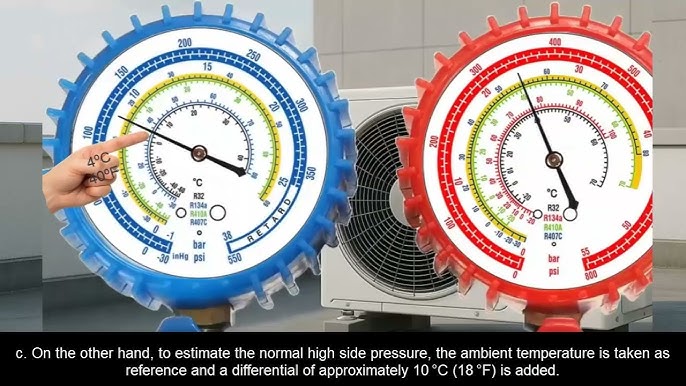
The low pressure gauge shows suction side pressure. This is where refrigerant enters the compressor. The high pressure gauge shows discharge side pressure after the compressor.
Check the low side first. Normal pressure varies with temperature but should be steady. The high side pressure is usually much higher and changes with load.
- Low side pressure is usually between 25 and 45 psi
- High side pressure can range from 150 to 250 psi
- Pressure outside these ranges may indicate leaks or blockages
Interpreting Temperature And Pressure
Pressure readings alone do not give full information. You must compare pressure to temperature for correct diagnosis.
Use a temperature-pressure chart to find if pressure matches the refrigerant’s temperature. This helps detect problems like low refrigerant or system restrictions.
| Pressure (psi) | Temperature (°F) | Meaning |
|---|---|---|
| 40 | 40 | Normal low side pressure |
| 200 | 110 | Normal high side pressure |
| 20 | 32 | Low refrigerant charge |
| 300 | 130 | Possible blockage or overcharge |

Credit: www.hvacshop.com.au
Common Mistakes To Avoid
Using air conditioner gauges correctly is important for accurate readings. Many people make mistakes that lead to wrong results.
This guide highlights common errors and how to avoid them for better AC maintenance.
Handling Leaks And Air Pockets
Leaks and air pockets cause false pressure readings. They make it hard to diagnose AC problems properly.
- Check all hose connections for tight seals before starting.
- Never use damaged or cracked hoses.
- Open valves slowly to avoid trapping air inside the system.
- Bleed air from hoses to prevent air pockets.
- Use a vacuum pump if needed to remove air and moisture.
Misreading Gauge Scales
Gauge scales can be confusing. Misreading them causes wrong pressure checks and system damage.
| Common Mistake | Correct Action |
| Reading high-pressure gauge as low pressure | Identify each gauge before use and read carefully |
| Ignoring units (PSI, kPa) | Know the units shown on gauges and convert if needed |
| Not zeroing gauges before use | Calibrate or zero gauges before measuring |
| Confusing liquid line with suction line pressure | Connect gauges to the correct service ports |
Maintaining And Calibrating Gauges
Air conditioner gauges measure pressure to keep systems running well. Proper care helps them stay accurate and last longer.
Cleaning and calibration are key for correct readings. This guide shows how to maintain and calibrate your gauges.
Routine Cleaning Tips
Clean your gauges regularly to prevent dirt and dust build-up. Clean gauges give better pressure readings and avoid damage.
Use a soft cloth and mild cleaner. Avoid harsh chemicals that can damage the gauge face or seals.
- Wipe the gauge face with a damp cloth
- Remove dust from connectors and hoses
- Check for cracks or leaks on hoses
- Store gauges in a dry, cool place
Calibration Frequency And Methods
Calibrate your gauges often to keep readings accurate. Calibration ensures your gauge matches true pressure values.
Calibrate gauges at least once a year or after heavy use. Use a certified pressure source or send gauges to a professional lab.
- Compare gauge readings to a known accurate standard
- Adjust the gauge pointer if possible
- Replace gauges that cannot be calibrated
- Keep calibration records for reference
Safety Tips When Using Ac Gauges
Using air conditioner gauges helps check the system’s pressure. It is important to work safely to avoid injuries.
Always follow safety rules to protect yourself and keep the AC system safe from damage.
Protective Gear Recommendations
Wear safety gear before using AC gauges. This gear protects you from refrigerant leaks and sharp parts.
Use goggles to protect your eyes. Gloves help keep your hands safe from chemicals and cold burns.
- Wear safety goggles to guard eyes
- Use gloves to protect hands
- Wear long sleeves to avoid skin contact
- Use closed-toe shoes for foot safety
Handling Refrigerants Safely
Refrigerants can be dangerous if not handled correctly. Avoid breathing in fumes and prevent skin contact.
Always check for leaks before and after connecting gauges. Use the right tools to control the refrigerant flow safely.
- Work in a well-ventilated area
- Never inhale refrigerant gases
- Use leak detectors to find leaks
- Follow proper disposal rules for refrigerants
Frequently Asked Questions
What Are Air Conditioner Gauges Used For?
Air conditioner gauges measure refrigerant pressure in HVAC systems. They help diagnose leaks, check system performance, and ensure proper refrigerant levels. Accurate readings prevent damage and improve efficiency. They are essential tools for technicians during maintenance and repairs.
How Do You Connect Air Conditioner Gauges Correctly?
Connect the blue hose to the low-pressure port and the red hose to the high-pressure port. Ensure the valves on the gauge manifold are closed before attaching. Use proper fittings to avoid leaks. Double-check connections for a secure fit before taking readings.
Can Beginners Use Air Conditioner Gauges Safely?
Yes, beginners can use gauges safely with proper instructions. Always wear safety gear and follow manufacturer guidelines. Avoid handling refrigerants without certification. Practice on non-operational units first. Understanding basic HVAC concepts improves safety and accuracy.
Why Is Refrigerant Pressure Important In Air Conditioning?
Refrigerant pressure indicates system health and cooling efficiency. Low pressure may signal leaks or insufficient refrigerant. High pressure can cause compressor damage. Maintaining correct pressure ensures optimal performance and energy savings. Gauges help monitor and adjust refrigerant levels precisely.
Conclusion
Using air conditioner gauges helps keep your system healthy. They show pressure levels clearly and quickly. You can spot problems before they get worse. Always read the gauges carefully and follow safety steps. Practice makes it easier to use them well.
Stay patient and check your AC regularly. This simple tool saves time and money. Taking care of your AC means better cooling and comfort. Keep your gauges clean and store them safely. Small efforts lead to big benefits in the long run.