Tying guy lines on a tent might seem simple, but doing it right makes all the difference between a shaky shelter and a sturdy one. If you want your tent to stand strong against wind and rain, mastering this skill is a must.
You’ll learn easy, step-by-step methods to tie guy lines quickly and securely. By the end, you’ll feel confident that your tent will stay put no matter what nature throws at it. Ready to make your camping experience safer and more comfortable?
Let’s get started!

Credit: www.reddit.com
Choosing The Right Guy Line
Tying guy lines properly keeps your tent stable and safe. Choosing the right guy line is important. It helps the tent hold strong in wind and rain.
This guide explains the types of guy lines, materials to consider, and the right length and thickness for your tent.
Types Of Guy Lines
Guy lines come in different styles. Each type has a special use and strength level. Pick the one that fits your tent and weather conditions.
- Static Guy Lines:These do not stretch. They hold the tent firmly in place. Good for strong winds.
- Dynamic Guy Lines:These stretch a little. They absorb shock from wind gusts. Best for variable weather.
- Reflective Guy Lines:These have reflective threads. They make the lines visible at night.
Material Considerations
Guy lines are made from different materials. Each material affects strength, durability, and weight. Choose a material that matches your needs.
| Material | Strength | Durability | Weight |
| Nylon | High | Good | Light |
| Polyester | Medium | Very Good | Light |
| Polypropylene | Low | Moderate | Very Light |
Length And Thickness
The length and thickness of guy lines affect tent stability. Pick lines that are long enough and thick enough for your tent size and environment.
- Length:Guy lines should be 1.5 to 2 times the distance from the tent to the ground peg.
- Thickness:Thicker lines hold better but weigh more. Thin lines are light but may stretch or break.
- Balance:Choose lines that balance strength and weight for your camping needs.
Essential Knots For Guy Lines
Guy lines keep your tent stable in wind and rain. You need strong knots to hold them tight.
Using the right knots helps you adjust tension and secure the lines easily. Here are three key knots.
Taut-line Hitch
The taut-line hitch is an adjustable knot. It lets you tighten or loosen the guy line without untying.
This knot slides on the rope but stays firm under load. It works well on slippery or thick ropes.
- Make a loop around the tent stake or anchor.
- Wrap the working end around the standing line twice inside the loop.
- Then wrap once outside the loop and pull tight.
- Slide the knot to adjust tension as needed.
Bowline Knot
The bowline knot creates a fixed loop at the end of a rope. It won’t slip or tighten under pressure.
You can use it to tie guy lines to tent loops or stakes securely. It is easy to untie after use.
- Make a small loop near the rope end.
- Pass the rope end up through the loop.
- Wrap it around the standing line.
- Pass the end back down through the loop and pull tight.
Trucker’s Hitch
The trucker’s hitch creates high tension in the guy line. It is good for tightening ropes firmly.
This knot uses a pulley effect to pull the rope tight. You can lock it in place with a simple knot.
- Make a loop or slip knot in the middle of the guy line.
- Pass the rope end around the anchor point.
- Thread the end through the loop to create a pulley.
- Pull the rope tight and secure with a half hitch or two.
Step-by-step Guide To Tying Guy Lines
Tying guy lines correctly keeps your tent stable and safe. It prevents the tent from collapsing in wind or rain. Follow these simple steps for a secure setup.
This guide explains how to attach, anchor, and adjust your guy lines. Each part helps your tent stay firm on any ground.
Securing To Tent
First, find the guy line loops or tabs on your tent. These are usually at the tent’s corners or sides. Attach one end of the guy line to these points using a strong knot.
- Use a bowline knot to tie the line to the tent loop.
- Make sure the knot is tight and will not slip.
- Leave enough line length to reach the ground anchor.
- Check that the line is not twisted or tangled.
Anchoring To Ground
Next, secure the other end of the guy line to the ground. Use stakes or pegs designed for your camping surface. Push or hammer the stake into firm ground at an angle away from the tent.
| Ground Type | Best Stake Type | Notes |
| Soft Soil | Long metal stakes | Insert at 45-degree angle |
| Rocky Ground | Heavy-duty screw stakes | Use hammer carefully |
| Sand | Wide plastic stakes | Push deep for hold |
| Snow | Snow stakes or deadman anchors | Bury sideways for grip |
Adjusting Tension
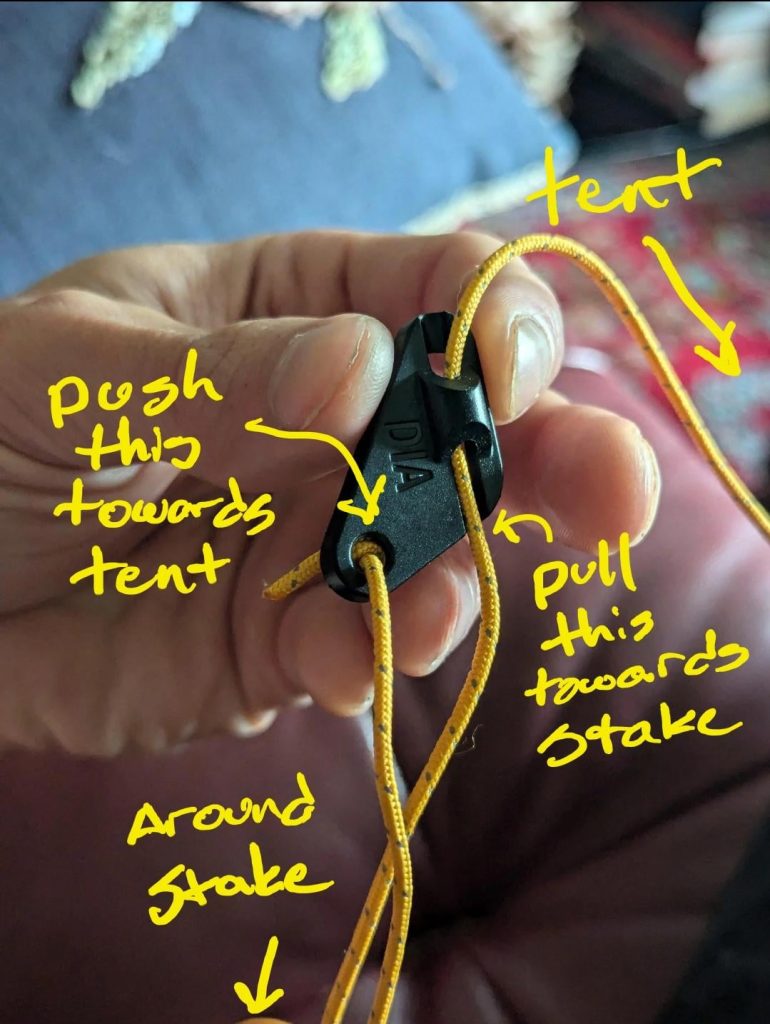
Finally, tighten the guy line to keep your tent firm. Use a tensioner or a taut-line hitch knot to adjust the line’s length. Tight lines stop the tent from flapping or sagging.
- Pull the line until it feels firm but not too tight.
- Slide the tensioner to lock the line in place.
- Test the tension by pushing gently on the tent.
- Re-adjust if the tent moves or the line loosens.

Credit: www.reddit.com
Tips For Optimal Stability
Tying guy lines correctly helps keep your tent steady in different weather.
Using the right methods improves safety and comfort while camping.
Choosing Anchor Points
Select strong, stable points to attach your guy lines. Look for trees, rocks, or solid ground stakes.
- Pick spots away from foot traffic to avoid tripping.
- Use natural anchors like large roots or heavy stones.
- Make sure anchors can hold tension without moving.
Dealing With Wind
Wind can make your tent unstable. Tie lines at an angle to resist strong gusts.
| Wind Direction | Tie Line Angle | Additional Tips |
| Front | 45 degrees away from tent | Use more guy lines on windward side |
| Side | Perpendicular to tent | Check lines often for slack |
| Back | 30 degrees from tent | Anchor firmly to prevent lift |
Maintaining Tension
Keep guy lines tight to avoid sagging and flapping. Loose lines reduce tent stability.
- Check tension after strong wind or rain.
- Use tensioners or knots that are easy to adjust.
- Retighten lines regularly during your stay.
Common Mistakes To Avoid
Tying guy lines correctly keeps your tent stable. Mistakes can cause your tent to fall or tear. Avoid these common errors to stay safe and dry.
Focus on tight knots, correct angles, and proper tension. These factors make a big difference in tent setup.
Loose Knots
Loose knots can slip or come undone in the wind. A knot that is not tight enough will not hold the guy line firmly.
- Always pull knots tight after tying.
- Use knots designed for tension, like the taut-line hitch.
- Check knots regularly during your trip.
Incorrect Angles
Guy lines must be anchored at the right angle. Too steep or too shallow angles reduce support and can damage the tent.
| Angle | Effect on Tent |
|---|---|
| 30° to 45° | Optimal tension and stability |
| Less than 30° | Weak hold, lines may slip |
| More than 45° | Stress on tent fabric and poles |
Overtightening
Overtightening guy lines can strain tent poles and fabric. It can cause damage or make the tent unstable.
- Adjust tension so the tent is firm but not stretched.
- Check pole bends and fabric wrinkles.
- Loosen lines slightly if poles bend too much.

Credit: www.reddit.com
Additional Gear To Improve Setup
Using extra gear can make tying guy lines easier and more secure. It helps keep your tent stable in wind and rain. This gear saves time and reduces stress during setup.
Choosing the right tools improves your camping experience. The right gear also protects your tent from damage. Here are some useful items to consider.
Guy Line Tensioners
Guy line tensioners keep your lines tight without needing knots. They allow easy adjustment of tension even after setup. This helps maintain tent shape in changing weather.
Tensioners come in different styles, such as plastic slides or metal buckles. They reduce line slack and stop slipping. Using tensioners saves time and effort when securing your tent.
- Plastic tensioners are lightweight and simple to use
- Metal tensioners offer strong grip and durability
- Adjustable tensioners let you tighten lines quickly
Stakes And Pegs
Stakes and pegs anchor your guy lines into the ground. Using strong and sharp stakes improves holding power. This helps keep your tent stable on different surfaces.
Choose stakes based on the ground type you expect. Lightweight aluminum stakes work well on firm soil. Heavy-duty steel stakes are better for rocky or hard ground.
- Aluminum stakes are light and rust-resistant
- Steel stakes provide strong hold in tough soil
- Plastic stakes suit soft or sandy ground
Reflective Lines
Reflective guy lines increase visibility around your tent at night. They help prevent tripping over lines in the dark. This adds safety for you and others at the campsite.
Reflective lines glow when light hits them. They are easy to spot with a flashlight or headlamp. Using these lines makes your campsite safer after sunset.
- Reflective lines reduce accidents at night
- They improve tent visibility in low light
- Use colored reflective lines for style and safety
Frequently Asked Questions
How Do I Properly Tie Guy Lines On A Tent?
To tie guy lines, use a taut-line hitch knot for adjustable tension. Secure the line to the tent loop, stake it firmly, and adjust tension to keep the tent stable in wind.
Why Are Guy Lines Important For Tent Stability?
Guy lines provide extra support by anchoring the tent to the ground. They prevent the tent from collapsing or shifting during strong winds or rain, enhancing safety and comfort.
What Is The Best Knot For Tent Guy Lines?
The taut-line hitch knot is best for guy lines. It allows easy adjustment of tension without slipping, ensuring the tent stays securely anchored throughout your camping trip.
How Many Guy Lines Should I Use On My Tent?
Use at least three to four guy lines, depending on your tent size. Evenly space them around the tent for balanced support and maximum wind resistance.
Conclusion
Tying guy lines on a tent keeps it strong and steady. Use simple knots that hold tight in wind and rain. Check lines often to keep your tent safe. Practice tying before you camp to feel confident. A well-secured tent makes outdoor trips more enjoyable.
Keep these tips in mind for your next adventure. Safe camping starts with good preparation.